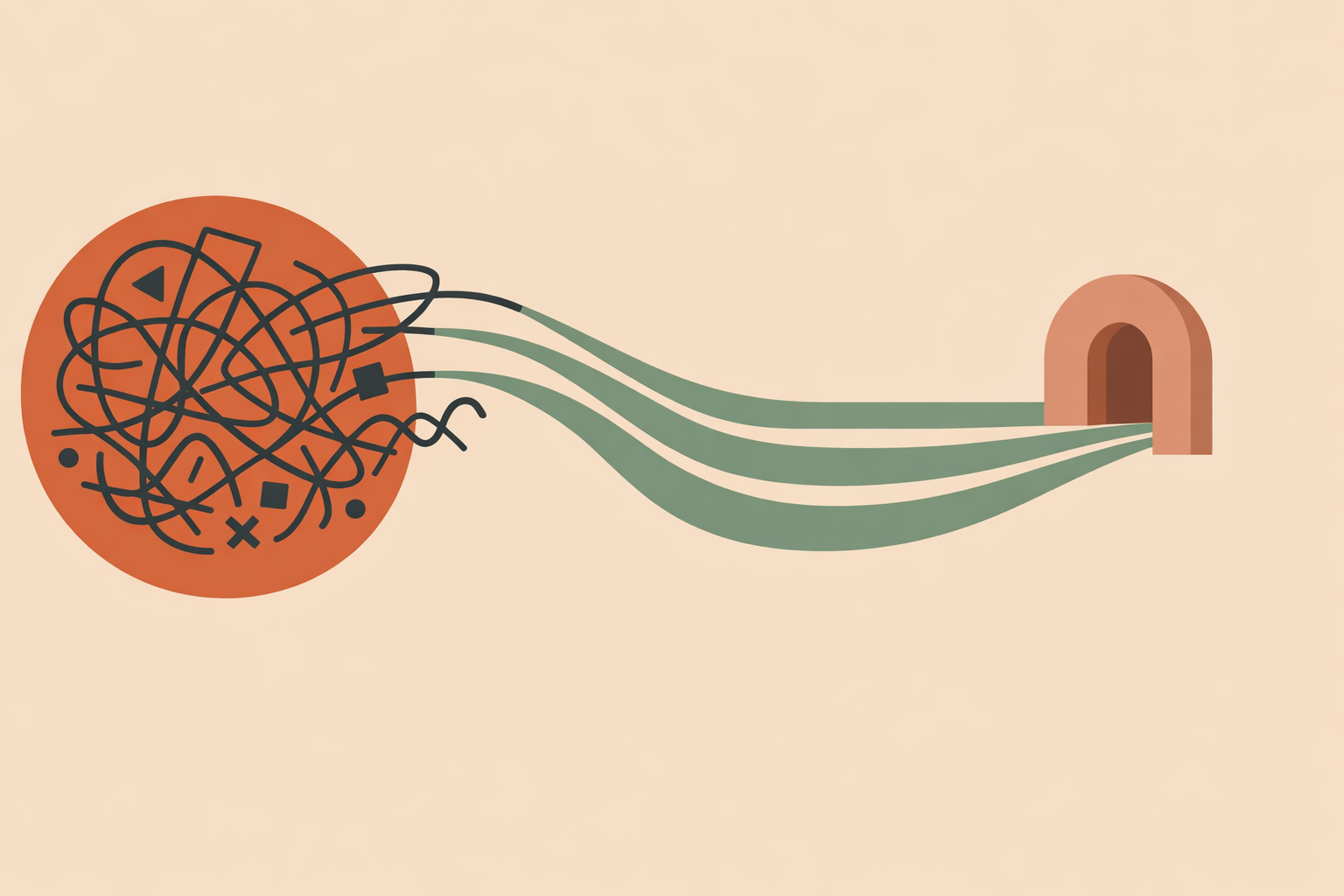
When clients ask, “So how does NLP work?” it’s easy to fall into jargon—representational systems, submodalities, anchoring—and watch their attention drift. Others give a slick technique overview that still doesn’t help someone make a change on a Tuesday afternoon. The most helpful response is usually more human: offer a picture they can use.
Key Takeaway: Metaphors make NLP easier to understand and easier to use. Three especially practical ones are the mind as a map, inner experience as a camera with adjustable settings, and habits as operating-system scripts. Used well, these stories help clients grasp what is changing, feel small shifts quickly, and practice new responses in daily life.
Why Metaphors Explain NLP More Clearly Than Jargon
Start with images, not terminology. When people ask how NLP works, they usually want a clear sense of what’s happening inside and what they can do next.
Metaphor is built for that. Communication research suggests single-source metaphors are often easier to grasp than technical explanations, and learning research shows analogical comparisons can help people apply new ideas more readily.
Traditional lineages have leaned on story and image for centuries because they carry understanding in a way the mind can live inside. NLP sits comfortably in that same tradition: it gives language to how inner experience is organized, and metaphors make it usable.
One phrase that lands well in practice: “Think of your mind as a map. It is not the world itself; it is your current picture of it. NLP helps you redraw parts of that map so new paths become easier to notice and use.”
The point is not to sound clever. The point is to give someone a handle they can reach for when real life gets loud.
Use Metaphors That Lead to Action
A strong metaphor does two jobs: it clarifies what’s happening, and it points toward a small experiment the client can run.
- Name the limit: “This is a helpful picture, not literal truth.”
- Connect it to action: “If your map says ‘dead end’ at asking for help, let’s draw a side path and test it this week.”
That second step is where coaching comes alive. Action turns a nice explanation into a repeatable skill.
Core Story 1: The Mind as a Map
This is often the easiest place to begin because everyone understands maps. A map highlights some features, leaves others out, and quietly shapes which routes feel possible.
If someone avoids presentations, difficult conversations, or visible leadership, the outer situation is only part of the story. Their inner map may already label the territory as danger, embarrassment, rejection, or shutdown. When the map changes, options appear.
This is a familiar principle in NLP: update the internal map and the person can see new routes through the same terrain.
Try a quick mapping exercise:
- Ask: “When you picture this situation, what labels are on the map?”
- Invite three words or symbols: “Spotlight,” “Judgment,” “Freeze.”
- Then ask: “What paths are missing?”
- Add alternatives such as “Use notes,” “Start with a story,” or “Find one friendly face.”
- Choose one route to test in real life that week.
The gentleness here matters. Instead of telling someone to “push through,” you help them redraw the inner landscape so a safer route becomes visible.
Core Story 2: The Camera and Its Settings
Once the larger map is clear, it helps to zoom into the details of inner experience. The camera metaphor makes this practical fast.
Ask a client to notice a memory, expectation, or imagined scene like a photo or short clip. It has distance, brightness, focus, color, scale, movement, and often sound. Small adjustments to those qualities can shift how the experience feels.
There is evidence that changing features of mental imagery can modulate emotions, which matches what many practitioners see when working with submodalities: change the internal coding and the experience changes with it.
A common pattern is an uncomfortable image that feels huge, close, sharp, and bright. Move it farther away, soften the edges, shrink it, and dim it. Many people notice the intensity easing as the image changes.
You can guide a quick “settings shift” like this:
- Ask where the image seems to be located.
- Invite the client to move it farther away.
- Make it smaller.
- Reduce brightness or color.
- Check what changes in their felt response.
One helpful principle is that greater distance can reduce impact, which often explains the relief clients feel when a scene is no longer “right up close.”
For building a more resourced state, reverse the direction. Bring a desired scene closer, add clarity and warmth, and let it become vivid enough to matter. When the preferred image carries real emotional weight, follow-through becomes easier.
Sometimes one adjustment does it. Sometimes it takes a few passes. That’s normal skill-building in session.
Core Story 3: The Mind as an Operating System
The third metaphor is ideal for habits and repeat reactions. The mind works like an operating system, and familiar behaviors run like scripts when a cue appears.
This framing helps with loops like scrolling, snacking, delaying, shutting down, or slipping into the same self-talk. The person doesn’t need “fixing.” A script is running, and scripts can be updated.
That fits with habit research showing change often involves disrupting sequences and practicing a more useful alternative.
In NLP terms, pattern interrupts and rehearsal make immediate sense: pause the old script at the cue, then run a new one in its place.
For example:
- Old script: 3 p.m. slump, curved posture, vending machine.
- Interrupt: stand up, breathe out fully, look across the room.
- New script: walk outside for one minute, drink water, reset posture.
- Reinforcer: mark a streak or use a small acknowledgment.
Reinforcement can be simple and still effective. Behavioral evidence suggests contingent rewards help new behaviors stick, which can look like a streak tracker, a supportive message, or brief recognition when the new script runs.
Language is part of the operating system too. “I’m a procrastinator” locks the pattern into identity. “I’ve been using a delay strategy” keeps it editable, which makes change feel more reachable.
How the Three Metaphors Work Together
These stories work best as a set: the map shows where someone feels stuck, the camera changes the intensity of key inner moments, and the operating-system script turns insight into a repeatable response.
A session often flows in that order. Identify the challenge on the map, adjust the inner picture so it feels less overwhelming or more inviting, then set one small script to run when the cue appears. When you return to the map, the route usually looks different.
Clients get a coherent answer to how NLP works: the picture changes, the felt experience shifts, and the repeated response updates.
What This Sounds Like in Practice
The best explanations are short enough to remember. These lines translate well in session:
- “We are working with your inner map so more options become visible.”
- “Let’s adjust the settings on that inner picture and see what changes.”
- “When the cue appears, we want a different script to run automatically.”
- “Keep the learning, lose the sting.”
If someone is skeptical, there’s no need for debate. Keep it grounded:
- “Let’s try one small shift and see whether it feels useful.”
- “If it helps, keep it. If not, we use something else.”
- “Your experience is the test.”
That tone keeps the work practical and respectful.
Designing Goals with These Metaphors
Metaphors become most powerful when they connect directly to a goal the client cares about.
- Map question: What does the desired destination look like?
- Camera question: What inner qualities support that state?
- Operating-system question: What exact script should run at the cue?
Example: a client wants to speak more confidently in meetings.
- Map: “I contribute calmly and clearly.”
- Camera: brighter image of success, steady internal tone, grounded posture.
- Operating system: arrive early, breathe, ask one opening question, then share one point.
Now the goal is concrete: an image, a felt state, and a behavior sequence.
Troubleshooting When Change Does Not Hold
If the metaphor clicks but the behavior stays the same, treat that as guidance rather than failure.
- Check the cue. Was it specific enough?
- Strengthen the preferred image. If it’s too faint, it won’t compete well; stronger impact is often linked to greater vividness.
- Shrink the replacement behavior. Make the new script easy to run.
- Add reinforcement. Mark tiny wins.
- Repeat. Rehearsal builds a new default.
Two steadying lines help: “We are training a new default.” And: “Let’s make the first win small enough to repeat.”
Using Metaphors Ethically and with Cultural Care
Not every metaphor fits every person. One client thinks in landscapes, another in music, kitchens, code, dance, sport, or craft. The best image is often the one that already belongs to their world.
Ask permission: “Can I offer a metaphor and see whether it fits?” If it doesn’t, build one together.
This is more than style. Metaphors shape meaning, and meaning shapes how people relate to themselves. Research on framing suggests metaphor choices can influence how people reason, so it’s worth choosing images that support dignity and agency.
A few principles keep the work clean:
- Let the client shape the image.
- Do not force a metaphor because it works for you.
- Keep the process grounded in real-life testing.
- Stay within coaching scope and refer onward when a different kind of support is needed.
Conclusion
When NLP is explained through metaphor, clients tend to understand it faster and use it sooner. The map helps them see that their current route is not the only one. The camera shows how small shifts in inner coding can change how a moment feels. The operating-system metaphor makes repeated behaviors easier to update without turning them into identity.
These are practical bridges between insight and action. Used with care, they make NLP clearer, more humane, and more usable in daily life.
Offer the image. Test one small shift. Let experience do the teaching. Over time, clients often carry these stories into the rest of their lives, using simple language to describe change in ways that feel empowering, grounded, and real.
Master NLP Practitioner Skills
Deepen these metaphors into repeatable techniques in the NLP Practitioner Certification.
Explore NLP Practitioner →