Coaches often place mindfulness and meditation in the same bucket and reach for a guided practice the moment tension rises. Sometimes that helps. Just as often, it uses valuable session time, shifts you into teaching mode, and pulls attention away from the client’s immediate aim. At other times, coaches avoid any pause at all and watch the conversation stay caught in reactivity. The real question is which tool fits the moment.
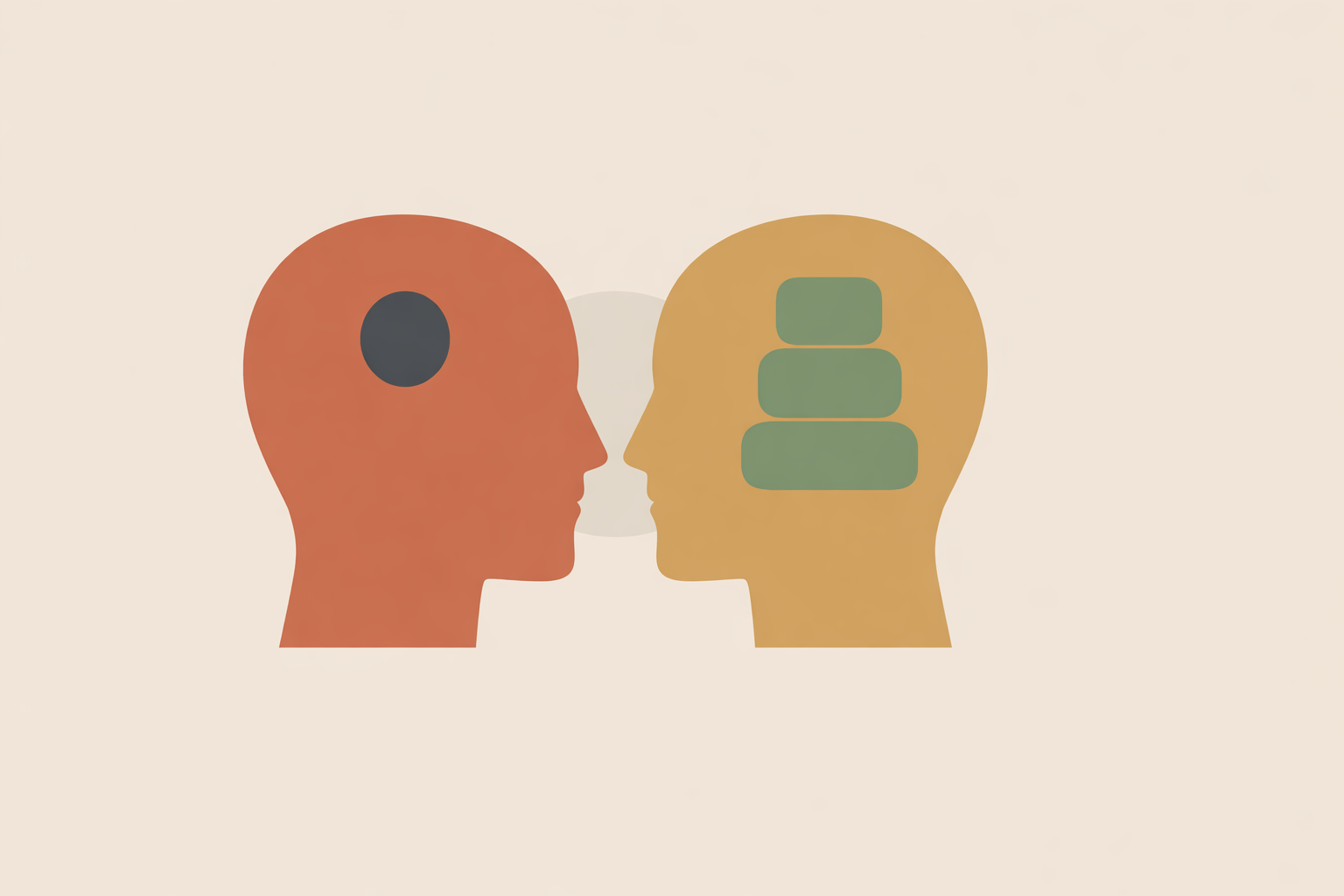
A useful distinction clears this up: mindfulness is an in-the-moment quality of attention, while meditation is a structured practice that strengthens that quality over time. In coaching, that usually means mindfulness belongs inside the conversation, while meditation is better suited to what happens between sessions.
Key Takeaway: Effective coaching separates mindfulness from meditation and uses each with intention. Mindfulness helps bring steadiness and choice into the live conversation. Meditation helps build attention and self-awareness through regular practice over time. When you keep that line clear, sessions stay focused, practical, and supportive.
Mindfulness vs meditation in action
The difference becomes clearer in real situations.
One client arrived visibly tense before an important presentation. His breathing was shallow, his pace was rushed, and his thoughts kept jumping to what might go wrong. Instead of shifting into a longer guided exercise, I invited a short pause. We slowed the exhale, named one body sensation, named the main thought present, and returned to the value he wanted to embody. Within a minute, his voice steadied and the session could move forward. That’s mindfulness doing its job: reconnecting someone with the present moment so their next step becomes more intentional.
Another client had a different pattern. She was steady in sessions, but between sessions she struggled with digital drift, fractured attention, and difficulty beginning focused work. In that case, a short daily meditation made more sense than repeated in-session resets. We co-created a simple routine: a few minutes of breath-focused practice before her first work block. Reviews of mindfulness meditation suggest attention improves with practice, which aligns well with this kind of goal.
These are different tools for different jobs. Mindfulness supports state in the moment. Meditation develops skill over time.
Clear definitions you can share with clients
Clients usually do best with plain language.
Mindfulness can be described like this: paying attention to what is here, on purpose, with more openness and less struggle. It isn’t limited to sitting quietly. It can be brought into listening, walking, writing, speaking, eating, or pausing before responding. In coaching, that makes it especially useful because it can be woven directly into real choices as they’re being made.
Meditation is a more structured exercise. It’s a family of practices that train attention and awareness over time. That might mean focusing on the breath, repeating a phrase, noticing sounds, or resting with a wider field of experience. The form can vary, but the common thread is intentional training.
This is also where traditional roots deserve respect. Across contemplative lineages, awareness has never been limited to the cushion. Practice exists to shape how a person meets ordinary life. Coaching can honour that spirit while still acknowledging the cultural depth these practices come from.
When to use mindfulness inside a coaching session
Use mindfulness when the session needs clarity now.
If someone is tangled in self-criticism, indecision, racing thoughts, or emotional intensity, a brief pause can help the conversation regain shape. In practice, even a short reset can change the quality of the exchange without taking over the session.
Common moments where mindfulness helps:
- At the beginning, to help the client arrive
- In the middle, when emotion or confusion starts to dominate
- Just before a decision, to reconnect action with values
- At the end, to help the client leave with one grounded next step
Mindfulness-related strategies show small but meaningful effects on adaptive behavior, which helps explain why these brief pauses can be so useful in coaching conversations. Many coaches also recognise the shift firsthand: a person moves from spiralling to choosing once they have enough space to notice what’s happening, rather than being swept along by it.
A simple script can be enough: pause, feel both feet on the ground, lengthen the exhale, and name one thing being felt right now. Then return to the question at hand.
How you invite the pause matters too. Language such as “Would you be open to a short pause?” keeps the exchange collaborative and protects the client’s sense of choice. It also reflects respectful practice.
When to use meditation between sessions
Introduce meditation when the client wants a repeatable structure for building steadiness, focus, or self-awareness over time.
This is usually most helpful when the challenge is ongoing rather than acute: difficulty settling into work, scattered attention, harsh inner commentary, or trouble noticing patterns until they are already running the show. In those cases, meditation gives the client a clear container for regular training.
You can match the practice style to the goal:
- Focused-attention practice for distraction, task initiation, or follow-through
- Open-awareness practice for noticing thought and emotional patterns
- Loving-kindness or gratitude-based practice for softening harsh inner dialogue
Research on mindfulness mechanisms suggests practice can support self-compassion and reduce automatic negative self-evaluation, which helps explain why gentler heart-based practices can be valuable for clients who are hard on themselves.
As for duration, simpler is often better. For many coaching clients, a short, repeatable practice is more useful than an ambitious plan they won’t keep. Five minutes on most days is a practical starting point in many coaching contexts because it’s easy to begin and easier to sustain.
How to blend mindfulness and meditation across a coaching journey
The most useful approach is often to blend them without blurring them.
Meditation coaching builds the capacity. Mindfulness brings that capacity into real life and live coaching conversations. When you keep both roles clear, clients understand not only how to practice, but why it supports their goals.
A simple coaching arc might look like this:
- Open with a brief settling pause
- Use mindful check-ins when the conversation becomes charged or unclear
- Close with one practical between-session meditation commitment
- Review what the client noticed at the next session and adjust
This kind of blend reflects how many mindfulness-based programs combine formal practice with reflection and everyday application in practice. In coaching terms, the session supports awareness in action, while the between-session practice builds continuity.
For example, a client might begin with three minutes of seated practice on weekdays, then add one mindful pause before sending an important email or entering a meeting. The formal practice builds familiarity; the in-the-moment pause turns that familiarity into a usable skill.
Ethics, cultural respect, and scope
These practices deserve care.
Not everyone finds meditation easeful, and not every format suits every person. Reviews of the literature suggest some participants report harmful effects or increased discomfort during meditation practice. That doesn’t make the practices unsuitable. It means coaches should work with consent, simplicity, and responsiveness.
Good practice includes:
- Explaining what you are inviting and how long it will last
- Making participation optional
- Offering adaptations such as eyes open, attention on sound, or feeling the feet on the ground
- Checking how the practice landed rather than assuming it helped
- Reducing intensity or pausing the experiment if the practice does not feel supportive
Cultural respect matters just as much. Mindfulness and meditation come from living traditions with their own philosophies, ethics, and lineages. A respectful coaching approach acknowledges those roots, avoids presenting borrowed practices as newly invented, and stays alert to oversimplification or appropriation.
Scope matters too. Coaching can support awareness, reflection, behavior change, and well-being. It should remain grounded there.
A simple decision framework for coaches
When you are unsure what to use, ask:
- Does this person need support in the moment or training over time?
- Would a short pause help more than a formal exercise right now?
- Is the practice matched to the client’s actual goal?
- Has the client clearly agreed to try it?
- How will we review what happened and adapt from there?
As a practical rule, choose mindfulness for live clarity, choose meditation for ongoing development, blend them when they truly support each other, and choose neither when fit or consent is missing.
Used this way, mindfulness and meditation stop being interchangeable buzzwords and become distinct, respectful supports. One helps the client meet the present moment with more choice. The other helps them build that capacity over time. Knowing the difference makes both more effective.
Explore Mindfulness Coach Certification
Build practical in-session mindfulness skills and between-session routines with the Mindfulness Coach Certification.
Explore Mindfulness Coach →