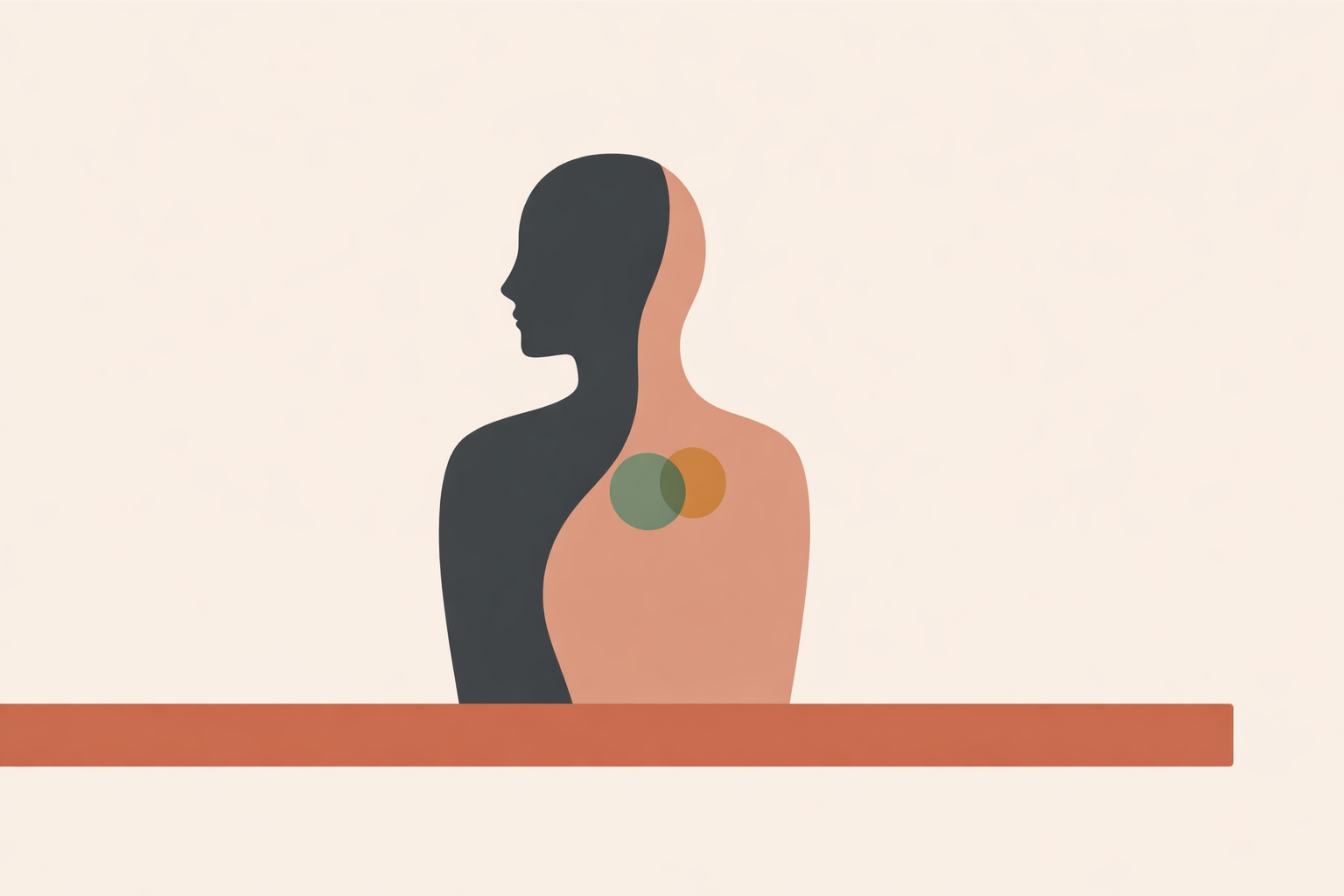
Experienced coaches know the moment a client’s system spikes or drops: talk-led methods stop landing. The story loops, breathing gets tight, shoulders lift or collapse, and insight no longer translates into action. The pace quickens—or the client goes far away.
In those moments, more analysis rarely helps. What helps is supporting the body to settle so learning can resume. Without that shift, even well-crafted questions can ask a dysregulated system to do what it cannot.
Key Takeaway: Somatic coaching is most effective when you prioritize nervous system regulation before meaning-making. When you help clients settle through simple outside-in and inside-out practices, they regain capacity for reflection, clearer choices, and action that integrates—while keeping the work firmly within coaching scope.
From talk-heavy sessions to body-led change
The shift is simple but profound: instead of starting with why a pattern exists, start with how it is showing up in the body right now. Notice breath, jaw, eyes, weight in the feet, speed of speech. These are often the first places change becomes available.
As patterns soften in the body, the story usually changes with them. And when the system is steadier, clarity and committed action tend to follow.
Reading the body’s language: states, early signals, and workable maps
Somatic coaching begins by recognizing state clearly—and speaking about it respectfully. A simple map helps you know when to keep exploring and when to pause and support settling first.
Many coaches use plain-language states such as activated, collapsed, and steady. These aren’t boxes; they’re orientation points. The aim isn’t to force an “ideal” state, but to build more choice inside changing states.
Early signals matter because they show up before a client tips over the edge. Activation might look like fast thoughts, shallow breath, tight jaw, restlessness, or scanning the room. Collapse might feel like heaviness, numbness, low energy, or going distant. Naming these “yellow lights” builds self-trust and makes skillful support easier.
Naming can stay collaborative and simple:
- “I notice your breath got faster. Does ‘activated’ fit, or would you name it differently?”
- “You seem farther away right now. Is that how it feels to you?”
- “What usually tells you you’re nearing your edge?”
That shared language gives clients a usable map of their own system—without making their experience feel wrong or broken.
Outside-in settling: grounding and orienting first
When a client feels anxious, flooded, or close to overwhelm, outside-in support is often the most reliable place to begin. Environmental cues, contact with surfaces, and gentle movement can bring attention back to the present faster than intense inward focus.
Grounding techniques commonly use present-environment cues and physical contact to reduce distress. In session, that can be very simple: feet on the floor, pelvis on the chair, back against the wall, eyes moving slowly around the room.
Orienting works especially well here. Slowly looking around and naming what is seen, heard, or felt can interrupt spiraling and return attention to immediate reality. Many approaches use sensory awareness this way, helping clients anchor attention in the present.
Physical cues can be just as effective:
- Feet pressing into the floor
- Hands feeling the chair or thighs
- Back resting into support
- Eyes landing on stable, non-charged objects
For bodies carrying obvious surface tension, progressive muscle relaxation can help by creating a clear contrast between strain and softening—especially for clients who struggle to sense subtler shifts.
Rhythmic movement belongs here too. A small rock or sway often settles the system without requiring much verbal processing. Many traditions have used this kind of rhythm intuitively for a very long time.
Clients often describe this as the real turning point: not the clever insight, but the moment the body finally felt contact, support, and enough steadiness to stay present.
A simple outside-in sequence for high activation
When someone is highly activated, keep the practice brief, collaborative, and optional:
- Anchor contact: “Feel your feet and gently press into the floor.”
- Orient softly: “Let your eyes land on a few steady objects in the room.”
- Name the present: “What are three things you can see right now?”
- Add movement: “Would a small side-to-side sway feel supportive?”
- Pause for choice: “Is this enough, or would one more round help?”
The goal isn’t perfect calm. It’s enough settling for learning and choice to come back online.
Inside-out settling: breath, sensation, touch, and sound
Once the body is more grounded, inside-out practices can deepen regulation and build self-knowledge. Breath, sensation awareness, touch, and sound often work well here—especially in small, choiceful doses.
Many grounding approaches include breath, sensory awareness, touch, and sound, which makes them a natural fit once a client has enough stability to turn inward gently.
A slower breath with a slightly longer exhale is often a strong entry point. Keep it plain and practical: “Inhale for four, exhale for six.” Think of it like giving the system a little more room to settle on each out-breath.
Brief body scans can help clients notice where tension, effort, or numbness are living. Move slowly, and keep the invitation light—jaw, shoulders, hands, belly. The aim is awareness, not performance.
Self-soothing touch can be especially supportive. A hand on the heart, belly, or side of the ribcage often helps clients feel safer and more accompanied in their own experience.
Soft sound is another underused tool. Humming, sighing, or quiet vowel tones can shift the tone of a session quickly. For some clients, vibration is simply easier to feel than breath.
Inside focus should still be dosed well. If turning inward increases distress, return to external anchors like contact, orienting, or movement.
A gentle inside-out ladder
Once the client is grounded enough, try a short sequence like this:
- Breath: 3 to 4 slower breaths with a longer exhale
- Touch: one supportive hand placement
- Sensation: a 10-second scan of jaw, shoulders, or chest
- Sound: 1 or 2 soft hums or sighs
Then pause and check: steadier, same, or less steady? If the system settles, repeat. If not, shift back to orienting, contact, or movement.
A regulation-first session arc
Somatic sessions often flow best when regulation is built into the structure—not added only when things wobble. A simple arc works well: arrive, resource, explore, integrate.
- Arrive: Begin with a brief check-in and a short grounding or orienting practice.
- Resource: Choose one supportive tool based on the client’s current state.
- Explore: Work with the coaching topic while continuing to track state.
- Integrate: Close by naming what shifted and anchoring one next step.
This arc keeps pacing clean because regulation stays primary. It also helps the work remain body-led without losing practical momentum.
During exploration, small steps tend to land better than intensity. Touch the edge, return to support, then approach again if the system allows. Essentially, you’re building capacity the way you’d build strength: gradually, with rest built in.
Simple scaling can help:
- “How activated does this feel from 0 to 10?”
- “Do you want to stay with this, or come back to your anchor?”
- “What would make this 10% easier right now?”
As Mark Walsh observes, good somatic training changes how you stand, breathe, and relate under pressure. In coaching, that grounded practicality matters more than sounding sophisticated.
Coach presence and co-regulation
Your state is part of the session. A steadier coach can help a client find steadiness; a rushed or tense presence can quietly amplify activation.
This is why pre-session preparation matters. A few minutes of grounding before you meet often does more than any technique you offer in the first five minutes.
Useful basics include:
- Longer exhales
- Softening the jaw and shoulders
- Feeling your own feet and seat
- Slowing your pace of speech
- Letting pauses do some of the work
Warmer vocal tone, unhurried pacing, and well-timed silence often make the relational field feel safer and more spacious. Traditional teaching lineages have long understood this, even when using different language.
Cultural attunement matters, too. Eye contact, silence, touch, distance, and directness don’t mean the same thing across communities. Ask rather than assume, and let that understanding evolve with the relationship.
Closing perspective
Somatic coaching is at its best when it stays humble and practical. Start with what is immediate: contact, breath, sightlines, posture, movement, sound. Help the body settle enough for reflection to become useful again.
Across many traditions, there’s a shared understanding that the body can return to balance when given enough time, space, and warmth. In modern language, you might call this a natural movement toward regulation and reorganization. Put simply: you don’t always need to push harder. Often, you slow down, support contact, and let learning emerge from steadiness.
Two commitments make this approach especially effective:
- Sequence for steadiness: outside-in before deeper inward focus when needed.
- Track the client’s unique signals: their yellow lights, their anchors, and ways of tracking client progress around “steady.”
In closing, keep consent explicit, care for your own system, and stay respectful of cultural roots and differences. A clear structure, embodied presence, and regulation-first pacing help clients settle in the moments that matter—and choose what comes next with more trust in themselves.
Train in Somatic Coach Certification
Apply these regulation-first tools in your work through the Somatic Coach Certification.
Explore Somatic Coach Certification →