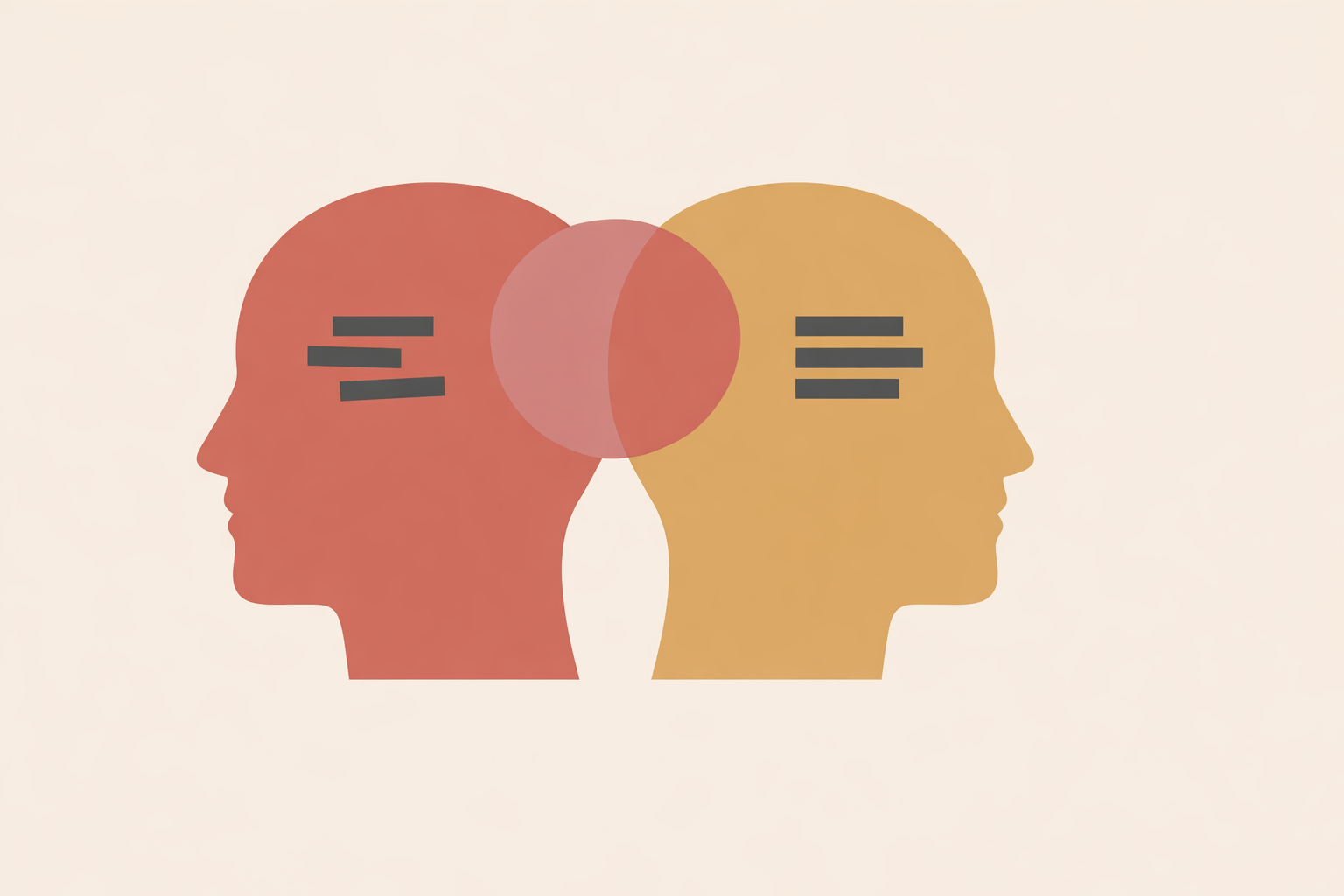
In alcohol recovery coaching, a familiar tension comes up: a client asks, “Is my brain damaged?” or says, “A couple of drinks just take the edge off.” In those moments, language can either build shame or build understanding. When we skip the explanation, myths stay in place. When we reach for “broken brain” or “lack of willpower,” many clients shut down. A steadier approach is plain and respectful: alcohol can shape how the nervous system functions, and those changes influence choice without defining the person.
Key Takeaway: Alcohol recovery conversations are more useful when they frame brain changes as adaptation rather than personal failure. Clear coaching language can explain immediate effects, craving, brain fog, sleep disruption, and uneven improvement without creating alarm. The most helpful stance is practical and hopeful: reduce shame, strengthen choice, teach skills, and stay within coaching scope when extra support is needed.
Explaining alcohol’s immediate effects without alarm
Alcohol is often appealing because it can feel pleasurable, social, and relieving in the short term. The trade-off is reduced clarity, which traditional observation has described for centuries and modern evidence continues to map.
In plain terms, alcohol can impair judgment, along with balance, memory, and speech. It doesn’t act through one single “addiction chemical.” It influences signaling across multiple systems tied to mood, learning, inhibition, arousal, and stress.
Over time, repeated alcohol use can alter multiple systems, which helps explain why alcohol can feel soothing in one moment and create more difficulty later. Traditional lineages recognized this pattern long ago: loosened speech, reduced guard, and a decline in steadiness and clarity.
A helpful script: “Alcohol can seem to soften discomfort quickly, but it also makes clear thinking and steady choices less reliable. That’s why it can feel comforting and costly at the same time.”
How alcohol reshapes reward, stress, and self-control
When clients want to understand why a pattern feels so compelling, a three-part map is usually enough: reward, stress, and self-control.
Repeated alcohol use can lead the brain to re-tune systems linked with self-regulation as well as reward and stress. Many people recognize a familiar sequence: stronger wanting, a quicker rise in emotional strain, and less steering capacity in the moment.
- Reward and habit: alcohol becomes linked with relief, pleasure, or routine.
- Stress reactivity: tension, irritability, or emotional discomfort can make alcohol feel urgent.
- Self-control: under strain, it gets harder to pause, reflect, and choose differently.
Withdrawal and early readjustment can activate stress circuits, increasing anxiety, irritability, and urgency around relief-seeking. At the same time, the functions clients most want to rely on can feel less available.
Together, these shifts can form a feedback loop: cues and stress increase wanting while self-control is less accessible exactly when it’s needed. This is one reason craving is better understood as learned neurobehavioral momentum than as a character flaw.
Useful coach language: “Your system built a fast route to relief. We’re not here to shame the route. We’re here to build new ones.”
Making sense of craving
Craving is often cue-driven. It can be sparked by a time of day, a room, a familiar glass, a drive home, loneliness, conflict, fatigue, or the feeling of “I earned this.” With repetition, alcohol becomes linked to people, places, emotions, and routines, and those cues start pulling harder.
That’s why clients may say, “I wasn’t even thinking about drinking until I walked into the kitchen,” or “I only want it when I feel cornered.” Both experiences make sense.
It can help to say: “This is your system remembering a fast form of relief. Remembering is not the same as deciding.” That sentence alone often lowers shame.
Mindfulness-based skills support this stage well, and so can brief craving tools. They don’t erase urges; they create enough space for a different response.
A rapid protocol you can teach:
- Name it: “This is an urge.”
- Locate it: “Where do I feel it?”
- Slow the breath for a few rounds.
- Ask: “What do I want most in the next ten minutes?”
- Shift the body: stand, walk, stretch, wash the face, step outside.
The broader message is hopeful. The same plasticity that helps habits form can also support new learning and recovery. Brain plasticity can be harnessed to support recovery and strengthen healthier patterns over time.
Talking about brain fog, sleep, and mood shifts
Clients often worry that brain fog means permanent decline. Coaching support starts by separating symptoms from identity and tracking what changes with routine.
Heavy alcohol use can affect attention, memory, decision-making, and problem-solving. Executive-function tasks are often especially affected, so clients may feel slower, more distractible, more forgetful, or less organized than usual.
Sleep can also stay unsettled for a while after someone cuts back or stops. Sleep problems may persist into early recovery, and irritability or low mood can rise as the system rebalances.
Many people find that alcohol-related brain changes can improve over time, including improvements that feel significant in daily life.
Brain fog is also nonspecific. Sleep loss, anxiety, trauma history, attention differences, low mood, and nutritional strain can all contribute. Coaching can support observation, rhythm-building, and practical experiments, while severe, persistent, or worsening concerns call for appropriately qualified support beyond coaching.
A practical script: “Poor sleep and fogginess can happen while your system is rebalancing. Let’s support rhythm first and watch the pattern rather than turning this into a story about who you are.”
Recovery is often uneven, but improvement is common
Clients usually want a timeline. The kindest honest answer is that improvement is common, and the path often comes in waves.
Across recovery, brain and behavioral changes may improve over months. Some people notice early gains in morning clarity, steadier energy, or less internal chaos within weeks, while others need more time before changes feel obvious.
This fits lived experience and traditional wisdom: when daily rhythms become steadier, the whole person often becomes steadier with them. Consistent light exposure, regular meals, movement, rest, reflection, and soothing routines help the nervous system settle and support clearer choices.
Consistency matters because repetition can reshape pathways in ways that support recovery.
A useful timeline conversation: “We won’t promise the same pace for everyone. What we can expect is that steady practice often brings meaningful change, even if the path is uneven.”
Translating neuroscience into helpful coaching
The most effective explanations are simple, permission-based, and practical. Ask first, explain briefly, then return to choice.
For example:
- “Would it help if I shared a simple map of why evenings feel harder?”
- “Your urge makes sense in context. Let’s slow it down and see what else is needed.”
- “We’re not trying to win by force. We’re building more options.”
It also helps to map patterns visually:
- situation
- thoughts
- emotions
- body sensations
- urge
- action
This kind of mapping keeps the conversation grounded and shows where new skills can be inserted.
Short metaphors can help too:
- Volume knob: reward gets louder, stress gets louder later, clear steering gets quieter.
- Well-worn path: the old path is familiar; recovery is building another one through repetition.
- Wave: the urge rises, peaks, and passes, even when it feels commanding.
One-minute practice to assign: “At the usual drinking hour, pause for sixty seconds. Name the strongest sensation in your body, name the feeling, and choose one five-minute action that matches the kind of person you want to be tonight.”
Scope and safety in alcohol recovery coaching
Coaching can offer education, structure, reflection, accountability, and skills practice. It can help clients prepare for change, notice patterns, and build supportive routines through mindset and behavior change, which is meaningful work.
It also has limits. Complex withdrawal risk and some co-occurring concerns require support beyond coaching. Suddenly stopping heavy drinking is not always risk-free because withdrawal can become serious.
Stay grounded and avoid bravado. If a client may be at risk during reduction or stopping, encourage them to seek appropriately qualified support while you remain in your lane: planning, encouragement, tracking, reflection, and practical behavior-change support.
Conclusion
Alcohol can influence reward, stress, habit, memory, sleep, and decision-making. That reality doesn’t need drama, and it should never be used to strip anyone of dignity. It’s a map that helps people make sense of what they’re experiencing.
Used well, that map explains why change can feel hard, why urges can feel persuasive, and why small repeated practices matter. It also helps coaches speak in ways that reduce shame and strengthen choice.
Keep the message clear: many difficulties seen in heavy drinking and early recovery fit an adapting nervous system; improvement is common, though often uneven; and people deserve support that is practical, respectful, and hopeful. Save safety talk for where it belongs, stay within coaching scope, and pair evidence-informed explanation with grounded human care.
Explore Alcohol Recovery Coaching
Build shame-free, evidence-informed coaching skills with the Alcohol Recovery Coach Certification.
Explore Alcohol Recovery Coach →