Many coaches feel pushed to pick a side: NLP or CBT-informed coaching. In real sessions, that divide rarely helps. One client shifts quickly through language, imagery, and live rehearsal; another wants structure, visible progress, and simple between-session experiments.
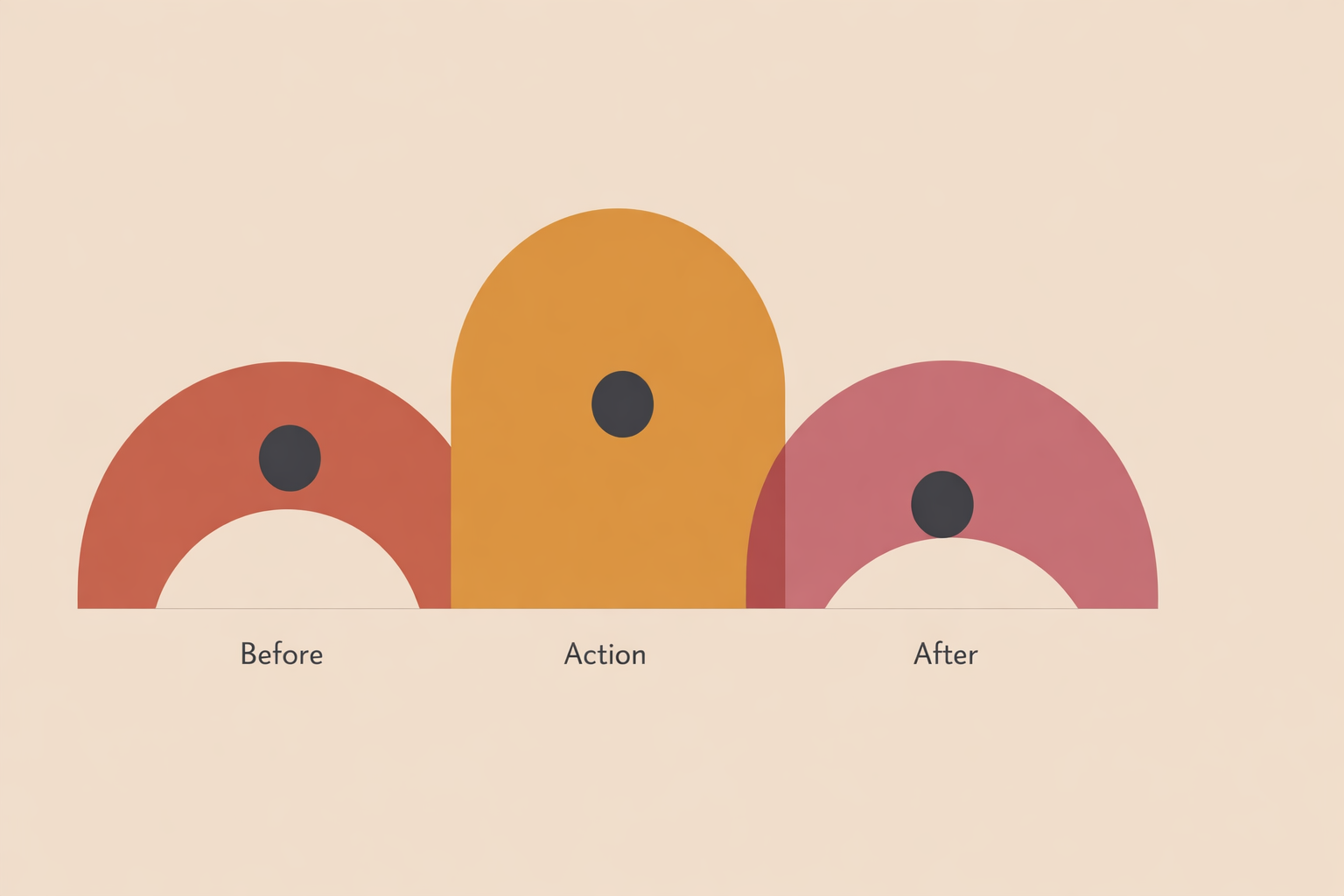
A more practical view is to treat NLP and CBT-informed coaching as two complementary maps of change. NLP often shines when the work centers on communication, presence, and flexible responding. CBT-informed coaching often shines when progress depends on testing assumptions, reducing avoidance, and turning goals into clear actions. Used together, they can follow a natural rhythm: insight, action, review.
Key Takeaway: Choosing between NLP and CBT-informed coaching is usually a question of fit, not allegiance. NLP tends to suit work around communication, modeling, and state shifts; CBT-informed coaching tends to suit structured experiments, measurable progress, and recurring patterns such as avoidance or self-criticism. The most practical integration is often simple: use NLP to shift perception and language, then use CBT-informed tools to test, review, and stabilize the change in observable behavior.
NLP and CBT as two maps of change
The simplest comparison is this: NLP starts with subjective experience, while CBT-informed coaching starts with the relationship between thoughts, emotions, and behavior.
In NLP, the starting point is how people code experience through internal images, sensations, sounds, and words. It is often framed as a communication model, with strong attention to how inner representation shapes outer behavior.
A core NLP premise is internal maps: people respond not just to events, but to the meaning they make of them. When the map changes, new options often become available.
CBT-informed coaching works more directly with interpretation, emotional response, and action. It commonly follows a steady rhythm: notice a pattern, test a prediction, try a different behavior, then review what happened. This goal-oriented style fits naturally with coaching agreements built around outcomes, action steps, and progress reviews.
In session, the difference is usually easy to hear:
- NLP-flavored question: “When you picture Friday’s presentation, what do you see, hear, and feel just before your confidence drops?”
- CBT-informed question: “What are you predicting will happen, and what small test could help us check that prediction?”
Neither map is “better.” Each highlights different leverage points.
When NLP fits best in coaching
NLP is often a strong fit when the brief centers on communication, presence, influence, confidence, or staying flexible under pressure.
Its coaching value often comes from close attention to language, sensitivity to state (the client’s moment-to-moment inner condition), and modeling effective patterns. When a client already performs well in some contexts, NLP helps identify what they’re doing differently and bring that capability into the situation that matters.
If a founder says, “I always choke with investors,” they’re describing more than a problem; they’re revealing a meaning pattern. An NLP-informed process can loosen the generalization, explore what happens internally in the seconds before they speak, and rehearse a more useful sequence using the client’s own words.
Modeling is especially helpful here. You might explore how a calm, persuasive colleague prepares for a difficult conversation: what they focus on, how they breathe, what phrases they use, and what assumptions keep them steady. The point is practical adaptation, so the client can stay authentic.
Markers that often suggest an NLP fit include:
- Goals related to presence, storytelling, influence, confidence, or communication clarity.
- A client who responds well to live rehearsal and experiential work.
- Situations where a change in language or state quickly affects behavior.
- A need for more behavioral flexibility rather than more analysis alone.
An NLP-informed mini-sequence might look like this:
- Identify the key moment: “What happens just before your voice tightens?”
- Elicit the internal coding: “What do you see, hear, and feel?”
- Model a preferred pattern: “How does someone you respect do this differently?”
- Rehearse the alternative: “Try that phrase again with a slower exhale.”
- Set a micro-commitment: “Use it once this week and note what changes.”
Many practitioners experience NLP less as a rigid theory and more as a language-and-behavior toolkit, especially when it stays grounded in observable outcomes and broader hypnotherapy and NLP practice.
When CBT-informed coaching fits best
CBT-informed coaching is often the better fit when someone is stuck in avoidance, harsh self-judgment, repetitive thinking, or difficulty turning intention into consistent action.
Its strength is structure that creates momentum. Progress comes from small, testable steps that produce real-world feedback.
Consider a client delaying a quarterly report because they believe, “If it isn’t perfect, I’ll be criticized.” A CBT-informed approach can break the task into stages, surface the prediction driving the delay, and test it with one manageable action. The client gets movement without needing to wait for a breakthrough moment.
This approach also fits coaching relationships because it is practical, collaborative, and easy to review. The same collaborative style supports clear agreements: decide a target behavior, run an experiment, then evaluate what happened together.
CBT-informed coaching often shines when:
- Stakeholders expect a clear process and visible progress.
- Avoidance or self-criticism is blocking action.
- The client wants tools they can repeat independently.
- The work benefits from written tracking, experiments, or regular reviews.
A simple pattern might be:
- Name the situation.
- Identify the prediction or assumption.
- Design a very small behavioral experiment.
- Review what actually happened.
- Refine the next step.
A well-designed experiment often creates more learning than extended reflection alone, because it tests whether the prediction holds up in real conditions.
This can be particularly valuable in onboarding, performance improvement, or projects with compliance and safety expectations, where clarity and consistency matter.
How to integrate NLP and CBT without creating technique soup
The cleanest integration is straightforward: use NLP to shift perception and response, then use CBT-informed tools to test and stabilize the shift in real situations.
That keeps the work coherent. Instead of mixing techniques randomly, you guide the client through insight, action, and review.
For example, you might start with NLP by exploring how a client represents a difficult stakeholder internally and how their wording tightens their state. Once the picture and language become more workable, you move into CBT-informed coaching: What are you predicting will happen next time? What small action would test that? What will you review afterwards?
Another practical pairing is to model an effective behavior with NLP, then translate it into one concrete experiment with a clear way to track progress, much like simple behaviour-change techniques. The client gains both felt alignment and follow-through.
An integrative script can be as brief as this:
- Insight: “What changes when you shift the image, the wording, or the posture?”
- Action: “What is one small test you can run this week?”
- Review: “What actually happened, and what will you adjust next?”
Traditional and ancestral practices can also sit naturally inside this sequence when they genuinely belong to the client’s background and values. Breath practices, grounding postures, meaningful phrases, or other familiar rituals often deepen steadiness and connection, and they pair well with a clear review process.
A brief traditional breathing practice followed by a simple prediction-and-review cycle can bring both emotional resonance and practical clarity.
Important boundaries when blending approaches
Integration works best when it stays honest about limits and keeps the work aligned with coaching scope.
One boundary is durability. Fast subjective shifts can feel powerful, and they still need to show up in behavior over time. The existing review found insufficient evidence for durable effectiveness of NLP coaching, which makes consistent follow-through and review especially important.
Another boundary is context. Reframing can be useful, and it should never be used to twist workload problems, discrimination, or unsafe conditions into a personal “mindset” issue. Strong coaching respects the realities around the client as well as the choices they can make within those realities.
Scope matters too. If someone shows signs such as panic, prolonged low mood, unresolved trauma, self-harm, substance misuse, or severe sleep disruption, it is wise to pause and refer onward to appropriately qualified support. Coaching guidance also emphasizes maintaining boundaries when a person’s needs move beyond coaching.
A simple framework for choosing NLP, CBT-informed coaching, or both
Before starting an engagement, four questions usually clarify the best fit.
- What needs to change in observable behavior?
- Does the client respond better to flexible conversation or structured tools?
- How much between-session practice is realistic?
- Are there any scope or safety concerns that change what coaching can appropriately hold?
From there, the choice tends to become clearer.
- Choose NLP first when the brief centers on communication, presence, confidence, influence, or flexible responding.
- Choose CBT-informed coaching first when the main issue is avoidance, self-criticism, recurring unhelpful predictions, or the need for a visible action plan.
- Blend them when a shift in language or state opens the door, and structured experiments are needed to make the change stick.
Example: a new team lead wants to be heard more clearly in cross-functional meetings. If they prefer live rehearsal over worksheets and only have ten minutes a day for practice, starting with NLP often fits: model a respected peer’s preparation, craft two useful phrases, and rehearse delivery. Then add CBT-informed structure: predict how steady they expect to feel, run two small experiments that week, and review results together.
Choosing with clarity and integrity
Choosing between NLP and CBT-informed coaching is rarely about defending one method against the other. It’s about matching the map to the moment.
If the work centers on language, meaning, presence, and flexibility, NLP can be a strong opening move. If the work benefits from structure, repetition, and visible progress, CBT-informed coaching offers a clear container. When both are useful, the combination stays clean: shift the inner pattern, test the outer behavior, then review what happened.
What matters most is whether the coaching creates grounded, observable change. Keep boundaries clear, respect context, draw on the client’s own resources (including traditional practices where appropriate), and let the method serve the person rather than the other way around.
Master NLP Practitioner Skills
Build your integration skills with the NLP Practitioner Certification and apply NLP patterns with clear, coach-ready structure.
Explore NLP Practitioner Certification →