Choosing an online yoga teacher training is a turning point: you’re not just learning poses—you’re stepping into a lineage of service. Many people find that online study expands their teaching options and clarifies their voice as a guide; Graduates often describe both professional growth and a deeper personal connection to the practice.
Before enrolling, five grounded checks help you hold tradition and modern life in the same steady hands. They move from inner clarity to practical reality: name your purpose and lineage, read the curriculum like a future teacher, confirm delivery and feedback, verify ethics and inclusion, then trace what happens after graduation. When all five align, your “yes” tends to feel calm—less like a leap, more like a clear next step.
Key Takeaway: Choose an online yoga teacher training by aligning your purpose and lineage with a curriculum that builds real teaching skill, delivered with feedback and mentoring. Verify ethics, safety, and inclusion, then confirm the program supports your next steps after graduation so your commitment feels steady and sustainable.
Check 1: Get clear on your teaching path and lineage
Begin with your “why,” then choose the depth (200-hour or 500-hour) that fits your capacity right now and your longer vision.
Yoga is more than technique; it’s a relationship to source and to the people who carried these teachings forward. Different schools often specialize in particular approaches—Vinyasa, Ashtanga, Hatha, Yin, chair-based, and more—so naming the stream you’re drawn to can simplify everything that follows.
Clarify why you want to teach
- Name your aim in one sentence (e.g., “I want to guide accessible beginner classes,” or “I want to deepen in philosophy and pranayama to support steadier minds”).
- Choose three qualities you want people to feel in your classes: welcomed, grounded, inspired, safe.
- Note the elders, texts, and traditions you want to uphold—whether that’s Patanjali’s sutras, pranayama as your teacher transmitted it, or a culturally humble approach to Sanskrit and mantra.
Once the “why” is clear, the training choice gets practical. Many people start with a 200-hour foundation and appreciate the ability to progress in a way that fits real life. If you feel called to greater depth over time—more advanced guidance, more leadership—many frameworks describe 500-hour standards as a natural evolution.
Choose a style and depth for this season
- If you’re early in your journey: starting broad can keep options open; many teachers refine their niche through experience, and a broad start supports that.
- Prioritize trainings that prepare you to teach in ways that are “safe, inspiring, and inclusive.” Naturalistico frames foundation-level certification around building safe, inspiring and inclusive spaces.
- If professional registration matters for your goals: check requirements early; many standards highlight how registration can support recognition, directories, and practical next steps.
Check 2: Read the curriculum like a future guide
A strong syllabus feels like a living map: philosophy grounded in practice, anatomy shaping sequencing, breath integrated throughout, and inclusion embedded rather than added at the end. You’re choosing training that helps you guide real people—not just collect hours.
As you review the curriculum, picture teaching a mixed-level class and ask, “Does this program clearly prepare me for that room?” Many recognized frameworks outline core curriculum areas that create balance: humanities and history, techniques and practice, anatomy and physiology, teaching methodology, and professional essentials.
Read the syllabus like a practitioner, not a tourist
- Philosophy with roots: Are the yamas/niyamas, key classical texts, and cultural context taught with respect and humility?
- Embodied techniques: Asana, pranayama, and meditation should build progressively, with cues that respect diverse bodies.
- Anatomy for safety: Functional anatomy should clearly support adaptation and smart sequencing; programs that blend anatomy with practical teaching tend to produce more confident class structure.
- Teaching methodology: Look for clear training in class arcs, cueing layers, and offering options without shame.
- Inclusivity: Seek explicit work in accessible sequencing and cultural humility; many trainings emphasize inclusion as an essential skill.
- Professional essentials: Ethics, scope boundaries, and practical steps to begin serving your community responsibly.
Naturalistico captures the kind of integration worth looking for: “Certification should prepare guides to teach inspiring classes that integrate alignment, sequencing, and breathwork.” If the syllabus reads like disconnected topics, ask how the program helps you stitch them into everyday teaching.
Think of it like building a woven mat: every strand matters, but it’s the interlacing that makes it strong. Your goal is the ability to walk into common, real scenarios—beginners, varied mobility, changing energy—and guide with steadiness.
Check 3: Check how the online training is delivered
Even an excellent curriculum needs a supportive container. Choose delivery that helps learning land in the body—and make sure there’s real feedback, not just screen time.
Online learning can be surprisingly rich when it combines live connection with the ability to revisit lessons. Many learners praise online formats for blending flexibility with depth, especially when programs offer both interactive sessions and replays.
Choose a format your body can relax into
- Blended beats binary: Live touchpoints keep momentum, and recordings let you rewatch and integrate at your pace.
- Community and accountability: Forums, quizzes, and messaging can improve accountability and reduce the “alone with videos” feeling.
- Nervous system fit: Choose a cadence—weekly or biweekly—that supports consistent learning without overwhelm.
Insist on real feedback and mentoring
- Ask how often you’ll be observed teaching; video assessment and mentorship can turn digital study into real confidence.
- Confirm individualized support; programs emphasizing personalized attention often help trainees integrate faster.
- Look for steady checkpoints: short practice teaches, sequencing assignments, and reflections that build skill step by step.
Delivery is not a minor detail—it’s the bridge between knowledge and skill. Even well-designed programs can show no effect if implementation is weak. Put simply: don’t be dazzled by a beautiful syllabus; make sure the teaching structure can actually carry you.
Check 4: Check ethics, safety, and inclusivity
Glossy branding is easy; ethical clarity is the real foundation. Look for explicit commitments to consent, cultural humility, inclusion, and clear boundaries—principles that naturally reflect yoga’s heart of non-harm and dignity.
Many standards bodies outline ethical principles such as accountability, integrity, and student-centered conduct. These aren’t “extras”—they shape how future teachers hold space.
Look for explicit ethics, not just inspiration
- Written safeguards: Clear conduct policies and opt-in consent practices for any hands-on assists.
- Safeguarding: Transparent safeguarding policies, reporting procedures, and appropriate checks where relevant.
- Accessibility skills: Training that includes options such as chair-based variations and size-inclusive cueing; strong checklists include accessibility as a core competency.
- Cultural roots honored: Respect for lineage and language, humility in what’s shared, and a clear stance against tokenism.
When these commitments are written, taught, and modeled, you can exhale. Your learning unfolds in a container aligned with the values most practitioners want to carry forward.
Check 5: Trace your path after graduation
The certificate isn’t the destination; it’s your first lamp. A strong program helps you translate training into sustainable next steps—ongoing study, real-world teaching experience, and a rhythm that fits your life.
Look for post-training support that helps you set up your teaching space, build inclusive class arcs, and find your first students. Naturalistico offers grounded guidance for landing first clients with clarity and confidence.
Check how this fits your real life
- Calendar: Map teaching windows you can sustain (for example, two evenings and a weekend morning).
- Format: Decide whether online-only, in-person, or hybrid best matches your energy and community.
- Technical setup: Get clear on platforms and basics; many guides emphasize a clear business model alongside reliable audio, lighting, and backups.
- Visibility: If relevant, consider directories; some standards point to directories as one practical route to being found.
Map your next 12–24 months
- Months 1–3: Practice teach weekly; build two dependable sequences (beginner and mixed-level); refine inclusive language; gather testimonials.
- Months 4–6: Add a simple thematic series; offer one donation-based community class a month; consider ongoing mentoring to stay steady as you grow.
- Months 7–12: Stabilize class times; explore complementary skills; if you feel called to deeper offerings, review 500-hour standards as a possible next step.
- Months 12–24: Integrate wider support skills as appropriate, aligned with your values and boundaries. Naturalistico frames this as part of an evolving path of holistic coaching and community care.
This longer view keeps the nervous system calm: you’re building something real, step by step, with the steadiness yoga has always valued.
Conclusion: Commit to your online yoga teacher path with clarity
When these five checks align, the decision tends to feel rooted: a lineage you can stand in, a curriculum that shapes you into a capable guide, delivery that supports embodied learning, ethics you trust, and a pathway that continues after graduation.
Pause and listen—to your body, the tradition, and the practical shape of your days. Strong choices come from heart plus due diligence. Thoughtful planning also helps surface unanticipated effects before they turn into friction.
Naturalistico is built for the long arc—combining certification-level learning with tools for real client work and a community committed to ongoing evolution. If your inner “yes” is clear, choose your start date. If it isn’t, revisit the checks, ask for a sample class, and let the right door reveal itself in its own time.
May your online yoga teacher path be spacious, ethical, and deeply useful—to you, to your students, and to the lineages that hold us all.
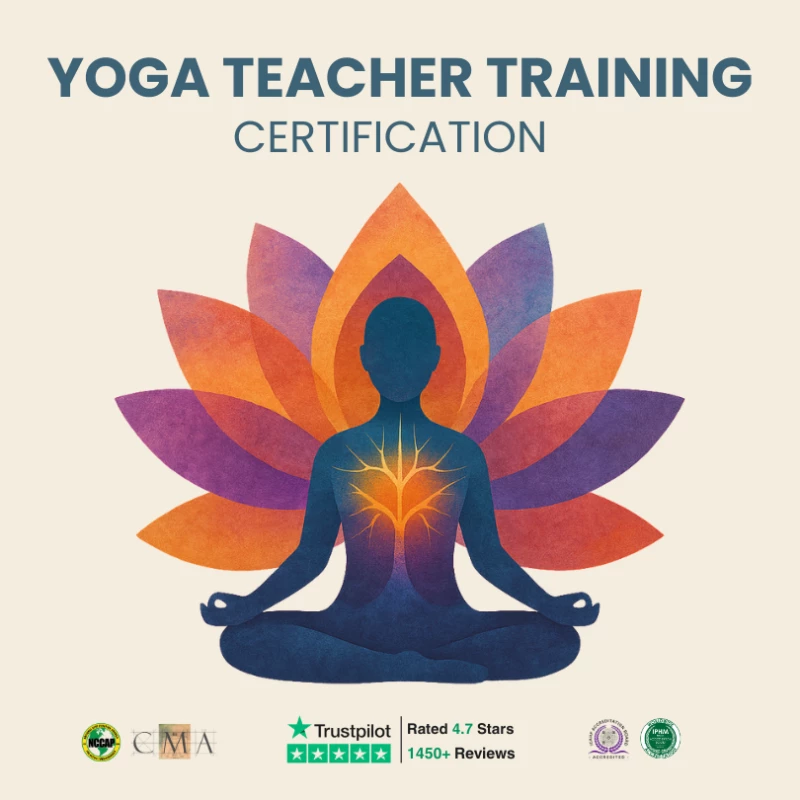
Explore Yoga Teacher Certification
Bring these five checks to life with Yoga Teacher Certification as you build safe, inclusive, teachable class skills.
Explore Yoga Teacher →