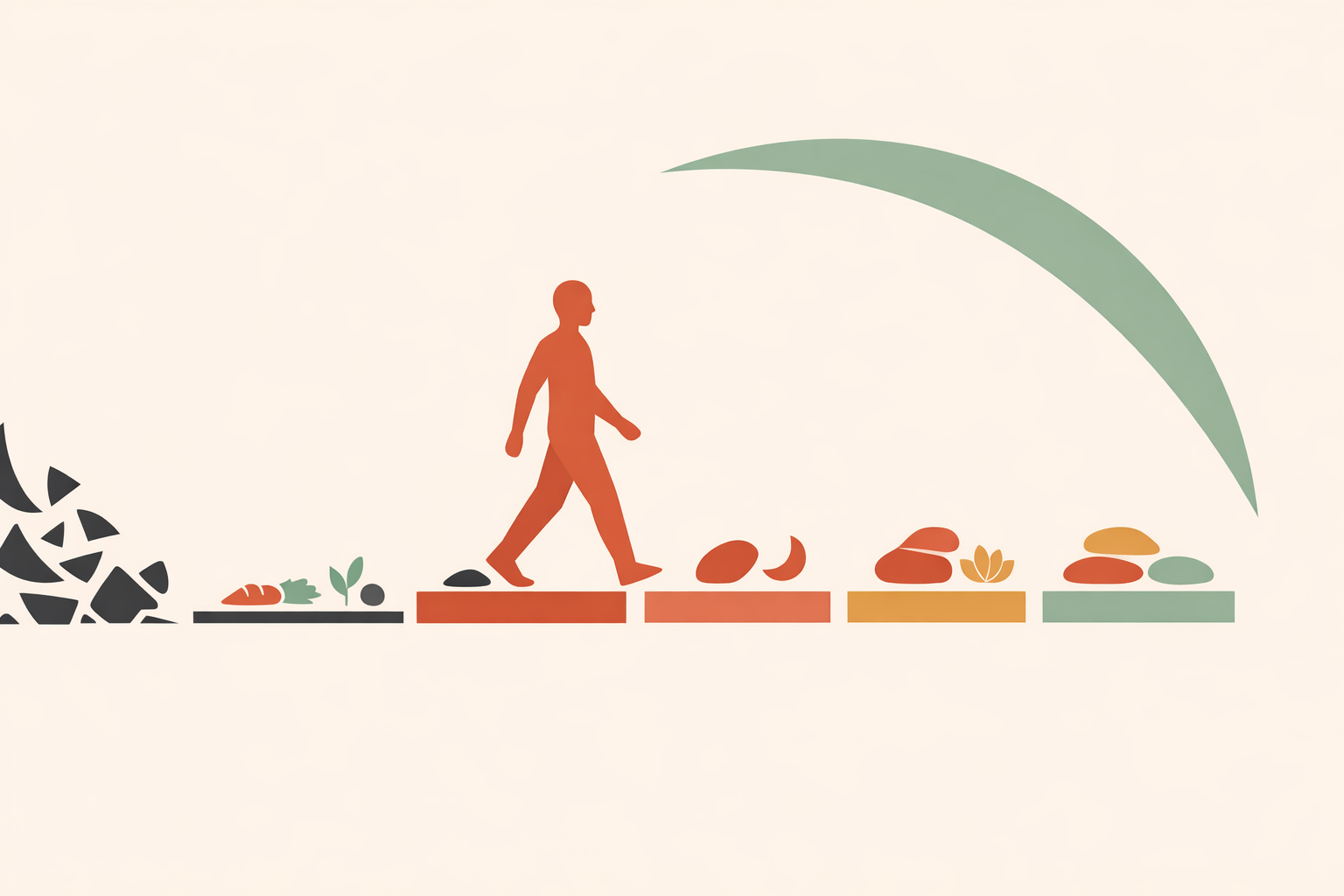
When clients describe feeling “creaky,” it’s easy for coaches to reach for scary explanations or complicated plans. Those approaches can create pressure and stall momentum. A steadier, more helpful story is one clients can recognize in their own lives: the body does best when everyday challenge and real recovery stay in balance.
Key Takeaway: Oxidative stress offers a practical, scope-appropriate way to talk about aging without fear. The most coachable plan usually focuses on four areas: plant-forward meals, appropriately dosed movement, steady sleep and stress rituals, and small environmental shifts. Together, these habits support energy, recovery, and long-term well-being more reliably than one-off fixes.
Oxidative stress as a practical aging story
Oxidative stress is a clear bridge between daily habits and the way people feel over time. Scientifically, it describes an imbalance where reactive oxygen species outpace the body’s defenses and begin affecting lipids, proteins, and DNA. In day-to-day language, it’s the wear clients notice as slower recovery, lower resilience, and less steady energy.
This matters because it shapes healthspan: the years when someone feels capable, independent, and engaged. That idea tends to land far better in coaching than abstract longevity talk, because clients want to feel more like themselves in ordinary life.
The goal also stays balanced. Some oxidative activity is part of normal adaptation, and the aim isn’t to eliminate it—it’s to reduce chronic overload that builds when food, movement, sleep, stress, and environment all pull in a draining direction. That’s exactly why it’s coachable: small choices can shift the body’s wear-and-repair rhythm over time.
A simple script often lands well: “Your body can handle challenge. What it needs is enough support to recover from it. Our plan is to lower the background strain and build the habits that help you bounce back.”
How to explain redox balance without fear
A fear-free frame is straightforward: the body becomes more resilient through wise challenge followed by real recovery.
This is the essence of hormesis. Short, manageable stressors—like brisk walking or strength work—create a temporary oxidative pulse, and exercise-induced oxidative stress is part of how the body builds stronger antioxidant defenses. In coaching terms, the focus is the right dose for the person in front of you.
Mitochondria sit near the center of this conversation because they respond to rhythm. Light exposure, movement, meal timing, and sleep influence how efficiently the body produces and uses energy. Traditional practice has long taught this through routine: rise with light, move daily, eat real food, and let evenings soften.
Clients usually grasp this quickly when it’s framed as pattern. When someone is under-moved, under-rested, overstimulated, and irregular with meals, the body often feels noisier. As those basics steady, many people notice calmer energy, better recovery, and more resilience.
Habit shift 1: Plant-forward meals that reduce background strain
Food is often the best place to begin because it’s daily, familiar, and culturally rooted. A plant-forward pattern doesn’t need to be trendy; it can start with beans, greens, herbs, roots, grains, olives, broths, and other staples already present in a family’s food memory.
Plant-rich diets provide vitamins, minerals, and polyphenols that support antioxidant defenses. In older populations, plant-forward patterns are also linked with lower oxidative markers. Practically, that makes plants a strong first lever when a client feels run down or disconnected from nourishing meals.
Mediterranean-style eating is one familiar example, but the principle travels across cuisines: meals centered on legumes, whole grains, nuts, greens, aromatic herbs, and quality oils tend to create a steadier foundation. Many practitioners also find extra virgin olive oil, especially robust, phenol-rich varieties, fits naturally as part of the larger pattern.
Keep the coaching prompt simple and heritage-aware:
- Ask, “What did your family eat on ordinary weekdays?”
- Rebuild one of those meals with today’s schedule in mind.
- Add more plants before removing foods.
- Use herbs, bitters, and traditional seasonings to keep it familiar.
A useful micro-habit: add beans or lentils to two meals this week, and include a generous serving of greens or colorful vegetables with one main meal each day.
Habit shift 2: Movement hormesis for resilience and recovery
Movement supports redox balance best when it’s consistent enough to stimulate adaptation and gentle enough to recover from. That middle path is where many clients thrive.
Appropriately dosed training builds resilience over time. Sedentary living often travels with higher oxidative strain, while regular movement tends to buffer it. Walking, carrying, climbing, squatting, reaching, and light strength work all fit naturally into a supportive routine.
For many people, the most effective plan is also the least dramatic:
- Short walks, especially after meals
- Two or three brief strength sessions each week
- Mobility or floor-based movement to reduce stiffness
- One enjoyable activity tied to culture, community, or play
If a client wants structure, conversation-pace aerobic work plus basic resistance training is a solid start. Consistency often beats intensity bursts followed by long gaps, especially later in life.
A sample week might look like this:
- 10-minute walks after one or two meals each day
- Two 15–20 minute strength sessions with sit-to-stands, wall push-ups, step-ups, and carries
- One longer walk, garden session, or dance session on the weekend
The guiding principle is simple: finish sessions feeling worked, not wrecked. When the dose fits, clients often notice better sleep, steadier mood, and less stiffness before they ever think about “fitness.”
Habit shift 3: Sleep and stress rituals that support repair
Recovery is where the benefits consolidate. When food lowers background strain and movement builds resilience, sleep and stress rituals help complete the cycle.
Nightly routine matters because repair follows rhythm. Many practitioners observe that when light exposure, meal timing, and sleep timing become more regular, clients feel less “wired and tired.” Irregular sleep patterns, by contrast, commonly show up alongside heavier strain and poorer recovery.
Stress practices matter for similar reasons. In older adults, steadier stress regulation and more stable immune signaling often move together. Breathwork, meditation, prayer, humming, quiet walking, and reflective evening rituals can all help soften the internal pace of the day.
There is no need to make this elaborate. A few repeatable cues are enough:
- Dim lights at the same time each evening
- End screens earlier than usual
- Take a warm shower or rinse
- Use five minutes of slow breathing or quiet sitting
- Keep a simple bedtime anchor such as tea, journaling, poetry, or prayer
Where appropriate, traditional practices can be beautiful supports, offered respectfully and without shallow borrowing. Often the best ritual is the one the client already knows from home.
Habit shift 4: Environment, community, and meaning as hidden levers
Not all oxidative load comes from food and pacing. The wider environment shapes background strain, too.
Air pollution, tobacco smoke, and certain chemical exposures can increase oxidative load. Clients can’t control everything, but small shifts can still make a meaningful difference over time.
Useful places to start include:
- Opening windows when outdoor air is favorable
- Using a kitchen fan while cooking
- Reducing smoke exposure
- Swapping one harsh household product for a gentler option
- Spending more time in natural light during the day
Light and temperature cues also shape how people feel. Morning light, cooler evening conditions, and mild heat or cold exposure are used across traditional and modern wellness settings to support rhythm and resilience. These don’t need to be intense to be useful; consistency does most of the work.
Community and meaning matter just as much. Habits stick when they feel relational: a shared walk, a recurring family dish, time outdoors with a neighbor, or a weekly practice tied to purpose. In real life, belonging often holds routines in place.
Bringing oxidative-stress habits into coaching practice
The coach’s role is to turn the big picture into a manageable weekly plan. Most clients do best when they choose one action from a few categories, rather than trying to overhaul everything at once.
A practical framework is:
- One food shift
- One movement shift
- One recovery shift
- One environmental or social shift, if capacity allows
For example:
- Add lentils to lunch twice this week
- Walk for 10 minutes after dinner four days this week
- Dim lights by 9:30 p.m.
- Open the kitchen window when cooking or invite a friend for a weekend walk
Tracking can stay light. A weekly page with a few markers is usually enough:
- Energy on waking
- Afternoon slump
- Sleep timing and wake-ups
- Walks and strength sessions completed
- Meal quality
- Stress level
- Sense of connection or purpose
This style of tracking keeps attention on lived outcomes rather than perfection, and it helps clients see how small changes can shift the whole week.
Clear boundaries matter as well. Coaches can support habits, routines, accountability, and reflective observation. When questions move into supplements, advanced protocols, lab interpretation, or anything that may intersect with a client’s licensed support team, collaboration and referral are the right next steps.
Conclusion
Oxidative stress is most useful when it helps clients understand their lives more clearly, not when it frightens them. Some wear is normal, and chronic overload is optional. Food, movement, sleep, environment, and connection all shape how gracefully the body handles the demands of time.
Traditional lifeways have long pointed toward the essentials: plant-rich meals, daily movement, evening rhythm, fresh air, natural light, and community. Modern evidence supports many of these patterns, and practitioners also see their value play out in real lives.
For coaches, the work is to make that wisdom doable and respectful of the client’s culture and capacity. Choose a few steady actions, tie them to real routines, and let small wins build momentum. Over time, that approach supports more ease, better recovery, and a broader healthspan grounded in daily practice.
Train as a Longevity Coach
Apply these oxidative-stress habit frameworks with confidence in the Longevity Coach Certification.
Explore Longevity Coach Certification →