It’s easy to fill a group program with calls and content. It’s harder to create changes people can feel in their calendar, relationships, and energy. Many labs start strong, then drift: one person takes most of the airtime, experiments stay theoretical, and the move from one-to-one to groups starts to feel like “more reach, less depth.”
The issue is rarely motivation. It’s structure.
Key Takeaway: A strong systems-based group lab focuses on one clear life-system shift, uses a repeatable insight-to-experiment rhythm, and creates enough structure for participants to learn from one another without losing depth. The most effective labs are specific in their promise, light but steady in their support, and grounded in clear scope, respectful facilitation, and practical follow-through.
Why systems-based coaching works so well in group labs
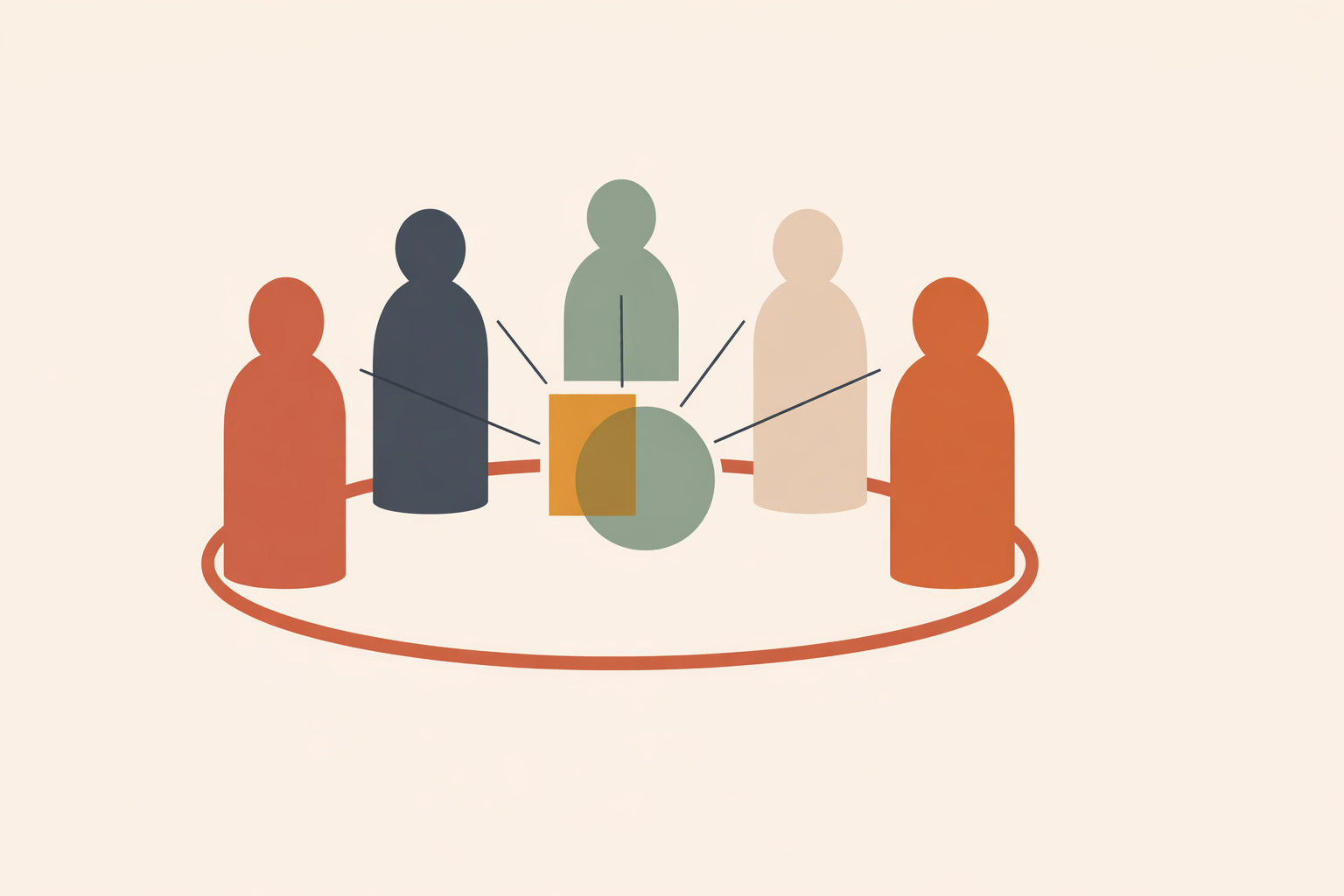
Systems-based coaching fits groups beautifully because patterns get easier to spot when more than one person is looking. What feels tangled in solo reflection often becomes clear in a circle.
One participant names a loop of overwork and resentment, another notices what’s reinforcing it, and the group helps shape a small experiment that’s realistic enough to try this week. That’s where group work shines: multiple perspectives speed up recognition and learning in a way that’s hard to recreate alone.
As participants test changes and report back, each person’s week becomes shared learning. The lab turns into a living practice space: map, experiment, review, refine.
For many holistic practitioners, this approach also resonates with traditional ways of understanding well-being. People aren’t separate from their relationships, responsibilities, rhythms, or surroundings. Systems work keeps change in context, which is how many communities have made sense of balance and growth for generations.
In practice: In a boundaries lab, one participant maps a loop: “say yes to extra tasks → less rest → irritability → overcompensate by saying yes again.” A peer notices that fear of disappointing someone is part of the loop. Together, the group designs one small test: one clear “no,” paired with a respectful repair message if needed.
Define one clear transformation
The fastest way for a lab to lose its power is to promise too much. Broad outcomes create lots of insight, but not enough visible movement.
Choose one system for participants to shift, and keep it concrete. “Design a regenerative weekly rhythm” is clearer than “improve time management.” “Move from reactive conflict to steadier repair at home” gives more direction than “have better relationships.”
Then define what “done” looks like. This gives the lab a clean shape, keeps messaging honest, and helps you facilitate with focus.
- Example transformation: Design a regenerative week.
- Definition of done: By the end of the lab, participants have a repeatable weekly planning ritual, can identify their main energy drains and restorers, and have completed at least one boundary experiment with reflection on the results.
A clear finish line also clarifies scope: what belongs inside the lab, and what doesn’t.
From there, build supports that serve the journey rather than padding the offer. A simple mapping workbook, a shared check-in space, and an experiment log are enough when they consistently point back to the central shift.
Use a weekly rhythm that turns insight into movement
Most labs get better when they run on one repeatable cycle. Instead of trying to do everything each session, guide people through a steady sequence: notice the pattern, map it, choose one leverage point, run a small experiment, and review what happened.
Insight rarely changes a system on its own. A lab works when it reliably turns understanding into action, week after week.
A practical flow often looks like this:
- short teaching or framing
- collaborative mapping
- reflection on consequences and reinforcing loops
- selection of one small lever
- commitment to an in-life experiment
- report-back and review the following week
This keeps the group from becoming interesting but diffuse. The group doesn’t just discuss patterns; it tests them.
Keep experiments small and specific. Follow-through is more likely when the action is doable inside real life.
- Sample 8-week arc:
- Week 1: group agreements and simple mapping of what repeats
- Week 2: loops and leverage points
- Week 3: boundaries as system signals
- Week 4: energy drains and restorers
- Week 5: relationship ripples and repair
- Week 6: work rhythms, bottlenecks, and constraints
- Week 7: maintenance loops that support consistency
- Week 8: consolidation and review of the definition of done
In practice: A facilitator might say, “Choose the smallest action that could influence the wider loop. Not the perfect action. The smallest meaningful one.”
Choose the right group size and support level
For most labs, 8–12 participants tends to be the sweet spot. It brings enough diversity of experience for rich mapping, while staying intimate enough for honest sharing and tailored feedback.
An 8-to-12-week container also suits this work. It gives enough time for multiple experiment cycles without losing momentum.
Sessions don’t need to be long. A clear arc matters more: orient the group, map and coach, set the experiment, and close with commitments.
Between sessions, light scaffolding usually supports follow-through better than constant contact.
- Simple between-session support can include:
- a midweek check-in prompt
- short voice-note reflections
- one experiment log template
- an optional accountability thread
This keeps the group connected while supporting participants’ self-trust and ownership.
Price your lab with integrity
Pricing works best when it reflects the container you can truly hold well. Start with your real costs, available time, and capacity, then set a number you can stand behind.
Price around structure and support: the depth of facilitation, the clarity of the journey, and the level of access participants receive.
If you offer tiers, keep the differences clean and easy to compare.
- Base Lab: weekly group sessions, shared space, and core templates
- Lab + Focus: the group journey plus a small number of one-to-one support sessions
- Extended Integration: the core lab plus a short integration period or added feedback on participants’ maps and experiments
The distinction should be about access and support, not about whose well-being matters more. If you add a higher-touch option, cap it tightly so you can deliver it with care.
Clear pricing language also helps participants choose quickly and confidently, which tends to make enrollment feel cleaner on both sides.
Create clear boundaries for a safe group container
Scope is part of good facilitation. A systems-based lab is designed for exploring patterns, relationships, habits, and small experiments. It isn’t the right container for acute crisis or overwhelming distress. Strong group guidance consistently emphasizes clear screening and redirecting people toward more appropriate support when the group format isn’t a fit.
This can be clear and kind without being heavy. Participants relax when they know the edges of the container.
Brief, specific agreements make those edges easy to uphold.
- Useful group agreements:
- confidentiality: share the learning, not someone else’s story
- consent: ask before giving direct feedback or continuing a line of inquiry
- non-blame: map structures and patterns rather than assigning fault
- turn-taking: make room for all voices
- self-responsibility: step back when needed and rejoin when ready
In systems work, language shapes what becomes possible. Non-blaming phrasing protects dignity and keeps the group focused on what can shift.
It also helps to remember the facilitator is part of the system. In groups, pacing, boundaries, and response style can reinforce old dynamics or gently interrupt them. Solid guidance notes that leaders’ actions can shape group patterns, which is why steadiness matters.
In practice: If a participant starts spiralling into blame, you might say, “Let’s slow the loop down. What tends to happen next? And what comes after that? Where do you still have one point of choice?”
Honour cultural roots without appropriation
Many practitioners love systems work because it echoes older communal ways of making meaning. People have gathered in circles for reflection, witnessing, and shared learning for a very long time. It’s worth acknowledging that lineage with respect, rather than presenting collective inquiry as newly invented.
Respect also means discernment. Learning from communal wisdom traditions is different from borrowing rituals, symbols, or language without context or relationship.
A grounded approach is usually simple:
- be transparent about what practices are yours and what are not
- name lineage where appropriate
- avoid stylised rituals you do not have relationship with
- if a lab includes traditions beyond your own, involve culture-bearers respectfully and compensate them fairly
- keep the group rooted in humility, context, and consent
You don’t need to imitate another culture’s forms to create depth. A plain, sincere orientation to the space and shared intentions is often enough.
This wider framing can also be freeing for participants. When a struggle is seen in its larger context rather than as a personal flaw, defensiveness softens and curiosity returns.
Launch simply and refine from practice
A first lab doesn’t need a perfect curriculum. It needs one clear transformation, a repeatable weekly structure, and a container you can hold steadily.
Start small enough to notice what’s working, then refine from direct experience.
- A practical launch sequence:
- choose one life system to focus on
- write a one-sentence promise and a definition of done
- build an 8-to-12-week arc around one repeatable experiment cycle
- set transparent inclusions, pricing, and boundaries
- use a simple intake process to confirm fit
- pilot the lab and refine from feedback and observation
During the pilot, keep tracking simple. Weekly experiment completion and participants’ confidence with mapping will tell you plenty.
Bring integrity to the structure, and let the group do what circles have always done: help people see themselves more clearly, supported by community and accountable to real-life practice. Start with one shift, hold it well, and let what you learn guide the next version.
Master Systems-Based Coaching
Deepen your lab design skills with the Systems Based Life Coaching Certification.
Explore Systems Based Life Coaching →