Mid-session, you can feel the room tilt: a client’s breath shortens, their voice sharpens, and their story speeds up. In that moment, more language is not always the answer. A short, body-first reset is often the steadier move—simple, portable, and easy to repeat.
Three-minute grounding can be a practical DBT-informed way to help clients reconnect with the present so they can respond with more choice. Used well, it does not shut feelings down. It gives them somewhere to land.
Key Takeaway: A brief grounding sequence can help clients steady attention and reconnect with Wise Mind in the middle of intensity. The most reliable versions are simple: start with orienting to the room, then use contact points like feet and chair, then add sensory structure, breath, or gentle movement if that feels supportive. The goal is not to erase emotion, but to help clients return to choice.
Why brief grounding belongs in a DBT-informed practice
Short grounding works because it’s usable in real life. Clients don’t need props, privacy, or perfect conditions. They need something they can remember and reach for when stress rises.
In a mental health frameworks approach, grounding sits naturally alongside distress tolerance. It helps shift someone from being swept up in an inner storm to noticing what’s here now. That small pause often makes Wise Mind more available.
Three minutes is a helpful frame rather than a hard rule. It’s short enough to use during conflict, on a commute, before a difficult conversation, or as a quick check-in during a session. Some breathwork guidance notes shifts with 5 minutes of slow breathing, but many clients build consistency faster with shorter rituals they’ll actually repeat.
That repeatability is the point. Frequent, brief resets can become everyday self-support rather than something saved for emergencies. Over time, clients often notice activation earlier and return to the room before overwhelm builds.
A simple in-session version might sound like: “Let’s pause for a short reset so your body does not have to carry this alone.” Then guide orienting, contact with chair and floor, and one or two slower exhales before returning to the conversation.
What physical grounding is
Physical grounding is the deliberate use of sensation, contact, and attention to reconnect with the present moment. It draws awareness out of a spiral and into something concrete: the floor under the feet, the chair at the back, the sounds in the room, the color of the wall.
Many people feel that shift within minutes. The aim isn’t forced calm. The aim is enough steadiness to notice what’s happening without being consumed by it.
Two dynamics often make grounding effective:
- It gives attention a task. Structured sensory noticing competes with rumination for limited mental bandwidth.
- It shifts focus outward. Moving from internal overwhelm to external supports can soften an “inside-only” loop of distress, as described in grounding guidance.
Grounding is not avoidance. Done well, it makes space for emotion while keeping the person connected to the present.
A useful teaching line is: “We are not getting rid of the feeling. We are helping your body find the room again.”
Start outside: orienting, consent, and steadiness
When a client is highly activated or foggy, starting outside the body is often the gentlest entry point. Before asking someone to track inner sensation, help them reconnect with the environment.
Begin with consent and collaboration: “Would it help to look around the room together for a few seconds?” That small invitation supports predictability and choice.
Then orient slowly. Invite the client to let their eyes move around the space, land on a few neutral objects, and name where they are right now. Adding the date, time of day, or one detail about the room can strengthen the sense of location.
For some people, eyes-closed practice or immediate inward focus increases agitation or detachment. In those moments, staying with external-only grounding is often the best adaptation.
Match the first step to what you’re seeing:
- Panic or high activation: begin with sight and sound, then add feet pressure.
- Shutdown or dissociation: keep eyes open, name place and time, then notice the chair.
- Rumination: use a structured sensory task such as 5-4-3-2-1.
For neurodivergent clients, predictability helps. A simple frame like “We’ll try three short steps, and you can skip any of them” often makes the practice easier to trust.
Use feet, seat, and gravity as your first anchor
Once the client has oriented to the room, pressure is often the next easiest anchor. Gravity is already doing its job, and the body can usually find contact without much effort.
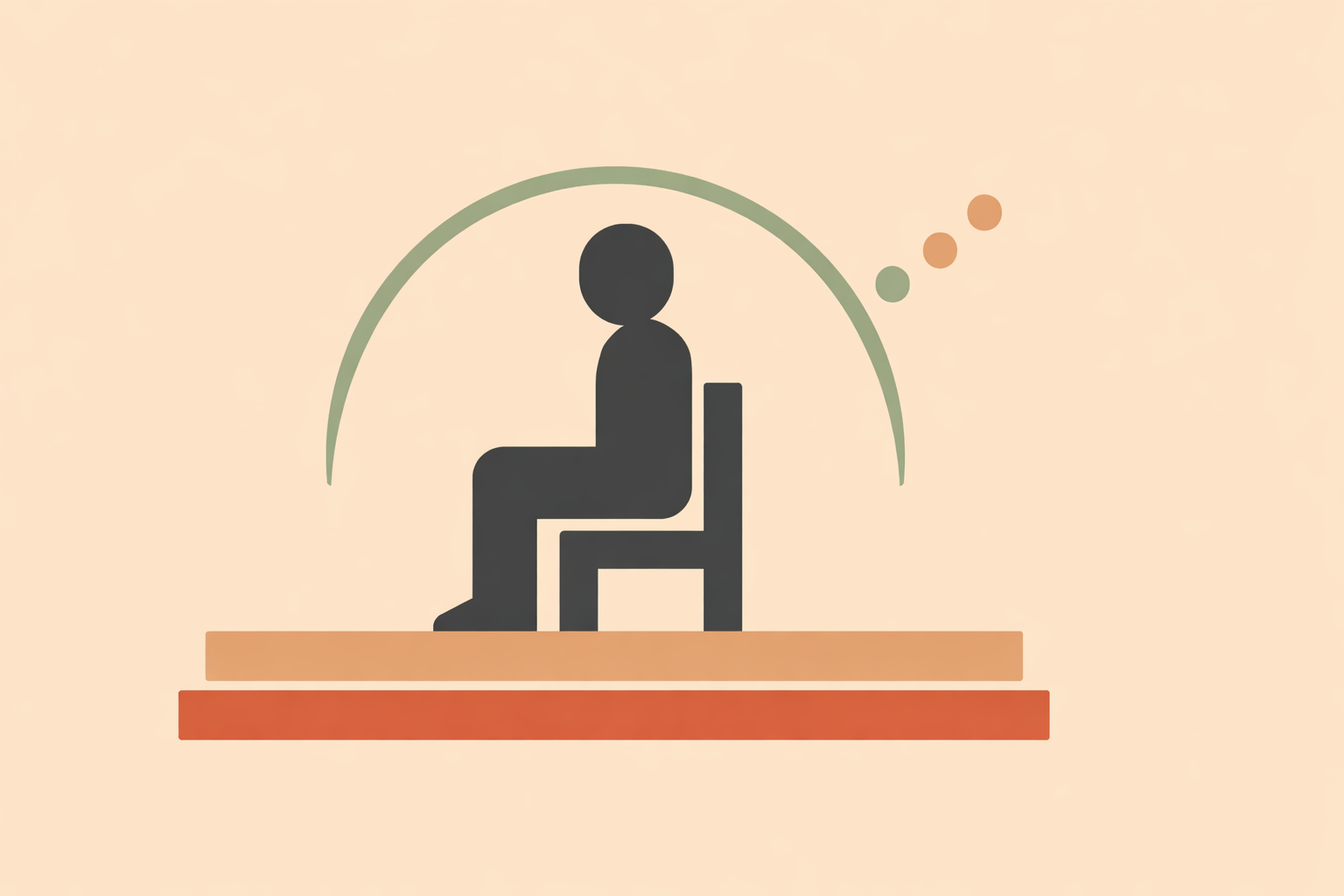
Invite the client to press both feet into the floor and notice what presses back. Then shift attention to the chair: thighs on the seat, back against support, arms on armrests, or hands resting on the legs. These contact points are common in grounding practices.
A short sequence is often enough:
- Feet: press down for a slow count of five, then release.
- Chair: notice where the body meets support.
- Sight: name three things in the room.
This pressure-based approach often helps clients feel more located. Many describe a quiet sense of “I am here, and something is holding me,” which is why it works well early in a reset.
Small movements can deepen the anchor. A gentle heel-to-toe rock, press-and-release through the feet, toe wiggles, or a soft push through the hands can make contact and support easier to notice without flooding the system.
Use the senses: 5-4-3-2-1 and structured noticing
When the mind is looping, structure helps. The 5-4-3-2-1 method gives attention a clear job: notice five things you can see, four you can feel, three you can hear, two you can smell, and one you can taste. Major health education sources describe the 5-4-3-2-1 technique as a quick way to return attention to the present.
Pacing matters. Instead of rapid-fire naming, slow down and pause with each item. Notice color, shape, texture, distance, brightness, or temperature, as suggested in guidance on slow noticing.
You can script it simply:
- Five things you can see.
- Four things you can feel.
- Three things you can hear.
- Two things you can smell.
- One thing you can taste.
Adapt freely. If smell or taste isn’t accessible, skip them. If a client benefits more from describing one object in detail than finishing the full sequence, follow what supports steadiness.
This kind of granular noticing can be especially supportive when shame or overthinking has narrowed perception. As the room becomes more vivid, the inner story often loosens.
Tension and release for anger, agitation, and stuck activation
Not every client needs stillness first. Sometimes activation wants a safe channel. Brief tension-and-release can help the body discharge intensity and find a clearer baseline.
Progressive muscle relaxation has been associated with reduced physiological arousal, and many practitioners adapt the same principle into short grounding sequences.
Try one or two simple contrasts:
- Clench fists for five seconds, then release.
- Lift shoulders slightly, then let them drop.
- Press toes into the floor, then soften.
- Push palms gently into a wall, then notice the rebound.
These actions help clients feel strength, boundary, and support without acting outwardly on the intensity. They’re especially useful when anger, urgency, or restlessness makes seated stillness feel unreachable.
Keep the dose small: a little effort, then a clear release. If something feels too sharp, shift to a gentler option such as feet pressure or alternating hand presses on the thighs.
Breath and gentle movement: use them carefully
Breath can be powerful, but it lands differently for different people. For some, breath focus brings steadiness; for others, it increases discomfort or panic. Good practice is responsive practice.
When breath feels supportive, start with a longer exhale. Research on prolonged expiratory breathing suggests parasympathetic activation, which fits what many practitioners observe in real sessions.
You might offer:
- Inhale naturally, then exhale a little longer.
- Try two or three softer, slower exhales.
- If counting helps: inhale for four and exhale for six.
If dizziness, chest pressure, or panic rises, stop and switch anchors. Breathwork safety guidance warns that some practices can trigger dizziness and discomfort, especially when breathing becomes forced.
Gentle movement can be an excellent alternative or addition. Mindful walking, slow swaying, or standing and noticing weight shift from one foot to the other can combine motion with present-moment attention. This often supports clients who settle faster through movement than through stillness.
It’s also worth holding these practices with cultural respect. Breath and walking rituals have deep roots across traditions. Use them with humility, avoid flattening lineages, and make space for clients to draw from what is meaningful in their own background.
How to weave a 3-minute reset into sessions and daily life
Grounding becomes more useful when it’s predictable. Rather than reinventing the wheel each time, build a simple sequence you can return to.
A reliable arc is:
- Orient to the room.
- Notice contact with the floor or chair.
- Add sensory structure, breath, or muscle contrast if helpful.
If one anchor isn’t landing after about a minute, switch instead of forcing it. A client who doesn’t like breath focus may respond quickly to feet pressure. A client who finds body focus too intense may do better with visual naming.
Track simple markers. Continue when the room feels more real, speech slows, breath softens, or the client notices more external detail. Pivot when distress rises, detachment deepens, or the exercise starts feeling effortful.
Your presence matters. An unhurried pace, grounded posture, and steady voice often shape how well the reset lands. Clients borrow steadiness from us before they can generate it alone.
Normalize micro-doses between sessions: one minute of feet-and-chair contact before opening email, three named colors before a meeting, or two longer exhales before walking into the house at the end of the day. Repetition turns a skill into a habit.
Closing perspective
Three minutes isn’t magic, and grounding won’t look the same for everyone. Still, brief, consent-based physical grounding can change the direction of a moment and bring a client back to choice.
Start simple: orient first, use gravity and contact, then bring in the senses. Add breath or movement when they genuinely support the client in front of you. Keep it collaborative, adaptable, and respectful of each person’s way of processing.
Use care with breath-focused practices for clients who are prone to panic, dizziness, or breath sensitivity, and keep cultural roots in view when drawing from traditional rituals. Practiced this way, grounding becomes a repeatable ritual of returning—steady, humane, and deeply useful in real life, including within Dialectical Behavior Therapy work.
Deepen DBT Grounding Skills
Explore the Dialectical Behavior Therapy Certification to strengthen DBT-informed grounding and distress tolerance tools for real-life moments.
Explore the DBT Certification →