


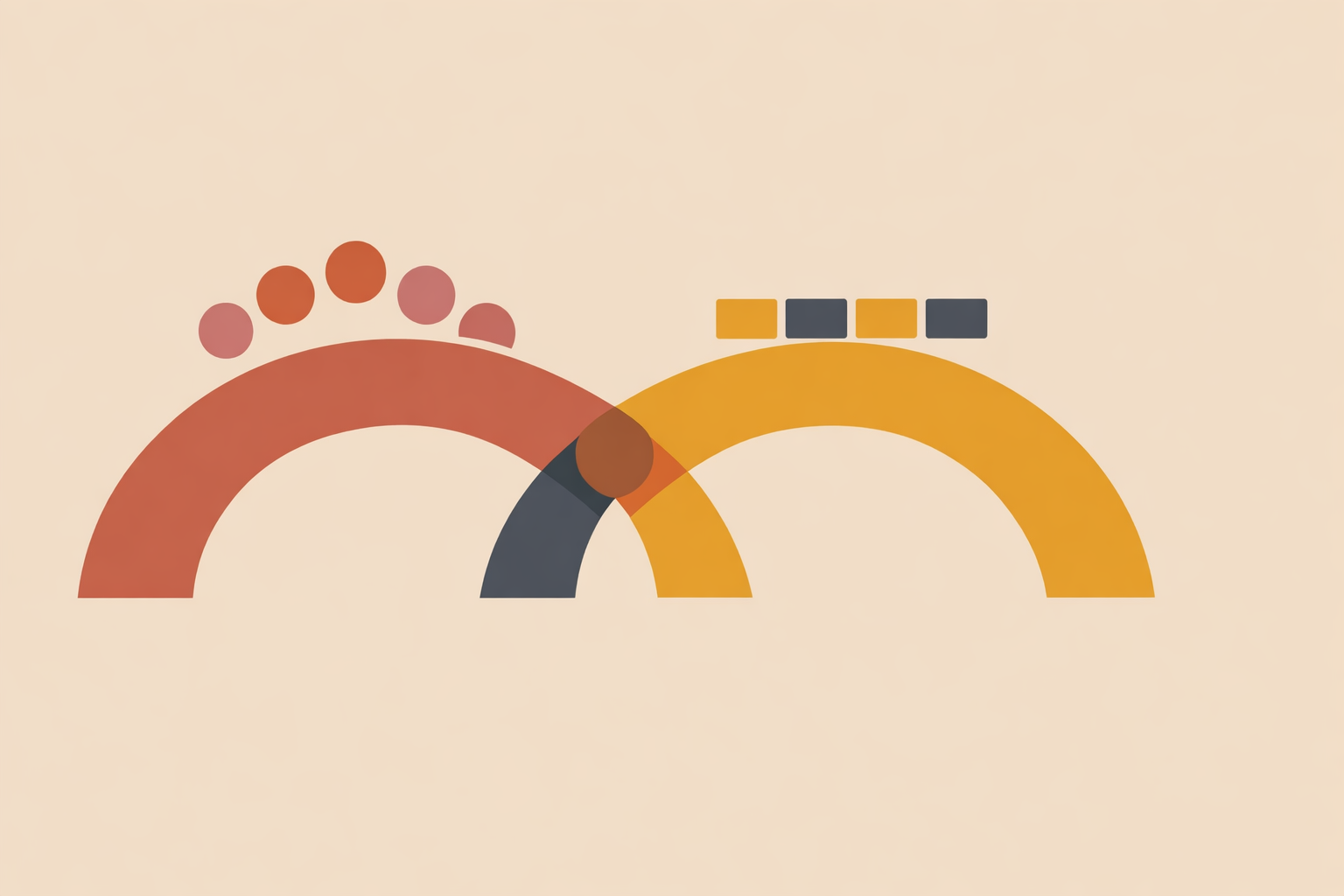
Many practitioners and school teams recognise the pattern: a child makes real gains in play-based sessions, then those same skills seem to vanish during circle time, transitions, or on the playground. Often, it’s not about the child’s ability—it’s about the bridge between a supported session and a busy school routine. Skill transfer is not automatic, and broad IEP goals can unintentionally widen the gap.
When play-based support is built around functional classroom goals—using shared visuals and everyday language—progress is far more likely to show up across the whole day. Play stops being a “separate win” and becomes part of how a child participates, communicates, and settles into school life.
Key Takeaway: Skill transfer from play sessions to school routines improves when play targets the same functional IEP goals children need all day. Choose a few observable behaviours, practise them in repeatable play loops, use consistent cues and visuals across settings, and track carryover with brief real-world observations.
Why aligning play-based sessions with classroom IEP goals matters
When session goals match what a child is genuinely being asked to do at school, progress becomes easier to notice—and much easier for adults to reinforce. A child who practices waiting, requesting help, shifting attention, or taking turns in play is more likely to use those same skills during arrival, circle, centres, snack, or outdoor play when the structure feels familiar.
That starts with functional goals. Strong IEP practice prioritises goals that are specific, measurable, and functional—the kinds of skills you can actually see in real routines, not just in formal tasks.
Misalignment often shows up in small but powerful ways: different visuals in different places, different phrases from different adults, or goals that sound good on paper but are hard to spot in the moment. When home, school, and sessions run on parallel tracks, generalisation becomes fragile. When everyone shares the same direction, skills tend to settle and stay.
“Play therapy is an evidence-based therapeutic technique that uses play to help children express emotions, explore their thoughts, and overcome psychological challenges.”
The shift is simple: choose goals that truly belong to the child’s day, then build play around those exact moments.
Play is a relationship-first communication space
Play isn’t just recreation. For many children—especially those who find conventional verbal formats difficult—play is one of the clearest ways to communicate, connect, and show readiness for interaction.
Reviews describe play as supporting social interaction, communication, and emotional regulation for autistic children. And from a traditional, relationship-led lens, that makes perfect sense: play allows expression through movement, rhythm, gesture, gaze, repetition, and shared attention—long before “good talking” appears.
The American Academy of Pediatrics describes play as essential to development, learning, and social-emotional growth. Essentially, play is one of childhood’s primary learning languages.
For practitioners, this changes the stance. Rather than pushing play into a narrow definition of “correct,” it becomes a place to notice how a child enters interaction, what they return to, what supports reciprocity, and where delight appears. Think of it like listening carefully before choosing what to teach.
“Play therapy is a specialized area of practice and a way to relate to clients who are unable to verbalize their feelings.”
When play is treated as communication, IEP goals become much easier to translate into lived moments—not abstract targets.
How to read the IEP through a play lens
The most useful IEP goals for play-based work are the ones you can clearly see, prompt, and repeat in natural interaction. If a goal can’t be spotted in a short real-life moment, it’s usually too broad to guide play effectively.
Start by looking for targets linked to participation. Inclusive planning recommends goals embedded in typical classroom activities so children can access and join everyday routines more fully.
Four areas translate especially well into play:
- Joint attention: sharing focus, following a point, showing, pointing, or checking in with a partner. Joint attention is often described as a pivotal skill for social-communication.
- Communication: requesting, commenting, choosing, asking for help, or using visuals meaningfully.
- Regulation: waiting briefly, shifting activities, recovering after frustration, or using a calming support.
- Participation: joining a game, staying with a shared activity, taking turns, or following a simple sequence with support.
Then go smaller. In everyday practice, a few strong targets rehearsed often will usually carry farther than many scattered targets touched once in a while. Choose what will make the biggest difference to the child’s day and write it in plain, observable language:
- Looks when I point
- Uses picture to ask for bubbles
- Waits with timer
- Rolls the ball back
- Chooses between two options
- Stays in the group song for one verse
These are play-ready goals: concrete, repeatable, and easy to weave into interaction.
Turning IEP goals into play themes and repeatable interaction loops
Once the target is clear, the next step is to turn it into something a child can do inside a joyful exchange. A simple structure works well: invite, wait, respond, repeat.
For joint attention, child-led, floor-level play is often the easiest doorway. Following a child’s interests can support joint attention and engagement. If a child loves ramps, trains, spinning tops, or figures, start there—then add tiny invitations: point, pause, show, hide, reveal.
For imitation and reciprocity, mirror the child’s sounds or movements, then pause and make space for a return. Early interaction work often uses imitation and turn-taking to grow back-and-forth connection. Put simply, you’re building the rhythm of “you, me, you, me.”
For regulation, sensory play can create the readiness needed for shared moments. Water play, dough, jumping, sand, or simple obstacle courses can help modulate arousal and attention, which often leads to steadier participation.
For communication, mirror classroom tools whenever possible. Choice boards, photo symbols, and first-then cards can reduce strain and increase clarity. Visual supports are widely used to understand expectations and support independence in routines.
For requesting and initiation, create gentle opportunities: place a desired toy in a clear container, hold back one needed piece, or pause right before a favourite action. This kind of set-up can increase requests and initiations.
What matters most is repetition without dullness. Keep the structure stable, then vary the materials, pacing, and tone so the child stays engaged.
“Play therapy is an evidence-based therapeutic technique that uses play to help children express emotions...”
Embedding play-based goals into the school day
Play-based support becomes far more powerful when the same cues and interaction patterns show up in everyday routines. If a skill only appears on the mat, it hasn’t fully found its place in the child’s day yet.
Inclusive IEP guidance recommends incorporating goals into daily activities rather than separating them into drills—and play fits that approach naturally.
Practical examples:
- Circle time: use a shared chant for turn-taking, a visual timer for waiting, and clear pointing to the schedule for gaze shifts.
- Centres: place one high-interest item for two children, use the same choice board from sessions, and keep adult language short and consistent.
- Transitions: pair the same first-then card, the same “wait” symbol, and the same transition song used in play-based support.
- Outdoor play: build turns into swings, slides, bubbles, or chasing games with the same familiar phrases the child already knows.
When play sessions track directly to classroom targets, children’s gains are more likely to show up in everyday routines. And in real-world practice, shared cues often reduce friction: one “wait” card, one timer, one turn-taking phrase—used consistently—can make the whole day feel more predictable.
Tracking progress without draining the joy from play
Progress tracking doesn’t need to interrupt connection. Some of the best information comes from brief observations during real activities—captured quickly, then reflected on later.
Authentic assessment in early childhood uses observation and work samples in natural contexts to show growth over time. In play-based work, that might be a quick tally, a photo of a shared sequence, or a short note after the moment ends.
Useful things to track include:
- How often the child shifts gaze to share attention
- Whether they use a visual to request
- How long they can wait with support
- How many back-and-forth turns they manage
- Which routines show the strongest carryover
Keep it light. One page is often enough, and a simple timeline can help families and school teams see steady growth—even when it’s gradual.
School-based play work can make a noticeable difference. One review reported improvements in functioning with weekly school-based play sessions over several weeks.
The purpose of tracking isn’t to formalise every moment—it’s to notice what’s becoming easier, what still needs scaffolding, and where confidence is growing.
Working in partnership with families and educators
Consistency across adults often makes the difference between a skill that appears occasionally and one that truly settles in. When families, educators, and practitioners share language, visuals, and expectations, children usually feel safer—and more willing to use what they know.
Family-school partnership research links collaborative goal setting and communication with stronger outcomes. In day-to-day practice, this can stay refreshingly simple.
Start with shared questions:
- What phrases already help this child settle?
- What games do they love at home?
- Which visuals make sense to everyone?
- What routine is hardest right now?
- What would feel like a meaningful next step?
Then keep carryover realistic:
- One short turn-taking game after dinner
- One shared first-then card used in more than one place
- One classroom phrase used consistently at home and in sessions
- One calming ritual repeated before challenging transitions
When adults mirror each other’s tools and language, support becomes coherent. What this means is the child doesn’t have to decode a new system with every setting change.
“The Association for Play Therapy is THE hub for all things play therapy.”
Community matters too. Practitioners tend to do their best work when they stay reflective, keep learning, and, for those deepening child-centered play therapy skills, remain open to what families and children are showing them.
Honouring traditional and culturally rooted play wisdom
Some of the most powerful forms of play are also the oldest: rhythm games, hand-clap patterns, call-and-response songs, passing games, simple storytelling, and ritualised group play. These practices have supported regulation, belonging, and shared attention for generations—often with no special equipment at all.
Culturally relevant play can support emotional well-being and resilience, and traditional group games naturally encourage turn-taking and engagement. Here’s why that matters: these are exactly the foundations many IEP goals are trying to build—delivered in a form that already feels human and familiar.
In practice, that may look like:
- A familiar family song used as a transition ritual
- A passing game that supports waiting and anticipation
- A rhythmic chant for “my turn, your turn”
- A simple storytelling circle with props and repetition
- A hand-clap game adapted to the child’s pacing and comfort
The key is respect. Ask families what feels like home. Invite them to share games, songs, or stories that matter to them. Credit the source, avoid using sacred elements casually, and don’t flatten living traditions into generic “strategies.”
Thoughtful play isn’t only about skill-building. It’s also about dignity and recognition—creating spaces where children feel safe enough to join in. Skills practised in safety and delight are often the ones that travel the furthest.
Conclusion
When play-based support aligns with classroom IEP goals, session gains are far more likely to become everyday gains. The clearest path is usually the simplest: choose a few functional targets, turn them into short repeatable play loops, use the same visuals and phrases across settings, and track progress through brief real-world observation.
Keep it relationship-led. Follow the child’s interests, respect sensory needs, and build from connection rather than compliance. Honour family culture and traditional forms of play, and use consistency to support carryover—without turning the day into a constant “work-on-skills” project.
A final note of care: children vary widely in sensory needs, communication styles, and support preferences, so it’s worth checking that everyone involved is comfortable with the chosen cues, visuals, and play routines—especially when you’re trying to generalise skills across settings.
Explore Play Therapy Certification
Build relationship-led strategies that help children generalise play-based skills into real routines with Play Therapy Certification.
Explore Play Therapy →










