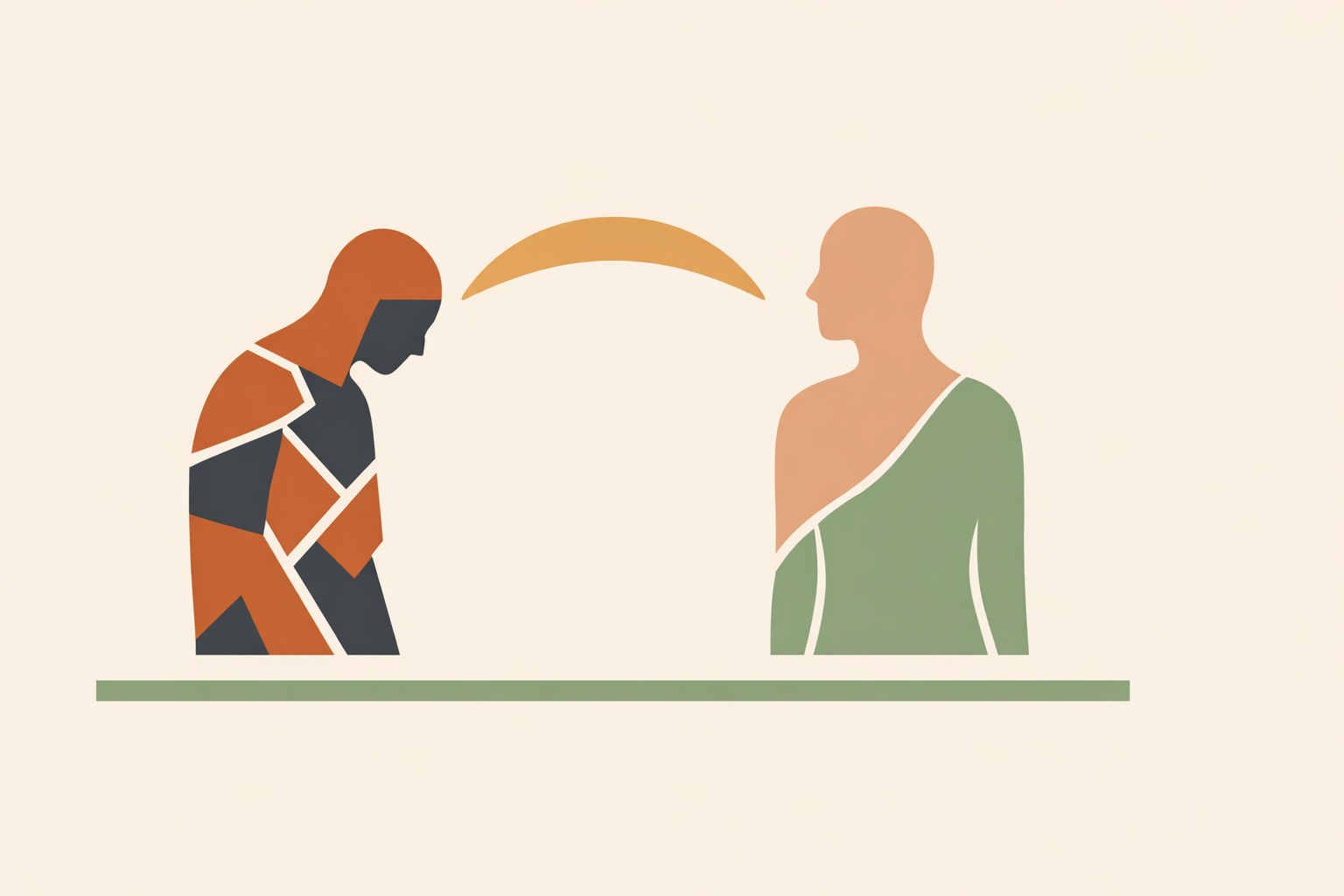
Experienced helpers learn quickly that insight alone does not shift state. A client may arrive collapsed or highly activated; your framework may be sound; and yet the session still stalls. In those moments, the real gatekeeper is often safety. That’s why polyvagal-informed work lands so well in real sessions: it offers clear language for what people already recognize in their lived experience.
Used well, this lens starts with state before story. It helps practitioners pace support more skillfully, choose simpler interventions, and meet protective responses with compassion. It also benefits from humility: some parts are well supported in practice and overlapping research, while some proposed mechanisms remain debated. Both can be true at once.
Key Takeaway: Polyvagal-informed practice works best when you prioritize safety and nervous-system state before insight or narrative. Simple supports like predictable pacing, breath, voice, and co-regulation can increase readiness for connection and reflection, while keeping the model’s more specific neural claims held lightly where evidence is still debated.
Why polyvagal-informed work resonates in practice
Polyvagal-informed work gives everyday language to patterns people have long felt in their bodies. Rather than framing struggle as a mindset problem, it highlights how physiology shapes availability for connection, reflection, and change.
Even a “solid” approach can stall when a person’s system is braced, flooded, or shut down. Starting with safety often changes everything—pace slows, expectations become more realistic, and the next step gets simpler. As Stephen Porges puts it, “We don’t solve problems when we’re frightened. We solve problems when we’re safe with others.”
This frame can also soften self-criticism. When reactions are understood as survival responses rather than character flaws, shame often loosens its grip and self-kindness becomes more possible.
It’s no surprise the approach has spread widely across disciplines. Practically speaking, it offers a respectful way to talk about overwhelm, shutdown, mobilization, and connection—without reducing a person to a label.
The three-state map: a practical way to understand patterns
At its simplest, polyvagal theory adds nuance beyond the classic two-branch model. Instead of only “rest-and-digest” versus “fight-or-flight,” it describes three primary adaptive states that help practitioners track what’s happening with more precision.
In this working map, there is a ventral vagal social engagement state, a sympathetic mobilization state, and a dorsal vagal immobilization state—described as three primary states arranged in a pragmatic hierarchy for understanding behavior.
- Ventral vagal: associated with steadier breathing, softer gaze, listening, and more reciprocal connection.
- Sympathetic mobilization: brings energy for action and can be useful at the right intensity.
- Dorsal immobilization: can appear as shutdown, collapse, numbness, or disconnection when overwhelm peaks.
As a practical lens, this map is easy to use in real time. In a ventral vagal state, people often show calmer communication. Sympathetic activation can bring energy for action. Dorsal immobilization may serve as a protective response when overwhelm is too much.
Importantly, this isn’t about boxing people in. Think of it like a shared map: it helps everyone name what’s happening, without making it personal or permanent.
Neuroception, cues, and the body’s reading of safety
One of the most memorable ideas in polyvagal theory is neuroception: the body’s continuous, non-conscious scanning for safety or danger. Porges defines neuroception as a nonconscious evaluation of risk and safety.
Here’s why that matters: physiology constantly adjusts to cues of welcome or warning, and the capacity for connection rises or falls accordingly. You can often see this “reading” of the room show up in posture and prosody—as well as facial expression, eye focus, and readiness to approach or defend.
Polyvagal theory also proposes that ventral vagal pathways, together with related cranial nerve functions, shape eye contact and listening. Practically, this validates something traditional and relational lineages have long emphasized: tone of voice, facial softness, pace, and warmth aren’t “extras”—they can be central.
For many practitioners, this is where the framework becomes immediately usable. It’s less about proving a technical claim in the moment and more about sharpening your attention to cues, rhythm, and relational fit.
Why state often comes before story
One of the most helpful shifts in polyvagal-informed practice is recognizing that story is often downstream of state. When the body is braced, flooded, or shut down, even brilliant insight may not land.
Polyvagal-informed strategies emphasize state over narrative. Essentially, supporting a steadier state first can improve pacing and make reflection more accessible afterward.
This tends to create a cleaner, kinder sequence:
- First orient to what the body is doing now.
- Then support enough steadiness for engagement.
- Only then invite meaning-making, reflection, or deeper exploration.
Put simply: when the system feels safer, the story becomes easier to hold—without pressure to “perform insight” on demand.
How polyvagal-informed practice looks in sessions
On the ground, polyvagal-informed work is usually simple. It relies less on dramatic techniques and more on attuned pacing, supportive environments, and small, well-timed experiments that help someone shift without overwhelm.
Common supports include breath, voice, and movement, including simple polyvagal exercises: orienting to the room, lengthening the exhale, soft humming, gentle movement, relaxing posture, and adjusting vocal tone and pace.
These tools feel familiar because, in many traditional lineages, they’re not new. Rocking, drumming, chanting, and creative expression have long helped people shift nervous-system state. Ritualized breath, rhythm, and communal pacing are time-tested “ancestral technologies” for steadiness, connection, and belonging—now described with modern terms.
The core principle is fit. Small, consent-based steps tend to work better than pushing for a big shift.
- Orient to one steady visual anchor.
- Invite a longer exhale or gentle hum.
- Adjust posture toward ease rather than effort.
- Use rhythm, pacing, and voice to support steadiness.
- Pause often enough to notice what helps and what does not.
“We don’t solve problems when we’re frightened. We solve problems when we’re safe with others.”
What current research supports most clearly
Not every part of polyvagal theory is equally settled, but several themes central to polyvagal-informed practice are well supported: safety matters, predictable environments matter, slow breathing can help, and attuned relationships matter deeply.
Research links higher resting vagal indices with flexible regulation and social engagement. Perceived safety is also associated with HRV changes, reinforcing a core practice insight: safety is embodied, not just conceptual.
On the skills side, slow paced breathing (often taught around six breaths per minute) has been shown to reduce anxiety. HRV biofeedback can increase HRV and may reduce stress over time.
Relationally, the evidence is especially strong: attuned relationships are central for people with complex trauma histories, and co-regulation is foundational to healthy human development.
This convergence is good news. It means you don’t need to overstate the model to use it well—warmth, pacing, rhythm, breath, and relational steadiness already stand on meaningful ground.
Where the debates are: mechanism, measurement, and oversimplification
Good practice includes knowing where debate exists. Polyvagal theory is influential, and some of its more specific explanatory claims remain contested.
For example, the familiar evolutionary “ladder” explanation is disputed by comparative neuroanatomy. Defensive and regulated states may involve intertwined networks rather than a simple stepwise hierarchy.
Similarly, collapse and immobilization are likely more complex than one pathway alone. Reviews suggest multiple systems contribute to these states.
HRV also needs careful interpretation, since it’s shaped by many factors such as breathing rate, posture, age, and cardiovascular context. So a single snapshot is an imperfect stand-in for “safety.”
Even so, polyvagal approaches can remain useful when used as a practical map rather than a rigid explanation. The most grounded stance is simple: use what helps, stay precise with claims, and avoid turning metaphor into certainty.
Ethical and inclusive polyvagal-informed practice
For coaches, facilitators, and holistic practitioners, ethical use of this lens comes down to scope, consent, precision, and cultural respect. The model works best when it supports awareness and choice—not when it’s used to explain people away.
A strong starting point is to describe responses as adaptive. Framing autonomic patterns as adaptive strategies often reduces shame and invites self-kindness.
Another is to adapt tools rather than assuming one size fits all. Predictable approaches can improve fit and felt safety, and standard breathing practices can require adaptation for some autistic people.
- Use clear, non-pathologizing state language.
- Offer small choices and keep interventions consent-based.
- Treat metrics as informative, not definitive.
- Adapt practices for sensory needs, culture, and context.
- Credit the lineages behind breath, rhythm, chant, and ritual.
- Support well-being and self-awareness without overpromising outcomes.
Done this way, polyvagal-informed practice becomes a respectful bridge between modern language and older, lineage-rooted embodied wisdom.
Learning this work more deeply
Going deeper with polyvagal-informed work is less about collecting techniques and more about building literacy: tracking state, pacing support, shaping safer environments, and speaking about physiology with nuance.
It also includes learning how routines, ritual, and practitioner communication shape the wider setting. In organized environments, safety-focused practices can help make the overall milieu more regulating.
If you want to build this lens into your practice in a more structured way, look for training that emphasizes:
- state tracking and co-regulation
- practical tools for vagus nerve regulation, breath, voice, orientation, and pacing
- ethical scope and accurate language
- cultural humility and respect for traditional roots
- real-world application with clients and groups
Polyvagal-informed work is at its best when it stays grounded, relational, and open to ongoing refinement.
Conclusion
Polyvagal-informed work resonates because it dignifies what people feel in their bodies and gives practitioners practical language for safety, activation, collapse, and connection. It shifts attention away from blame and toward patterns that can be met with steadiness, pacing, and care.
Research strongly supports key elements around safety, breathing, co-regulation, and predictable environments. At the same time, debates around evolutionary sequencing, shutdown mechanisms, and HRV interpretation are a helpful reminder to keep claims precise and avoid oversimplifying complex human states.
Held lightly, polyvagal theory remains a valuable working lens—one that supports wiser pacing, more compassionate language, and better conditions for well-being. It also sits naturally alongside older, lineage-rooted practices of breath, rhythm, voice, ritual, and relational presence.
Train in Polyvagal Therapy
Deepen your state-based skills with the Polyvagal Therapy Certification.
Explore Polyvagal Therapy →