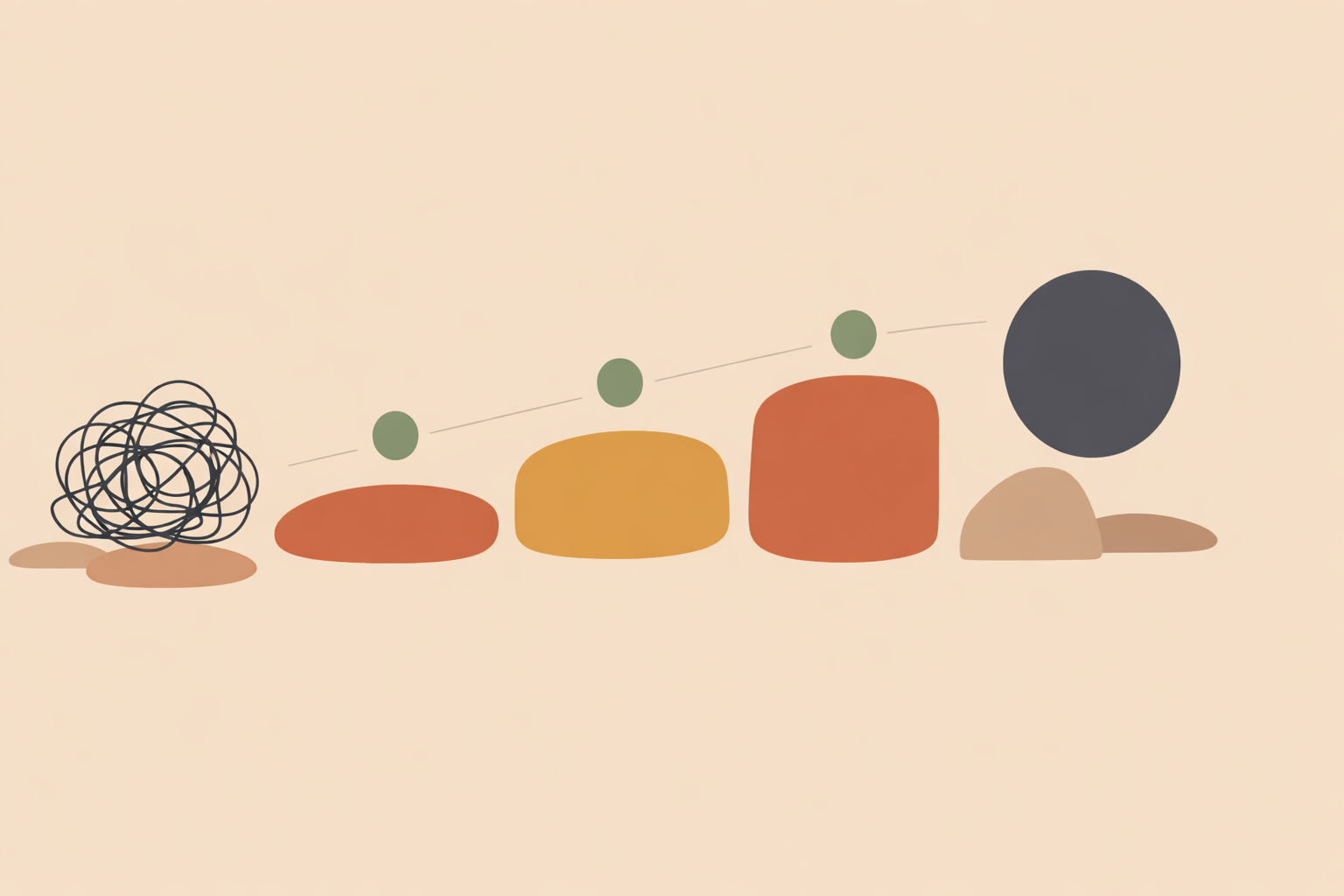
When families ask for support, the default response is often more rules, more reminders, more consequences, or a bigger chart to hold it all together. In practice, that usually creates more chasing, more friction, and less clarity. Adults end up reacting after the fact, while children get far more attention for what is going wrong than for the skill they are still learning.
A positive behavior reinforcement map offers a steadier alternative. It turns values into observable skills, pairs those skills with meaningful recognition, and gives adults a simple plan they can follow through on. Instead of policing, they begin coaching, and the child gets a clearer path to success.
Key Takeaway: Reinforcement maps help families move from reactivity to collaboration by making expectations clear, recognition predictable, and skill-building practical. A strong map focuses on one behavior in one context, uses brief and meaningful reinforcement, and evolves over time from external rewards toward confidence, pride, and connection.
Why reinforcement maps help families collaborate more
A reinforcement map shifts attention from controlling behavior to teaching it. When adults know what to notice, what to encourage, and how to respond, home life often feels calmer and less adversarial.
This approach can reduce power struggles and strengthen parent–child connection because it leans on relationship as the engine of change. Social rewards such as parent attention, praise, hugs, and shared activities don’t just improve follow-through; they make the process warmer and easier to sustain.
The map also replaces vague “don’t” instructions with a clear skill to practice. “Stop shouting” becomes “ask for help in a calm voice.” “Don’t grab” becomes “wait and ask for a turn.” When everyone can picture success, the household tone shifts.
Adults benefit, too. A map gives them something steady to return to in the moment, which often leads to more consistent responses than a rule-and-consequence approach built on frustration.
For example, a parent might choose “gentle hands during sibling play.” Each short stretch of gentle play earns a marble, and five marbles earns choosing the bedtime story. The family stops orbiting the conflict and starts building a new pattern.
What goes inside a positive behavior reinforcement map
A good map is simple, specific, and usable under pressure. It takes a broad value like respect, cooperation, or patience and turns it into something visible.
That might look like:
- uses words instead of hitting
- puts shoes by the door after coming home
- starts homework within ten minutes
- asks for help when frustrated
The goal is not a perfect system. The goal is one skill defined clearly enough that a child can practice it and an adult can notice it.
Many practitioners also find it helpful to think through what tends to happen before the behavior, the behavior itself, and what happens after. That quick sequence helps you spot triggers, choose a positive opposite, and decide what kind of response best supports learning.
A strong map usually includes:
- one target behavior
- the setting or routine where it matters
- the positive opposite of the problem pattern
- the reinforcer
- when and how the reinforcer will be given
- what the adult will say
- how the plan will be adjusted if needed
Brief plans tend to survive real family life. Complex systems often collapse when everyone is tired or rushing.
A bedtime map, for instance, might read: “From 7:15 to 7:45, the steps are toothbrush, pajamas, three calm breaths, choose a book. Each step earns one checkmark. Four checkmarks earn cuddles and the child’s chosen story.” It’s concrete, teachable, and easy to repeat tomorrow.
How to design a first reinforcement map
Start with one real challenge, not a whole personality overhaul. The clearest maps focus on one behavior in one predictable context.
Use this sequence:
- Choose one focus. Pick something observable, such as “hang backpack on hook after school” rather than “be responsible.”
- Name the context. Tie the skill to a routine: after school, during dinner, at bedtime, during sibling play.
- Define the positive opposite. If the struggle is yelling, the skill might be “use a calm voice to ask for help.”
- Choose a meaningful reinforcer. Use what genuinely matters to the child: praise, a cuddle, shared play, choosing music, tokens, or a small privilege.
- Keep the system winnable. The child should succeed quickly enough to stay engaged.
- Script your words. Labeled praise works best when it is specific and sincere: “You put your backpack away right away. That was helpful.”
- Plan for slips. Decide in advance how you will respond calmly if the behavior does not happen.
Collaboration strengthens the map. When the child has a say, especially in the reinforcer and the “look” of the system, you’ll often see less resistance. Even “Stars or checkmarks?” can help.
Token systems can be especially useful for school-age kids because they help sustain efforts over a longer stretch and build toward a later reward. Kept simple, they support routines and repeated practice without requiring a big emotional response every time.
Here is a practical example: “When you come home, your backpack goes on the hook within two minutes. That earns one point and a quick ‘I noticed.’ Five points earns choosing dessert on Friday.” Clear, brief, repeatable.
Using reinforcement maps in coaching sessions
Reinforcement maps work well inside coaching because they turn big goals into practical home practice. They also give structure to role-plays and weekly check-ins.
Start by walking through a typical day and listening for recurring friction points. Where does the family lose rhythm most often? Once that moment is clear, draft a starter map together and keep it intentionally small.
In session, a map can guide:
- what the family wants more of
- what tends to happen right before the struggle
- which reinforcers feel natural and realistic
- how the adult will phrase directions and praise
- what to try before the next session
A simple 50-minute session might include:
- brief check-in on what improved
- review of one target behavior
- refining the map
- role-play of one difficult moment
- agreement on one small practice for the week
The map keeps the work grounded. Instead of discussing parenting in abstract terms, everyone focuses on one interaction and improves it step by step.
Light tracking supports momentum. A quick tally such as “3 of 5 mornings” is often enough to see if the plan is working and what needs adjusting.
Adapting reinforcement maps by age, temperament, and family culture
A reinforcement map should fit the child in front of you. The structure can work across ages, while timing, language, and reinforcers evolve.
For toddlers, reinforcement works best when it is given quickly. Tiny steps, immediate praise, and short time windows make the connection clear.
School-age children often enjoy visible progress. Tokens, checkmarks, and point systems help them stick with longer tasks and delayed rewards, especially when the goal is broken into manageable chunks.
Adolescents usually respond best to choice, voice, and autonomy-supportive agreements. With teens, a map often looks like a shared plan: reliability brings more freedom, while slips lead to review, repair, and a reset, much like authoritative parenting does.
Maps can also support emotional development by reinforcing skills such as naming feelings, asking for help, taking turns, pausing before reacting, or using calming tools. These are often the capabilities a family is truly trying to strengthen, especially across child and adolescent development.
Culture matters, too. Many families already have traditions that naturally reinforce belonging and contribution: shared meals, songs, storytelling, blessings, household roles, family walks, or seasonal rituals. These can become powerful reinforcers without borrowing from anyone else’s lineage or dressing up the process.
Temperament matters as much as behavior. For one child, a sticker is exciting; for another, it falls flat while ten minutes of one-on-one time is deeply motivating.
Keeping reinforcement ethical and sustainable
Reinforcement works best when it supports dignity and relationship. The child should feel guided and encouraged, not controlled.
Over time, many practitioners shift from external rewards toward social recognition, competence, and pride. Research suggests children can be especially responsive to social rewards, and tangible incentives often matter less as children grow.
A simple fade might look like this:
- Week 1: token plus praise
- Week 2: praise plus special time
- Week 3: praise most of the time, with an end-of-week privilege
- Week 4 onward: reinforcement comes mainly through recognition, trust, and natural family life
This gradual shift supports internal motivation over time. The map stays in place, while the “reward” becomes more about capability and connection.
There are a few common pitfalls to avoid:
- Too much attention during problem behavior. In some cases, social attention can unintentionally keep a difficult pattern going.
- Inconsistent follow-through. If reinforcement appears and disappears unpredictably, the message gets muddy.
- Overcomplicated systems. Too many steps make the plan hard to sustain.
- Rewarding in the middle of a meltdown. That can slide into bribery rather than planned reinforcement.
Connection-based reinforcers are often the most sustainable: one-on-one time, shared play, family rituals, encouragement, affection, and being genuinely noticed. These strengthen trust while the skill is growing.
Repair is part of the practice. Adults will miss moments, forget the plan, or lose patience. A brief reset such as “I got loud earlier. Let’s start again” protects the relationship and keeps the map humane, much like the repair-centered approach in natural and logical consequences.
Bringing a reinforcement map into daily family life
A reinforcement map becomes useful when it fits the rhythm of real days, not when it looks perfect on paper.
That usually means:
- starting small
- keeping language simple
- using reinforcers the family can actually offer
- reviewing the map once a week
- adjusting quickly when something is not working
With steady use, expectations become more predictable and recognition feels fairer. Adults spend less time in constant correction, and children get more chances to succeed in ways everyone can see.
Most importantly, the map turns good intentions into a repeatable practice. One skill, one moment, one plan that the family can run again tomorrow, whether in everyday family support or broader positive parenting coaching.
Practice Positive Parenting Coach
Build reinforcement maps and coaching language more confidently in the Positive Parenting Coach course.
Explore Positive Parenting Coach →