Many wellness practitioners price midlife hormone-balance support the way they price a massage: by the session or in a bundle. It sounds straightforward, yet it often invites an unfair comparison between “an hour of your time” and a much broader support experience that’s harder to measure.
Most women aren’t looking for “just a session.” They’re looking for steadier sleep, dependable energy, more comfort with temperature shifts, a clearer mood, and a stronger sense of self as life changes.
Pricing lands better when it reflects a journey rather than a calendar. When your offers show a beginning, a middle, and a longer arc of integration, your scope feels clearer, your boundaries feel kinder, and your pricing feels consistent.
Key Takeaway: Pricing hormonal balance offers works best when your tiers mirror the client journey and your prices reflect time, touch, and scope. A clear three-tier structure helps women understand what is included, choose the level that fits their season of life, and stay engaged long enough to feel meaningful change.
Step 1: Frame your offer as a guided journey
Women in midlife often want support that feels whole-person. In practice, that typically means steadier sleep, steadier energy, more ease with temperature changes, a calmer emotional landscape, and a renewed sense of identity.
Instead of listing sessions or modalities, describe the arc of change. One clear line can carry the whole offer: “We settle sleep and stress first, then build strength and nourishment, then personalize rhythms for longer-term vitality.”
That arc gives your pricing a backbone. It also helps a prospective client understand why one tier is foundational while another includes more support and a wider life context.
It helps to add a short “what this journey will and won’t do” note:
- Will support steadier routines, movement confidence, energy pacing, and more self-trust.
- Won’t promise a perfectly linear experience or an overnight shift.
Clear expectations build trust and make your pricing feel like an aligned investment.
Women also want to understand what they’re paying for. Across public pricing models, the main difference between tiers is often bundle scope: the education, check-ins, structure, and follow-through included. When you offer continuous support, a higher tier makes sense because the client is held between sessions, not only during them.
Step 2: Build a three-tier structure that matches real change
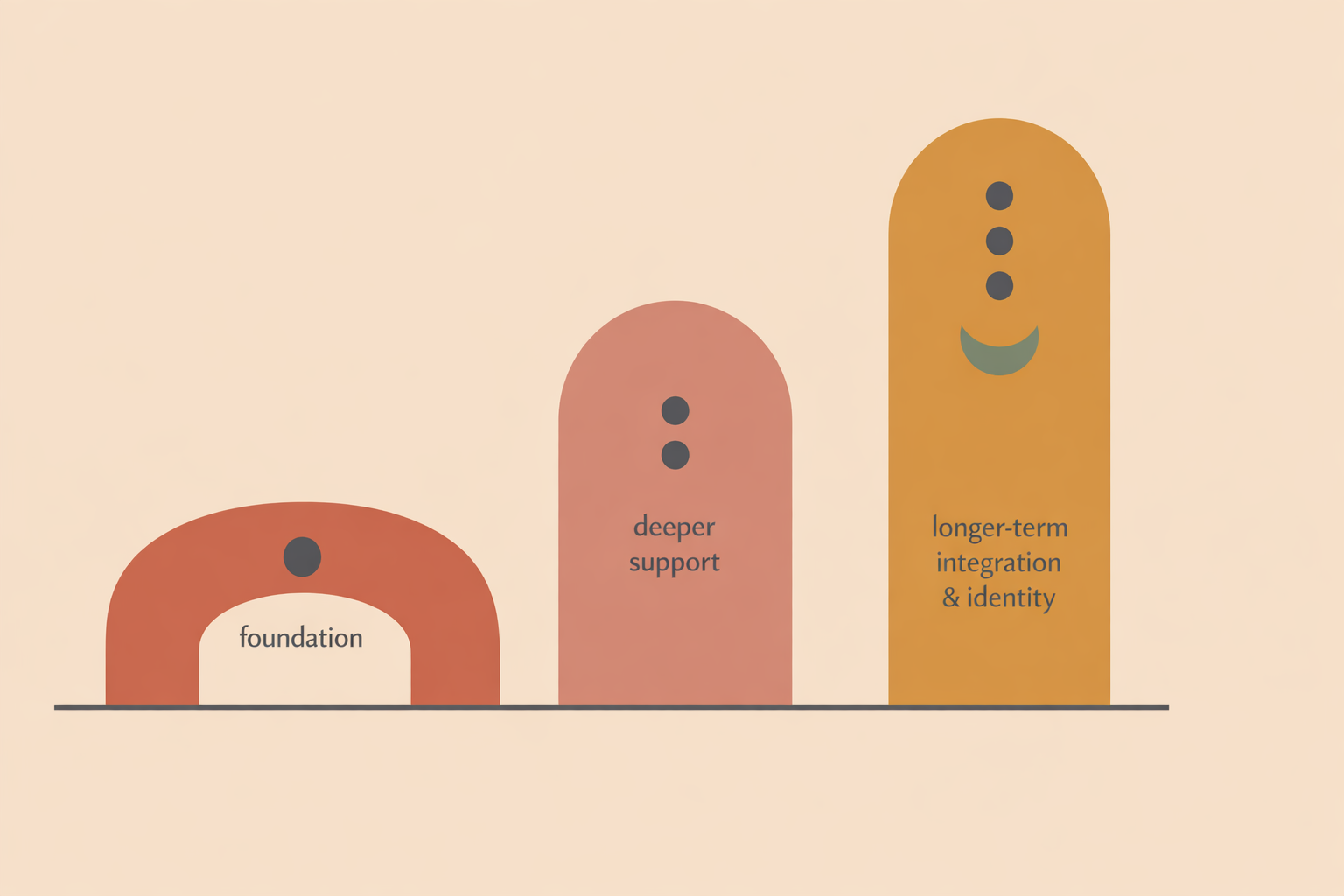
A three-tier “staircase” works because it helps women quickly recognize where they are and what they need next. It also gives you a clean way to separate foundational support from deeper integration.
Keep the structure simple:
- Tier 1: Foundations for awareness, rhythm, and basic habit shifts.
- Tier 2: Implementation, where routines become consistent and lived.
- Tier 3: Integration, where support becomes personalized and long-range.
Many offers map well onto timelines like these:
- Tier 1: 4–6 weeks for sleep cues, stress buffers, hydration, gentle movement, and a few core nourishment shifts.
- Tier 2: 8–12 weeks for progressive strength, mobility, rhythm design, and steadier weekly structure.
- Tier 3: 3–6+ months for seasonal routines, emotional practices, and broader lifestyle coherence.
Practitioners often anchor the middle tier at 12 weeks because it’s a practical window for habit-building, and research suggests 12-week interventions can support meaningful shifts in areas like sleep, stress, and mood.
Your tier names can stay plain: Essentials, Build, Vitality. What matters is that each tier tells a distinct story of change and clearly signals what “more support” actually means.
If you use discovery calls, keep the language grounded: “We start with Foundations to settle rhythms and build momentum. If that feels supportive, we extend the work to strengthen habits and personalize your routines more deeply.”
Step 3: Price by time, touch, and scope
Once your tiers are clear, pricing becomes much easier. Use three variables:
- Time: how long the container lasts.
- Touch: how much direct contact is included.
- Scope: how many areas of life you’re actively supporting.
Start by setting the time frame (for example 4–6 weeks, 8–12 weeks, or 3–6 months). Then define touch: number of 1:1 sessions, any group calls, and whether messaging support is included. Finally, define scope: sleep, stress, movement, nourishment, rhythm design, seasonal reflection, community, and so on.
A simple worksheet keeps your numbers logical:
- Set your base hourly rate for live support.
- Multiply it by your expected live hours per tier.
- Add 20–40% for preparation, review, messaging, and behind-the-scenes care.
- Add a continuity factor if the tier includes curriculum, community, or ongoing resources.
From there, round to a clean price that fits your brand.
Bundling also makes value easier to understand. One fee can feel steadier than a menu of separate charges. Some practitioners widen access by pairing 1:1 support with group options, then offering an alumni membership for seasonal resets or community circles. As a rule, more guidance, continuity, and personalization warrants a higher investment.
Step 4: Tie each tier to outcomes women can actually feel
Pricing is easier to accept when outcomes feel concrete. Women don’t need inflated promises. They need language that helps them picture daily-life change.
In a foundational tier, focus on quick, felt shifts:
- Falling asleep more easily
- Waking less during the night
- Fewer afternoon crashes
- A calmer evening rhythm
- More confidence with basic movement and nourishment habits
In a middle tier, focus on consistency and capacity:
- A regular strength routine
- More stable weekly rhythms
- Less friction around meals and movement, including menopause nutrition patterns that feel easier to sustain
- Clearer focus during the day
- Better follow-through on personal priorities
In a longer container, outcomes widen to include identity, self-trust, seasonal awareness, and a steadier personal rhythm you can rely on.
This progression matches what many practitioners observe and aligns with evidence that nonpharmacological approaches in midlife can support improvements in mood, sleep, and quality of life over about 8–12 weeks.
Keep your language sensory and grounded: “A steadier morning.” “More ease in the evening.” “A rhythm you can maintain.” These phrases help women recognize themselves in the offer.
Step 5: Place traditional and modern frameworks where they add value
Not every tier needs every tool. A stronger approach is to place traditional and modern frameworks where they deepen the experience without overwhelming the client.
In Tier 1, keep traditional practices simple, respectful, and embodied. This might look like one morning ritual, one evening settling practice, or a gentle reflective prompt around meaning and pace. The goal is to offer something usable and clearly rooted, without compressing a whole lineage into a few sessions.
In Tier 2, you can add more structured rhythm support. This is a good place for qigong-inspired movement, guided self-acupressure, seasonal pacing, or light-and-dark practices that help clients notice how daily rhythms affect energy and rest. Guidance highlights the value of morning light, evening dimming, and a cooler sleep space for tuning circadian rhythms.
In Tier 3, integration becomes the center: seasonal routine design, meaning-making, community reflection, expanded movement practices, and support for long-term consistency. This is where routines often start to feel like a natural expression of who someone is, rather than another project to manage.
Traditional knowledge sits well beside modern evidence when both are used with care. You can draw on each where it best serves the client and name cultural roots with respect.
Step 6: Communicate your tiers so women can choose with confidence
Once the structure is built, clarity does the rest. A woman should be able to land on your page and quickly understand what each tier is for, what it includes, and how to decide.
Use names that signal the main outcome:
- Essentials: Sleep + Stress Foundations
- Build: Strength + Nourishment Rhythms
- Vitality: Full-Spectrum Integration
Under each tier, add a short “This is for you if…” prompt. It helps someone self-recognize without wading through a long description.
Spell out inclusions clearly:
- Live sessions
- Messaging window
- Movement and rhythm guidance
- Women’s health coaching resource library
- Community calls, if relevant
Then be equally clear about what’s not included. Boundaries reduce confusion, protect your energy, and help clients feel safe inside the container.
Finally, show continuity. Explain how someone can start with a lighter offer, step into deeper support when ready, and stay connected through alumni circles or seasonal memberships if that suits her. Warmth matters here too: “Based on what you shared, I’d start with the gentlest tier that still gives you real traction.”
Conclusion
Pricing midlife hormone-balance support gets easier when your numbers reflect a clear journey. A staircase of foundations, implementation, and integration helps women understand what they’re choosing and helps you hold your work with confidence and integrity.
Start simple: name your three tiers, set the timeline for each, define inclusions and boundaries, and tie each level to outcomes a woman can feel. Then price according to time, touch, and scope.
Refine as you work with real clients. Midlife support is living work, rooted in tradition and strengthened by evolving evidence. Keep your cultural references respectful, keep your containers clear, and reserve strong guarantees for what you can consistently deliver. When your pricing tells that story well, women can choose support that truly fits their season of life and the broader arc of women’s health and fertility.
Advance Women’s Midlife Support
Apply this tiered pricing approach with deeper clinical context in the Anti-Aging Specialist for Women Certification.
Explore Anti-Aging Specialist →