When a stressed, deconditioned, or dizzy client shows up, the real decision isn’t “Which art is best?” It’s “Which practice will regulate rather than overload, today?” When the fit is right, adherence improves, confidence rises, and small wins start compounding.
Key Takeaway: Match Qigong or Tai Chi to a client’s current bandwidth: Qigong typically offers simpler, more immediately settling repetition, while Tai Chi adds continuous sequencing that builds coordination and balance over time. The “best” option is the one they can practice consistently without feeling overloaded.
Shared roots: one tradition, two expressions
Qigong and Tai Chi are closely related arts with shared Chinese roots. Both draw on an energetic worldview involving qi, yin and yang, and the larger principle of nourishing life through steady practice. They both coordinate body, breath, and awareness—just organized through different structures.
Qigong is best understood as a broad family of practices: posture, breath regulation, repeated movement, stillness, and focused attention can all be part of it. Tai Chi (Taijiquan) developed as an internal martial art and later became widely valued for well-being and vitality. Modern literature notes that Tai Chi evolved from a martial art into a widely practiced health-focused movement practice.
From a practitioner’s view, both belong to a living tradition—structured ways of cultivating steadiness, sensitivity, and whole-person awareness over time, not random “slow exercise,” much like an integrative Chinese medicine approach stays rooted while engaging modern contexts.
It’s common to hear, “But is this scientific?” As educator Alex Heyne notes, “One of the most persistent misconceptions is that classical Chinese traditions are ‘anti‑science’; in reality, the classical texts are full of rigorous observational method—they simply organize data through a different conceptual language” entirely.
How they feel in practice
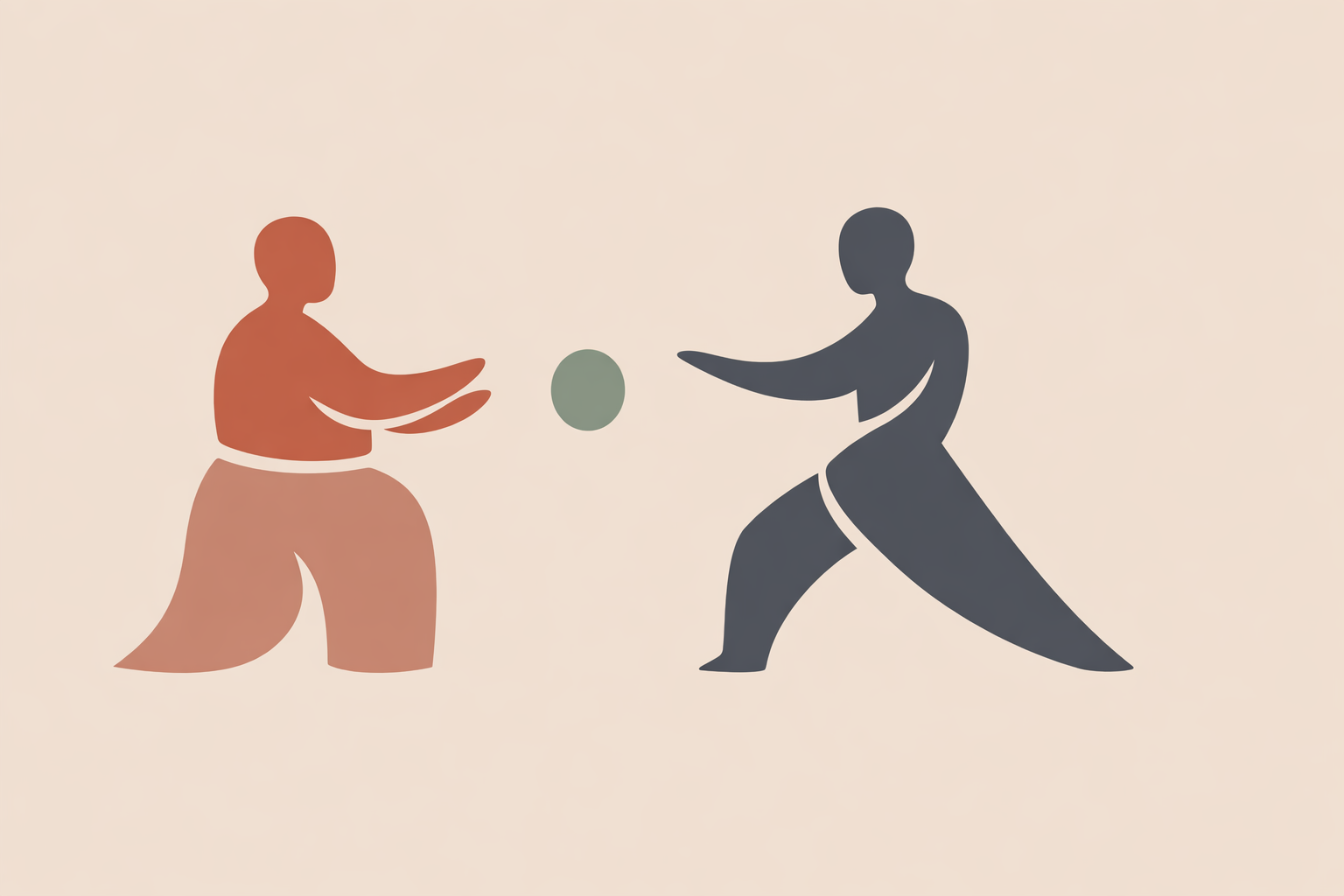
In the body, the difference is often immediate. Tai Chi can feel like a slow river: continuous, coordinated, and gently demanding. Qigong can feel like waves: repetitive, rhythmic, and quickly centering.
Tai Chi is usually practiced as linked sequences that range from short beginner forms to long, detailed sets. Harvard notes that more advanced Tai Chi forms can have 100 or more positions. That sequencing develops weight transfer, spatial awareness, and coordination in a very tangible way.
Qigong, by contrast, often uses simpler sets—or even one movement repeated many times. The National Qigong Association describes qigong as repeating a movement while coordinating breath and attention. Put simply, there’s less to memorize, which can make it easier to begin on low-energy days.
This is why many people experience Qigong as lower “cognitive load” than Tai Chi. It asks for presence more than choreography—helpful when someone is mentally tired, emotionally flooded, or easily discouraged.
Tai Chi often invites a deeper mind-body integration: calming, yet quietly complex. Research suggests Tai Chi can involve cognitive-related brain regions alongside motor activity, which fits what many teachers observe—attention gets trained as much as the legs do.
And the facilitator matters, too. “The domains of professionalism that underlie the practice of TCM are similar... with stronger emphasis on Taoist ethics, cultivation of self, and relational harmony,” Tan and colleagues note—reminding us that our own steadiness and presence shape how these practices land profoundly.
- Tai Chi: continuous forms, changing weight shifts, stronger coordination demand
- Qigong: repeated patterns, simpler structure, easier entry for many beginners
- Both: breath-led, adaptable, and supportive of embodied awareness
Which fits which client?
A practical rule: match the practice to today’s capacity, not an ideal future goal. Start with what the person can receive well now.
Choose Qigong first when someone is highly fatigued, mentally overloaded, discouraged, or returning after a long break. The simplicity often supports daily stress relief and quick early success. An eight-week qigong program has been linked with improved sleep quality in adults struggling with poor sleep, which mirrors a common real-world pattern: when people settle more easily, their routines become easier to keep.
Choose Tai Chi first when someone wants a structured learning journey, enjoys skill-building, or needs more work around stability and coordination. A systematic review found tai chi can reduce falls and improve balance in older adults—one reason it’s so often used as a steadying, confidence-building practice.
Blend both when you want regulation and development together. Think of it like warming the engine: a short Qigong opening can settle the system, then a few Tai Chi transitions can be introduced without overwhelm. For many clients, that balance is the sweet spot.
Also remember: fit isn’t only physical—it’s relational. As Tan and colleagues describe, professionalism in these traditions includes personal cultivation and qualities like integrity, humility, and the willingness to “constantly refine the self.” When you bring that mindset, you listen better, adapt faster, and recommend more wisely.
- Start with Qigong for low bandwidth, high stress, fatigue, or limited tolerance for standing and memorizing
- Start with Tai Chi for balance goals, confidence-building, and clients who enjoy learning a form
- Blend both when you want Qigong’s settling effect and Tai Chi’s developmental challenge
Program design: making either practice workable in real life
Once you’ve chosen a direction, the next step is realism. The best plan isn’t the most ambitious—it’s the one someone will actually repeat.
Start small, especially with stressed or depleted clients. Consistency usually matters more than duration. Qigong often fits as a five- to fifteen-minute daily rhythm. Tai Chi can benefit from a bit more guided learning time, but short, regular exposure still tends to beat occasional long sessions.
A simple arc might look like this, following the same kind of grounded step-by-step progression practitioners often use in support planning:
- Weeks 1–4: Qigong most days for 5–15 minutes, with one guided session each week
- Weeks 5–8: keep Qigong as the settling base and introduce a few Tai Chi movements
- Weeks 9–12: expand into short linked Tai Chi phrases if capacity and interest are growing
This works because it respects readiness. Essentially, early success builds trust, and trust builds consistency—often the deciding factor in long-term change.
Both arts also fit real life beautifully: they can be practiced standing or seated, alone or in groups, as short home rituals or longer guided sessions. That flexibility is part of why they remain so useful in coaching and community settings.
Finally, keep refining your own lens. “A good TCM education must train students to critically appraise both classical texts and modern research,” Tan and colleagues remind us. In practice-building terms: know your lineage stories and your data, hold them with humility, and let real outcomes guide your evolution.
Closing perspective
Qigong and Tai Chi aren’t competing paths—they’re two doors into the same house of embodied cultivation. Qigong tends to calm and simplify. Tai Chi tends to organize and strengthen through continuous flow. Both can support steadiness, presence, and a more trusting relationship with the body.
If someone is running on fumes, Qigong is often the kinder first step. If someone wants structure, progression, and a stronger coordination challenge, Tai Chi may be the better lead. And when the timing is right, the two can blend seamlessly.
Keep the cautions simple and practical: progress gradually, respect fatigue and discomfort, and adapt the practice to the person rather than forcing the person into the form. These arts are generally gentle, but thoughtful pacing still matters. Held with cultural respect, humility, and good judgment, they offer a grounded, time-tested way to support well-being.
Study Chinese Medicine Foundations
Explore how Qigong, Tai Chi, and qi theory fit within the Chinese Medicine Practitioner course.
Explore Chinese Medicine Practitioner →