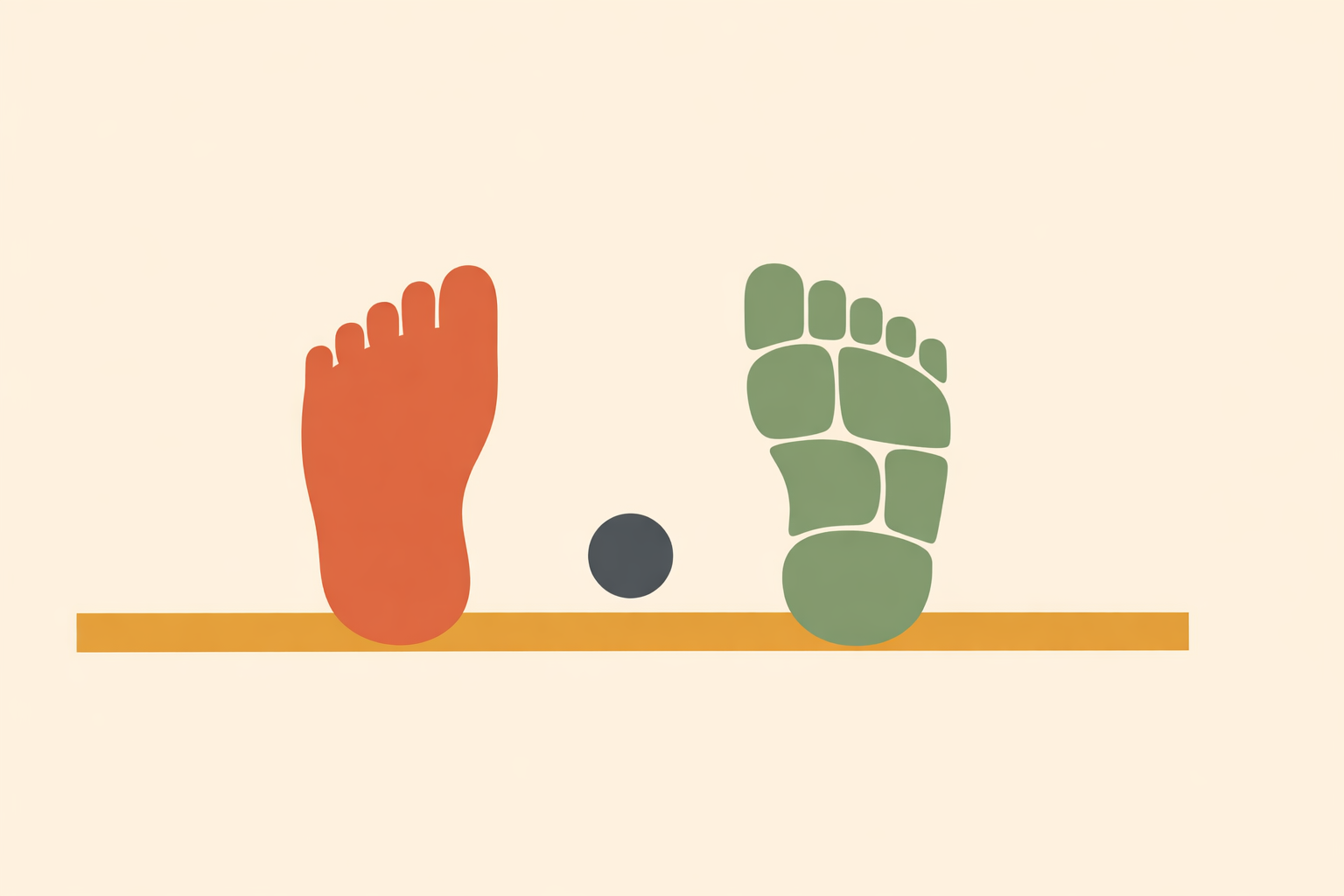
Foot work becomes far more effective when you choose the right tool for the right moment. Clients often come in wanting support with stress, unsettled sleep, or that wired-yet-tired feeling, and both foot massage and reflexology can help. They do it in different ways.
Foot massage is comfort-first and immediate. Reflexology is structured, map-guided, and usually best delivered as a planned series with clear goals.
Key Takeaway: Foot massage and reflexology are not interchangeable. Foot massage is the simpler option for quick relaxation and settling. Reflexology is the more structured choice when you want a repeatable series aimed at steadier rest, lower stress, or improved daytime energy. Used thoughtfully, both can sit inside a broader coaching plan with clear expectations, appropriate boundaries, and measurable outcomes.
How foot work supports nervous-system settling
Both reflexology and foot massage can help the body shift out of stress vigilance and into a calmer state. That’s one reason they pair so well with broader well-being goals in traditional and Eastern medicine.
Foot-focused touch has been associated with lower stress and anxiety, and sessions are often followed by signs of settling such as lower heart rate and steadier breathing. When that shift happens, everyday sleep, digestion, mood, and pain sensitivity often become easier to support, because chronic stress and autonomic imbalance are closely tied to those experiences.
Touch itself can also help calm the system. Gentle pressure and rhythmic contact can reduce discomfort signals through pain-modulating pathways, and pleasant touch may activate reward pathways linked with safety and relaxation.
The feet are an accessible entry point for regulation. A repeated foot ritual teaches the body a familiar cue: it’s time to soften, slow down, and settle.
Foot massage for relaxation, grounding, and quick support
When the goal is immediate comfort, foot massage is often the cleanest place to start. It’s straightforward, easy to explain, and doesn’t ask the client to learn maps or theory.
Broad kneading, stroking, ankle circles, arch work, and gentle toe mobilization can create a strong sense of relief quickly. That makes it especially useful:
- at the end of a coaching session
- as a calming evening ritual
- during travel, busy weeks, or stress spikes
- for clients who want simplicity over structure
A 10–20 minute session is often enough to support relaxation and lift mood. Home routines work best when they’re easy to repeat, even though research comparing ideal frequency across different protocols is limited.
A simple home sequence might include:
- 2 minutes of ankle circles and shaking out tension
- 5 minutes of slow arch and heel kneading
- 3 minutes of thumb glides from heel toward toes
- 2 minutes of gentle toe squeezes paired with slower exhalations
Foot massage shines as a short-term settling tool. Research on reflexology and related foot-focused work tends to show short-term improvements more consistently than long-range shifts.
That’s still valuable. A good foot massage can be exactly the right support when what someone needs most is to exhale.
Reflexology as a structured, map-guided practice
Reflexology offers a different experience because it follows specific maps and sequences. The work is usually less about general comfort and more about a repeatable, intentional arc.
Many reflexology maps draw from zone theory and older healing systems, including Chinese traditions. Contemporary reflexology has evolved through multiple schools, but its strength often lies in this blend of structure, ritual, and whole-person framing.
Clients who respond well to reflexology often like that it feels purposeful: points are chosen for a reason, sessions can be repeated, and the approach can be adjusted over time. It can be a strong fit when you’re supporting goals such as:
- steadier sleep
- better daytime energy
- stress reduction over several weeks
- a more reflective, ritual-based self-care rhythm
Research reviews suggest reflexology may reduce pain and stress in some contexts, though outcomes vary by setting and protocol. Multi-session approaches have also been linked with improved fatigue and sleep in some studies.
A practical coaching arc is four to six sessions with a clear focus, plus a simple tracking question: How long did it take to settle at night? How steady did your energy feel this morning? That combination of structure and observation is where reflexology often becomes most useful, especially inside naturopathic coaching.
What tradition and modern evidence both suggest
Reflexology doesn’t need to be separated from its lineage to be used responsibly. Traditional use carries real weight, especially when it has been refined across generations of practice. Modern evaluation adds another lens. Together, they support a grounded approach.
Across traditions, reflex-style foot work has long been used to support balance, rest, and vitality. Modern reviews point in a generally supportive direction around stress, pain, and quality of life, while noting that results vary. Evidence reviews describe limited but meaningful promise for areas like gastrointestinal disorders and more mixed outcomes for migraine and low back pain.
That matches what experienced practitioners see: response is individual, and outcomes depend on context, timing, rapport, expectations, and the client’s home rhythm. Reflexology works best as supportive care inside a larger plan.
Clear language keeps the work both meaningful and ethical. You can say: we’re using reflexology to support rest, calm, and overall balance, and we’ll track what changes for you.
When to choose foot massage and when to choose reflexology
A simple framework keeps decision-making practical.
- For immediate grounding: choose foot massage. Research supports short-term reductions in stress and anxiety after foot-focused sessions.
- For sleep and fatigue goals: consider reflexology as a series. Structured programs have been associated with better sleep quality in some groups.
- For stress with body tension: either can work. Choose massage for simplicity, reflexology for a more structured ritual.
- For digestive discomfort: reflexology can be included as supportive care, though findings for digestive issues are mixed.
- For headaches or low back discomfort: keep expectations realistic. Results are variable.
When in doubt, ask:
- Do they want immediate comfort or a structured series?
- Will they actually repeat a short home ritual?
- What outcome can you observe over the next few weeks?
The best method is usually the one the client receives well and will genuinely integrate into daily life.
Safety, boundaries, and ethical communication
Foot work is gentle by nature, and it still calls for good judgment. Comfort, consent, and tissue quality guide every session.
Avoid deep foot work for people with suspected deep vein thrombosis or significant vascular concerns. If someone uses anticoagulants, keep touch light and non-compressive, and proceed only with appropriate clearance. Do not work directly over ulcers, active infections, and pronounced edema.
During pregnancy, practitioners commonly avoid strong pressure on pelvic-related reflex zones and adapt sessions to stay gentle and comfort-focused. Guidance often recommends general caution and thoughtful modification.
If anything is unclear, stay with light foot massage, avoid compromised tissue, and seek clarification before using a more structured reflexology protocol.
A simple communication script supports trust:
- Consent: “I’ll check in about pressure and comfort throughout.”
- Scope: “This work supports relaxation, balance, and self-awareness.”
- Boundaries: “If anything about the tissue or your comfort feels uncertain, we modify or pause.”
That tone protects the client experience and the integrity of your practice.
Bringing both methods into one cohesive coaching plan
Foot massage and reflexology work beautifully together because they play different roles. Massage offers quick settling and an easy home ritual. Reflexology gives you a structured thread to follow over time.
A clean way to layer them:
- use foot massage for immediate settling and regular home support
- use reflexology for a defined series with clear goals
- track sleep, stress, mood, or energy in simple everyday language
- adjust based on lived experience, not theory alone
Used this way, neither approach is overpromised or undervalued. Foot massage becomes a reliable ritual of ease, and reflexology becomes a tradition-informed structure for supporting rest and balance over time.
Train in Naturopathic Coaching
Build structured client plans like these in the Naturopathic Coach Certification.
Explore Naturopathic Coach →