Most gut-support engagements start the same way: a client describes bloating or irregularity, you suggest a probiotic, and you invite them to check back if anything changes. Two weeks later, consistency is patchy, symptoms are hard to interpret, and attention has drifted. A more complex supplement stack often creates the same problem in a different form: too many variables, not enough signal.
A simpler structure tends to work better. When probiotics anchor a short, clearly paced journey, clients know what they are doing, why they are doing it, and what success looks like. Probiotics are well tolerated for many people and easy to observe across a few weeks. Paired with small servings of fermented foods and a 60-second daily tracker, they become a focused experiment with clear trend lines.
Key Takeaway: Client retention often improves when gut support is built around a simple probiotic journey with three check-ins. A clear Assess–Adjust–Integrate rhythm gives clients a manageable plan, helps you capture useful patterns, and makes keep, switch, or pause decisions easier. In practice, a 4–8 week arc is usually enough to establish consistency, notice early shifts, and fold what works into everyday life.
Use a 3-check-in structure clients can understand immediately
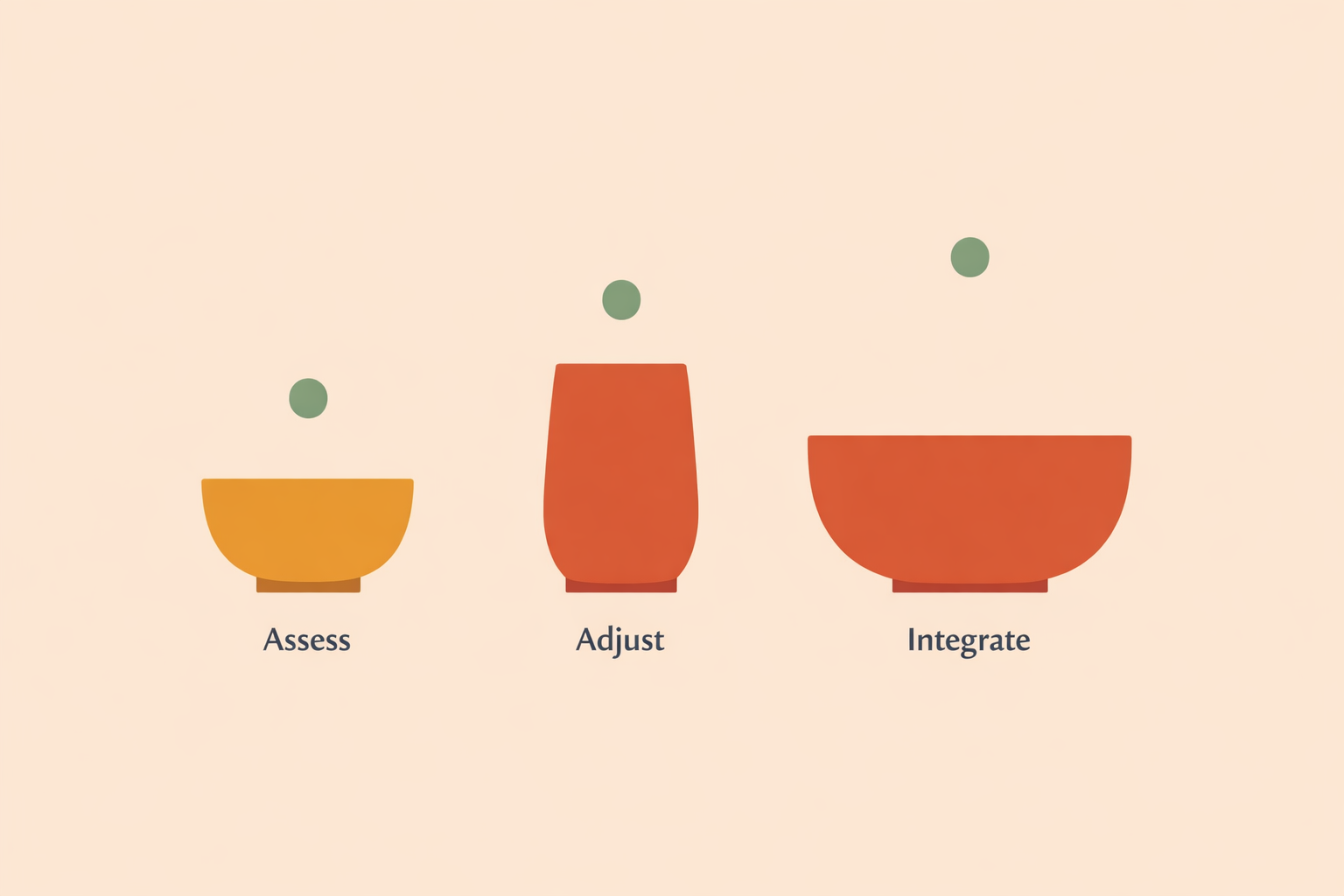
The biggest shift is pacing. Instead of “try this and let me know,” use a defined three-visit arc: Assess, Adjust, Integrate.
This structure gives clients a clear beginning and a clear next step, while giving you cleaner observations. It also fits how habits settle: early consistency first, then refinements, then a realistic plan the client can actually live with.
- Assess: week 0 to 1
- Adjust: week 2 to 3
- Integrate: week 4 to 8
Frequent contact early on helps momentum build instead of fading. Often, one short message between visits is enough to keep attention on the basics.
- Between visits: one daily 60-second tracker and 1–2 short supportive messages
- Primary measure: one main goal, such as less bloating
- Secondary measures: two supporting markers, such as stool regularity and post-lunch energy
That clarity makes progress easier to feel and easier to trust.
Check-in 1: assess, simplify, and set expectations
The first conversation should leave the client feeling heard and clear about the experiment ahead. Start with their digestive story: food timing, stool patterns, bloating, reactivity, energy, sleep, stress, movement, and any past experience with probiotics or fermented foods.
Then choose one primary focus. A narrow goal gives you a cleaner read on what’s changing and keeps the client oriented. “Post-dinner bloating drops from 7/10 to 4/10” is more useful than a broad hope to “feel better.”
Set expectations for early adaptation. In the first week or two, gas, mild bloating, or stool-form changes can show up and often settle as the gut adjusts. A calm explanation here prevents unnecessary worry and helps clients stay steady.
Keep the framing simple: “We’re starting gently, watching how your system responds, and adjusting if needed.”
- Starter protocol example: multi-strain Lactobacillus/Bifidobacterium blend once daily with breakfast
- Fermented food option: 1–2 tablespoons of sauerkraut or a small serving of kefir 3 times weekly
- Simple tracker: bloating 0–10, Bristol stool type, midday energy 0–10
- Supportive habit: a 10-minute walk after the largest meal
Check-in 2: adjust gently and build momentum
At the second check-in, review the tracker together and look for patterns. Notice timing (morning vs evening bloating), steadiness (stool pattern), and any “quiet wins” like improved energy even if digestion is still catching up.
If progress is present but incomplete, adjust one variable at a time. Timing, dose, and meal pairing are usually the first levers. This keeps the process responsive without making it complicated.
If tolerance is good, this can also be the moment to introduce a gentle prebiotic. Prebiotics support beneficial microbial communities and can pair well with probiotics when introduced gradually.
If the gut feels reactive, slow the pace. When urgency or constipation worsens, escalating the dose usually adds noise; reducing, pausing, or changing strain family tends to give you clearer information.
- Some improvement + good tolerance: keep the probiotic steady and consider adding a small amount of gentle prebiotic fiber
- Some improvement + mild gas: keep the dose modest and change timing
- No improvement + no discomfort: adjust timing or trial a modest dose change
- Worsening symptoms: reduce, pause, or switch rather than escalating
Keep your language encouraging and practical: “Your consistency is showing up in the tracker. Let’s make one small change and give it enough time to speak.”
Check-in 3: integrate what worked and decide what comes next
By the third visit, the picture is usually clearer. Put baseline and current experience side by side, then identify what changed and which steps felt easy enough to keep.
This is where “keep, switch, or pause” becomes straightforward. It also respects the reality that probiotic outcomes vary by goal: reviews sometimes find limited efficacy depending on the condition, strain, and outcome being measured. A client’s lived response stays central.
When the experiment has gone well, fold the gains into a broader routine. Continue the probiotic if it still feels supportive, or shift toward food-first maintenance with fermented foods, fiber variety, meal rhythm, and movement. This is where traditional practice shines, because steady daily habits build durable change.
- Continue: when the client feels clear benefit and tolerance is good
- Switch: when the response is partial or strain fit seems off
- Pause: when the experiment feels unhelpful, confusing, or too activating
- Integrate: keep the habits that gave the clearest support
Close the journey with care. Reflect the client’s effort back to them and name what they did that made the difference.
Troubleshooting, boundaries, and red flags
Probiotics are supportive tools, not a magic bullet. When something doesn’t land well, the best move is often to simplify: reduce, pause, or change direction rather than forcing the plan.
Safety is generally reassuring for healthy people. The NIH notes probiotics are generally safe for this group, with side effects often limited to mild digestive discomfort. Significant frailty or immune compromise calls for extra caution, so screening and clear boundaries matter.
There are also moments when supplements should be paused and prompt in-person support sought. Marked pain, severe diarrhea or constipation, vomiting, unexplained weight loss, fever, bleeding, or symptoms that are intense or persistent deserve timely follow-up.
Respect for cultural roots belongs here too. Fermented foods and fiber-rich staples don’t need to be exoticized to be valuable. When possible, work with foods that already belong to the client’s own kitchen and family traditions.
- First troubleshooting step: reduce dose or change timing for 5–7 days
- Second step: pause briefly, then reintroduce more gently if appropriate
- Third step: switch strain family or focus on food and routine instead
- Good practitioner question: “Which fermented or fiber-rich foods already feel familiar in your home or family tradition?”
Conclusion: a simple probiotic journey often keeps clients engaged
A three-check-in probiotic journey gives gut support a clear rhythm: assess, adjust, then integrate. It naturally weaves together traditional food wisdom and evidence-informed practice without overwhelming the client.
It also supports follow-through. A short, structured arc makes change easier to notice, easier to document, and easier to build on through real-world habits and nutrition and diet foundations.
Probiotics are a strong starting point, but they’re not for everyone, and they aren’t always the right choice at every moment. When you hold clear boundaries, screen thoughtfully, and keep the experiment simple, clients get a process they can trust and a path they can sustain within gut health practice.
Master Gut Health Coaching
Deepen this check-in framework inside the Gut Health Practitioner Certification for clearer, client-centered gut support.
Explore Gut Health Certification →