Most skin consultations start on the bathroom shelf: which cleanser, which acid, which serum to swap next. Practitioners know where that often leads—long product lists, short-lived improvements, and follow-ups built on guesswork instead of patterns. A steadier approach is to begin with the woman, not the product: her rhythms, pressures, rituals, and the way her skin responds across real life.
Key Takeaway: A mapped, coaching-led skin intake helps shift the conversation from reactive product swapping to clearer pattern recognition and more sustainable support. When you chart life rhythms, skin signals, routines, behaviors, and meaningful rituals together, the next steps become simpler, more personal, and easier to follow.
Why a skin intake map changes the conversation
A strong intake does more than list products. It shows how sleep, food rhythm, stress load, movement, seasons, environment, and personal rituals shape how skin looks and feels.
When you map first, patterns often show themselves quickly. One client who feels stuck in constant serum-switching may notice breakout clusters after intense weeks. Another connects winter dullness to late nights and irregular rest. The goal is context, not control.
This is where narrative-led intake shines. When someone understands their recurring skin patterns, they stop chasing every flare and start choosing calmer adjustments: keep the routine simple, return to a familiar oil ritual, or protect sleep for two weeks before changing anything else.
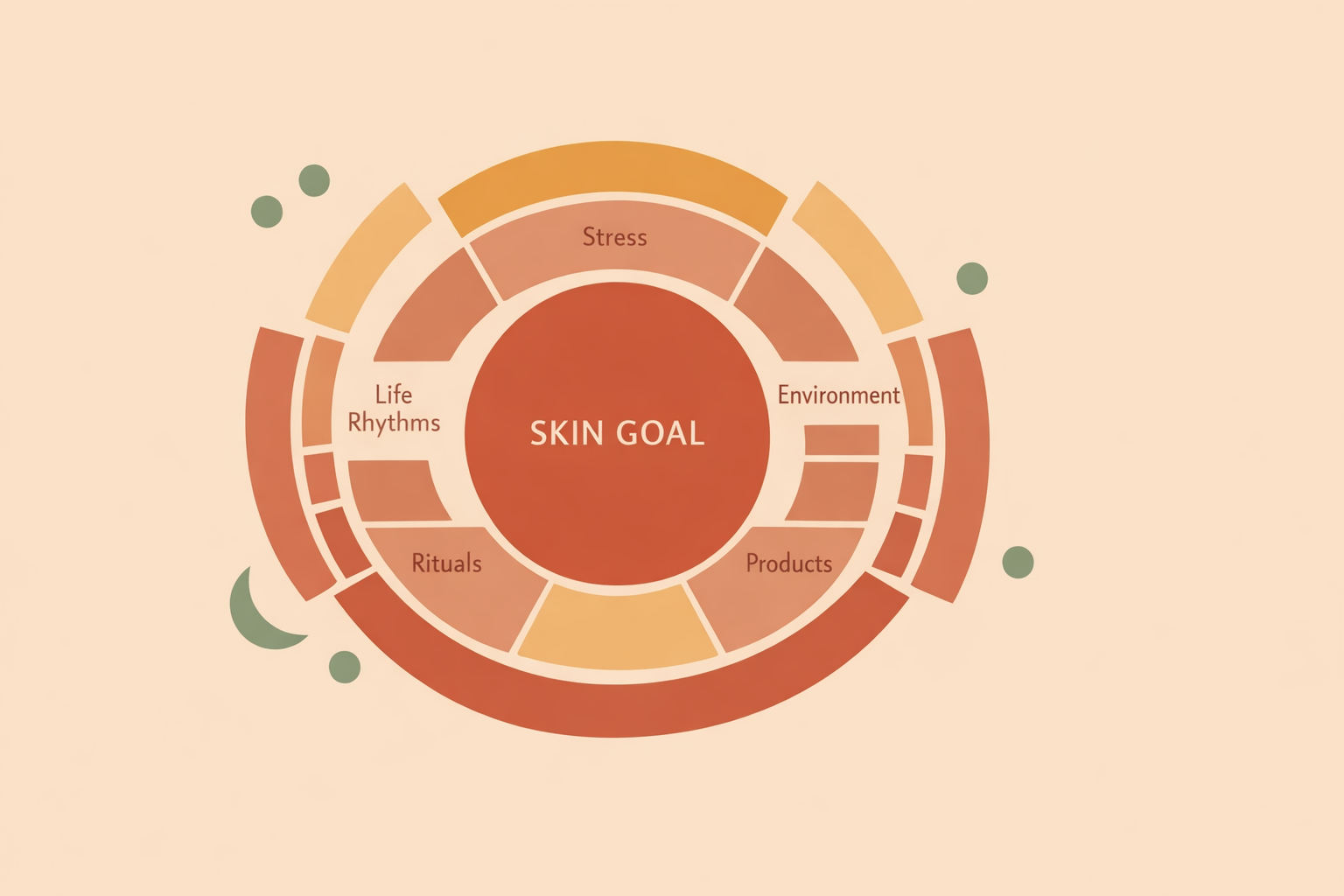
A visual map can help: place the current skin goal in the center (calm, hydrated, clearer, less reactive) and build outward with rhythms, emotional climate, cycle phases, environment, touch habits, and current products. By the end, you can usually identify the two or three levers that matter most right now.
Open the session with warmth, clarity, and partnership
The opening sets the tone. A kind, collaborative frame helps people speak honestly and makes the session feel supportive rather than corrective.
Use plain language: this is a space to notice patterns, understand the skin story, and co-create a few grounded next steps. That shifts the energy from “give me a fix” toward shared observation.
Then outline the flow: life rhythms first, then skin expression, then routine and rituals, and finally a short support plan. The same structure works in one-to-one sessions and in groups with guided worksheets or reflection prompts.
- Helpful opening question: “What would you love to feel in your skin three months from now?”
- Simple scaling prompt: “How supported does your skin feel today, from 1 to 10?”
- Useful framing words: care map, skin story, support plan, experiments, reflections, next steps.
Your role is to hold a clear process, listen well, and help the client notice what her skin has been communicating.
Map whole-life context before discussing products
Skin comfort is shaped day to day by movement, eating patterns, rest, and how someone processes stress. Starting here gives the routine review real meaning.
Begin with open prompts: walk me through a typical day, from waking to bedtime. Ask about meals, hydration, screens, work pace, movement, rest, and how evenings feel. Add a few simple scales so you can track change over time.
This stage often reveals the bigger picture. Many women connect breakouts, redness, or itch with work sprints, travel, or interpersonal strain, and stress triggers are widely recognized in acne. More broadly, stress processing can influence skin comfort in visible ways.
- Mini-check example: Sleep: 6.5 hours, wakes twice
- Movement: 20-minute walks, four times weekly
- Stress: 7/10 during deadline week
- Meals: irregular lunch, late dinner
- Hydration: around 1 litre daily
By the time you turn to products, you know the conditions the skin is living in, not just what is being applied to it.
Listen for skin patterns, not just skin “type”
Once the wider context is clear, turn to the skin’s own story. Look for patterns of oiliness, dryness, sensitivity, congestion, and reactivity across everyday life.
Ask for specifics: where shine appears by midday, whether cleansing leaves tightness, when redness shows up, which areas flake, and how skin shifts with weather, travel, or the menstrual cycle. This builds a functional picture rather than a marketing label.
Pay close attention to barrier strain. Common cues include stinging from products that should feel neutral. Increased reactivity to basic cleanser, simple moisturizer, or even water reactivity can also signal that the skin wants gentler support.
A personal or family history of eczema, hay fever, or asthma may suggest an atopic tendency. In practice, that often calls for simpler routines and a stronger focus on comfort.
- Example note: Redness around the nose after the morning gym, calmer by evening.
- Example note: Chin congestion appears a few days after high-pressure work periods.
- Example note: Tightness increases with double cleansing and cold weather.
This part of the intake often brings relief. The client stops feeling like “difficult skin” and starts seeing consistent feedback they can work with.
Review routines and separate core steps from extras
After context and patterns are clear, review the routine: what is used, how often, in what order, and how it feels on the face.
Most routines become steadier when the basics are obvious. For many people, core steps are cleansing, hydration, and protection. Everything else is optional and should earn its place.
Exfoliants, masks, strong actives, and tools can be useful, but timing matters. Over-exfoliation and stacking too many strong formulas often reduce comfort and blur cause and effect.
When irritation is present, simplify first. A short return to gentle cleansing, steady moisture, and daily protection creates enough calm to observe what the skin responds to next, much like a skin health assessment aims to do.
- Routine audit example: Morning: foaming cleanser, acid toner, vitamin C, niacinamide, retinoid, moisturizer, SPF.
- Evening: balm, gel cleanser, scrub, acid pads, retinoid, sleeping mask.
- Common result: tightness, redness, and confusion about what is helping.
- First adjustment: pause the scrub and acids, keep a gentler cleanse-and-moisture rhythm for two weeks.
This is also where traditional care can sit beautifully beside modern formulations, as long as the client’s skin feedback stays in charge.
Include traditional rituals with respect and discernment
Many women already carry meaningful care rituals from family, culture, or community. Bringing these into the intake can make the plan feel grounded and personal.
Oil cleansing, herbal steam baths, and mineral clays have been used across many traditions for generations. They deserve respectful conversation rather than romanticizing. Ask what the client already practices, what feels meaningful, and what her skin typically enjoys.
From there, choose culture-rooted support that fits the person: a weekly oil massage, an oat or rice infusion, a clay ritual used occasionally rather than aggressively, or a slower evening cleanse that feels settling after a demanding day.
The aim is to select practices that honor their roots, fit real life, and keep the barrier comfortable.
Notice emotions, behaviors, and touch habits
Skin is personal, and feelings about it shape daily behavior. This part of the intake links inner pressure to visible patterns.
Ask about scratching, rubbing, picking, and mirror-checking. Picking and rubbing are well recognized ways that strain can show up on the skin, especially when stress is high.
Explore emotional climate gently: does she feel confident, frustrated, self-conscious, disconnected, or tender around her skin? Then ask what she does on difficult days. That question often reveals the real drivers of flare cycles.
- Gentle prompt: “When you feel stressed, what do your hands tend to do?”
- Supportive follow-up: “Would it help to replace that habit with a short grounding ritual?”
- Example swap: pressing oil along the jaw for 60 seconds instead of checking the mirror repeatedly.
When the client can see these links without shame, the plan becomes kinder and easier to follow.
Turn the map into a simple support plan
Close the session with clarity. Reflect the main patterns you noticed together, then choose a few practical levers to focus on first.
If the skin seems overstimulated, a basic reset often gives the cleanest feedback: gentle cleansing, moisture, and daily protection. Add-ons can return one by one, so it stays obvious what helps and what doesn’t.
Timelines help clients stay steady. Two weeks is often enough to assess comfort shifts, while four to six weeks is a more useful window for texture and clarity.
- Two-week example: cream cleanser, simple moisturizer, daily SPF.
- Lifestyle focus: earlier nights, one midday walk, one familiar oil ritual on the weekend.
- Tracking prompt: rate tightness, sting, and morning glow every third day.
Keep the plan small enough to follow. Consistency beats complexity.
Know when to pause experimentation
Most skin coaching stays within observation, routine support, and habit change, whether that sits inside broader women's health coaching or a more focused skincare conversation. It also includes knowing when to stop experimenting and encourage outside evaluation.
If you notice rapid changes, bleeding, non-healing areas, or a widespread rash with broader symptoms, pause routine tweaks and encourage prompt in-person support from an appropriately licensed professional.
You do not need to make sense of everything on the spot. Good practice includes clear boundaries and timely referrals.
Use the intake map as a living document
A skin intake map works best when it is revisited. Skin shifts with seasons, stress, travel, hormones, work patterns, and evolving rituals, so the map should evolve as well.
Invite clients to add small notes between sessions: slept well and skin felt softer; deadline week and jaw tension returned; simplified the evening routine and morning sting settled. Over time, this kind of observation replaces reactive product changes with steadier, self-aware care.
That is the value of the map. It honors the client’s story, makes patterns visible, and supports sustainable next steps, whether in ongoing holistic skincare specialist training or day-to-day practice. Save cautions for the end: go slowly with new actives, patch test when appropriate, and prioritize comfort if the barrier feels strained.
Train in Holistic Skincare
Apply this mapping approach more deeply in the Holistic Skincare Specialist for Women Certification.
Explore the Certification →