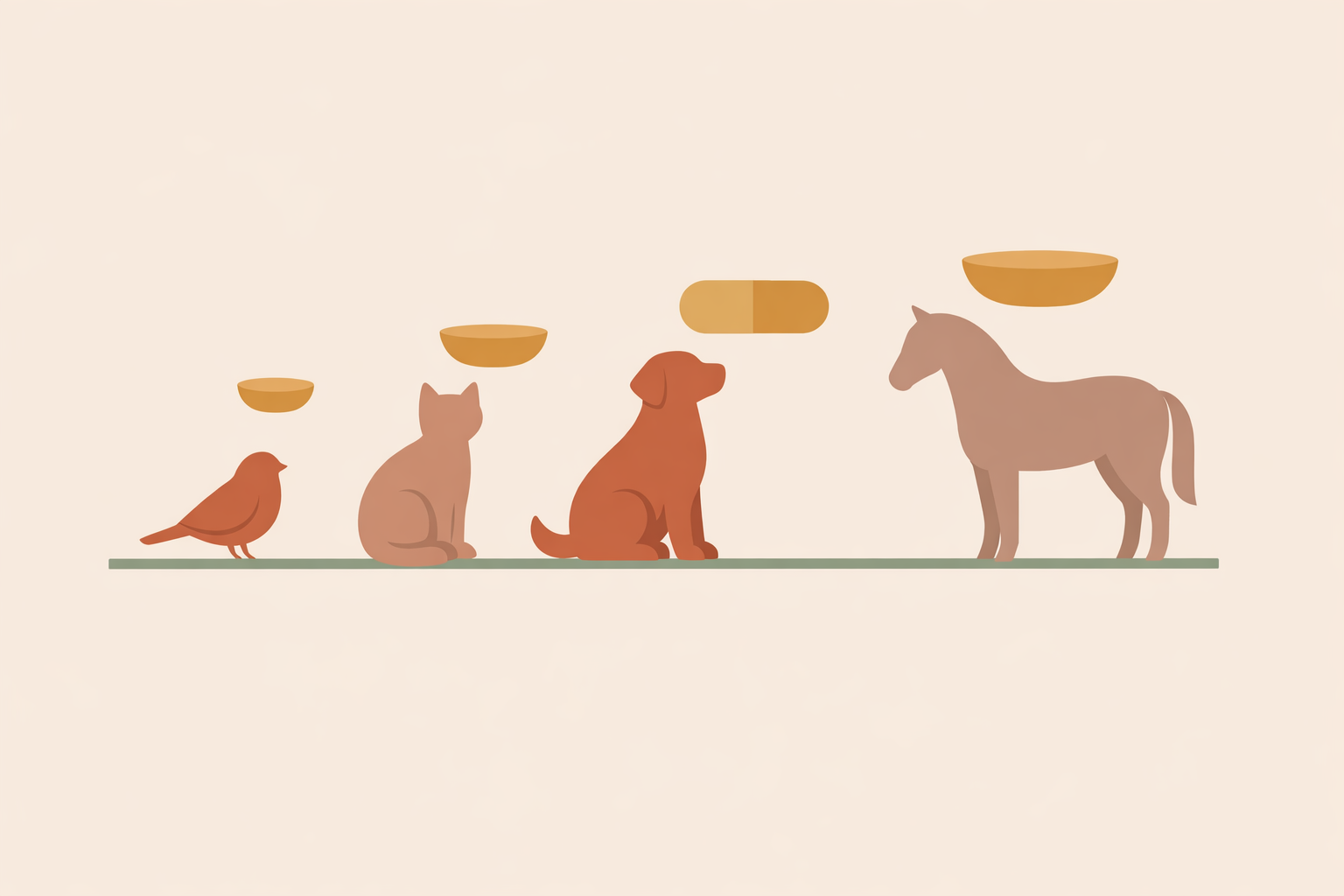
Species-specific dosing sits at the heart of responsible animal herbalism. The same plant can feel settling for one animal, too intense for another, and barely noticeable for a third. A cat that hides after a strongly scented extract, a bird that goes quiet with an overenthusiastic blend, or a horse that ignores a tiny tincture dose all teach the same lesson: species comes first.
Problems usually appear when people take shortcuts, like assuming “natural” always equals gentle or shrinking a human amount by body weight and hoping it fits. A steadier approach starts with the animal’s species, sensitivity, life stage, and situation, then translates a plan into mg/kg or mL/kg so the exposure stays proportionate and repeatable.
Key Takeaway: Species-specific dosing makes herbal plans safer, clearer, and more consistent. Start with the animal’s species and individual context, choose a suitable preparation, calculate fairly by body weight, and adjust rhythm, intensity, and duration with care.
Why species-specific herbal dosing matters
One plant does not land the same way across species. Different animals handle plant constituents through different digestive patterns, enzyme pathways, and elimination routes. Species-aware dosing belongs at the starting line, not as an optional “upgrade.”
Even with plants, mismatch happens. Animals can still have adverse reactions when a preparation is unsuitable, too concentrated, or poorly matched to the individual.
Some broad practitioner patterns help you orient quickly:
- Dogs often tolerate a wider variety of preparations and flavors than other common companion species.
- Cats usually do best with gentler, more diluted forms and smaller exposures than dogs.
- Horses often suit bulk herbs and teas better than high-proof extracts.
- Birds and small mammals usually need very dilute infusions and slow, careful escalation.
- Reptiles generally benefit from conservative amounts and longer spacing between exposures.
A quick example makes it real. A dog might accept a mild glycerite easily, while a cat given the same fluid volume of a similarly scented extract may salivate, hide, or refuse food. The difference is the species and the way the herb is delivered: form, concentration, and pace.
Build a species-first workflow before you calculate
Most dosing mistakes happen before the math begins. Clear planning keeps the whole process calmer, safer, and easier to repeat.
A grounded workflow can stay refreshingly simple:
- Confirm the species, weight, and life stage. This sets how conservative you should be from the outset.
- Clarify the goal. Short-term support and longer-term support call for different intensity and rhythm.
- Review the individual context. Appetite, scent tolerance, digestive sensitivity, current supplements, and previous reactions all matter.
- Choose the form before the dose. A well-chosen herb still fails if the animal refuses it.
- Set stop points in advance. Decide what changes would mean reduce, pause, or discontinue.
This step protects against two classic errors: assuming human doses apply and ignoring the animal in front of you.
For an older indoor cat with strong scent aversion, a mild infusion mixed into food is often a better starting point than a concentrated tincture. When the form fits the species, dosing becomes far easier to get right within a broader animal wellness approach.
Use mg/kg and mL/kg for fair dosing across species
Once the plan makes sense, body-weight dosing helps make it fair. Translating traditional guidance into mg/kg or mL/kg gives each animal a proportionate exposure rather than a guess.
Two equations handle most everyday calculations:
- dose (mg) = body weight (kg) × dose rate (mg/kg)
- volume (mL) = dose (mg) ÷ concentration (mg/mL)
If a 25-kg dog starts at 8 mg/kg of a gentle powdered herb, that’s 200 mg. If the liquid extract available is 100 mg/mL, that translates to 2 mL. From there, the daily amount can be divided into smaller portions when that suits the animal better.
The arithmetic is easy; the judgment is where skill shows. Starting at the bottom of an appropriate range reduces surprises, especially for cats, small exotics, and sensitive animals. Recording in mg/kg also prevents accidental escalation when brands, formulas, or concentrations change.
Match the preparation to the species and the situation
Preparation type changes the “feel” and intensity of a plan. A tea, decoction, glycerite, tincture, and standardized extract can come from the same plant yet act very differently in real-world use.
General guidance many practitioners rely on:
- Infusions are usually the gentlest and broadest option, and often suit sensitive species well when diluted.
- Decoctions pull more strongly from roots and barks, so shorter windows and reduced amounts often fit better for seniors or more delicate animals.
- Mother tinctures and high-proof extracts tend to be more intense than teas and usually call for drop-level dosing, dilution, and extra care with cats.
- Standardized extracts offer consistency, but that consistency requires precise calculation and clear stop points.
Form can matter as much as amount. A small quantity of a concentrated extract can feel more stimulating than a larger volume of weak tea. This is one reason horses often do well with bulk herbs or teas, while smaller or more sensitive animals usually do better with gentler preparations and slower pacing.
Adjust for sensitivity, age, and constitution
Even within one species, individuals vary. Young animals, seniors, frail animals, and highly sensitive animals usually do best with a softer entry point and more time to assess the response.
- Juveniles often begin around 25–50% of an adult mg/kg amount for gentle herbs.
- Seniors often begin around 50–75% of the adult amount, with longer intervals and closer observation.
- Sensitive animals often benefit from diluted preparations, divided portions, and more time before any increase.
Watch the whole picture, not only the goal. Appetite, stool, comfort, energy, and willingness to take the preparation give fast, practical feedback about whether the plan is landing well.
Change the rhythm for short-term needs and longer support
Dosing is also about rhythm. A plan used for a short flare should have a clear window, and longer-standing patterns usually respond better to steadier, lower intensity support.
For more acute situations, practitioners sometimes use closer intervals or slightly higher intensity, then step down quickly. For longer-term goals, a measured approach tends to be easier for animals to tolerate and easier for you to track.
Many practitioners also draw on seasonal frameworks, including the TCVM Five Elements lens, to refine timing and pacing. It can help decide whether a brief corrective phase or a longer, gentler course fits best, while still keeping species, form, and dose as the foundation.
Continuous, indefinite use of strongly stimulating or draining plants is best avoided. Planned pause weeks often keep support more balanced and easier to assess.
Know the red-flag exposures
Some plants and preparations call for extra restraint, especially for cats and other sensitive animals.
One major red flag is concentrated essential oils and strongly phenolic preparations. Pet poison awareness resources flag tea tree, wintergreen, clove, and oregano as particularly concerning exposures for pets, especially when concentrated.
Other important red-flag categories include:
- Salicylate-containing plants such as willow, wintergreen, and meadowsweet
- Pyrrolizidine alkaloid plants such as comfrey, coltsfoot, and borage, which are associated with liver risk
- Cardiac glycoside plants such as foxglove, oleander, and lily of the valley
Layering concentrated multi-herb products on top of existing botanicals, supplements, or medications also tends to create more problems than using one well-chosen herb at a time. Pregnancy, lactation, very young age, advanced age, and frailty all call for extra restraint, especially with stimulating plants and high-proof extracts.
Set clear stop points and watch for early signs of overload
A good plan includes clear instructions for when to slow down. That decision is best made while everyone is steady, not after an animal is already uncomfortable.
Pause, reduce, or rethink the plan if you see changes such as:
- sudden food refusal
- excess salivation
- hiding or unusual withdrawal
- digestive upset
- marked shifts in energy or behavior
High doses can behave unpredictably, and bigger is not always better. Beginning low and building carefully, only when the animal remains steady, keeps dosing decisions clean and confidence-building.
Use documentation to build a safer, more confident practice
Careful notes turn one-off choices into lasting skill. Documentation does not need to be elaborate; it needs to be consistent.
A simple log might include:
- species, weight, and life stage
- plant or formula used
- preparation type
- mg/kg or mL/kg amount
- frequency and duration
- observed changes in appetite, stool, energy, comfort, and behavior
- any increase, reduction, or pause and the reason for it
This record prevents drift and supports better reassessment, especially when product concentration changes. It is also valuable if there is ever a question about plant exposure history, much like the discipline used in evidence checks before using natural options for pets.
Over time, patterns become obvious: which forms animals accept, which species need more dilution, when seasonal support helps, and when less truly is enough.
Bring species-first dosing into everyday animal herbalism
Species-specific dosing expresses respect for the individuality of the animal and for the plants themselves. Traditional practice has always emphasized this kind of attentive matching, and it remains the most reliable way to work.
Start with species, context, and suitability. Choose a form the animal can tolerate. Calculate fairly by body weight. Keep the rhythm appropriate to the situation. Watch closely, document well, and build in pauses when the body asks for a break.
Practiced this way, animal herbalism becomes steadier and more predictable. Over time, many practitioners see the same quiet improvements: steadier digestion, calmer seasonal patterns, more comfortable movement, and better acceptance of well-matched plans, especially when developed through animal herbology training.
Study Animal Herbology Certification
Build species-first dosing judgment and preparation selection with the Animal Herbology Certification.
Explore Animal Herbology →