


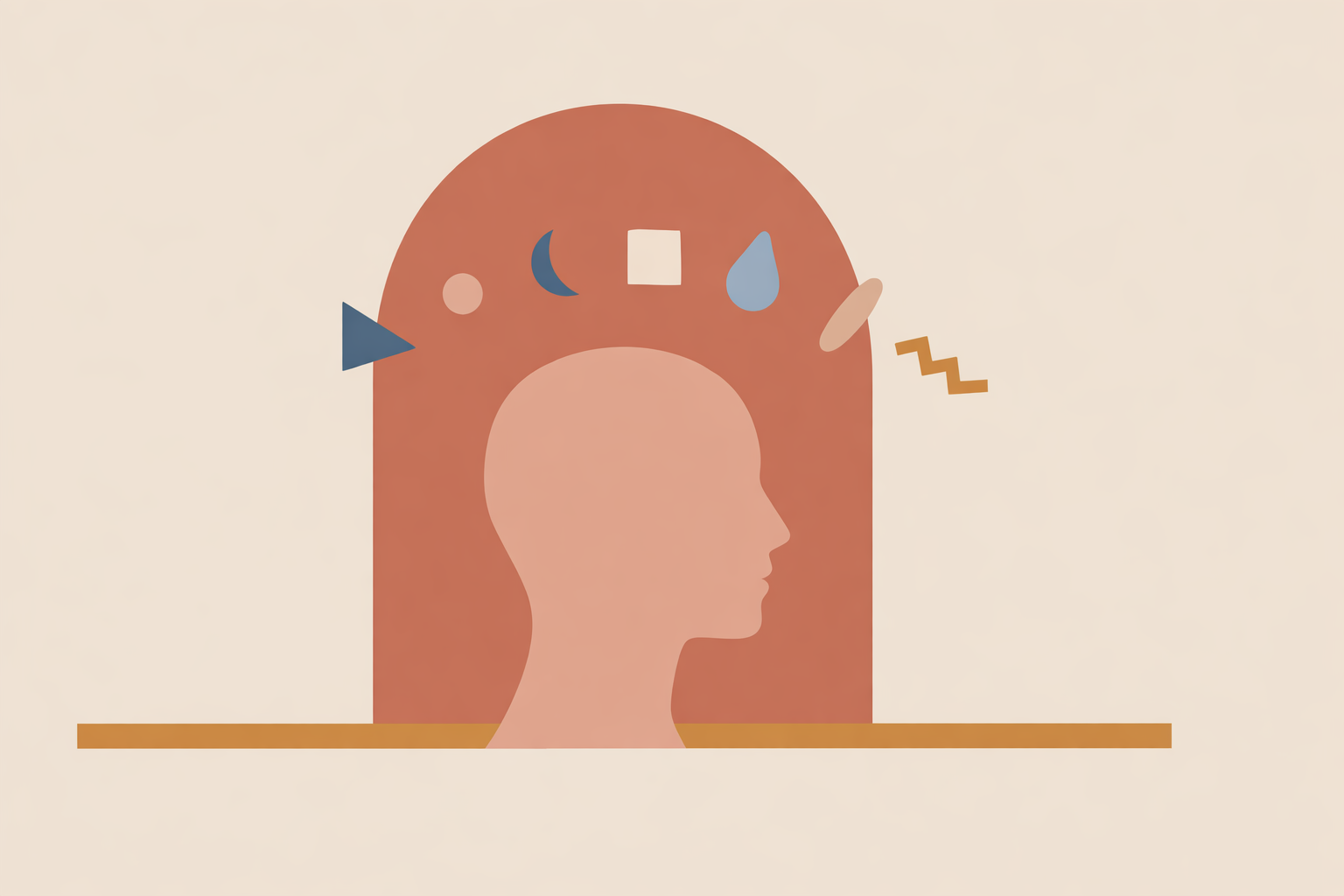
When a client’s state shifts, many practitioners instinctively reach for more content: more questions, more history, one more tool. Sometimes that fits. But a glance that keeps returning to the door, a full-body flinch at a small sound, a sudden blankness mid-sentence, or an urgent rush to fix everything usually signals a protective state change. In those first moments, the most supportive move is often simple: recognize what is happening, reduce pressure, and help the person re-orient to the present.
Key Takeaway: Trauma-informed sessions become steadier when you can quickly recognize seven common protective patterns: hypervigilance, startle spikes, shutdown, avoidance, intrusive recall, shame-based protection, and body-level dysregulation. The practical sequence is consistent: notice the shift, normalize it without over-interpreting, ask permission, orient to the present, reduce intensity, and only then decide whether to continue.
1. Hypervigilance and constant threat scanning
One of the clearest early signs is a person who orients more to exits than to you. They may choose the chair nearest the door, keep a bag close, track every sound, or keep part of their attention on the room rather than the conversation. That pattern is often less about manners and more about a system trying to predict danger.
In trauma-related states, people can become overly attuned to danger and persistently alert. In the session space, this often looks like room-scanning, guardedness, trouble settling, or a strong need to know exactly what will happen next. You may also hear familiar themes like betrayal, punishment, contamination, or “I have to stay prepared,” even when the person says it quietly.
Across many traditional lineages, practitioners watch the eyes, shoulders, and breath closely. When attention seems split between you and the room, safety is not yet fully felt, and it helps to respond to that first.
What helps in the first minute:
- Name the environment without making the person wrong.
- Offer choice around seating, sound, or door position.
- Invite brief present-time orientation through sight, touch, or contact with the room.
You might say: “There’s a lot going on outside today. Would it help to adjust where you’re sitting?” Or: “Before we continue, take a moment to look around and name three things you can see.”
2. Exaggerated startle and sudden activation spikes
Sometimes the shift is immediate. A hallway door closes, a phone buzzes, a pen drops, or silence lands too abruptly. The body jumps, speech speeds up, the jaw sets, or the person shifts into urgent problem-solving.
An exaggerated startle response is a recognized trauma-related arousal sign. Reminders can also bring physical reactions such as a racing heartbeat. You don’t need to analyze why it happened in that moment. The system has moved into protection and usually needs less stimulation, not more demand.
Many ancestral traditions read flinching, trembling, or sudden urgency as signs of unfinished alarm in the body. The response is steady across worlds: slow down, reduce input, and help the person regain enough steadiness to choose their next step.
What helps in the first minute:
- Pause and lower your own tempo.
- Soften your voice and reduce competing stimulation.
- Orient outward before asking for reflection.
- Offer one choice at a time.
You might say: “Let’s slow this right down.” Then: “Can you feel your feet on the floor?” Or: “Would you rather stay seated, or look around the room for a few seconds first?”
3. Shutdown, numbing, and “going away”
Not every protective state looks activated. Some people go very still. Their face loses expression, their gaze fixes or goes distant, speech slows, or they suddenly say, “I don’t know,” even when they were clear a moment before.
These moments are often protective downshifts, not disinterest. Trauma-related dissociation can include feeling detached, being in a daze, or losing awareness of present surroundings. In the room, practitioners often notice stillness, a fixed gaze, time loss, or the sense that the person isn’t fully in contact.
Low visible activation doesn’t always mean stability. Someone can look calm while feeling far away inside, so the task is to restore contact rather than push for more story.
What helps in the first minute:
- Pause the story.
- Check gently for contact.
- Keep eyes open if possible.
- Use simple external anchors rather than deep inward focus.
You might say: “Let’s pause for a moment. Are you here with me?” Or: “Would it help to look around and find three straight lines in the room?” Often, less is more.
4. Avoidance as protection, not defiance
Avoidance is easy to misread, especially when it shows up as cancellation, distraction, joking, changing the subject, relentless busyness, or losing momentum whenever certain themes come close. But avoidance usually has a protective logic.
Trauma-related avoidance can include avoiding thoughts and feelings linked to difficult experiences, as well as avoiding people, places, or activities that create too much activation. In session, this can also look like pulling away from body awareness, over-explaining, or clinging to productivity to avoid slowing down.
A broader map can support your observations. Trauma-related patterns are often described across four groups: intrusion, avoidance, negative shifts in mood or thinking, and altered arousal. Used well, that framework helps you pace wisely without turning the session into a labeling exercise.
Pushing past avoidance too quickly can recreate coercion. Many people need pacing, choice, and trust before approaching what has been defended against for good reason, including in trauma-adapted CBT.
What helps in the first minute:
- Get curious about the protection.
- Differentiate current unsafety from remembered unsafety.
- Offer smaller, more workable steps.
You might say: “It makes sense that part of you doesn’t want to go there today.” Or: “What does slowing down here protect?” That language respects the intelligence in the response.
5. Intrusive memories and present-past blending
Sometimes the past arrives with force: an image, a smell, a sound, a wave of nausea, a sudden body memory, or the unmistakable sense that danger is happening now. When this happens, detailed exploration is rarely the first need. Orientation is.
Trauma reminders can include sounds and smells, and flashback states may feel as though the event is happening again. Reminders can also trigger fear reactions even when the person can’t name the link right away.
Not every intrusive experience arrives as a clear picture. Some people mainly feel an emotional surge or a body state. That experience still deserves careful, respectful support.
What helps in the first minute:
- Pause the content.
- Name time and place.
- Use concrete, sensory orientation.
- Leave interpretation for later.
You might say: “Let’s come back to this room together. You’re here with me now.” Then: “What color can you see?” or “Can you feel the chair underneath you?”
6. Shame, inner criticism, and relational mistrust
Protective states also shape beliefs and relationship patterns. “I’m broken.” “No one is safe.” “It was my fault.” “I should be over this by now.” In practice, these often function like survival rules, not casual negativity.
After trauma exposure, people may experience persistent negative beliefs, strong guilt or shame, negative views of self or world, and difficulty feeling happiness. In sessions, that can show up as harsh inner commentary, quick shifts between closeness and distance, reluctance to ask for support, boundary discomfort, or excessive apologizing.
Repeated adversity can organize the inner world around threat. Many practitioners recognize the inner critic as a protector that learned harshness felt safer than vulnerability, especially in trauma and relationships work.
What helps in the first minute:
- Name the protective intention beneath the criticism.
- Keep boundaries clear and predictable.
- Invite a small increase in kindness rather than demanding a total shift.
You might say: “I hear a part trying very hard to stop more hurt.” Or: “Would it be okay to ask what this harsh voice is trying to protect?”
7. Body cues, regulation shifts, and thin interoception
The body often speaks before words do. Breath holding, jaw tension, tight shoulders, gut discomfort, trembling, numbness, temperature shifts, restlessness, fatigue, or changes in sleep and appetite can all signal that regulation is wavering.
Some trauma-related arousal patterns include feeling keyed up, jittery, and having difficulty sleeping. Alongside that, experienced practitioners rely on close observation of posture, breath rhythm, facial tone, gaze, and pacing. Traditional systems have long read these signs as expressions of vitality, depletion, strain, or withdrawal, and modern nervous-system language adds a useful layer to that older skill.
Interoception (the ability to sense what’s happening inside) can also be thin or confusing. For some people, inward attention feels supportive; for others, it feels blank or too intense. Body-focused work benefits from pacing and consent, and breath practices aren’t always regulating. If someone feels air hunger, chest tightness, dizziness, or more distress when focusing on the breath, it’s usually wiser to shift outward.
What helps in the first minute:
- Favor outside-in anchors when inward focus feels jagged.
- Use contact points such as feet, back, hands, and visual orientation.
- Add small movements only by consent.
You might say: “Let’s not chase the breath right now.” Then: “Can you feel your back against the chair?” or “Look around and find five blue objects.”
Using the seven clues well
These seven patterns help you respond to what’s happening now without needing the full story. When you can spot them early, sessions tend to become steadier, kinder, and more collaborative.
- Notice the concrete shift: gaze, breath, voice, posture, speed, contact.
- Normalize the response without over-explaining it.
- Ask permission before changing pace or practice.
- Orient to time, place, and the immediate environment.
- Titrate by working in small pieces.
- Check function: what might this response be protecting?
- Close with care so the person leaves with more steadiness than they had at the peak of activation.
These cues are not proof of a specific history. The same behaviors can also reflect protection, exhaustion, culture, grief, overwhelm, or an immediate life stressor. Read patterns gently and avoid over-interpreting.
When distress clearly exceeds the frame of coaching or holistic support, widen the circle of care. If someone is in immediate danger, severely disconnected, unable to function, or facing ongoing violence, they need a higher level of support than an ordinary session can hold.
The most reliable principle remains straightforward: when in doubt, choose the gentler anchor. Orient to the room, reduce demand, restore choice, and let steadiness come before story. That rhythm is deeply familiar in modern trauma and emotional healing work and in older practitioner traditions that have always respected the body’s timing.
Train in Trauma Healing
Build steadier sessions with skills from the Trauma healing coach certification.
Explore Trauma healing →










