Many weight-loss programs still start with the same formula: more cardio, fewer calories, and constant attention to the scale. In real life, that often backfires. Motivation dips, workouts feel flat, soreness lingers, and normal scale fluctuations end up stealing the spotlight from genuine progress.
A steadier path is to protect the tissue that supports everyday energy use, physical capability, and resilience while body weight trends down.
Key Takeaway: Strength training works best as the foundation of weight-loss coaching because it helps preserve muscle and physical capability while body weight decreases. Around that foundation, walking, light cardio, and culturally familiar movement can support overall energy use without taking over the plan. Progress is best judged through body composition, performance, consistency, and lived experience—not the scale alone.
Why strength training should anchor weight-loss coaching
Strength training earns its lead role because it helps protect the tissues that power daily movement. During weight loss, fat-free mass preserved and strength improved more with resistance exercise than with dietary restriction alone.
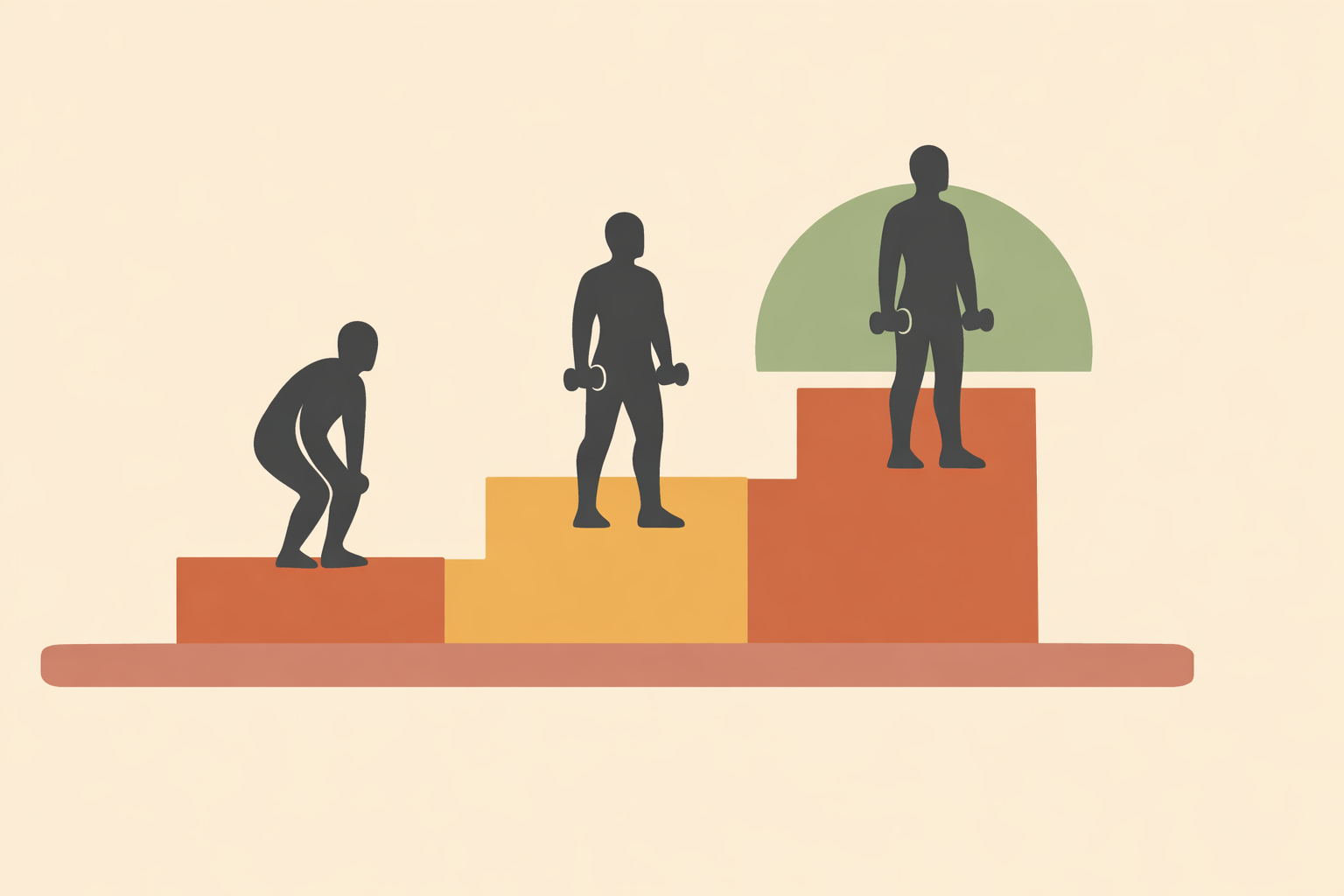
That protection shows up where it matters: carrying groceries, climbing stairs, lifting children, working in the garden, or moving through long days with more ease. When time and energy are limited, many practitioners place resistance work first, then add other activity once the base is stable.
It also changes the emotional tone of the plan. Strength-first coaching gives clients something to build. Feeling stronger and more capable often arrives before the scale gives any “credit,” and that momentum can carry the whole process.
Think beyond calorie burn: protect the body’s engines
Traditional lifeways rarely separated movement into neat categories. Daily living blended carrying, squatting, walking, lifting, dancing, and hands-on work. A grounded weight-loss plan can reflect that wisdom by keeping strength at the center, then layering in walking, play, and restorative movement.
Body change is shaped by more than one lever. Food patterns, sleep, stress, work demands, social context, and movement habits all matter. Strength training isn’t the whole story, but it’s one of the most dependable anchors because it protects capability while the rest of the plan adapts to real life.
For many busy clients, a workable start is two full-body sessions per week, plus short walks after meals on non-lifting days. The lifting provides the main stimulus; the walks keep movement frequent and sustainable.
Redefining progress beyond the scale
One of the biggest shifts in weight-loss coaching is learning to look past day-to-day scale changes. During weight loss, lean mass preserved while fat mass decreased, even when total body mass didn’t change much.
This is why clients often notice looser clothing, better gym performance, or easier movement before they see a dramatic change in body weight. Muscle and fat can move in different directions, and the scale doesn’t tell that story well.
Early weigh-ins are also easily influenced by hydration, food volume, sodium, menstrual-cycle timing, bowel contents, and training-related inflammation. Weekly trends tend to be far more grounding than single numbers.
What to track instead of relying on body weight alone
Useful markers of progress often include:
- Waist and hip measurements
- Clothing fit
- Training loads or repetitions
- Step consistency
- Energy through the day
- Sleep quality
- Ease of daily movement
A practical review rhythm is every 3 to 4 weeks. Compare a 7-day average body weight, one or two tape measurements, a favorite outfit, and one or two performance markers (for example: squat reps, rowing load, or walking pace). If strength is rising and measurements are shifting, the plan is usually working even if the scale stays quiet.
Consent matters here. Some clients prefer not to track body data and would rather focus on energy, confidence, consistency, or movement quality. Strong coaching respects those boundaries and keeps check-ins supportive instead of evaluative.
Phase 1: Build the habit and movement foundations
Phase 1 should feel manageable. The target is reliable attendance, solid movement patterns, tolerable fatigue, and a positive relationship with training. For many people, two full-body sessions per week is plenty to begin.
A minimum-effective approach fits well: 1 to 3 challenging sets for each major movement pattern, usually with 2 to 4 reps left in reserve. The work should feel purposeful, and clients should leave with enough energy to return next week.
This approach is especially supportive for people with an all-or-nothing history. Starting smaller often builds the kind of trust and momentum that lasts.
How to design a simple Phase 1 strength plan
Prioritize the main patterns with accessible variations:
- Squat: box squat or goblet squat
- Hinge: kettlebell deadlift or hip hinge with dowel
- Push: incline push-up or machine press
- Pull: supported dumbbell row or band row
- Carry: farmer carry
- Brace: dead bug or side plank
- Lunge or step: step-ups or supported split squat
A sample 40-minute session might look like this:
- 5 minutes of easy warm-up movement, such as walking or a familiar dance pattern
- Goblet squat: 3 sets of 8 to 10
- Incline push-up: 3 sets of 6 to 8
- Kettlebell deadlift: 3 sets of 8 to 10
- Supported row: 3 sets of 10 to 12
- Farmer carry: 3 rounds
- 3 minutes of easy walking to finish
The tone matters as much as the template. Coaching cues like “leave a little in the tank” and “finish feeling like you could repeat this” make consistency feel safe and achievable.
Phase 2: Progress strength while supporting body-composition change
Once attendance is steady, the goal is usually to progress the basics rather than chase endless variety. A simple double-progression model works well: build repetitions within a target range first, then increase load modestly.
Most work can stay around 1 to 3 reps in reserve. In a calorie deficit, frequent training to failure often creates more soreness than clients need and can make consistency harder to maintain.
A practical weekly template often includes 2 to 3 sessions covering:
- Knee-dominant work
- Hip-dominant work
- Horizontal push and pull
- Vertical push and pull
- Loaded carries
- Trunk stability
Using double progression without overwhelming recovery
If a client is doing 3 sets of 8 to 12 on a dumbbell press, they keep the same weight and gradually earn more reps until the top end of the range feels strong. Then the load increases slightly and reps start lower again.
This keeps progress steady and recovery predictable. The same method works for squats, hinges, rows, presses, and carries. Accessories can come later, once consistency and recovery are already reliable.
How to combine lifting, cardio, and daily movement
Cardio can strongly support a weight-loss plan, especially when it’s kept in its lane. For many clients, 2 to 3 sessions of 20 to 40 minutes at a conversational pace—plus more daily steps—adds meaningful movement without draining lifting quality.
When strength and endurance work happen on the same day, separating them by 3 to 6 hours can reduce overlapping fatigue. If they must be back-to-back, lifting first is often the smoother choice.
A practical weekly layout could look like this:
- Monday: Lift A
- Tuesday: 30-minute walk
- Wednesday: Lift B
- Thursday: easy mobility and walking
- Friday: Lift C
- Saturday: easy cycling or long walk
- Sunday: family hike, dance, or market walk
This structure supports the goal while protecting recovery and keeping enthusiasm high.
Phase 3: Maintain results with flexibility and autonomy
Phase 3 is about sustainability. Life gets busy, routines shift, travel happens, and energy changes with seasons. Clients do best with a framework that bends without breaking.
The core patterns usually stay the same, while emphasis rotates over time. One block may lean into strength, another into higher reps, another into movement quality, and another into lighter recovery-focused work. Planned deloads can also help training stay fresh and doable long term.
Maintenance stays active. It’s a skill built through repetition, self-awareness, and flexible planning.
Teach clients simple training dials
Clients stay consistent when they know how to adjust their plan without starting over. Useful dials include:
- Volume: shorten the session by reducing work sets
- Intensity: add a rep or two before increasing load
- Schedule: swap a full gym session for a short home workout or travel session
A monthly rhythm such as three build weeks followed by one lighter week often works well. These deloads support motivation and keep training aligned with real-life demands.
Interruptions also deserve normalizing. Missed sessions don’t mean failure. A calm return plan—book the next session, take a walk today, and restart with the last successful load—keeps the process steady.
Weaving in cardio, steps, and traditional movement practices
Walking, easy cycling, swimming, dance, and other low-friction activities fit naturally around a strength-first plan. They add variety, support energy use, and tend to be easy to recover from.
Traditional and ancestral movement practices are especially valuable here. Carrying groceries on foot, gardening, sweeping outdoor spaces, dancing with family, or doing repetitive home tasks by hand can all “count” as meaningful movement. For many clients, these feel familiar and dignified because they connect activity to identity and daily rhythm.
People keep moving more consistently when the plan feels like an extension of life and culture.
Examples include:
- A family dance session after dinner on non-lifting days
- Walking to the market and carrying bags home
- Short gardening blocks paired with easy walks
- Using stairs, hills, or outdoor chores as part of weekly movement
Conclusion: A steadier, strength-first path
The central idea is simple: protect the body’s engines while body weight trends down. Phase 1 builds consistency and confidence. Phase 2 progresses the training stimulus without overwhelming recovery. Phase 3 builds flexibility so clients can stay steady through real life.
Across all three phases, one principle tends to hold: minimum effective training, maximum sustainable consistency. Strength work helps preserve capability during weight loss, while walking, light cardio, and culturally meaningful movement broaden the plan in a way clients can live with.
A few cautions belong in every responsible coaching relationship. Individuals vary in recovery, mobility, training history, and stress load, so plans should be adjusted to the person in front of you. When a client has pain, dizziness, or ongoing symptoms they can’t explain, they should seek appropriate medical support before pushing intensity.
Steady change usually comes from repeatable sessions and respectful adjustments. When coaching honors both time-tested movement traditions and modern evidence, progress tends to feel more stable and sustainable.
Coach Weight Loss Confidently
Deepen your programming with the Fitness and Weight Loss Coach Certification for strength-first, sustainable client results.
Explore Fitness Coach →