Most client check-ins still orbit a single number: the scale. When it stalls or swings, coaches feel pressure to cut calories harder, add more cardio, or defend the plan—even as clothes fit better and lifts improve. That mismatch can turn genuine progress into apparent failure.
Key Takeaway: Strength-centered fat loss is best judged with a combination of metrics, not bodyweight alone. Waist change, strength, body-composition snapshots, daily energy, sleep, mood, and training consistency together give a clearer picture of progress than the scale ever can.
Shift 1: High-Quality Fat Loss Starts With Strength
High-quality fat loss protects strength, function, and vitality. In practice, that means reducing fat while keeping the tissue that helps you move well, train well, and feel steady in daily life.
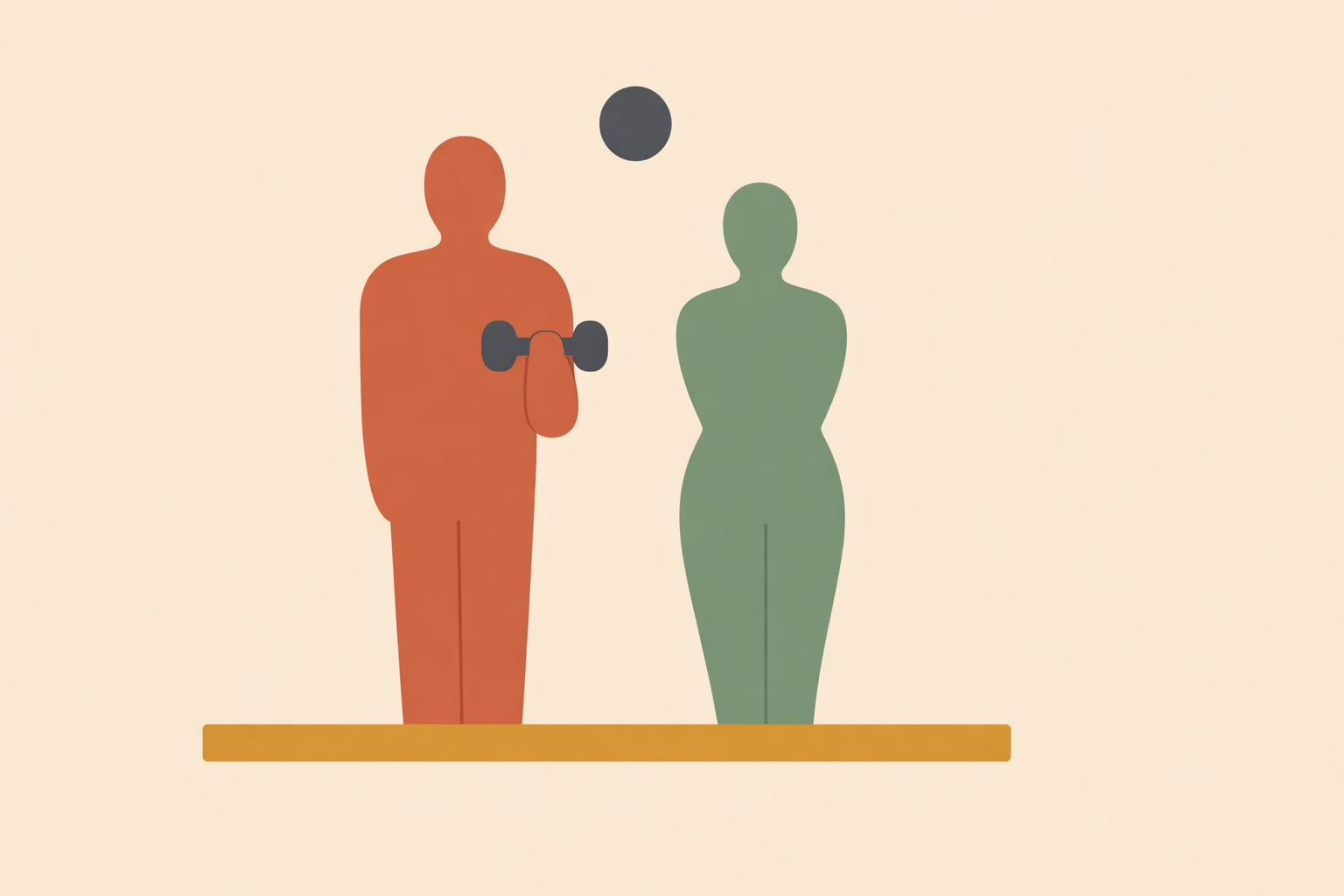
During an energy deficit, resistance training helps preserve fat-free mass and improve muscular strength. That’s why two people can share the same scale weight yet look, feel, and perform very differently.
Large reviews also show reductions in body-fat percentage with resistance training, especially when it’s paired with a sensible calorie deficit. In real coaching, this is the win: a body that’s leaner, steadier, and more capable, even if the scale seems unimpressed.
Concrete example: A client drops only 1.5 kg in eight weeks, but their deadlift rises from 50 kg to 70 kg for sets of five and their waist shrinks by 3 cm. The scale says “small change.” Their body and performance say otherwise.
Traditional ways of judging physical progress were often rooted in function: what the body could carry, how steadily it could work, and how well it recovered. Strength-focused fat loss follows that same logic.
Why the Scale Misses What Matters
A scale only measures total body mass. It can’t tell whether a change came from water, fat, muscle, or bone mineral.
Daily bodyweight also shifts with water balance, sodium intake, digestion, and menstrual-cycle changes. So a short-term increase doesn’t automatically mean fat gain, and a quick drop doesn’t always reflect meaningful change.
Try this script: “We’re not chasing ‘down’—we’re chasing ‘better’: a smaller waist, steadier strength, and easier movement. The scale is one witness, not the whole story.”
Shift 2: Body Recomposition When the Scale Barely Moves
If clothes fit looser, photos look different, and training feels stronger while scale weight stays flat, body recomposition is often the reason.
Recomposition means losing fat while gaining—or at least preserving—muscle. Resistance training and supportive nutrition make this especially common for beginners, returners, and anyone rebuilding consistency after a long gap.
Early on, increases in glycogen and the water stored alongside it can temporarily hide fat loss on the scale. This is normal, and it’s part of why strength-based tracking matters.
Muscle tissue is denser and more water-rich than fat tissue, so gaining some muscle while losing fat can leave bodyweight almost unchanged. You can see real visual and performance change while the scale barely budges.
Practical rule: When the trend feels confusing, pair weekly average weight with waist measurements and photos. If waist is down and your working sets are improving, the process is likely moving in the right direction.
Metric 1: Waist and Circumference Measurements
Start with the tape measure. For many clients, it’s one of the clearest tools for tracking visible fat-loss progress.
As bodyweight changes, waist circumference shows the largest relative reductions compared with other common circumference measures. The waist often reveals change sooner than the scale does.
Hip circumference often changes more slowly than the waist during fat loss. Change isn’t perfectly even, and different areas respond at different speeds.
This is why a waist measure is so useful when scale readings feel noisy.
- Waist: Exhale naturally and place the tape midway between the lowest rib and the top of the hip bones.
- Hips: Measure around the fullest part of the glutes.
- Thigh and arm: Use the same landmarks every time.
Concrete example: A client’s weight drops only 0.3 kg in two weeks, but their waist shrinks 2 cm and their goblet squat improves from 14 kg to 16 kg for the same reps. That is meaningful progress.
Water, sodium, digestion, and cycle-related shifts can move bodyweight around from one day to the next, but a shrinking waist over two to four weeks is usually a steadier sign that central fat is changing.
Metric 2: Body-Fat Percentage and Lean Mass Estimates
If you have access to body-composition tools, they can add useful context—provided you use them sparingly and consistently.
Resistance training is associated with lower body-fat percentage and better lean-mass retention than scale weight alone can show. This is where composition tools help: they can confirm “quality change” when the scale feels quiet.
DEXA is often valued because it can separate fat mass from lean tissue across body regions. BIA is more accessible, but hydration, glycogen, sodium, and menstrual phase can all skew BIA estimates.
So if you use body-composition readings:
- Use the same tool each time
- Keep timing and routine consistent
- Compare trends over months, not days
Concrete example: A quarterly scan shows less fat mass and slightly more lean mass while bodyweight stays the same. That’s exactly the kind of result the scale alone would miss.
Used well, these tools support the coaching picture. Used too often, they tend to create more noise than clarity.
Metric 3: Strength and Performance
Track what the body can do. Strength is one of the clearest signs that muscle is being maintained through a fat-loss phase.
Even during weight-loss efforts, resistance training can improve muscular strength. Trials of accessible training formats have also shown gains in grip strength and other practical performance markers, even when scale-related changes were modest.
Useful markers include:
- Estimated 1RM for key lifts
- Reps at a fixed load
- Total weekly training volume
- Everyday ease such as stairs, lifting, carrying, and getting up from the floor
If waist is trending down while lifts stay steady or improve, muscle is likely being protected well.
Concrete example: Four weeks into a gentle cut, deadlift performance is up, walking pace feels easier, and recovery is stable. That is solid progress, whether the scale confirms it dramatically or not.
Metric 4: Energy, Sleep, and Mood
Many clients notice internal shifts before visible ones. Better mornings, steadier energy, deeper sleep, and calmer appetite are often early signs that the plan is sustainable.
These are not “soft” markers. They show whether someone is adapting well or being pushed past a good pace.
A simple daily check-in works well:
- Energy: 1 = depleted, 5 = steady
- Sleep: 1 = broken, 5 = deep
- Mood: 1 = tense, 5 = calm
When these markers stay stable or improve while the waist trends down, the process is usually well-paced and more likely to last.
Traditional practice has long paid attention to these signals. How someone sleeps, moves, and carries themselves often tells you as much as any numeric target.
Metric 5: Behaviors, Consistency, and Training Load
Results matter, but behaviors create results. A clear coaching system tracks the levers you can actually adjust week to week.
Reviews suggest that supervised resistance training often leads to clearer body-composition changes, in part because progression and adherence are stronger. Some more lightly structured or home-based routines show smaller changes, which highlights how much consistency and progression matter.
Track what is practical and coachable:
- Session completion rate
- Total weekly sets per major muscle group
- Training load or time under tension
- Protein intake as a supportive anchor for nutrition and diet body recomposition
- Daily steps or active minutes
Before changing calories, check adherence first. If sessions are inconsistent, protein is low, and daily movement is erratic, the next step is usually to make the basics steadier.
Concrete example: A client hits 90% of planned sessions, raises weekly leg volume, keeps protein consistent, and sees their waist drop 1.5 cm over the month while scale weight stays flat. That is not a stall. It is progress.
A Simple Weekly and Monthly Tracking Rhythm
The best tracking plan is simple enough to repeat without stress. Weekly checks show how things are moving; monthly checks show where they’re heading.
Weekly
- Average daily weigh-ins, or weigh two to three times and track the trend
- Measure waist once under the same conditions
- Log key lifts, best sets, or weekly volume
- Review session completion, steps, protein, and sleep
- Score energy, sleep, and mood from 1 to 5
Monthly
- Take progress photos in the same lighting and position
- Repeat full circumference measurements
- Use an optional body-composition snapshot if available
- Review what helped consistency and what needs adjusting
Meaningful recomposition usually becomes easier to see over eight to twelve weeks, not a few days. A two-to-four-week view is far more useful than reacting to every weigh-in.
A practical rule of thumb: if waist is shrinking, lifts are holding or improving, and bodyweight trends gently downward over time, the approach is working. If scale, waist, photos, and performance all stay flat for several weeks despite solid adherence, then a modest adjustment may be appropriate.
- Small nutrition adjustment
- Slight increase in protein
- More daily movement
- Closer attention to recovery and training quality
One-page tracker idea:
- Week of [date]
- Average weight
- Waist
- Best squat or hinge set
- Weekly sets for upper and lower body
- Steps per day
- Protein per day
- Energy / Sleep / Mood score
- Bottom line: Keep, Tweak, or Reduce
Conclusion: Better Metrics Create Better Coaching
When the scale stops narrating the whole process, fat loss becomes clearer and kinder. Waist measurements show shape change. Strength confirms that useful tissue is being preserved. Body-composition tools can add context. Energy, sleep, mood, and consistency reveal whether the process is truly sustainable.
In everyday life, changes such as easier stairs, stronger lifts, better posture, and more confident movement often arrive before dramatic scale shifts. These aren’t side notes; they’re central signs that the work is taking root.
As practitioners, it serves clients to track capacity, rhythm, and lived experience alongside bodyweight. That broader view respects both traditional wisdom and modern evidence, while keeping coaching grounded, humane, and effective for fitness and weight loss coaching.
Master Strength-Led Fat Loss
Apply these progress metrics in practice with the Fitness and Weight Loss Coach Certification.
Explore the Certification →