Many hypnotherapy sessions end with a familiar gap: someone feels calmer in the room, then struggles to recreate that shift when it matters. Long, improvised visualizations can be powerful, but they don’t always travel well into bedtime, a hard conversation, or the first stirrings of stress. What transfers best is usually simpler: short, repeatable “mental movies” tied to real-life cues, paired with small, visible actions and a clear sense of choice.
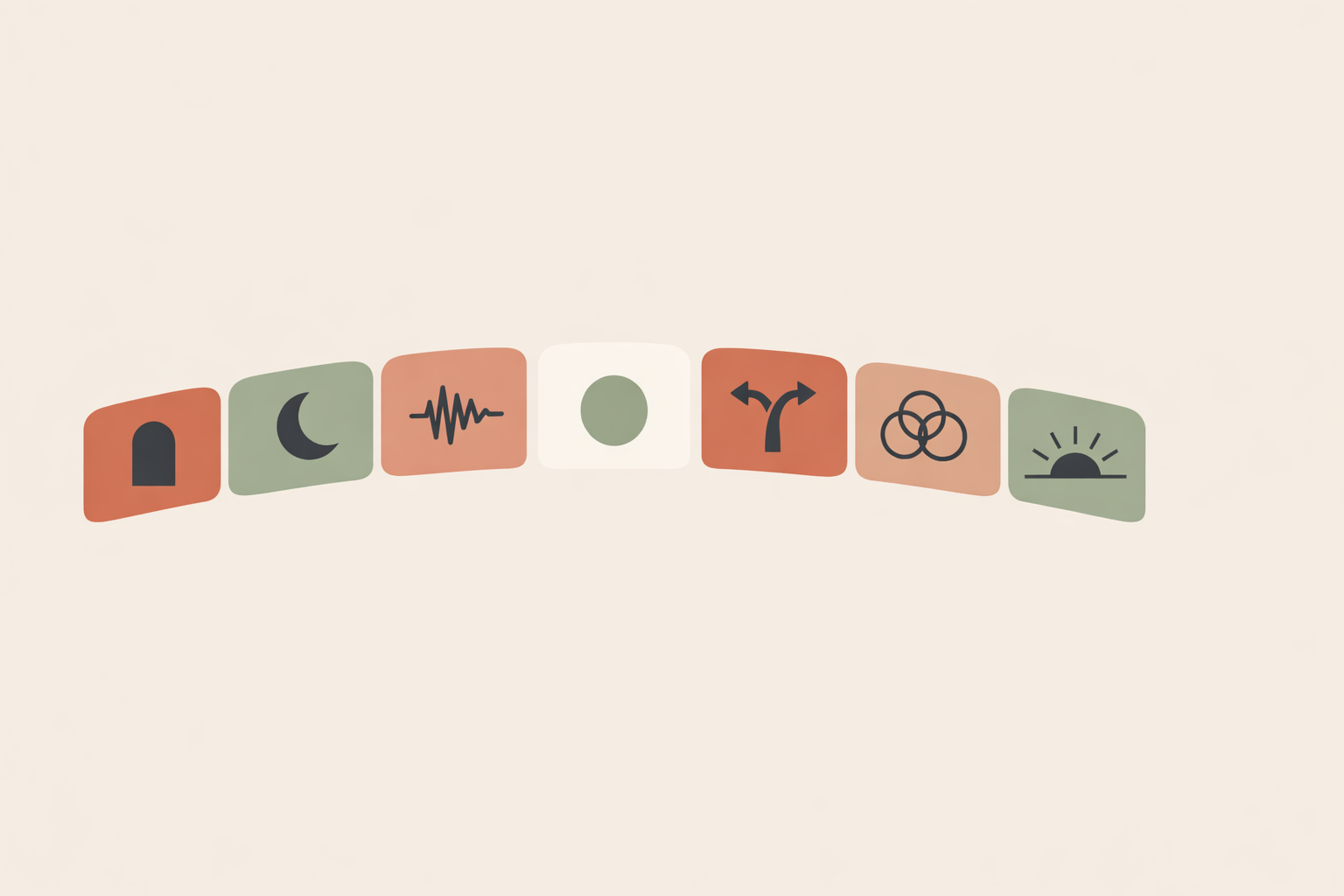
Key Takeaway: Subconscious reprogramming becomes more practical when clients rehearse short, sensory mental movies they can replay at real cues. A simple sequence might include a Safe Place Reset for quick regulation, a Sleep Corridor for evening wind-down, a Steady Voice rehearsal for boundaries, a belief-upgrade scene for kinder self-talk, a Fork in the Path movie for habit shifts, an Inner Circle scene for support, and a Day Ahead rehearsal for focus and follow-through.
1. Safe Place Reset: a fast calm anchor
Start with the most reusable scene: a safe-place movie the client can call up quickly. In practice, it becomes the base layer for everything else. When someone can settle into a familiar inner environment, other rehearsals land more easily.
A safe-place scene can be an inner refuge you return to whenever you need. Keep it recognizable rather than elaborate.
Begin by narrowing attention. Hypnotic induction often relies on focusing so the mind becomes more receptive to imagery and suggestion. A practical start is simple: notice the chair, feel your feet, follow the breath.
Then build the scene with a few dependable elements:
- Breath first: Invite 4–6 steady breaths with a longer exhale. Slow breathing can reduce arousal.
- Sensory detail: Add sight, sound, touch, scent, and taste where natural. Guided imagery tends to work better when it uses all senses.
- Simple structure: Choose a stable image (cove, garden, warm room) rather than a scene full of movement.
- Short duration: Brief imagery can still shift state. Around 10 minutes has been linked with a calmer state.
Mini-sample: “With each exhale, your body settles. The ground holds you. Light moves softly across the water. Your jaw unclenches. Your shoulders drop. You rest here for just a moment, and that is enough.”
Over time, compress the full scene into a quick cue: one breath, one image, one felt sense. That’s when it becomes truly portable.
2. Sleep Corridor: a nightly scene for drifting off
For sleep support, repetition matters more than novelty. Use the same scene long enough for the body to associate it with rest.
Regular pre-sleep guided imagery has been linked with better sleep quality and easier onset. Traditional bedtime rhythms echo this too: across cultures, repeated nighttime stories and prayers have long helped people soften into sleep, especially in family and communal settings.
A sleep script works best when it’s gentle and predictable:
- Keep the same pathway: Rehearse the same corridor, staircase, garden path, or dim room.
- Stay brief: Five to ten minutes is enough for many people.
- Use soft transitions: Lamps dimming, curtains parting, steps slowing, doors closing.
- Let the body learn the cue: Nightly repetition trains a familiar “time to drift” response.
Mini-sample: “You enter a quiet corridor lit by warm lamps. With each slow step, another thought fades behind you. At the end of the hall, a curtain opens into deep, welcoming darkness. Your body recognizes the way.”
If someone wakes in the night, replaying the final 30–60 seconds of the same scene is often more helpful than inventing a new one. Familiarity is the point.
3. Steady Voice: rehearsing calm boundaries
When someone wants more confidence in a difficult conversation, skip abstract instructions and rehearse visible behavior. A practiced response becomes easier to access under pressure.
A reliable pattern is to begin as an observer, then shift into first person once the scene feels manageable. That progression often helps the body-mind accept the rehearsal without bracing.
Keep the scene anchored to specifics:
- Posture: feet grounded, jaw soft, chin level
- Breath: one pause before replying
- Voice: slower pace, fewer extra words
- Boundary line: one sentence the client can genuinely imagine saying
Mini-sample: “You watch yourself from across the room. You pause before speaking. Your shoulders stay loose. Now step into the scene. Feel your feet on the floor and hear your own voice say, ‘I’m going to finish my thought, and then I’m happy to hear yours.’”
The aim is familiarity. When the moment arrives in real life, it feels less foreign because it’s already been rehearsed.
4. Rewriting the old story: upgrading limiting beliefs
When someone is caught in harsh inner talk, it’s usually better to acknowledge the old story briefly, then build a believable alternative. A perfect affirmation often feels like a mismatch and gets rejected.
In cognitive theory, core beliefs can shape behavioral patterns and influence automatic reactions. In day-to-day practice, it shows up as repeated inner stories that quietly set the limits of what feels possible.
A useful belief-upgrade movie has three parts:
- Name the trigger: the inbox, the silence after sending a message, the moment before speaking up
- Interrupt the old line: pause, breathe, ground, soften the body
- Install a bridge statement: kinder and more believable than an all-or-nothing affirmation
Bridge statements tend to land better than perfection-based language. “I’m learning to trust my voice” is often more usable than “I am completely confident in every situation.”
Mini-sample: “You open the inbox and feel the old rush: ‘I’m behind.’ Pause. Feel both feet on the floor. A steadier thought arrives: ‘One message at a time. I can begin here.’ You answer one important message and let that small completion register.”
This style of rehearsal teaches the subconscious that change can start with one believable shift.
5. Fork in the Path: rehearsing one new habit choice
Habit change sticks when imagery is attached to a precise moment rather than a vague goal. Rehearse the fork: the point where the old path starts, and a new move becomes possible.
Pattern interruption can create room for alternative behaviors. In coaching terms, it’s building a small pause where choice can live.
Build the script around:
- The exact cue: a message ping, a craving thought, an afternoon slump
- One visible action: one breath, one sip of water, finishing the current sentence, standing up, stepping outside
- A felt reward: relief, steadiness, self-respect, a sense of completion
Imagery rehearsal can enhance performance, especially when the scene is specific and emotionally alive.
Mini-sample: “The notification appears. Old path: react instantly. New path: inhale, soften your shoulders, finish the sentence you are writing, then decide what to do next. Feel the small win settle in your chest.”
Repeat the same fork regularly, and the new choice starts to feel more natural.
6. Inner Circle: support, lineage, and self-worth
Not every script needs to focus on self-correction. Some of the deepest work comes from support: remembered encouragement, symbolic guidance, and the felt sense of not standing alone.
Many traditions make space for elders, guides, ancestors, or an inner council as sources of courage and orientation. When approached with respect and cultural care, this becomes a strong resourcing practice in modern coaching contexts.
Shape the scene carefully:
- Choose figures with care: real, remembered, symbolic, or imaginal figures who feel supportive
- Keep the setting grounded: a fire, shoreline, bench, tree, or quiet room
- Receive one clear sentence: not a speech, just a line that feels steady and plausible
- Notice the body response: warmth, fuller breath, lifted posture, softer belly, steadier gaze
Specific, plausible affirmations often have more traction than vague self-praise. Self-affirmation research suggests effects are stronger when the content feels personally important and believable.
Mini-sample: “You sit beside a quiet fire. A supportive figure places a shawl around your shoulders and says, ‘You can take this one step at a time.’ Your spine lengthens. Your hands warm. You let the words settle.”
Between sessions, connect the movie with lived evidence. When someone notices small moments of steadiness in daily life, bring that back into the next rehearsal. Tracking new evidence helps revise self-beliefs, and that principle translates cleanly here.
7. Day Ahead: a short rehearsal for focus and follow-through
A morning or evening mini-movie helps people step into the day with direction. The goal is to pre-live a few meaningful moments with clarity, not to control every hour.
Self-hypnosis commonly combines relaxation with focused imagery. A day-ahead script applies that same structure to the next 12–24 hours.
Keep it compact:
- Choose three moments: one work focus point, one relational moment, one evening transition
- Add one identity phrase: “I move one meaningful thing forward” or “I stay steady and kind”
- Make it sensory: where the phone is, what the room feels like, how the body carries itself
- Let it stay short: a compact practice is easier to repeat consistently
Imagery tends to have the strongest effect when it is emotionally vivid and concrete.
Mini-sample: “See yourself at 10 a.m. You open the project calmly. Your phone is across the room. At noon, you answer clearly instead of rushing. In the evening, lights dim and your body recognizes it is time to wind down.”
Over time, these rehearsals strengthen the thread between intention and action.
Making the scripts work in real practice
These seven movies don’t need to be used all at once. Two or three core scenes are usually enough: one for regulation, one for a recurring challenge, and one for direction. The real skill is making them replayable.
A few principles keep the work grounded:
- Record and repeat: Many people benefit from repeated practice with a familiar script.
- Tie scenes to real cues: bedtime, a calendar alert, a doorway, a message tone, morning tea
- Track lived outcomes: sleep onset, calm pauses, clearer speech, kinder inner dialogue
- Let the language belong to the client: culturally respectful, emotionally tolerable, and natural in their own voice
Close each rehearsal cleanly. Grounding practices like naming objects or noticing body sensations can support a steady return to the present.
As always, pacing and fit matter. Practice works best when you agree on a clear stop-signal, start short, and choose pleasant or neutral imagery unless deeper material is clearly appropriate and well supported. Guidance on careful pacing highlights safety planning. Some people, including those with PTSD or experiences such as hallucinations, can find imagery destabilizing, so careful monitoring is important.
Finally, measure what matters. Tracking concrete signs of change supports evaluating benefit, and it can stay simple: How long did sleep take? How many calm pauses happened this week? Did the client notice one moment of kinder self-talk?
That’s how these mental movies become lived practice: short, respectful, repeatable inner rehearsals that support real change in daily life.
Master Hypnotherapy Scripts
Develop cue-based, repeatable scripts in the Professional Hypnotherapy Certification.
Explore Professional Hypnotherapy →