Many animal wellness practitioners learn quickly that what feels mild to people can overwhelm animals. A diffuser that seems gentle in your office sends a cat under the bed; a dog starts lip-licking and leaves the room; a horse tosses his head and avoids the stall door. In those moments, lowering the dose of an essential oil often isn’t enough. When intensity is the issue, the better starting point is usually a different form altogether.
Key Takeaway: For sensitive animals, hydrosols are often a gentler first choice than essential oils. They suit brief, optional, inhalation-first use, especially when working with cats or animals that are easily overwhelmed. Lavender, chamomile, rose, and calendula can all have a place in practice when offered with ventilation, careful observation, and full freedom for the animal to move away.
Why hydrosols often suit sensitive animals better than essential oils
Hydrosols are aromatic waters produced during steam distillation. They carry water-soluble plant compounds and a much lighter aromatic load than essential oils, which is often exactly what sensitive animals need.
Analytical work describes hydrosols as containing 50–2000 mg/L of volatile components. They’re still active and still aromatic, but they tend to land more softly on the senses than concentrated oils.
This matters especially with cats. Cats have limited glucuronidation, meaning they clear certain aromatic compounds more slowly than many other species. A hydrosol-first approach is a steady choice in small spaces and with animals who are stressed, elderly, or easily overstimulated.
Animal aromatherapy safety guidance also frames hydrosols as a gentle alternative to essential oils when used in very small amounts and with care. This fits long-standing traditional practice: start softly, keep it optional, and let the animal lead.
It also helps to release the idea of a universally safe essential oil for cats. In careful practice, there is no universal safety rule that makes concentrated oils automatically suitable for every feline. Hydrosols, plain carriers, fresh air, and choice create a more reliable foundation.
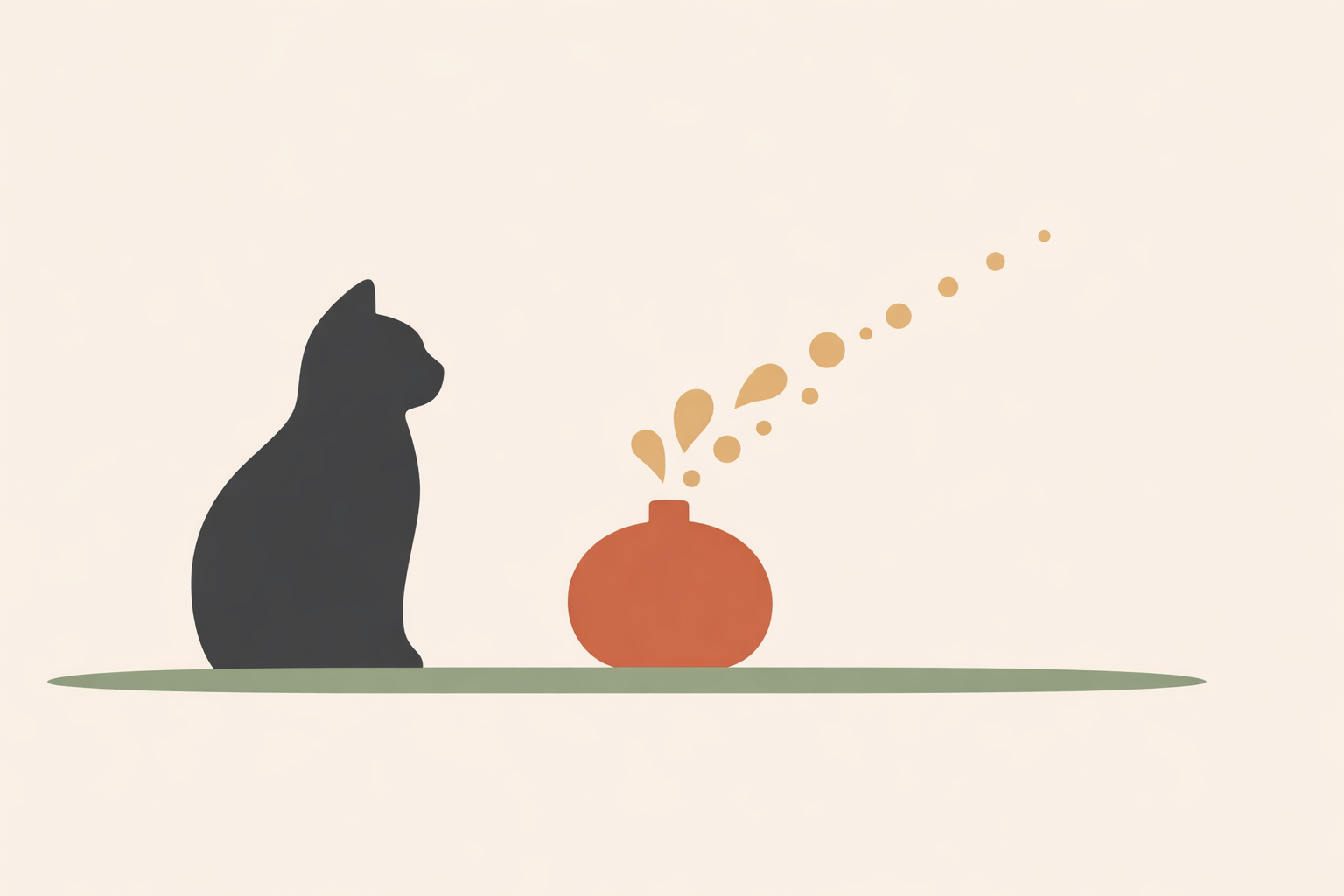
In real life, the shift can be immediate. If a newly adopted cat hides after a diffuser goes on, a small bowl of diluted hydrosol placed far across the room often changes the whole tone. The cat may still ignore it, and that’s valuable information. The goal is to offer a gentle option and watch the response.
Lavender hydrosol for calm, space, and everyday easing
True lavender hydrosol is often the first bottle practitioners reach for with sensitive animals. It’s traditionally associated with calm support, and in hydrosol form it’s often light enough for many dogs, some cats, and plenty of horses when introduced with care.
Composition reviews of lavender hydrosol show linalool dominance among its volatile compounds. Even in watered form, it remains recognizably lavender, just far less forceful than the essential oil.
Practitioners often choose lavender hydrosol because it’s straightforward to introduce. Many animals can investigate without feeling crowded by scent, which makes it a helpful companion for transitions, travel preparation, grooming routines, or settling a space after excitement.
For dogs and horses, light ambient use is often enough. For cats, many practitioners start with extra dilution and a shorter window. Lavender hydrosol is widely tolerated in practitioner experience across dogs, cats, and horses, but each animal’s preference still decides.
- Ambient room use: Place a small saucer of hydrosol across the room or mist once into open air, never toward the animal.
- Bedding support: For dogs, one light mist on bedding can be enough. Let it dry before use.
- Cat approach: Dilute 1:1 with water and offer only in a well-ventilated space with an easy exit.
- Before a trigger: Use five minutes before grooming, travel, or another known stress point, then remove the scent source.
If you’re unsure where to begin, lavender hydrosol is often the simplest first trial. One small offering tells you more than an elaborate routine.
Chamomile hydrosol for comfort, settling, and delicate skin support
Chamomile hydrosol brings chamomile’s long tradition of soothing support into a form that is easier to offer to animals. In practice, Roman chamomile is commonly chosen for comfort and settling, while German chamomile is often selected when the focus is skin comfort.
Descriptions of German chamomile hydrosol note alpha-bisabolol and chamazulene among its recognizable constituents, alongside flavonoids such as apigenin and quercetin. That profile matches why so many herbal and aromatic practitioners keep it close for tender or easily reactive situations.
Chamomile can be a welcome option when lavender isn’t the animal’s preference. Some animals relax around chamomile’s rounder scent; others show a clear “no,” and that clarity is part of good practice.
With cats, many practitioners introduce chamomile even more conservatively than lavender. It keeps the work respectful and animal-led, especially with a species that can be more sensitive to aromatic exposure.
- For settling: Mist once into room air or onto a cloth placed nearby, not on the animal.
- For grooming-sensitive dogs: Lightly mist the brush, then allow the aroma to dissipate before use.
- For small patch care: Dilute into sterile water and trial on a very small area first, observing afterward.
- For cats: Start with open-air scent only, well diluted, and only if the cat chooses to remain nearby.
Roman chamomile hydrosol is generally used for comfort and settling, while German chamomile hydrosol is generally used for skin-soothing. That distinction is shaped more by practitioner tradition than by strong comparative research, and it remains useful in everyday work.
Rose or calendula hydrosol as a third gentle option
After lavender and chamomile, many practitioners keep either rose or calendula on hand. Both can be valuable, and they tend to serve different needs.
Rose hydrosol is often chosen when an animal seems emotionally guarded, withdrawn, or easily ruffled by atmosphere. Its profile commonly includes phenylethyl alcohol and nerol, which helps give it a distinctive floral softness. In practice, many animals tolerate rose hydrosol better than concentrated rose essential oil because the hydrosol is simply less intense.
Calendula hydrosol is often brought in for gentle skin care and everyday herbal-style support. That reputation comes from calendula’s long traditional use, along with its plant profile of carotenoids and flavonoids. Even though a hydrosol doesn’t carry the full plant spectrum, calendula still holds a clear skin-friendly identity in practice.
- Rose for atmosphere: One or two mists into room air can be enough for a guarded or unsettled dog or cat.
- Rose for delicate coats: Mist into your hands first, then smooth lightly over the coat if the animal clearly accepts contact.
- Calendula for patch care: Dilute with sterile water and trial on a small area only.
- Calendula near resting spaces: Use very lightly and never in a way that forces contact.
If you support many sensitive animals, keeping one “atmosphere” hydrosol and one “skin” hydrosol adds flexibility without increasing intensity.
How to introduce hydrosols safely and gently
The safest hydrosol practice stays simple: offer, observe, and stop well before intensity builds. Most missteps come from doing too much, too long.
Animals recovering from stress, age-related frailty, or sensory overwhelm deserve extra care. Animal safety guidance advises against forcing aromatic exposure and recommends stopping if signs such as coughing or breathing discomfort appear, reinforcing the value of optional exposure.
- Offer, do not impose: Present the scent at a distance and keep exits open.
- Use brief windows: Five minutes is often plenty for a first trial.
- Ventilate: Open windows or doors so the animal can choose fresher air.
- Start tiny: One mist, one cloth, or one small bowl is enough.
- Avoid direct spraying: Never spray toward the face or onto sensitive areas.
- Trial topicals carefully: If using on coat or skin, test a very small area first.
- Store properly: Keep hydrosols cool, clean, and fresh; discard if they smell off or become cloudy.
Look for soft eyes, relaxed posture, curiosity, a return to the scent, or calm resting nearby. Walking away, repeated sneezing, lip-licking, head shaking, over-grooming, or agitation are clear signals to stop. If the animal opts out, that is the answer.
A small trial log helps. Note the hydrosol, dilution, method, time, and response. Over a week or two, patterns become clearer and your choices become more individual.
Using a hydrosol-first approach with dogs, cats, and horses
A hydrosol-first approach works across species because it centers observation over assumption.
- Dogs: Dogs often do well with light room misting, bedding use, or cloth offerings. Choice still matters, and many dogs settle easily with gentle routines.
- Cats: Cats usually call for the most restraint. Extra dilution, open-air use, short sessions, and no trapped exposure are wise defaults.
- Horses: Horses often respond well to cloths, bowls, or hand-offered scent in a breezy space where they can investigate and move away freely.
Across all three species, hydrosols are key tools for sensitive animals when essential oils feel like too much. They allow aromatic support without pushing intensity.
Ethically, the standard is steady: don’t corner an animal with scent, don’t chase a result, and don’t mistake stillness for consent. The most useful sessions are often the quietest ones, where the animal sniffs, pauses, and communicates clearly.
Conclusion
When an animal is sensitive to scent, gentleness is a skillful choice. Hydrosols bring plants into a lighter, more flexible form that many animals can meet on their own terms.
Lavender, chamomile, rose, and calendula each have their place. The craft is in how they’re offered: briefly, lightly, with ventilation, and with full respect for the animal’s response. Start with one hydrosol, one small offering, and careful notes. Over time, those small moments become a reliable, thoughtful way of working that keeps the animal’s comfort at the center, especially in animal wellness practice.
Train in Animal Aromatherapy
Deepen your hydrosol-first approach with the Animal Aromatherapy Certification.
Explore Animal Aromatherapy →