Many helping professionals meet complexity by trying to tidy the story in front of them: synthesize, normalize, propose a plan. That can help for a while. But when the same phrases keep returning, emotion surges without a clear narrative, or clarity collapses the moment an action step appears, the issue is often not technique. It is orientation.
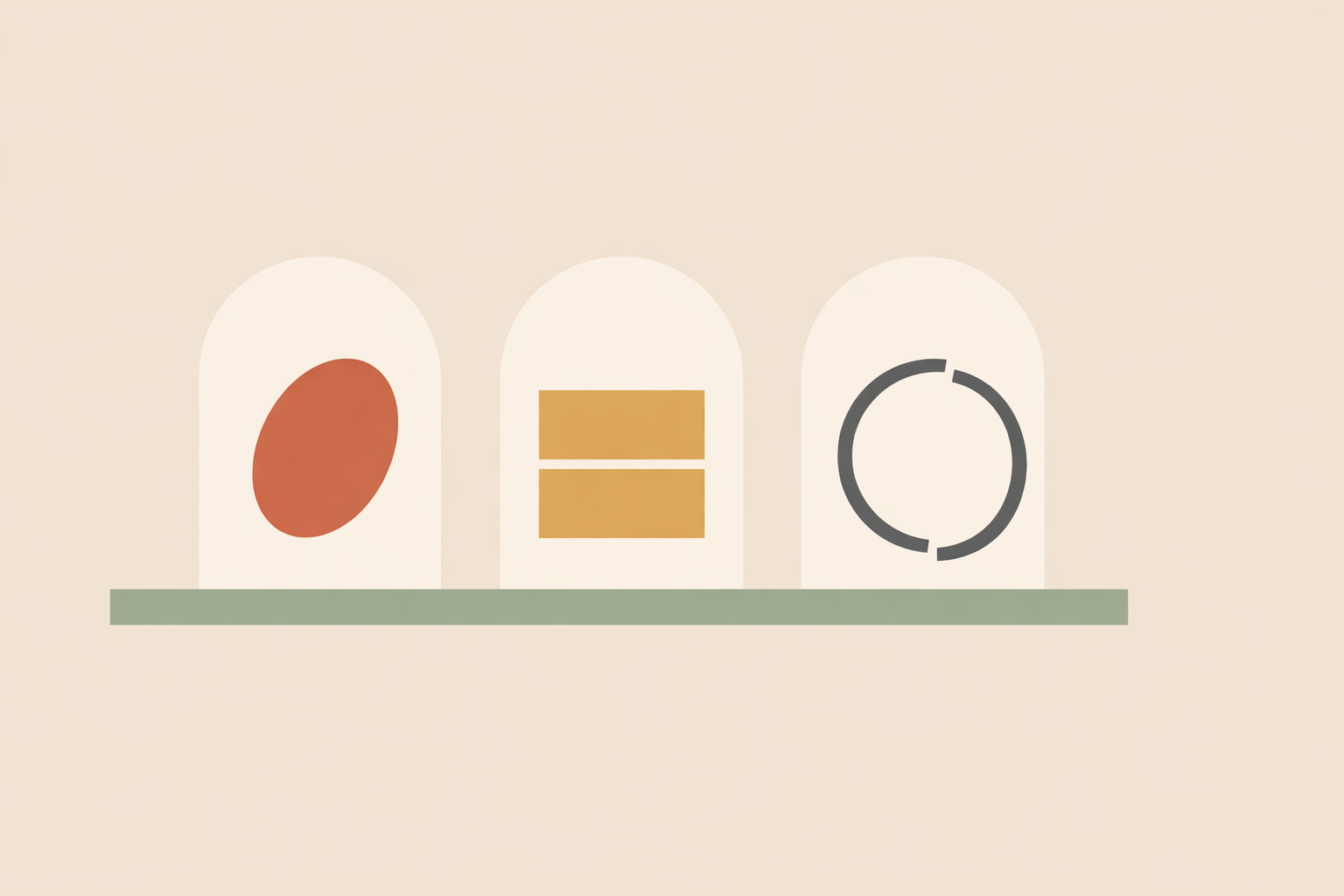
Lacan’s three registers offer a grounded way to listen for that orientation. The three registers help you hear self-images and rivalry in the Imaginary, roles and signifiers in the Symbolic, and the unsayable edge where language reaches its limit in the Real. In everyday practice, this can change how you pace a session, what you write down, and when you choose to slow the work rather than push for meaning.
Key Takeaway: Lacan’s Symbolic, Imaginary, and Real offer a practical way to listen beneath surface content. The Imaginary highlights self-image and comparison, the Symbolic reveals repeated words and inherited roles, and the Real marks moments where speech falters and intensity exceeds neat explanation. Used simply—even in a three-column note page—these lenses can make sessions more precise, more respectful, and easier to pace.
The three-column note map
A simple S/I/R page organizes listening without forcing a person into a rigid system. You are not labeling the person. You are sorting what is happening in the moment.
- S: repeated words, family sayings, titles, roles, commands, prohibitions.
- I: identity claims, comparison, admiration, shame, rivalry, the “ideal me.”
- R: bodily surges, speech breaks, loops, silences, moments that do not settle into a clear account.
A page might include notes like these:
- “good child,” “not needy,” “be useful” under Symbolic
- “I should have it together,” “they all seem more grounded than me” under Imaginary
- “tight throat,” long silence, “I can’t say it” under Real
This kind of note-taking does not replace your presence. It supports it. Over time, patterns become easier to hear, and your questions become more precise.
Lens 1: The Imaginary and the pull of self-image
The Imaginary is often the easiest register to catch because it sounds so familiar. It shows up as identities, comparisons, ideals, and mirror-like tensions: who I am, how I appear, who is ahead of me, who sees me, who does not.
Lacan’s mirror-stage idea suggests a child identifies with a whole image before lived bodily experience feels integrated, and this early relation to selfhood is marked by an image that comes before full felt unity. He also frames this early self-relation as misrecognition: the self appears cohesive, yet remains strangely outside itself.
You can often hear that structure echo in adult speech:
- “If only I could be the version of me I am on my best days.”
- “Everyone else seems so much more put together.”
- “I just need to become the kind of person who never gets overwhelmed.”
Rather than confronting Imaginary speech head-on, it often helps to follow it gently until the organizing image becomes clear. Then you can shift the work with a small pivot into language. If someone says, “I’m resilient,” and repeats that word, a useful question is: “What does ‘resilient’ mean in your family?”
Another practical move is to ask for one scene instead of a polished summary. If a person says, “I’m bad with boundaries,” you might ask, “What was the last sentence you said when you wanted to say no?” Scenes carry texture that summaries usually erase.
Lens 2: The Symbolic and the power of repeated words
If the Imaginary highlights image, the Symbolic highlights language: the words, rules, titles, and inherited phrases through which a life is organized. In Lacanian terms, this is the register of signifiers. In practice, it’s where you listen for what keeps returning and what it demands.
Common Symbolic material includes:
- family mottoes
- nicknames and role labels
- phrases tied to belonging or shame
- commands such as “be strong,” “don’t be difficult,” or “make yourself useful”
When someone says, “I’m the rock,” “I’m the difficult one,” or “I was always the peacemaker,” it helps to pause and ask where that phrase lives in their history. Whose language is it? When did it become important? What does it permit, and what does it forbid?
This is why verbatim notes matter. For Symbolic listening, exact wording often carries more than paraphrase. A smooth summary can hide the very signifier that would have opened the work.
One reliable practice is a quick signifier log in the margin. Circle repeated words. Box inherited phrases. Draw arrows when the same term appears in different contexts. Over several sessions, you may see a whole network.
For example, “useful” may connect to “worthy,” “not a burden,” “successful,” and “good daughter.” Once that chain is visible, present-day pressure often looks less like a personal flaw and more like a structure the person has been living inside.
Identity comparisons usually point toward the Imaginary. Repeating family mottoes or role labels tends to point toward the Symbolic. Lacanian accounts commonly describe the registers in terms of image and identification, signifiers and language, and bodily effects at the edge of symbolization.
Lens 3: The Real and the edge where words give way
The Real can sound dramatic in theory, but in the room it is often quiet and direct. It names what resists being fully captured by image or language.
Near the Real, speech may break, loop, or thin out. Silence may feel heavy. Tears may arrive before a clear account does. The body may register something the person cannot yet put into words. In Lacanian writing, the Real is tied to what lies at the limit of language.
You might notice:
- “I don’t have words for this.”
- a phrase repeated several times without movement
- sudden panic or numbness when the narrative seems to progress
- a bodily surge that comes before explanation
When that happens, interpretation is rarely the first priority. Pace is. If you push for a neat explanation too quickly, the person may offer a tidy answer that doesn’t actually help.
A steadier approach is to mark the limit without dramatizing it: “Something important is here, and we do not have to rush it.” Shorter questions, longer silences, and present-moment anchors create a slower lane.
Simple grounding prompts may include:
- naming three colors in the room
- feeling both feet on the floor
- taking time before answering
- allowing a silence to stand without filling it
If intensity consistently overwhelms speech, or if certainty hardens in ways that seem detached from shared reality, it is wise to pause interpretive work and direct the person toward more appropriate forms of support for continuity and containment within broader mental health frameworks.
How to pace a session across the three registers
The three registers work best as rhythm rather than formula. Many sessions begin in the Imaginary because that is where people first present themselves. With care, the work can move into the Symbolic by following exact wording and inherited roles. If the Real appears, the task is usually to slow down.
A simple pacing arc might look like this:
- Opening: let the image speak. Listen for identity claims, comparison, and presentation.
- Middle: follow the signifiers. Ask about repeated words, role labels, and family phrases.
- When intensity rises: slow the tempo. Stay close to what is happening now rather than forcing explanation.
- Closing: name one or two words or themes to carry forward.
The three-column note page supports pacing, too. You can see whether you are still in image-talk, whether language has started to open, or whether spaciousness matters more than interpretation.
It also helps you notice your own position in the exchange. Are you being pulled into a mirror relationship where the person wants agreement, admiration, or rivalry? Or are you being placed in relation to a rule, a demand, or an authority figure? That awareness keeps the conversation from getting stuck.
Micro-interventions that encourage Symbolic movement
You do not need heavy technique to shift a conversation. Small language-based moves are often enough.
- Echo the signifier. Repeat one charged word exactly as the person said it, then pause. “Useful.” “Too much.” “Reliable.”
- Ask for exact words. “Were those the exact words?” This keeps the texture of the speech intact.
- Ask whose word it is. “Who first used that phrase?” or “Who taught you that version of strength?”
- Punctuate contradiction. Gently mark when two statements do not sit easily together, then wait.
These interventions move the work from self-image toward structure. Instead of debating whether a person really is “too sensitive” or “not enough,” you explore how those signifiers were installed and what they continue to organize.
That often creates more room than advice does. Once a hinge phrase is heard in its history, different choices in the present can become possible.
Traditional and ancestral ways of hearing these registers
For practitioners rooted in traditional or ancestral frameworks, these lenses often feel familiar. Many lineages already pay close attention to image, naming, communal phrases, role inheritance, and experiences that exceed ordinary explanation.
The Lacanian frame can be useful here because it adds precision without displacing older ways of knowing. Images can be heard as Imaginary formations. Names, ritual phrases, and family laws can be heard as Symbolic material. Moments of sacred intensity, bodily knowing, or wordless rupture may sometimes be approached as encounters near the Real.
The guiding ethic is respect. Keep the work in the person’s own language and lineage. If someone brings a phrase such as “we endure in silence,” don’t rush to correct it. Listen for what it organizes, what dignity it carries, and where it may also create constraint.
A useful question in this kind of work is: “How does this phrase live in you, and what does it ask of you?” That keeps the conversation culturally respectful while still making room for movement.
Repetition over time: what shifts and what insists
Across longer work, repetition becomes especially informative. Some patterns soften when a key signifier is questioned, renamed, or placed back into history. Others return even after the narrative changes.
Lacanian accounts often distinguish repetition tied to signifying structure from returns that resist meaning. In practice, this helps you stay realistic about what kind of movement is available.
A practical heuristic:
- If a pattern loosens when roles, family words, or master-signifiers are explored, you are likely working mainly in Symbolic repetition.
- If the pattern returns as raw panic, collapse, or numbness despite good narrative movement, you may be near a more Real form of insistence.
Both call for care, but not the same pace. Symbolic repetition often invites further questioning. Real insistence asks for humility, steadiness, and cleaner boundaries.
One useful continuity practice is a monthly review. Note the main signifiers that organized the work, one Imaginary image that loosened, and any moments that exceeded clear wording. This keeps your listening oriented toward desire and structure rather than quick solutions, a useful habit in Lacanian psychoanalysis work.
The function of symptoms in Lacanian work
Within a Lacanian orientation, a symptom is not merely an obstacle to remove. It also does something for the person: it stabilizes a way of being, however costly that way may be. One concise description frames a symptom as a way of coping with one’s particular mode of existence.
That perspective changes the tone of the work. Instead of trying to erase a pattern outright, you ask what it protects, what place it holds, and what would be unsettled if it vanished too quickly.
This is not passive. It is respectful. It assumes that even constricting patterns carry intelligence. Change then becomes about re-positioning: finding a different relation to the same structure, or allowing a new one to emerge.
Bringing the three registers into practice
The Imaginary, the Symbolic, and the Real offer a steady map for complex conversations. The Imaginary helps you hear self-image and rivalry. The Symbolic helps you hear signifiers, roles, and inherited law. The Real reminds you that not everything valuable can be turned into fluent speech on demand.
A strong next step is straightforward: in your next few sessions, mark one moment from each register. Write down an exact repeated phrase for the Symbolic. Note an identity image or comparison for the Imaginary. Mark a silence, bodily cue, or speech break for the Real.
Over time, this way of listening makes conversations more precise without becoming rigid. It supports patience, ethical pacing, and close attention to the person’s own language.
Used well, these lenses widen a conversation. They help you move with more steadiness, especially when intensity rises or familiar stories start looping. As with any strong framework, it works best when paired with cultural respect, clear scope, and the humility to slow down when a person needs more containment than interpretation, especially across wider mental health frameworks.
Study Lacanian Psychoanalysis
Deepen your listening with the Lacanian Psychoanalysis Certification and apply Symbolic, Imaginary, and Real distinctions with precision.
Explore Lacanian Psychoanalysis →