Strong practitioner writing begins before anyone drafts a line. When the topic, audience, and section structure are fuzzy, the piece tends to drift—and revisions turn into a rebuild. For practice-led content, that early clarity matters even more, because tone, tradition, sourcing, and regional language decide whether the work feels rooted or generic.
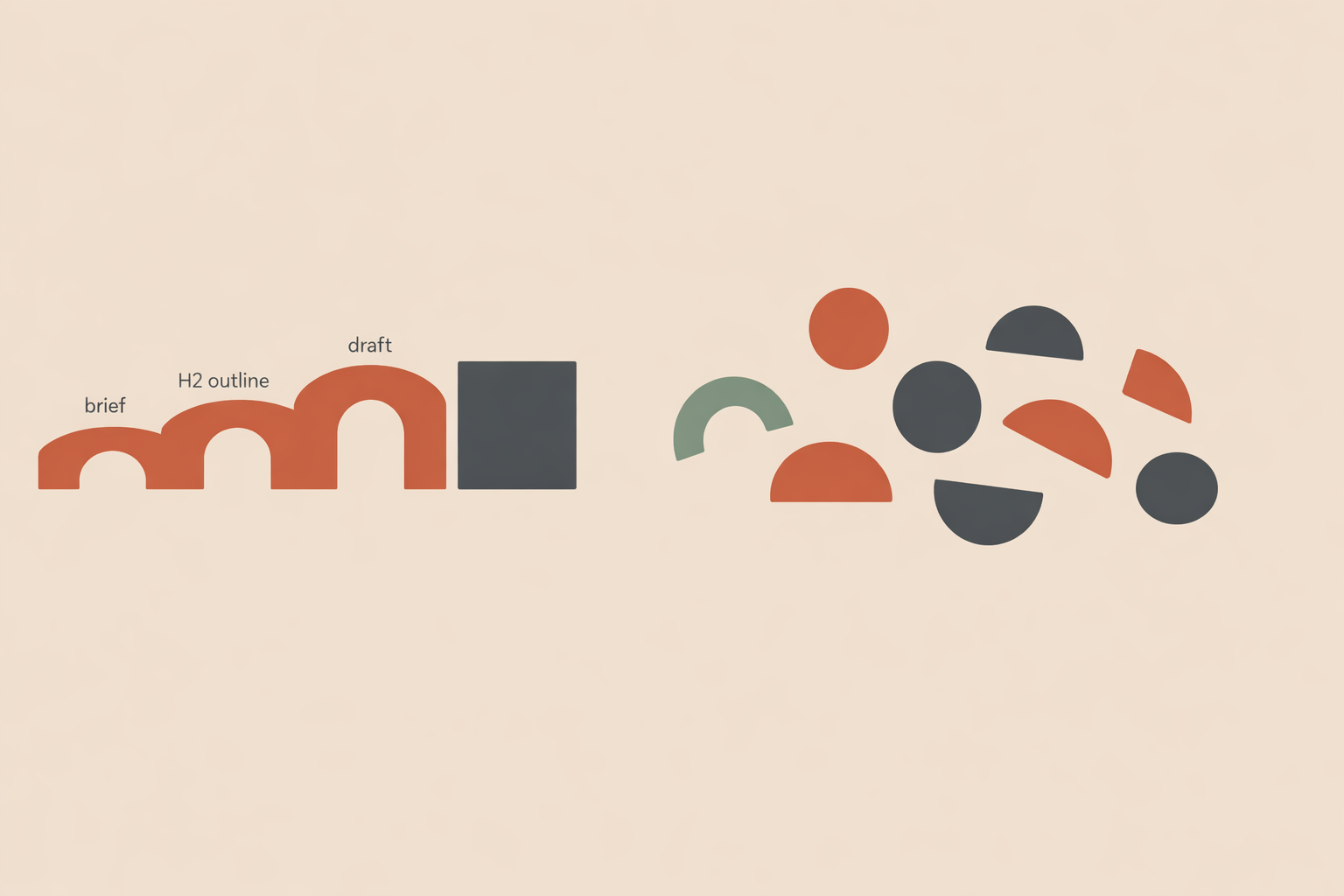
The workflow that saves the most time is also the simplest: confirm the brief first, then approve the H2 outline. With those in place, the writing stays focused, useful, and aligned with the people it’s meant to support.
Key Takeaway: The fastest way to get a strong practitioner article is to confirm the brief and approve the H2 outline before drafting. The most useful inputs are the topic and audience, exact H2 headings, must-include terms or traditions, any research or sources to weave in, and regional considerations. With that in place, drafting becomes far more cohesive and revisions usually stay at the level of tone, emphasis, and nuance rather than structure.
What to confirm before drafting
Before the body is written, it helps to settle five essentials. They give the article a clear frame and prevent avoidable back-and-forth later.
- Topic and audience: who the piece is for and what it needs to help them understand
- Exact H2 headings: the section structure you want the article to follow
- Must-include language: key terms, traditions, or modalities that should appear
- Sources to integrate: any studies, references, or internal materials that matter to the brief
- Regional considerations: wording, standards, or recognition context for your intended market
This approach keeps the article practical from the first paragraph. You shape the reader’s journey up front, then let the writing do its job within that structure.
Why the outline matters so much
An outline is more than an administrative step. It decides the order of ideas, reduces repetition, and makes sure each section has a distinct purpose.
For practitioner content, a good outline also protects voice. It creates space for traditional knowledge, lived experience, and evidence-informed framing to sit side by side—without squeezing everything into one narrow way of explaining the world.
And it doesn’t need to be rigid. Even university guidance describes outlining as a planning tool that can shift as the work develops, including living outlines. Structure should be intentional, then refined when a better sequence becomes clear.
A simple briefing template you can use
If you’re commissioning an article, a clean brief gives the writer exactly what they need to produce a cohesive first draft:
- The subject and intended reader
- The H2 headings, in order
- Any traditions, modalities, or key phrases to include
- Any research or reference material to draw from
- Any regional language or professional context to respect
With that agreed, the draft can be written in one coherent pass, and edits can focus on tone, emphasis, and usefulness rather than restructuring.
Three outline patterns for practitioner articles
If you don’t yet have an outline, these patterns offer a solid starting point. Each creates a different reading experience, so choose the one that best matches the topic and the audience’s level of familiarity.
Option A: Herbal practice
- Core energetics: matching plant and person
- Form matters: teas, tinctures, powders, and when to use each
- Dosing patterns that respect tradition and modern life
- Safety, ethics, and cultural respect in sourcing
- Tracking outcomes: what to note in session and between visits
- Conclusion
This structure fits pieces that move from traditional frameworks into everyday application. It starts with how practitioners think, then transitions into forms, use in real routines, and what to observe over time.
Option B: Mind-body coaching
- Regulating first: breath, posture, and simple somatics
- Language that builds capacity, not fear
- Micro-habits that stick in real weeks
- Bridging traditional wisdom and practical metrics
- When to pause, refer, or re-scope your plan
- Conclusion
This outline works well when the reader needs to feel supported and steady as they learn. It begins with stabilising practices, then builds toward communication, consistency, and clear scope boundaries.
Option C: Functional mushrooms
- Choosing the right mushroom for the goal
- Extraction and quality: fruiting body, mycelium, and dual-extracts
- Timing, stacking, and cycling
- Traditional lineages and modern sourcing ethics
- What to monitor over time
- Conclusion
This version is helpful when readers need both product literacy and context. It makes room for traditional use, quality considerations, and realistic tracking—without flattening a nuanced topic into quick claims.
What leads to a smoother final draft
The strongest articles are shaped before the first paragraph is written. A clear brief narrows the focus, and a strong outline keeps the piece coherent, especially in purpose and life design and other practitioner-led fields.
Once that foundation is shared, revisions get more rewarding. Instead of repairing structure, you can refine emphasis, sharpen language, and deepen the value of each section.
Closing thought
When practitioner content is clear at the outline stage, it reads naturally and respects the audience’s intelligence. Brief well, structure well, and the writing has the support it needs from the start.
Build Coaching Systems
Apply this clarity-first workflow inside the Systems Based Life Coaching Certification for structured, practitioner-ready client support.
Explore Systems Based Life Coaching →