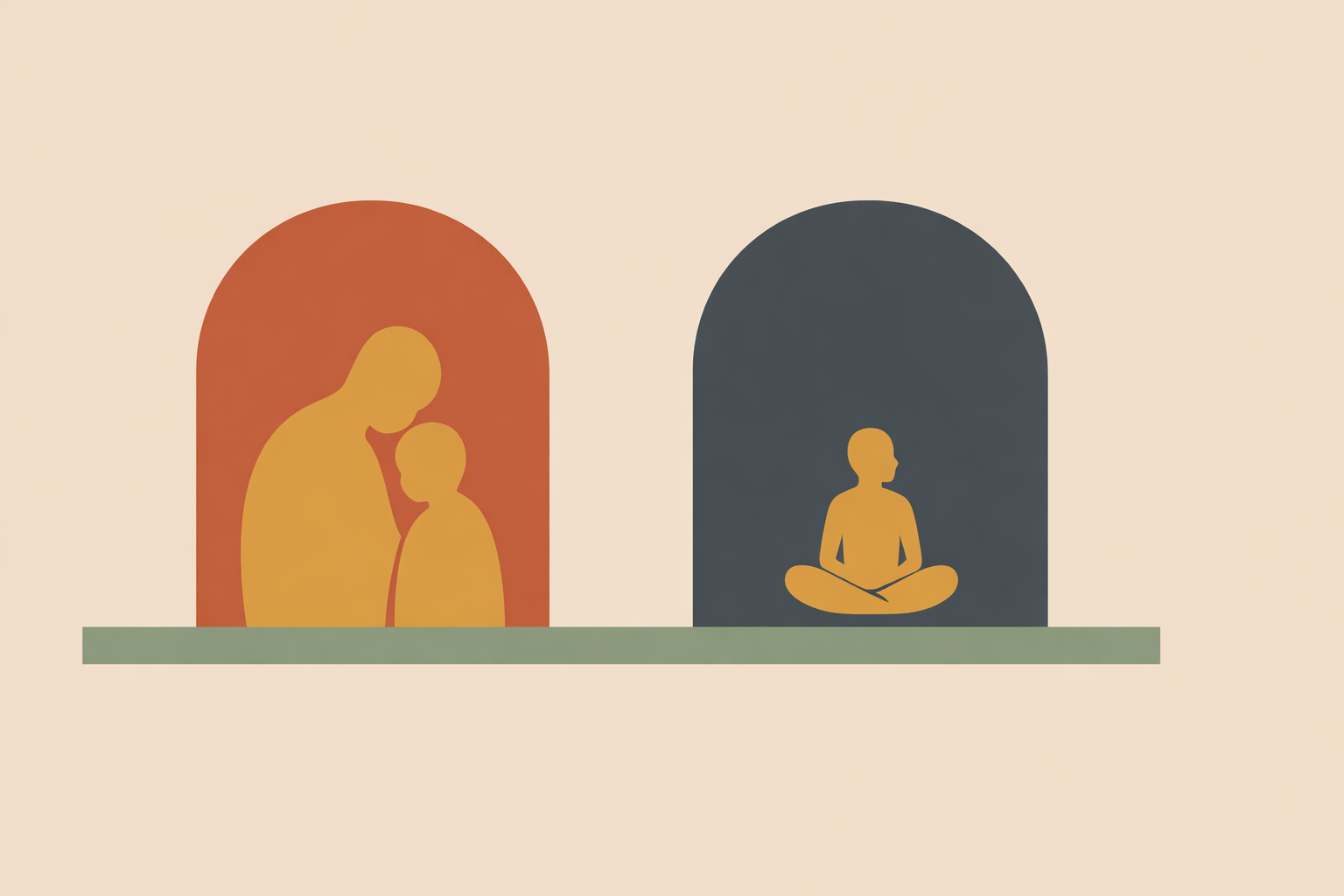
Practitioners hear the same dilemma again and again: a child hits, throws, or melts down; the adult wants a response that protects safety and preserves connection; the internet insists they must choose a side. Time-in gets framed as empathy, time-out as punishment, and families are left wondering whether closeness reinforces unsafe behavior or separation creates shame.
A more grounded view is simpler. Time-in and time-out are both short resets within positive discipline. The real question is which pause helps this child, in this moment, return to enough calm to learn.
Key Takeaway: Choosing between time-in and time-out is a match-the-reset decision inside positive discipline, not a values test. Time-in is often the better fit when a child is overwhelmed and needs co-regulation. Time-out can still be useful when it is brief, calm, and non-shaming, especially for interrupting unsafe behavior and reducing stimulation. In both cases, the pause matters less than what comes after: reconnection, repair, and practice of a better next step.
Time-Out vs Time-In: What You’re Really Choosing Between
For many adults, this topic carries old emotional charge. In some homes, time-out has been used as exile: long, angry, humiliating, and isolating. That history can make the term feel harsh before you even consider how to use it.
Yet in its intended form, time-out is a brief pause used calmly after a rule violation to interrupt unsafe behavior. In the same guidance, discipline is anchored in teaching and protection, not intimidation.
Time-in brings closeness and co-regulation. Time-out lowers stimulation and attention so everyone can reset. Either option can be respectful, and either can backfire if it’s delivered with heat or used on autopilot.
What you’re choosing between is two kinds of pause:
- Time-in — stay close, steady the nervous system, hold the limit.
- Time-out — create a calm break from stimulation, then reconnect and teach.
The best fit depends on safety, the child’s level of overwhelm, why the behavior is happening, and developmental stage.
Positive Discipline Means Teaching, Not Payback
Most discipline struggles soften when you return to purpose. The goal is to protect everyone, guide behavior, and build skills the child can use next time.
This is why seasoned practitioners often sound firm and warm at once: feelings are welcome, and boundaries still stand. A child can be angry without being allowed to hit. A child can be disappointed without being allowed to throw.
That balance isn’t new. Across many family and community traditions, elders have long paired closeness with clear limits. The words and customs differ, but the through-line is steady: keep connection while making the line unmistakable.
Language helps keep dignity intact and learning possible:
- Instead of “You are bad,” say “That action was unsafe.”
- Instead of “What is wrong with you?” say “I won’t let that happen.”
- Skip the lecture; give one clear limit and one next step.
When the adult stays grounded, both time-in and time-out become teaching tools rather than power struggles.
When Time-In Is the Better Fit
Time-in usually works best when a child is flooded, frightened, disorganized, or too overwhelmed to regulate alone. In those moments, separation often adds fuel; closeness helps the body settle.
This fits an empathy-first approach and aligns with responsive caregiving, where emotionally supportive interaction helps children return to balance. Practically, time-in creates space for co-regulation.
A simple time-in flow can look like this:
- Stop the unsafe action — “I won’t let you bite.”
- Reduce stimulation — lower noise, move away from the audience, simplify the environment.
- Move close — stay present without crowding.
- Name the feeling — “You are so upset.”
- Restate the limit — “No hitting, even when you’re angry.”
- Offer one regulation choice — “Do you want to squeeze my hands or push against the wall?”
- Revisit the moment once calm returns — “Next time, say stop and step back.”
This is containment with warmth: steady presence, fewer inputs, and a guided return to the group.
If a three-year-old collapses after leaving the playground, time-in can sound like: “Leaving is hard. I won’t let you hit. I’m right here. Let’s help your body settle.” The adult stays close, holds the boundary, and lends calm until the child can carry it again.
When Time-Out Makes Sense
Time-out still has a place when it’s used as a calm reset rather than a rejection ritual. The difference is design and delivery.
In current guidance, time-out is described as a temporary removal from reinforcement or stimulation for a short period. In day-to-day terms, it reduces input so momentum can drop.
Used well, it is:
- brief
- low-emotion
- specific to the behavior
- followed by reconnection
- paired with teaching afterward
The American Academy of Pediatrics includes time-out within calm, structured guidance, with one minute per year of age as a common guideline. Many practitioners lean on the principle more than the formula: end it as soon as the child is ready to rejoin safely.
A non-shaming time-out is not banishment to a lonely room. It can be a cushion in a shared space, a calm corner, or a predictable nearby spot. The adult stays steady and present, aiming to interrupt unsafe behavior without adding emotional pressure.
A six-year-old who swats a sibling might hear: “Hitting stops now. We’re taking a short pause on the blue cushion. I’ll stay nearby.” When the body settles, the child returns to connection and skill-building.
How to Choose in the Moment
When things are escalating, most adults don’t need more theory. A quick decision path helps: safety, regulation, understanding, and repair.
- Safety — Do I need to stop harm immediately?
- Regulation — Does this child need closeness, or less input?
- Understanding — Once calmer, what was driving the behavior?
- Repair — What skill or action helps restore the relationship?
This matters because different functions call for different responses, and children’s regulation needs shift with context and development.
In broad terms:
- Choose time-in when the child is panicked, overwhelmed, clingy, confused, or clearly needing help to settle.
- Choose time-out when behavior is unsafe, highly stimulated, or being fueled by ongoing attention and a brief pause is likely to reduce momentum.
Development changes the fit. Toddlers often have little impulse control and rely heavily on adult calm. School-age children can usually revisit what happened and plan a better next step. Teens tend to respond best to respectful, collaborative limits, though short cooling-off breaks can still support a reset.
For children with trauma histories, separation can carry extra attachment charge, so many practitioners avoid making time-out the default. Felt safety becomes part of the choice.
What a Good Time-In Looks Like in Practice
A strong time-in is not endless talking, rescuing, or negotiating the boundary away. It stays simple and steady.
It helps to hold five jobs in mind:
- stop the behavior
- steady the environment
- lend calm
- name what is happening
- guide the child back toward choice
A few short scripts can carry a lot of weight, especially for caregivers building a steadier tantrum script in the moment:
- “You’re upset. I’m here. I won’t let you hit.”
- “Your body is telling me this is too much. Let’s get smaller and quieter.”
- “Mad is okay. Throwing is not. Push on the wall with me.”
The strength of time-in is that regulation often comes before reflection. When the child can orient again, learning becomes available.
What a Good Time-Out Looks Like in Practice
A good time-out is short enough to reset, calm enough to protect dignity, and structured enough to feel predictable.
That usually means:
- name the behavior clearly
- move to the pause without drama
- keep your tone neutral
- avoid adding lectures during the pause
- end with reconnection, not distance
The pause is only half the tool. The return matters just as much, and good practice ties the restart to self-regulation so the child leaves with more skill, not more isolation.
Many practitioners “reward the restart.” Once calm returns, the child comes back into relationship quickly, hears the next-step skill, and gets a brief chance to practice it right away.
After the Pause: Repair Is Where the Learning Lands
Whether you used time-in or time-out, the pause is only the doorway. The growth lands in repair.
Repair brings the child back into belonging while still honoring impact. It teaches that relationships can stretch, rupture, and be restored.
A simple repair sequence can look like this:
- Rejoin warmly — “You’re back. We’re starting again.”
- Name the impact — “The book scared your sister.”
- Invite reflection — “What was happening in your body?”
- Identify the need — “You wanted the toy.”
- Practice the alternative — “Next time, say ‘my turn next’ or come get me.”
- Do one repair action — return the item, check on someone, help rebuild, or tidy what was thrown.
Short practice often teaches more than a long talk. One clear reset plus one rehearsed replacement skill can change the next moment.
Keep it concrete and doable: saying “stop,” asking for help, stepping back, using a calm signal, or returning to the group respectfully. Then notice the next success and reinforce it.
Using Both Tools Without Shame
Time-in and time-out don’t need to be opposing philosophies. In real family life, they can sit side by side inside a respectful, skill-building approach, including broader child and adolescent development work.
In many homes, time-in becomes the first choice for emotional overload, especially with younger children. Time-out stays useful when it is brief, calm, non-shaming, and aimed at interrupting unsafe behavior or lowering stimulation.
What matters most is the thread you don’t drop: dignity, clarity, and connection. Choose the pause that fits, then come back together for repair and practice.
Used this way, positive discipline builds something durable over time: a child who learns to notice big feelings, respect limits, ask for support, and return to relationship well. A final caution worth holding is that any pause can become harmful if it turns into humiliation, threats, or long isolation; if that’s happening, it’s time to simplify the plan and lean into calmer, more connected structure.
Train as a Parenting Coach
Build time-in and time-out skills into your toolkit with the Positive Parenting Coach course.
Explore Positive Parenting Coach →