Many teen-coaching plans default to coping skills, stricter rules, or screen policing. The pattern is familiar: skills look solid in a session, but under real pressure a teen snaps, shuts down, or spirals online; adults respond with more control, and rapport thins. Practitioners see the gap clearly: awareness arrives late, choices narrow, and small conflicts escalate fast.
Brief tracking rituals close that gap. When teens design their own micro-checks, big feelings become useful information: what’s here, how strong it is, what set it off, and what usually helps. The goal is a small pause between impulse and action, so choice has a chance to enter.
Key Takeaway: Teen-owned micro-tracking can turn intense emotions into clearer choices by helping young people notice patterns earlier and respond with more intention. A simple 60-second check-in, a trigger-response-choice log, and a short strategy review can work together as practical, dignity-centered tools that fit daily life, including school, home, and digital spaces.
Why teen emotions can feel so intense
Teen emotions can feel amplified because adolescence brings rapid change all at once. Identity is evolving, friendships shift quickly, social feedback hits harder, and the systems involved in planning and weighing consequences are still developing. Research shows emotion-regulation systems continue to mature through adolescence.
That helps explain why some teens react fast even when they understand what’s going on. Evidence suggests frontal regions involved in top-down regulation are still maturing, so insight and action don’t always arrive at the same speed.
In day-to-day life, a teen may know a text should wait, a conversation should pause, or a comment isn’t worth it, and still feel pulled to act immediately. Add school pressure, family expectations, friendship strain, and constant online contact, and stress stacks quickly.
Short tracking rituals meet teens where they are. They help teens catch intensity earlier, when one better next move is still available.
Picture Maya, 15, reading a group chat that excludes her. She scribbles: “Emotion: angry-embarrassed. Intensity: 7. Body: hot face. Need: respect. Next step: put phone down for 10 minutes.” That half-minute pause can change the next hour.
From control to choice: a better frame for emotional regulation
Many teens hear “regulate yourself” and translate it as “be less emotional.” A steadier frame is regulation as a learnable process: notice, name, understand influences, pause, choose, and review.
The aim isn’t constant calm. The aim is more choice in how to respond, plus a cleaner recovery after a hard moment.
Language sets the tone. Swapping “Why did you overreact?” for “What was happening, and what did you need?” changes the whole feel of the work. The tracker stops being a report card and becomes a map.
Co-design matters as much as wording. Youth-inclusive design tends to produce tools that are more usable and acceptable for young people, and practice mirrors that: teens engage more when they shape the format, prompts, and rhythm.
A shared word bank can also help, especially for teens who struggle to find precise language. Some will prefer drawing, voice notes, color codes, movement, or switching between languages. Respecting those preferences protects dignity and makes the tool fit real life.
A simple opening script can lower defenses: “These pages aren’t a report card. They’re a flashlight. You’re in charge. We’ll only track what helps you notice patterns you want to work with.”
Tool 1: The 60-second emotional check-in
Start with a one-minute check-in. It offers structure without turning into homework.
Use a phone note, small card, journal page, or color-coded system. Keep prompts brief:
- date or time
- where I am
- strongest emotion
- intensity from 0 to 10, or a color/emoji
- body sensations
- what I’m telling myself
- what I might need
- one supportive next step
For example: “2:45 pm, hallway. Emotion: pressured. Intensity: 6. Body: tight shoulders. Thought: I’ll never catch up. Need: clarity. Next step: list the three tasks due tomorrow.”
The strength is speed. A teen doesn’t have to unpack everything; they just capture enough detail to interrupt autopilot.
Encourage more specific vocabulary when it’s welcome. Moving beyond “fine,” “bad,” or “stressed” into disappointed, restless, embarrassed, relieved, or overloaded often leads to better conversations later. For some teens, a personal emotion list in two languages works better than any standard wheel.
If numbers feel too rigid, use colors instead: green for manageable, yellow for activated, red for overwhelmed. The format should serve the teen.
Many traditional lineages have long used small daily rituals to orient attention and steady the inner world. This check-in follows the same logic in a simple, secular form: pause briefly, notice honestly, and choose the next step with care.
Tool 2: The trigger-response-choice log
Once a teen can name what they’re feeling, the next step is spotting what sets the sequence in motion. The trigger-response-choice log turns repeated blow-ups into patterns you can work with.
Keep the structure straightforward:
- What happened?
- Who or what was involved?
- What did I notice first in my body or thoughts?
- What story did my mind tell?
- What emotion showed up?
- What did I do next?
- What happened afterward?
- What could I try next time?
Layered context becomes visible fast. Blow-ups are often built from a stack: poor sleep, school pressure, online comparison, noise, hunger, conflict at home, or social uncertainty. A small event becomes the tipping point.
Broad categories can help patterns emerge: school, family, friendships, romance, online activity, body image, workload, money, or future planning.
An equity lens matters too. Asking “What part was in my control, and what part wasn’t?” reduces shame and makes room for real stressors such as bias, financial strain, instability, or unsafe environments.
Digital life belongs in the log as well. Teens don’t live half online and half offline; the two are woven together. Including group chats, posting, scrolling, comparison, exclusion, and delayed replies gives a more honest picture of what shaped the moment.
Here is a short example: “What happened: Ben saw a classmate’s post about a party he wasn’t invited to. First sign: stomach drop. Story: ‘They hate me.’ Emotion: hurt 8/10. Response: doom-scroll and snap at mum. Aftermath: more tension. Next time: ask one clarifying question, then put the phone away.”
That’s enough to create a small, testable shift: a clearer link between trigger, meaning, action, and consequence.
Tool 3: A strategy and recovery review
Awareness is a start, but teens also need to learn what genuinely helps them steady themselves and return to what matters.
A short review after difficult moments makes this practical. Useful prompts include:
- What was I feeling?
- What did I try?
- How easy was it to do?
- Did the intensity shift?
- Did my behavior match my goal?
- What did I learn?
- Would I use this again?
Over time, this builds a personal regulation menu. One clear way to organize it is across five “doors”:
- Body: stretch, walk, hydrate, rest, change lighting or noise
- Attention: count objects, name five sounds, take a timed pause, single-task for five minutes
- Expression: journal, draw, voice-note, write an unsent message
- Connection: text a trusted person, ask for one concrete support
- Action: set a boundary, make a two-step plan, complete one small task
Journaling is often especially useful in practitioner experience because it reveals patterns that were invisible in the moment. Even a few lines can surface recurring stories, needs, and turning points.
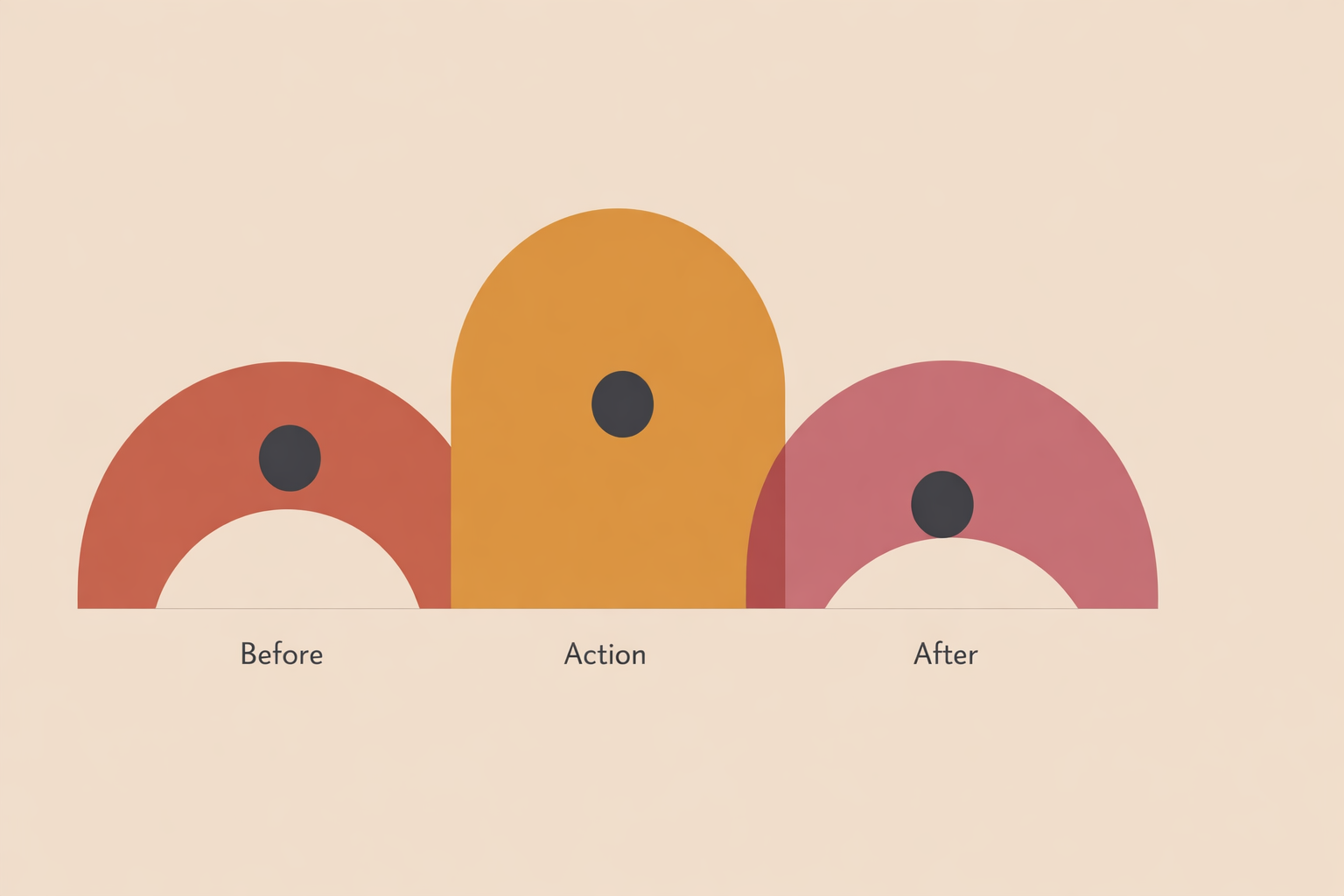
For example: “Before: 7/10, tense and scattered. Tried: two-minute walk, water, texted cousin. After: 4/10, finished one maths problem. Learning: movement plus water works quickly; talking helps later.”
This is also the place to honour family and cultural wisdom. Steady breathing, a familiar song, drumming, time outdoors, prayer, tea, quiet company with an elder, or a repeated phrase from home can sit alongside newer tools. Teens often engage more deeply when their own traditions are treated as real resources rather than extras.
How to combine the three tools into a weekly dashboard
Together, these tools start to tell a weekly story. The dashboard can be one page; it just needs to be consistent.
Keep the headings simple:
- most common emotions
- most frequent contexts
- strongest triggers
- strategies tested
- most useful support
- one pattern to discuss
- one small experiment for next week
This overview helps a teen step back from isolated incidents and see the thread running through them. It often becomes easier to say, “I’m not randomly falling apart. I’m getting overloaded after certain combinations of stress.”
A recent review found many youth co-designed interventions have not been fully evaluated yet. Even so, in coaching practice these lightweight, teen-shaped tools can be highly useful when they stay simple, voluntary, and tied to the teen’s own goals.
Here is a composite example. Monday night, a group-chat message arrives: “We already picked partners.” Check-in: embarrassed-angry 7/10, hot face, thought “Nobody respects me.” Trigger log: exclusion plus study stress plus skipped dinner. First impulse: blast the chat. Choice: put the phone down, walk for ten minutes, ask for clarification tomorrow. Outcome: no escalation, clearer information, found a partner in class.
That’s what progress often looks like: one better turn in the road.
Using teen trackers ethically
These tools work best when dignity comes before data. Explain the purpose, ask permission, invite edits, and let the teen choose the format whenever possible. The tracker should never feel like surveillance.
Keep records minimal and purposeful. Note only what supports the agreed goals, and avoid speculative labels. Brief, factual notes are usually enough.
Culture matters. A teen’s way of expressing emotion can be shaped by family norms, language, migration history, faith, community expectations, or past experiences of being misunderstood. Good practice adapts to this rather than flattening it.
Clarity around privacy is essential from the start. Teens need to know what stays between you, what might be shared, and under what circumstances extra support would need to be brought in. Plain language builds trust better than formal jargon.
Agree early on what, if anything, caregivers will be told. Surprises here can damage rapport quickly.
Finally, know when ordinary coaching goals are no longer the right frame. If a teen describes immediate danger, exploitation, severe impairment, or plans to harm themselves or others, pause the tracking process and follow your safeguarding pathway and scope of practice. In those moments, collaborative, timely support matters more than collecting more entries.
A simple script can help: “I hear how heavy this feels. My role includes helping keep you safe. I can’t hold this alone, so let’s decide together who we need to bring in next.”
Bringing these trackers into practice
When teens own simple, respectful tracking tools, intensity becomes information rather than chaos. Over time, many get more precise with emotion language, quicker to spot triggers, and clearer about what helps them recover and reconnect with their values.
Keep goals small and observable. SMART goals like “Do a two-minute check-in after school on four days this week” work better than “stop getting angry.” The aim is repetition and growing self-trust.
Build an anti-rumination rule from the start. If tracking increases distress, privacy worries, or over-analysis, shorten it, simplify it, or pause it.
Let traditional wisdom and modern practice support each other. A one-minute mood check can sit beside a calming breath taught by a grandparent; a trigger log can live alongside a weekly circle, a walk outdoors, music, or quiet reflection. These are modest tools, and they reliably help teens meet strong feelings with respect and one more degree of choice.
Teen Life Coach Certification
Build teen-centered coaching skills that support emotion tracking, better choices, and ethical practice in Teen Life Coach Certification.
Explore Teen Life Coach →