


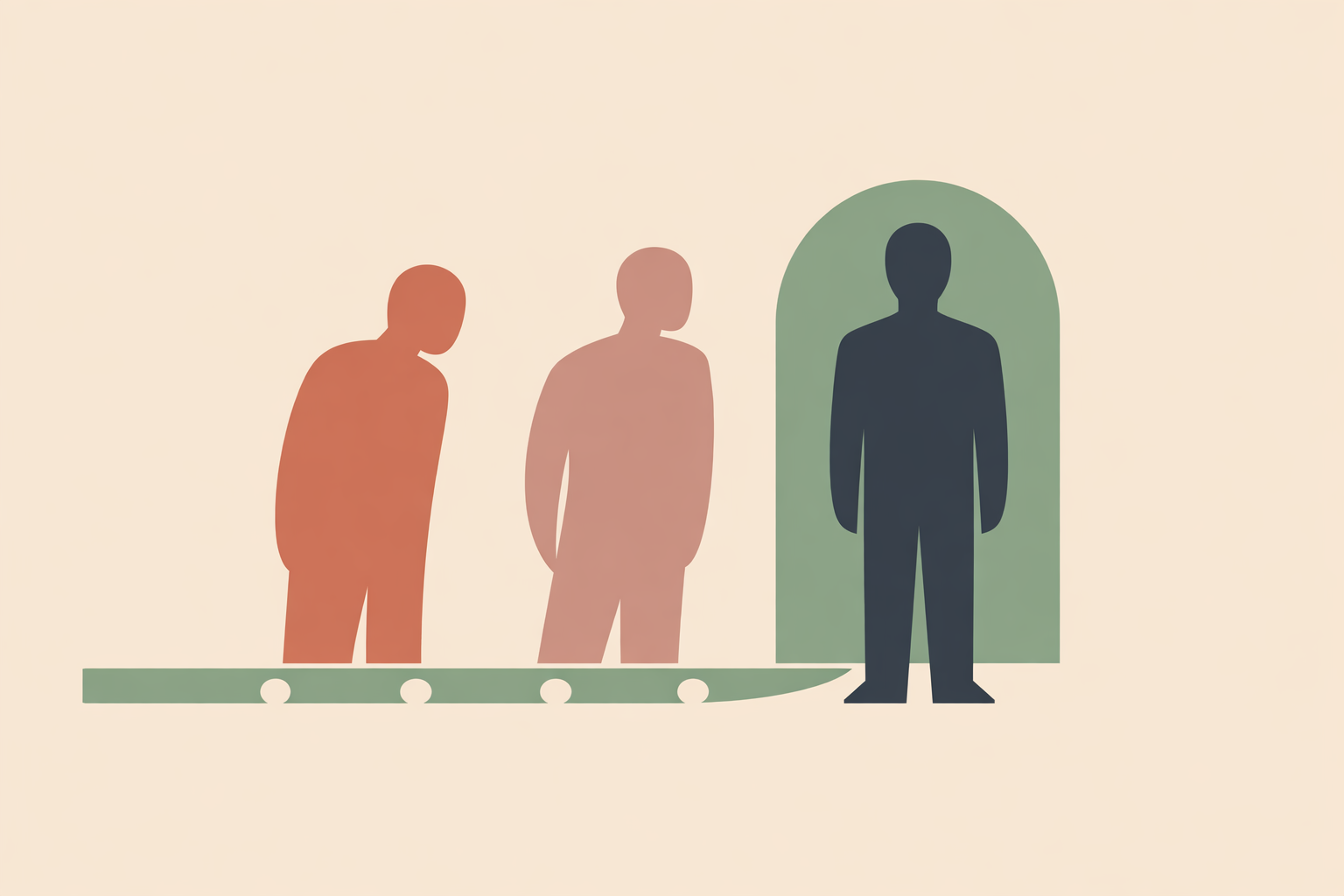
Practitioners meet the limits of “fix and optimize” the moment a client brings purpose into the room. Schedules can be streamlined and habits tightened, yet motivation still stalls—because the client isn’t chasing efficiency. They’re renegotiating who they are.
When that’s the real terrain, sessions can drift into abstraction, or swing back to tactics that miss the point: identity, values, belonging, and contribution. You also see the ripple effects—new boundaries, grief for an older self, relief at a clearer direction—and these shifts rarely fit neatly inside a one-off breakthrough. The practical question becomes: how do you support this depth while keeping momentum and reinforcing autonomy?
Key Takeaway: When purpose enters coaching, the real work often becomes identity-level change that needs structure and time to integrate. A life-design approach turns insight into small experiments, then uses reflection and cadence to build evidence, autonomy, and lasting alignment between values, choices, and daily action.
Why Identity Shifts Make Coaching a Longer Journey
When identity changes, everything tends to reorganize: choices, boundaries, relationships, and the projects someone is willing to pour themselves into. Coaching literature describes these as enduring changes in self-concept and life choices—so it makes sense that the work unfolds as a longer journey, not a single “aha.”
Often, the first visible sign is linguistic. Coaches regularly work with language and inquiry as doorways into identity, which helps explain why language shifts can arrive before external change. A client may move from “I’m just the reliable one” to “I’m building a life around what matters.” That’s not just phrasing—it’s an early blueprint.
And even good change can be emotionally complex. Many people feel relief and curiosity, alongside a real letting-go of an old self. Research on identity transition highlights phases that include grief, limbo, and reconstruction. Think of it like moving house: you may be excited for the new place while still feeling the weight of what you’re leaving behind.
Stability comes through repetition—doing the new life, not just imagining it. Research on learning and change suggests repeated behaviors and reframed beliefs help strengthen neural circuits, supporting more lasting shifts in habit and self-perception. What this means is: insight opens the door, but practice is what makes it feel like home.
“Coaching helps people stretch themselves in different ways to reach objectives that enhance and give new direction and meaning.”
A Practical Structure for Transformational Coaching Sessions
Deep change still benefits from a clear map. A reliable structure is to move between three layers: behavior (what someone does), beliefs (what they assume), and identity narratives (who they believe they are). Identity coaching literature frequently outlines these three levels, giving sessions shape without shrinking the work.
Practically, that means you may start with what’s happening this week—but you don’t stay there. You follow the thread into the assumptions underneath, then reconnect it to values, meaning, and choice, so action becomes more than “another task.”
A Typical Session Arc: From Story to Experiment
- Arrive and focus: What would make this conversation truly useful today?
- Explore the current story: What feels alive, stuck, or unresolved?
- Excavate assumptions: What rule, loyalty, or premise is shaping this pattern?
- Surface values and purpose: What wants to lead in this season of life?
- Co-design options: What action would express that more honestly?
- Commit and review: What experiment will you run before we speak again?
The turning point is often assumption excavation—gently testing the hidden premises that keep an old pattern in place. When a client can name “worth equals productivity,” the fog lifts. The issue becomes specific, workable, and no longer personal failure.
Skilled practitioners also track somatic cues—posture, breathing, vocal tone. Essentially, the body often signals alignment before the mind has finished explaining it, and those moments can guide what to explore next.
From Purpose to Practice: Designing Experiments That Build Evidence
Purpose becomes real when it becomes testable. Identity-focused coaching commonly uses practical exercises to help people engage new identities, not just describe them.
The aim isn’t to “prove” a theory about the self. It’s to gather lived evidence. Someone who says, “I want a more contributive life,” learns faster by hosting one gathering, declining one draining commitment, or trying one meaningful project than by staying in abstract reflection.
Values are especially potent when they move from concept to expression. That’s why coaching that includes values-based activities often leads to practical shifts in boundaries, priorities, and daily rhythm.
Examples of Life-Design Experiments
- Role experiments: Try a new role for two to four weeks, such as convener, mentor, or maker.
- Boundary experiments: Protect one evening, one morning, or one weekly block for what matters most.
- Contribution experiments: Offer a small project in service of a cause, community, or value you care about.
- Craft experiments: Publish, share, or complete one meaningful piece of work on a steady rhythm.
- Relational experiments: Practice a new script, a clearer request, or a more honest no.
Keep experiments simple enough to complete, clear enough to review, and meaningful enough to reveal something true. The review is where the learning consolidates: What felt energizing? What felt false? What became easier than expected? What resistance showed up—and what did it protect?
Cadence, Accountability, and Non-Dependent Support
Transformation benefits from rhythm. A steady cadence keeps learning connected to real decisions, instead of letting insights evaporate between sessions. In many coaching engagements, regular sessions often follow a dependable session architecture every two to three weeks, often over several months.
A good rhythm builds self-trust rather than dependence. Early on, sessions may be closer together to support experimentation and momentum; later, spacing can widen as the client becomes more internally anchored.
Many identity-focused coaching programs are designed around 3–6 months, emphasizing integration—so clients leave with their own compass, not a need for constant external prompting, much like transformational coaching that is held inside clear limits.
A Simple 3-Phase Arc
- Phase 1: Clarify what is changing, establish rhythm, and begin short experiments.
- Phase 2: Deepen the work through stronger boundaries, bolder choices, and more visible action.
- Phase 3: Consolidate the identity shift, taper support, and reinforce self-trust.
Throughout, it helps to name evidence of change as it appears. When a client chooses, speaks, or declines from a more aligned place, reflecting it back helps the new identity become recognizable—and therefore repeatable.
Working with Meaning, Tradition, and Cultural Respect
Purpose work naturally opens big questions, and that depth can be welcomed without dogma. The grounded approach is to work inside the client’s worldview, drawing on language and practices that already feel authentic to them.
Traditional frameworks—used with care—can be powerful allies here. Culturally rooted models such as ikigai can offer a thoughtful doorway into meaning, contribution, and fulfillment, especially when the practitioner keeps the cultural context intact. The goal is never to turn a living tradition into a productivity shortcut, but to engage it with humility, consent, and proper attribution.
Practically, that means naming origins, avoiding oversimplified diagrams as if they were the whole story, and letting the client decide what genuinely resonates. Respect for cultural roots isn’t an optional “nice-to-have” in purpose work; it’s part of professional integrity.
- Do: Ask what traditions, practices, or languages of meaning already feel like home to the client.
- Do: Attribute cultural frameworks clearly and use them with care.
- Don’t: Promise revelation or certainty.
- Don’t: reduce a living tradition to a tool for output alone.
Adapting Life Design for Creative Clients
Creative clients often need a slightly different doorway into purpose. Many are balancing integrity, sustainability, visibility, livelihood, and well-being all at once—and those tensions are usually central, not incidental.
For creatives, purpose clarity can reduce decision fatigue. Put simply: it becomes easier to choose fewer gigs, truer projects, and steadier momentum when approval and urgency are no longer the main drivers.
Useful Focus Areas for Creatives
- Creative north star: What do you want your work to do, evoke, or contribute?
- Sustainable rhythm: What cadence protects the craft without collapsing the rest of life?
- Livelihood experiments: What offer or project can you test without betraying the work itself?
- Community support: What relationships help the creative identity stay real and supported?
Here, life design isn’t about forcing neat answers. It’s about building a way of living where craft, contribution, and sustainability can coexist—honestly and consistently.
Adapting Life Design for Younger Clients
Younger clients often need permission to explore identity without feeling pressured to finalize it. Identity formation is widely understood as iterative, and coaching can support that iterative development through real-world exploration.
Language matters here. Non-finalizing phrasing—like “versions of you to explore this year”—can support experimentation without making it feel like a forever decision. Coaching scholarship also frames identity as iterative identity rather than a fixed endpoint, which pairs well with short trials and reflective review.
The aim isn’t to lock someone into a single path. It’s to build agency: “Try, learn, adjust,” until choices feel self-directed and grounded.
- Micro-experiences: Short trials in fields, roles, or communities that spark curiosity.
- Skill sprints: Brief periods of focused practice tied to visible output.
- Service-based exploration: Small contributions that reveal what feels meaningful.
- Values-in-action weeks: Choosing one value and shaping daily choices around it.
When choices are connected to meaning, contribution, and self-discovery—not pressure—young clients often become more willing to experiment, and more capable of steering their own growth within the clearer boundaries of ethical youth coaching.
Closing Reflection
Transformational coaching is the craft of helping people align their lives with who they are becoming. It weaves inner and outer change together: identity, beliefs, values, meaning, roles, boundaries, and action—held in a structure that keeps things moving.
Traditional wisdom has long understood that becoming isn’t a single decision; it’s a path shaped through reflection, practice, relationship, and contribution. Life-design coaching gives that ancient understanding a clear modern cadence—so insight becomes experiments, experiments become evidence, and evidence becomes self-trust. Used well, it supports clients in building lives that feel more honest, more grounded, and more fully their own.
Explore Purpose & Life Design
Continue this identity-to-action approach with the Purpose & Life Design learning path.
Explore Purpose & Life Design →










