Vinyasa can easily slide into constant invention: new transitions, new peak poses, new themes. Variety can be inspiring, yet without a repeatable arc it gets harder to see what is genuinely developing. Breath grows noisy, shoulders take over, recovery gets skipped, and “progress” turns fuzzy. A steadier path is usually more direct: repeat enough to notice patterns, then adjust with purpose.
In an Ashtanga-informed vinyasa practice, week-to-week progress isn’t only about reaching bigger shapes. It shows up as steadier rhythm, smoother breath, cleaner transitions, clearer focus, and a closing that truly lets the work settle. The seven checks below help you read those signals so your sequencing stays skillful, sustainable, and alive.
Key Takeaway: Sustainable vinyasa sequencing comes from a repeatable weekly arc guided by clear signals, not constant novelty. Use seven checks to shape progress: set a weekly rhythm you can maintain; let breath lead pace; use Sun Salutations to gauge heat and exertion; organize sequences around fundamental movement patterns and a few key postures; refine drishti to steady standing flow; read bandha integration in transitions; and finish with a consistent closing sequence and Savasana. Together, these checks create a practical tracker for evolving practice and teaching with more clarity and less guesswork.
Weekly Progress Check 1: Set a Sustainable Rhythm and Weekly Load
Start with rhythm before refinement. A steady weekly arc of stronger days, softer days, and real rest gives practice room to build without burning out your enthusiasm.
For many people, three to five practices a week works well, with at least one full day left empty. The exact number matters less than continuity: enough repetition to learn from, enough space to absorb what you’ve done.
A simple pattern might look like this:
- One stronger flow
- One technique-led or slower practice
- One medium session that repeats core material
- One optional gentle mobility or breath-focused session
- At least one full rest day
After each session, use a 1–10 exertion scale. Stronger days often land around 6–7, softer days around 4–5. If almost every session is hitting 7–8 for two weeks in a row, reduce volume before you add complexity. That can mean fewer rounds, shorter holds, or a shorter class.
It also helps to keep the same broad sequence “architecture” for two or three weeks. Repetition makes your patterns visible, and small refinements become easier to feel.
Keep notes brief: “Wed: 45 min, hip stability theme, RPE 5, finished fresh.” Over a month, those small entries tell the truth more clearly than memory.
Weekly Progress Check 2: Let Breath Lead the Pace
In Ashtanga-informed vinyasa, movement follows breath. When that’s truly happening, pace becomes less hurried and more intelligent.
Ujjayi pranayama and bandha awareness are traditionally used as inner timing for the flow. When breath stays even, the sequence stays honest. When breath turns strained, rushed, or interrupted, it’s a clear request for less speed or less ambition.
Try a short weekly breath audit. Pick a familiar section, such as Sun Salutation A. Move slowly enough that each transition fits inside a full inhale or exhale. If you arrive early, pause and wait for the breath to finish.
Track a few simple observations:
- Did the breath stay audible and smooth?
- Did you hold the breath in transitions?
- Did the exhale fully complete before folding or lowering?
- Did the breath feel like it initiated movement?
A cue that works for both self-practice and teaching: “Let the breath finish, then move.” It softens urgency and often improves form right away.
In your notes, rate breath leadership from 1–5: “Breath led most transitions; lost it twice while lowering.” That’s specific enough to guide next week.
Weekly Progress Check 3: Use Sun Salutations to Gauge Heat and Effort
Surya Namaskar is one of the clearest places to assess load. It’s easy to count, easy to repeat, and very honest about how much heat a class is building.
Too little volume can leave you under-warmed and flat. Too much can roughen the breath and break down form, especially through plank and Chaturanga. The goal isn’t chasing a number; it’s finding the dose that creates readiness without scattering attention.
Many practitioners do well somewhere between three and twelve rounds, adjusted by experience, pace, and intention. On stronger days, aim to work at about 50–80% of capacity: no gasping, no collapsing Chaturanga, no feeling of racing your own sequence.
A simple progression might look like this:
- Week 1: Sun A x4, Sun B x2 at a moderate pace
- Week 2: Add one round if breath stays smooth
- Week 3: Keep the same count but slow the transitions
- Week 4: Reduce volume slightly if heat rises faster than steadiness
Log one line: “8 total rounds; steady breath; shoulders comfortable.” That tells you whether the warm-up is supporting the rest of practice or taxing it.
Weekly Progress Check 4: Organize Around Fundamental Movements and Key Postures
Long-term progress comes from honoring fundamentals. A balanced sequence gives the spine and major joints enough variety that effort spreads evenly across class, instead of collecting in one overworked area.
One practical lens is the spine’s main directions:
- Flexion
- Extension
- Lateral flexion
- Rotation
When these directions show up early and clearly, there’s less temptation to force intensity later. Warm-ups become real preparation.
If you’re building toward a peak posture, work backward from that central shape. For Bridge, prepare with thoracic opening, hip extension, shoulder organization, and simpler backbends that teach the same actions. The whole sequence then feels coherent.
It also helps to track a small set of foundational postures across several weeks. Choose five that appear often, such as Downward Dog, Warrior II, Triangle, Bridge, and a seated twist. Use them as signposts for steadier breath, clearer support, and less unnecessary effort.
A quick “spine check” can anchor every class: a few rounds of Cat-Cow, gentle side bends, and simple twists. If one direction is missing by the end, add a modest counterbalance before closing.
Weekly Progress Check 5: Refine Drishti in Standing Flow
Steadier gaze supports steadier movement. In Ashtanga-informed practice, drishti is a direct support for attention, balance, and continuity.
When the eyes dart, the practice gets mentally noisy. When gaze settles, transitions often clean up and balances become more reliable, especially in standing sequences and one-leg work.
To keep this practical, choose one balance each week, such as Tree or Half Moon. Keep one gaze point and observe what changes.
Track small, clear markers:
- How many times you adjusted the standing foot
- Whether the lifted leg or torso wobbled less than usual
- Whether the breath stayed easier when the gaze was steady
- Whether transitions in and out of the pose felt smoother
Short pauses help. A brief still moment in Mountain between stronger sequences can reset attention and improve the next section. In teaching, it can be as simple as inviting students to soften the eyes and stay with one point.
Your log might read: “Half Moon: gaze steady for 4 of 5 breaths; one foot adjustment.” That’s real progress you can repeat.
Weekly Progress Check 6: Read Bandha Integration in the Transitions
Transitions often reveal more than the postures themselves. In an Ashtanga-informed flow, bandha awareness gives continuity and inner organization to the spaces between shapes.
Mula bandha and uddiyana bandha are traditionally felt as subtle support rather than dramatic effort. When that support is there, step-throughs feel lighter, lowering stays controlled, and the sequence holds together as one thread.
Use one weekly test: observe a small transition trio.
- Plank to Chaturanga to Upward Dog to Downward Dog
- Downward Dog stepping forward into lunge
- Seated fold rising back to stand
Look for concrete signs. Is the jaw soft? Do shoulders stay relaxed rather than creeping up? Can you lower with control? Does the back foot land quietly when stepping through?
Traditional practice values these markers because they’re consistent. Breath stopping, jaw tension, and shoulders climbing usually mean it’s time to reduce complexity and rebuild foundations. A trustworthy green light is sustaining the preparatory shape with steady breath for several cycles.
Try the quiet landing test: from Downward Dog, step to the top of the mat as softly as possible. If it lands heavily, shorten the distance with blocks under your hands and repeat. Small adaptations like this often reveal what support was missing.
Weekly Progress Check 7: Use a Consistent Closing Sequence and Savasana
A well-structured class has an arc: it builds, peaks, and lands. Without a real closing, practice can feel unfinished even when the stronger work was solid.
In an Ashtanga-informed rhythm, closing is where the effects of practice are absorbed. Repeating a familiar ending for several weeks helps the body and mind settle more quickly because the pattern is recognizable.
A simple closing might include:
- A gentle backbend or release shape
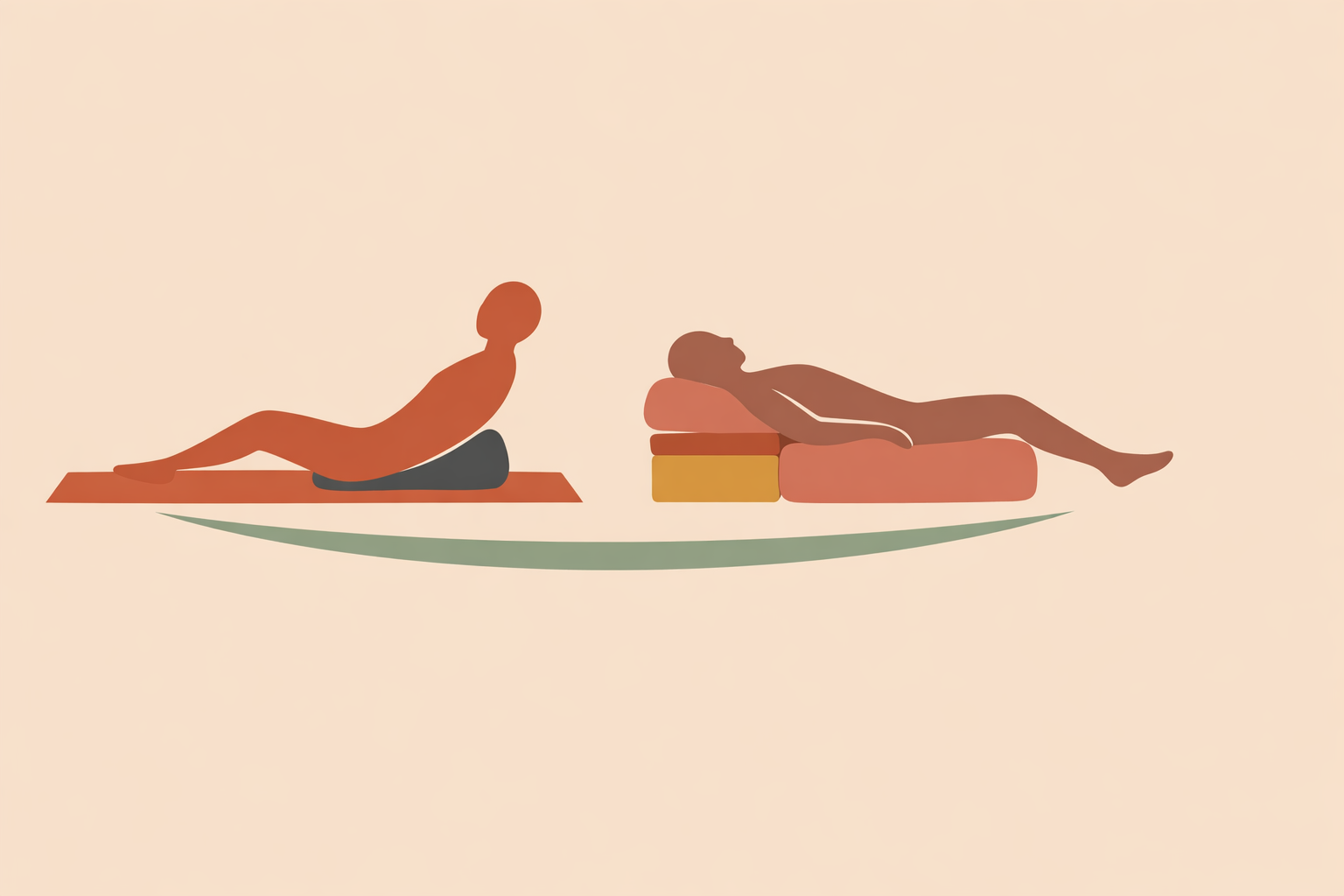
- A reclined twist on both sides
- One softening posture such as Happy Baby or a forward fold
- Savasana with enough time to truly rest
A practical guideline many teachers use is about one minute of Savasana for every ten minutes of class. What matters most is protecting enough time for the sequence to integrate.
Track closing quality with human, felt markers:
- Ease of stillness
- Clarity of breath
- Whether attention stayed present through the final minute
- The overall tone on completion
If a closing arrangement reliably helps you settle, keep it. Familiarity at the end of practice is often a strength.
Conclusion: Turn the Seven Checks Into a Weekly Tracker
Turn these checks into one repeating weekly record. Paper, notes app, or spreadsheet all work. Consistency is what makes it useful.
- Rhythm and load: session length, strong or soft emphasis, and exertion rating
- Breath and pace: where breath led well and where it broke
- Sun Salutations: total rounds and how heat felt
- Fundamentals: which spinal directions appeared and one note from a key posture
- Drishti: one balance, one gaze point, and any wobble pattern
- Bandhas and transitions: one transition that felt supported or unsettled
- Closing and Savasana: minutes rested and the tone of the ending
For teachers, brief class logs make future planning sharper and more responsive, especially within broader mental health frameworks. For personal practice, quick ratings for breath, focus, alignment, and overall energy reveal patterns that are easy to miss when you only go by memory.
Over a month, these seven checks give you grounded feedback without flattening the depth of practice. They show where sequencing is supporting growth, where recovery deserves more respect, and where repetition is quietly doing its work. Vinyasa often matures through attentive return and a steadier relationship with breath. Save experimentation for when the foundations feel clear, and let the basics keep proving their value.
Train Smarter in Yoga Teacher Training
Use these weekly checks to refine sequencing and breath skills inside the Yoga Teacher Training course.
Explore Yoga Teacher Training →