Middle-of-the-night pain can unravel an otherwise steady sleep rhythm. A 2 a.m. hip flare, repeated position changes, a stretch that wakes the whole system further, and a morning that feels shortened by hours—this pattern is deeply familiar in practice. In that moment, what helps most is a quiet sequence you can remember in the dark.
Key Takeaway: Night-time pain wake-ups are often best handled with a simple five-move sequence: calm arousal first, add only minimal movement, create more physical support, step out of bed briefly if needed, and use the next morning to notice patterns. This approach helps preserve ease around sleep instead of turning the bed into a place of effort.
Move 1: Calm the Wake-Up with Breath and Awareness
When pain wakes you suddenly, start by lowering the sense of alarm. That single shift can soften the experience and make the next choice clearer.
Mind-body practices can improve sleep quality and reduce insomnia severity, and they fit the reality of 2 a.m. because they ask so little of you. In practice, a minute of breath and awareness often reduces the felt intensity of discomfort and helps prevent the “fully awake” spiral.
Use a script simple enough to do half-asleep:
- Place one hand on the lower ribs and one on the belly.
- Inhale for 4 and exhale for 6. Repeat for 6 to 8 breaths.
- Soften three areas on each exhale: jaw, shoulders, belly.
- Shift the inner question from “Why is this happening?” to “What is my system doing right now?”
- Name three neutral facts: “I’m in bed. It’s quiet. I’m breathing.”
A phrase on the exhale can help: “soften,” “settle,” or a familiar prayer line. Many traditions meet night discomfort with gentle repetition and steadiness, and that tone alone can change the night.
If breath settles you but sleep doesn’t return yet, keep that win. It’s the bridge into the next move.
Move 2: Use In-Bed Micro-Movements, Not Big Stretches
If the main sensation is stiffness, compression, or a familiar ache in the back or hips, small movements under the covers often work better than a determined stretch. At night, less usually works best.
The goal is modest: reduce guarding, restore a little ease, and stay close to sleepiness. Keep movements small, slow, and easy to stop.
Try one or two:
- Lower-trunk rotations: Bend the knees and gently sway them a few centimeters side to side for 4 to 6 breaths.
- Mini knee-to-chest: Draw one knee in only partway, hold briefly, then release. Repeat on the other side.
- Pelvic tilts: On the exhale, gently flatten the low back toward the mattress. On the inhale, let the natural curve return.
Good night movement feels quiet and almost boring. If you notice breath-holding, sharpness, spreading discomfort, or a “revved up” feeling, stop and return to breath or repositioning.
For many people, these tiny motions take the edge off stiffness without pulling them into full wakefulness.
Move 3: Build a Supportive Nest
Often the most effective change is better support inside the position you already prefer. When pillows and props carry more of the load, the body can stop gripping.
A pillow setup that supports the knees and other pressure points can reduce strain and improve comfort during sleep. In practice, this is one of the fastest ways to help night-time aches settle.
Three reliable setups cover most situations:
- Side-sleep nest: Bend the knees slightly, place a firm pillow between the knees and toward the ankles, and hug a pillow to prevent the top shoulder from collapsing forward.
- Back-sleep nest: Place a pillow under the knees. If needed, add a small folded towel where the waist lifts away from the mattress.
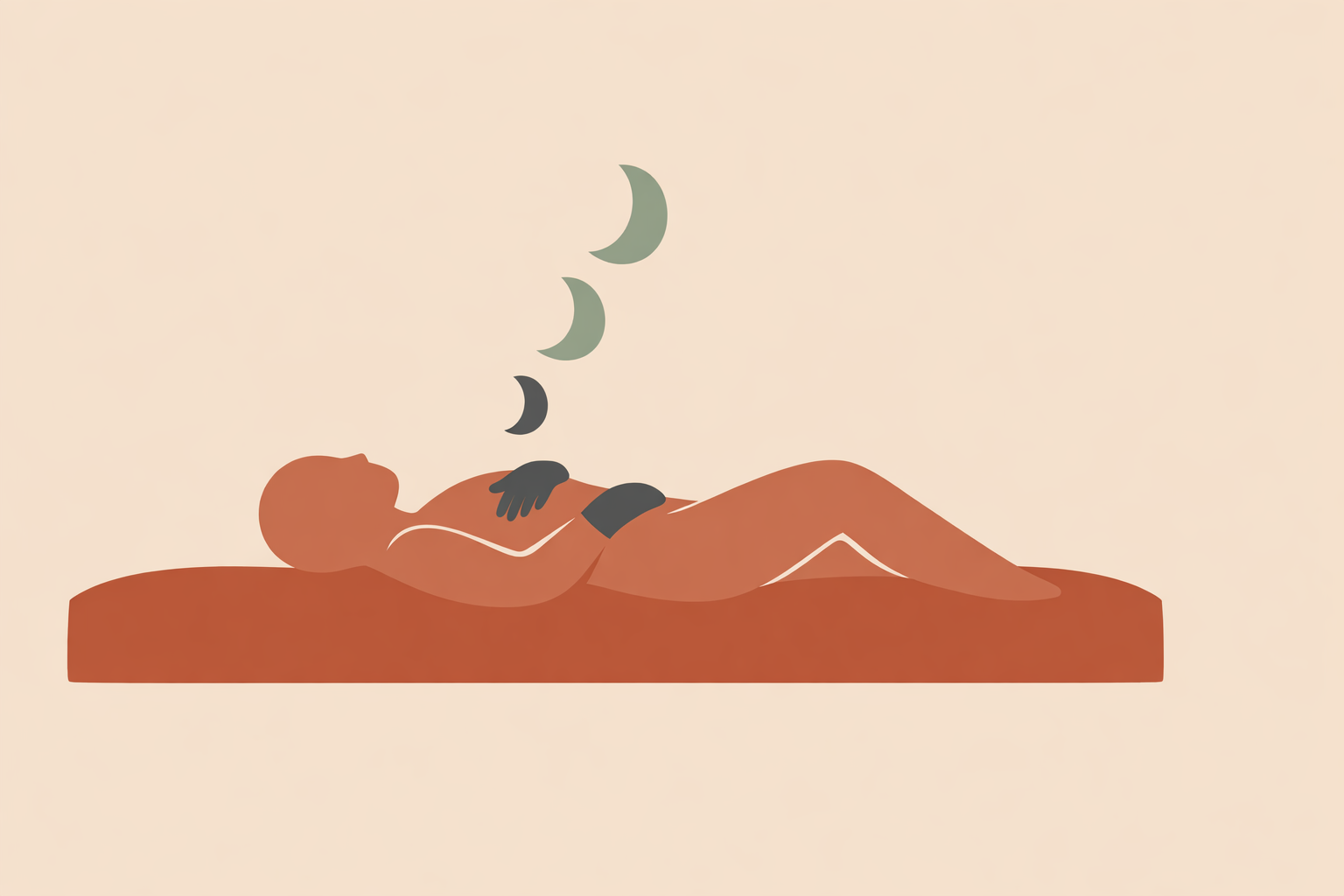
- Decompression rest: Lie on the back with the calves elevated on stacked pillows so the hips and knees are comfortably bent. Many people find this position immediately easing.
If neck or shoulder tension is part of the pattern, adjust the head pillow so the neck feels supported rather than pushed forward. If the mattress feels too hard, adding softness on top can make the night more forgiving.
Build the nest, then take a few slow exhalations. Once support is in place, the body often “gets the message” that it can let go.
Move 4: Step Out Briefly if the Bed Starts Feeling Like Work
If you’ve settled, moved, and repositioned but still feel stuck in wakefulness, step out of bed briefly. This protects the link between bed and sleepiness, instead of rehearsing frustration in the same spot.
Stimulus control encourages getting out of bed when sleep does not return, so the bed does not become associated with alertness and struggle.
Keep the reset simple:
- Stand up slowly.
- Keep lights low.
- Walk a short loop, sip water, or stand quietly for a minute.
- Avoid screens, bright overhead lighting, and anything mentally stimulating.
- Return to bed as soon as drowsiness returns.
For some people, one or two minutes out of bed is enough; others do better with a slightly longer pause. The principle stays the same: reduce agitation without switching into daytime mode.
This is also where inner tone matters. “What if I’m awake for hours?” tightens the whole system. A more useful stance is gentle and steady, much like approaches to bedtime anxiety: “I’m helping the night along. I don’t need to force it.”
Move 5: Use the Morning to Shape the Next Night
A difficult night can still offer useful information. Morning is the time to notice patterns without turning them into a long analysis.
Sleep disruption can accumulate into next-day sensitivity, which is one reason small adjustments matter. A short note is usually enough to catch what helped and what might have contributed.
Keep the morning log to three lines:
- When: “1:40 hips, 4:50 shoulder”
- What helped: “breath + side-sleep nest”
- Today’s support: “10-minute walk after lunch”
Then choose one daytime action that supports a steadier night. Gentle aerobic activity is associated with better sleep efficiency and less wake time, and low-intensity stretching can also support an insomnia-focused routine. Keep it realistic and repeatable.
A regular wake time matters too. Consistent wake times help stabilize the body clock more effectively than sleeping in after a difficult night.
Over time, patterns usually become obvious: more wake-ups after long sitting, late heavy meals, or unsupported side-sleeping; better nights after a dusk walk, an unwind away from screens, or setting up pillows before bed instead of improvising at 2 a.m. Those observations are often enough to build a personal micro-protocol that actually sticks.
A Gentle Night Practice That Builds Trust
These five moves work well because they follow the logic of the night: calm first, then make the smallest useful adjustment. Breath before effort. Support before struggle. A brief reset before frustration grows.
For practitioners, this framework fits naturally into holistic sleep support and sleep coaching. It blends behavioral structure with body awareness, respects lived experience, and leaves room for traditional evening rituals many people already trust: quiet prayer, simple stretching, warm bathing, or a brief moment of stillness before lights out.
Cautions belong at the end. If night waking regularly comes with loud snoring, repeated breathing pauses, persistent leg jerking, marked chest discomfort, or other unusual symptoms, broader support may be needed. For many ordinary pain-driven wake-ups, the aim is not perfection; it’s to make the night workable again.
With practice, the bed stops feeling like a test. It becomes a place where you know what to do: soften, make one small adjustment, and let sleep return in its own time.
Explore Sleep Coach Certification
Build a client-ready night-waking protocol in the Sleep Coach Certification.
Explore Sleep Coach Certification →