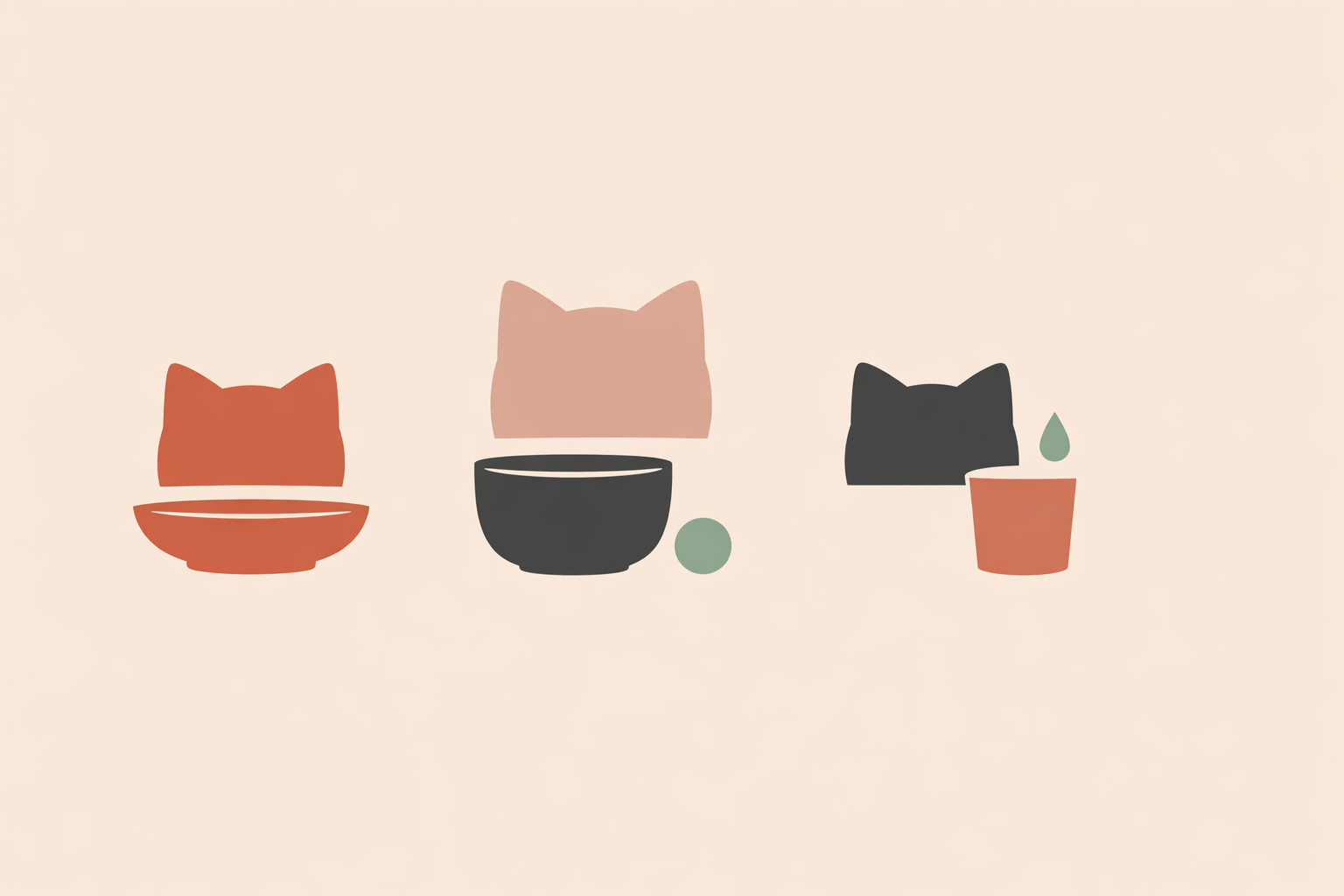
Most practitioners hear the same worry again and again: “My cat isn’t drinking enough.” People swap bowls, try fountains, and still can’t tell whether the issue is water access or the diet itself. Watching the bowl rarely gives a clear answer, especially in multi-cat homes. Food format usually does more heavy lifting than expected, and the fastest progress comes from choosing a routine you can repeat, then tracking what changes.
Three steady rhythms cover most cats: a wet-first routine for cats who genuinely enjoy soft food, a mixed wet-and-dry plan for busy schedules, or a dry-supported approach where kibble stays in place but water access and light moisture support become non-negotiable. Give any plan a full week with a simple log, and you’ll learn more than you ever will from bowl-watching.
Key Takeaway: Hydration is easiest to support when feeding format and daily rhythm work together. A wet-first routine gives many cats substantial moisture through meals, a mixed wet-and-dry plan raises overall intake while preserving flexibility, and a dry-supported approach relies on better water access, small moisture additions, and simple observation. In all three, steady routines and a one-week log tell you more than watching the water bowl.
Hydration Plan 1: Wet-First Feeding for Cats That Enjoy Soft Food
If your cat already lights up for soft food, this is usually the smoothest path. Cats are naturally geared to take in much of their daily fluid through what they eat, so moisture-rich meals tend to fit them well. When food carries water, many cats drink less from a bowl because they’re already getting fluid at mealtimes.
You can see this pattern reflected in research: wetter diets are linked with lower drinking from bowls while total water intake rises through food. A professional nutrition review also notes that fluid needs may be fully covered when wet food makes up the diet.
Moisture content is the reason. Dry food typically sits around 10–12%, while canned foods are far higher. Traditional cat keepers have long observed that prey-like textures, stews, and broths often pair well with comfortable digestion and a general sense of ease.
Keep the routine simple. Choose food labeled complete and balanced, then serve it at consistent times in the texture your cat actually prefers.
- 7:30 a.m.: 1 can or pouch of wet food, with 1–2 teaspoons of warm water stirred in if accepted.
- 6:00 p.m.: 1 can or pouch of wet food, again with a little added water if your cat enjoys a softer texture.
Portions can shift with age, appetite, and body condition, but consistency beats constant switching. If pâté works, stick with pâté. If shreds are the clear winner, keep shreds.
A small evening “sip ritual” can be a pleasant add-on: a little warm broth-water or a spoonful of diluted meal juices offered separately. This works best when it feels like part of the daily rhythm, not a struggle.
For one week, log:
- meal times
- food amount offered and finished
- any water added to meals
- visible drinking
- urine clumps
- stool texture
- weekly body weight
Those notes quickly show whether you need a texture swap, a portion adjustment, or a third small meal.
Hydration Plan 2: Mixed Wet-and-Dry Feeding for Flexible Schedules
For many households, mixed feeding is the most livable option. You keep the convenience and enrichment value of dry food while using wet meals to raise overall moisture.
As wet food becomes a bigger share of the day, cats can increase water intake compared with dry-only routines. A moisture-focused review also reports that wet diets, or dry diets with added water, reached 42.0–52.1 mL/kg/day, alongside more diluted urine than typical dry-fed patterns.
Mixed feeding also helps with an everyday pitfall: dry food is water-poor and calorie-dense, so free-feeding can quietly push intake higher than intended. Wet meals bring moisture and satiety, while dry food can be used more deliberately for play and measured portions.
A steady rhythm can look like:
- Morning: a small wet meal with 1–2 teaspoons of warm water stirred in.
- Mid-morning or midday: a measured portion of dry food in a puzzle feeder or scatter feed.
- Evening: a larger wet meal, again with a little extra water if accepted.
- Optional: a very small dry portion later for active cats who enjoy a food game.
Anchor the day with wet food, then use dry food on purpose.
Helpful moisture builders in a mixed plan include:
- stirring a little warm water into each wet meal
- using a spoonful of wet-food gravy to scent a puzzle feeder
- offering a small warm “sip” made from water and a little food jelly from the can
Dry food tends to shine most when it becomes part of hunting-style enrichment rather than an always-full bowl. Many cats settle into steadier appetite rhythms when food is earned in small, intentional portions.
Keep the one-week log, focusing on:
- wet food amounts
- dry grams
- water added
- puzzle or enrichment use
- urine clumps
- weekly body weight
If your cat starts leaving the wet portion, adjust texture or flavor before dropping the plan. In mixed feeding, the wet “anchor” is what keeps hydration moving.
Hydration Plan 3: Dry-Supported Hydration for Cats Who Stay on Kibble
Some cats stay on kibble for solid, real-life reasons: budget, preferences, routines, or simple acceptance. That choice can still be supported well, as long as water becomes part of the plan rather than an afterthought.
Because dry foods carry little moisture, water intake needs to come from drinking. The dry-supported approach focuses on access, comfort, and gentle encouragement.
Start with the environment. In multi-cat homes, access matters as much as the bowl itself. Guidance for households recommends several water points in different locations and bowl styles, which can be especially supportive for shy cats.
Create a simple hydration map:
- Place multiple water bowls in quiet, open areas.
- Keep water away from litter and, if possible, separate from the main feeding area.
- Try wide, shallow bowls for whisker comfort.
- Refresh water daily and wash bowls regularly.
- In cold or dry seasons, add an extra station near a favorite resting place.
- For older cats: elevate bowls slightly if posture seems to be a barrier.
Then add small moisture support around meals. Adding water to dry food can increase total water intake. For safety, serve moistened food promptly and discard leftovers rather than leaving damp kibble sitting out.
- Mix 1–2 teaspoons of warm water into a measured dry meal.
- Serve it promptly.
- Discard leftovers after a short period rather than leaving moistened kibble out.
- Offer a separate sip saucer once or twice daily if your cat enjoys flavored water.
If your cat refuses any moisture added to food, don’t turn it into a battle. Improve bowl placement, freshness, and choice instead. Many kibble-fed cats do well when drinking is easy, private, and stress-free.
Instead of guessing from water levels, track outcomes:
- meals finished
- visible drinking opportunities
- urine clump number and size
- stool quality
- weekly body weight
- interest in new water stations
Over time, this gives a clearer picture of what’s working.
Choosing the Plan You Can Actually Maintain
The best hydration plan is the one your cat accepts and you can repeat without friction. Wet-first feeding is often the most direct route when soft food is already a favorite. Mixed feeding balances flexibility with moisture support. Dry-supported routines respect real-world limits while strengthening the foundations that help a kibble-fed cat drink comfortably.
Use this framework:
- Accept: Start with the texture and format your cat truly eats.
- Account: Keep portions intentional and confirm the food is complete and balanced.
- Add: Layer in moisture through wet meals, water stations, small water additions, or sip rituals.
- Assess: Keep a one-week log and adjust based on trends, not one unusual day.
Traditional wisdom and modern feeding guidance land on the same point: hydration works best when it’s woven into daily life and into a practical feeding sequence. Meet your cat where they are, keep changes calm, and let steady comfort guide the next adjustment.
If appetite drops sharply, stools change suddenly, urination becomes difficult, or energy shifts in a marked way, pause the experiment and seek appropriate professional support alongside any feeding changes.
Hydration is not a product. It is a practice built through food, environment, and observation, and for practitioners building stronger animal wellness skills, that steady observation matters as much as the bowl itself.
Explore Animal Nutrition Certification
Build stronger feeding routines and hydration strategies with the Animal Nutrition Certification.
Explore Animal Nutrition →