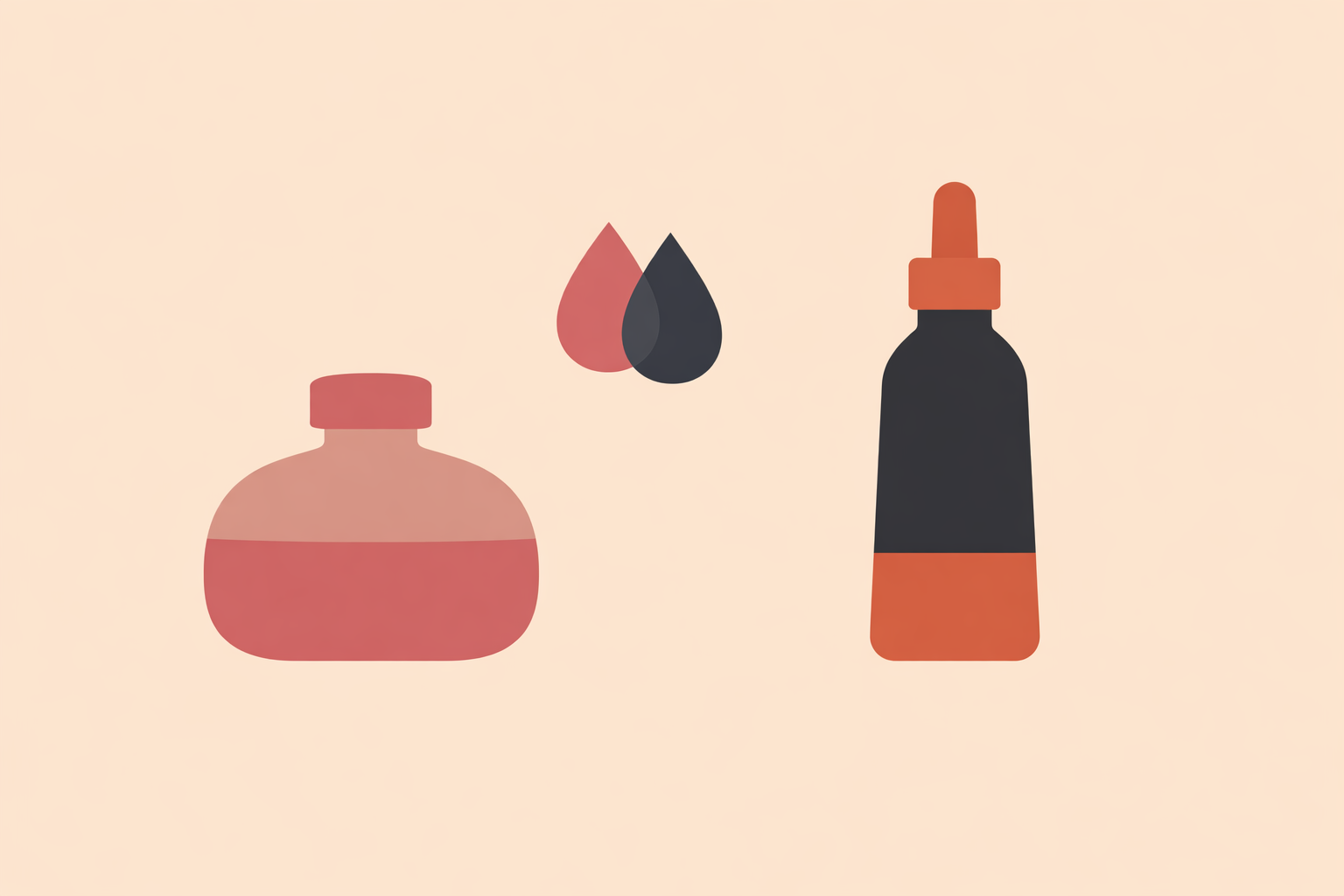
Clients often ask for alcohol-free extracts for children, pregnancy, recovery, or faith reasons. Glycerites are an obvious option because they taste pleasant and avoid ethanol. But solvent choice does more than change acceptability. It shapes constituent profile, flavor, color, mouthfeel, workflow, and shelf life.
That’s why two extracts made from the same herb can feel very different in real use. A glycerite often reads as soft, sweet, and rounded, while an ethanol extract tends to be brighter, thinner, and more aromatic. Neither is automatically better; they’re tools for different jobs.
Key Takeaway: Choosing between glycerites and tinctures is really a solvent decision. Glycerin–water systems often suit sweet, family-friendly, daily-use formulas, while ethanol–water systems usually offer broader extraction, easier filtering, and longer practical shelf life. The best choice depends on the plant, the person, the intended format, and how you plan to store and use the extract.
What a glycerite is, and how it differs from a tincture
A glycerite is a liquid herbal extract made with vegetable glycerin and water. A tincture uses ethanol and water. These aren’t interchangeable systems; they extract differently and behave differently in a formula.
Glycerin is sweet, thick, and fully miscible with water. In glycerin–water systems, it can carry water-soluble constituents and some moderately alcohol-soluble ones. That’s part of why glycerites feel syrupy and easy to take.
Ethanol–water generally extracts a broader range of constituents, including many that glycerin doesn’t pull as fully. Tinctures also tend to be thinner, easier to filter, and simpler to combine into multi-herb blends, which makes them a straightforward choice for regular making.
Whichever route you choose, strong notes keep your results consistent. Record the herb and plant part, fresh or dried state, ratio, solvent percentages, extraction time, and final yield. Clear labels make your process repeatable and easier to refine in herbalism and plant medicine.
How solvent choice changes the extract
The quickest way to understand extraction is to taste side by side. Same herb, different menstruum, different character.
Glycerin–water usually favors more polar compounds, while ethanol–water casts a wider net across polar and many less polar constituents. Aroma, bitterness, sweetness, and “body” can all shift because the solvent is pulling a different balance of compounds.
Chamomile is a familiar example: a glycerite often comes across softer and rounder, while a tincture usually feels more aromatic. Lemon balm can show a similar contrast, with glycerin leaning greener and fuller and ethanol lifting brighter top notes. Elderberry often sits naturally in glycerin when you want a syrup-like feel. Ginger frequently shows the opposite pattern, with tinctures delivering more pungency and resinous punch.
These aren’t rigid rules; they’re patterns many practitioners observe through repetition at the bench. Traditional craft grows through tasting, comparing, and keeping good records.
To train your palate, make two small extracts of the same dried herb: one in glycerin–water and one in ethanol–water. Dilute equal amounts in warm water and compare aroma, sweetness, bitterness, texture, and finish, much as you would in herbal tea preparation.
When a glycerite is the better fit
A glycerite shines when taste, daily acceptability, and alcohol avoidance are leading priorities. It’s a natural fit for family blends, regular-use support formulas, and products meant to mix smoothly into syrups, honeys, lozenges, or water.
That sweetness helps many people stay consistent, especially children and adults who dislike alcohol’s sharpness. In practice, glycerites often feel more inviting for everyday routines.
Glycerin can also support topical formulas because humectant properties can improve moisture feel and slip, depending on the rest of the blend.
- Choose glycerites when alcohol avoidance is important.
- Choose glycerites when sweetness improves regular use.
- Choose glycerites for syrups, honey-based blends, and other soft-format products.
- Choose glycerites when a gentler sensory profile suits the plant and the audience.
A practical example is a lemon balm glycerite for a school-age daytime blend, where flavor acceptance matters as much as the herb itself.
When a tincture is the stronger choice
Tinctures earn their place when you want broad extraction, efficient workflow, and a longer practical storage window. Many aromatic, resinous, or oil-rich plants express more of themselves in ethanol–water.
They’re also a strong match for busy making: quick filtering, clean pouring, and easy blending across several herbs. A thinner texture can make a noticeable difference when you’re producing regularly.
Alcohol-based tinctures also tend to have a longer shelf life than water-rich glycerites when made and stored well. For many makers, that reliability matters for stock formulas that may sit before they’re used.
- Choose tinctures for aromatic, resinous, or oil-rich herbs.
- Choose tinctures when broad-spectrum extraction matters most.
- Choose tinctures when thin texture and easy blending improve your process.
- Choose tinctures when you need a longer working storage window.
A ginger-forward blend is a classic example. If you want a more concentrated, vivid, warming feel, tincture is often the clearer choice, especially in herbal product making.
Shelf life, preservation, and the limits of glycerin
Glycerin is valuable, but it isn’t automatically self-preserving. Stability depends on the whole system: glycerin percentage, water content, pH, botanical load, sanitation, packaging, and storage conditions.
For dry-herb glycerites, many makers work around 55–60% glycerin. For fresh plants, higher percentages are usually needed to offset the plant’s own water. A commonly used guideline is around 75% glycerin when stronger preservation is the goal.
In everyday practice, alcohol-free glycerites are often planned around a 1–2 year working shelf life when stored well. Alcohol tinctures are often considered workable for 4–6 years under good conditions. These are practical planning windows, not universal guarantees.
Watch for red flags: gas, bulging caps, new cloudiness, ropey texture, mold, sour or otherwise off odors, unexpected color changes, or separation that no longer recombines normally. If something seems questionable, don’t rely on taste or smell alone to decide it’s fine.
For makers selling to the public, stronger quality control is wise. Measuring pH, checking water activity, and arranging appropriate microbial testing can greatly improve confidence in consistency and product stewardship.
A simple solvent checklist for everyday practice
When you’re unsure which direction to take, start with the plant and the real-world context.
- What herb are you working with, and which part of it?
- Are you using fresh material or dried?
- Do you want aromatics and resinous depth, or mainly a polar, sweet-friendly extract?
- Who will be using it, and is alcohol acceptable?
- How will the extract be taken: straight, in water, in syrup, in a topical, or in a blend?
- How long does it need to keep in good condition?
- Do you need a thin extract for easy blending, or a sweeter one for daily acceptability?
A useful rule of thumb: choose a glycerite when acceptability, sweetness, and alcohol avoidance lead the decision. Choose a tincture when breadth of extraction, efficiency, and longer keeping quality matter more.
It’s a simple frame, and it keeps formulation grounded in purpose rather than habit.
Choosing with confidence
Glycerites stand on their own as a traditional-style preparation with distinct strengths in flavor, texture, and daily use. Tinctures bring their own advantages in range, handling, and longevity, and many practitioners keep both on hand so they can choose deliberately.
The craft is matching plant, person, purpose, and preservation with care. Keep your standards clear, label honestly, and avoid overpromising. Respect traditional knowledge while staying attentive to stability, cleanliness, and responsible formulation.
In the end, confidence comes from repetition: side-by-side tasting, careful note-taking, and making small improvements each batch. That’s how solvent choice becomes fluent and intentional within plant medicine practice.
Master Herbal Product Making
Apply solvent-selection insights with hands-on methods in the Herbal Product Making Course.
Explore Herbal Product Making →