Most coaches discover quickly that a teen group can’t be run like six private sessions happening at the same time. In small groups, a few voices can take over, advice can pile up, time disappears, and follow-through can feel fuzzy unless the structure is designed for it.
Key Takeaway: Small-group teen coaching is a distinct craft built around peer visibility, structure, and communal accountability. When you design for rounds, roles, witnessing, and shared follow-through, the group becomes a place where teens practice wise choices together rather than only talk about them.
Why Small-Group Teen Coaching Is Its Own Practice
In a group, every share happens in front of witnesses. That changes pace, courage, and what support feels like. When a teen says, “I skipped practice because I panicked,” they’re not only talking to the coach; they’re trying on an identity in front of peers.
Group work goes best when it’s built with peer dynamics rather than trying to silence them. Visibility, belonging, and feedback are powerful forces at this age. The coach’s job is to shape those forces into something supportive.
Even a simple opening shows the difference. In a 1:1 session, “one win, one wobble” can quickly become all wobble. In a group, wins often lift the room first, which makes it easier to stay present when the harder shares arrive.
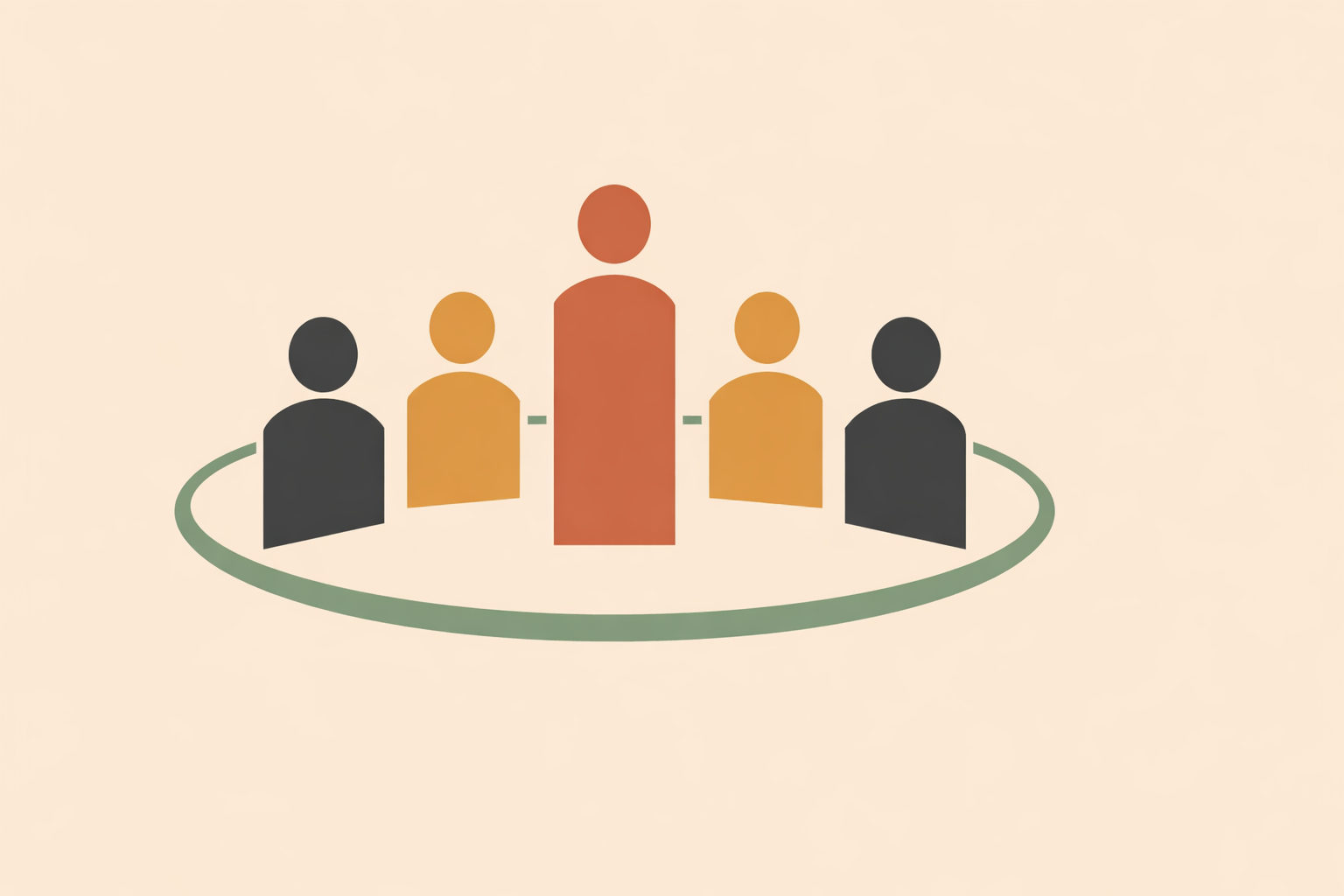
Traditional cultures have long valued learning in small circles. Young people were guided by elders, older siblings, aunties, uncles, and trusted neighbors, with skills passed on through shared participation. That wisdom translates well here: rounds, witnessing, and story-carrying remind teens that support can be communal.
Why Group Dynamics Matter So Much in Adolescence
Adolescence is a stage where novelty, reward, and social approval carry unusual weight. In emotionally charged moments, peer approval can strongly shape decision-making. Good group design gives teens a reliable pause button, so they can sort what’s happening and choose with more awareness.
Group work fits how many teens already learn: in relation to others. They watch, compare, test, imitate, resist, and revise in real time. With steady facilitation, that becomes a strength.
Peers can also act as co-regulators, helping one another steady emotion and perspective. It often looks ordinary: a nod across the circle, a shared laugh that releases shame, or one teen offering words another teen needed.
And because group spaces naturally create multiple relationships, teens aren’t only learning from an adult. They’re learning with and for one another, which changes the whole engine of growth.
What to Build Instead of a 1:1 Model
If group work has its own ecology, it needs its own container. The strongest teen groups are simple, repeatable, and clear enough that everyone knows what’s expected.
A workable session arc often looks like this:
- Opening: arrive, settle, and hear every voice once.
- Middle: focus on one live issue, one practical skill, or one shared exercise.
- Practice: let teens try a framework in pairs, triads, or spotlight format.
- Closing: name one next step and one takeaway.
This matters because groups drift without a clear arc. When the shape is consistent, the room relaxes and teens take more risks in a good way.
Core Structures That Make Teen Groups Work
A few design choices reliably separate a chatty hangout from a developmental space.
- Agreements before techniques. Co-create norms early and keep them visible. Use plain language like “one mic at a time,” “ask before advice,” “stories stay, learnings travel,” and “you can pass once.” Revisit them weekly.
- Rounds protect equity. Short, timed rounds prevent a few voices from taking all the space and help quieter teens participate without competing.
- Peer roles create ownership. Rotate simple roles like timekeeper, appreciations leader, or vibe-checker so teens help hold the space.
- Witnessing slows reactivity. Not every share needs immediate input. Sometimes the best move is letting a teen finish, take a breath, and then hear what landed before anyone offers reflections.
- Steady structure builds trust. Repetition makes the group feel safe. When teens know the shape of the session, they often open sooner and go deeper.
With these elements in place, support starts to feel communal rather than centered on the coach.
A Simple Group Format You Can Use
Here is a practical 60-minute flow for an established teen group:
- Arrive (5 minutes): one-word check-in or “weather report.”
- Wins and wobbles (10 minutes): each teen shares one small success and one challenge.
- Peer spotlight (15 minutes): one teen brings a real situation; the group asks questions before offering any reflections.
- Triad practice (15 minutes): teens rotate through speaker, peer coach, and observer roles.
- Commitment round (10 minutes): each person names one concrete step before next time.
- Close (5 minutes): one word or one sentence to leave with.
This format leaves room for honesty without letting the session slide into side advice, storytelling loops, or social performance.
Using GROW and OODA in a Group Setting
Well-known coaching frameworks work well with teens when they’re adapted for peer learning.
GROW becomes especially lively in triads. One teen names a goal, another asks a few questions about reality, both generate options, and the speaker chooses a way forward. Rotating roles teaches teens to think from more than one position and builds respect for the process.
OODA is useful when social pressure or digital behavior is involved:
- Observe: What happened?
- Orient: What matters here? What kind of person do I want to be in this moment?
- Decide: What are my real options?
- Act: What is my next small step?
Practiced together, this kind of decision framework becomes familiar enough to recall later under pressure. Group repetition is what makes it stick.
How Group Support Shapes Follow-Through
Accountability lands differently in a circle. In 1:1 work, a commitment mostly lives between coach and teen. In a group, it’s witnessed, which adds pressure and support at the same time.
A visible board with initials and one specific next step is often enough, especially when the group is helping teens make SMART goals visible:
- JH — ask teacher for rubric — Tuesday lunch
- AL — 10-minute history outline — Wednesday 7:30
- SR — phone in kitchen 8–9 — Thursday night
At the next session, keep the check-in brief: What happened? What helped? What got in the way? Public commitments often raise the stakes while making setbacks feel less isolating.
Over time, celebrating small steps teaches a deeper lesson: progress is usually incremental. Teens learn to build momentum through repeated, manageable actions.
Why Peers Often Help Teens Move Further
Many practitioners notice teens will absorb something from a peer that they would brush past if an adult said it. The coach’s role becomes clearer: design and steward a space where healthy peer influence can do some of the lifting.
There is also evidence that group mentoring can have a stronger effect on peer relations and social outcomes than one-to-one formats. On the ground, it makes sense. Teens receive real-time social feedback in a group, and the room becomes part of the learning.
When supportive peers are present alongside a caring adult, self-regulation often strengthens. Teens borrow steadiness from the group until they can generate more of it themselves.
Safety, Boundaries, and Cultural Humility
Supportive group work needs firm edges. Safety works best when it’s calm, clear, and adult-held.
Use direct language around confidentiality: stories stay in the group, and if someone’s safety is at risk, further support will be brought in. Teens often relax when boundaries are explained plainly.
Cultural humility also shows up in practical, everyday choices:
- Say names correctly and ask when unsure.
- Invite identity-sharing on teens’ terms, never by pressure.
- Rotate who speaks, leads, and gets reflected back.
- Choose neutral objects and ordinary rituals rather than borrowing sacred symbols or forms from traditions that are not yours.
These details shape whether the group feels respectful, fair, and trustworthy.
Working with Heat in the Room
Teen groups can shift fast. Advice rushes in, jokes land badly, one person takes over, someone shuts down. This is normal. It helps to have a few clean interventions you can use without making things heavy.
- When advice floods in: switch to questions only.
- When a comment stings: name the impact and invite a repair.
- When energy spikes: pause for two breaths, feet on the floor, eyes on one point.
- When one voice dominates: move into a timed round.
The aim is to protect the conditions that make reflection and belonging possible.
Bringing Digital Life Into the Circle
Teen life doesn’t stop at the group room door. Group chats, screenshots, disappearing messages, and public performance shape real choices, so it helps to bring that reality into the circle.
A monthly “digital OODA” drill works well. Offer a familiar scenario, slow it down, and walk through it together. Online decision-making becomes discussable instead of secretive or reactive.
With repetition, teens gain language for moments that usually move too quickly.
What Teens Learn Beyond the Topic of the Day
The deeper value of small-group coaching isn’t only the weekly skill. It’s the culture that forms through repetition.
Celebrate small efforts and teens start respecting steady progress. Ask what they felt in their body and they learn self-awareness includes more than thoughts. Ask what support they want from peers and they get better at naming needs and receiving support with intention.
That’s why small-group teen coaching stands on its own. It’s relational and communal by design, and it teaches teens how to be part of a supportive field for one another, which is central to child and adolescent development.
Over time, the circle offers a lasting lesson: growth does not have to happen alone, and this kind of peer-centered practice fits naturally within teen life coach certification training.
Train as a teen coach
Build group-ready coaching skills with the Teen Life Coach Certification.
Explore Teen Certification →