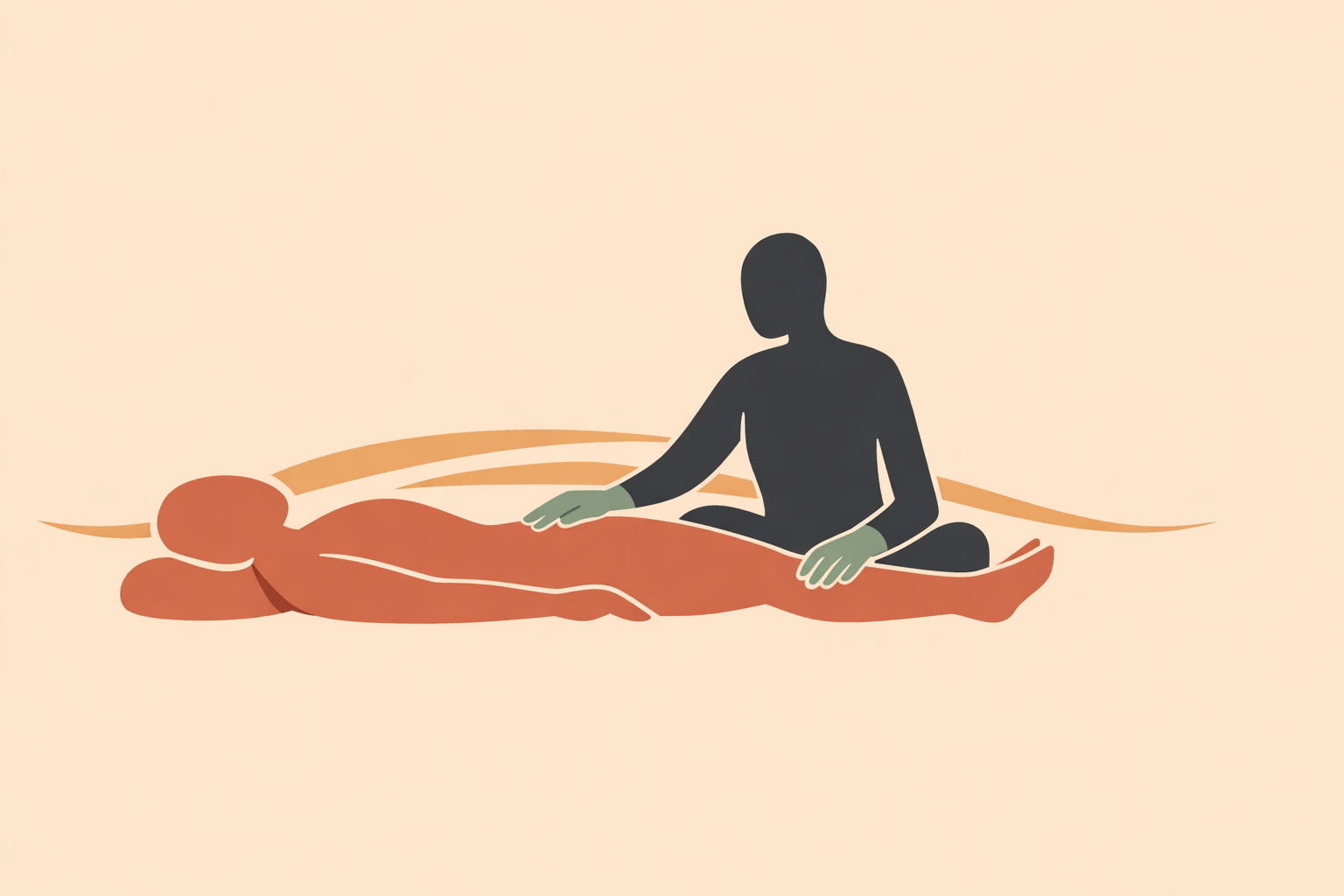
When a visibly restless client arrives, it’s tempting to reach for generic calming strokes. A more skillful first move is often simpler: read their state before choosing technique. When you catch the specific “wired” pattern early, it becomes much easier to match temperature, pressure, and pacing so the session feels settling rather than overstimulating or dull.
Key Takeaway: For wired clients, Ayurvedic bodywork works best when you match touch to pattern. First, read whether the presentation is more Vata-wired, Pitta-wired, or mixed. Then choose oils, pacing, pressure, and sequencing accordingly. A predictable arc—steady opening, rhythmic abhyanga, and a quiet close anchored by head and foot work—often helps fast systems settle without losing stability.
Read the Wired State Before Choosing Ayurvedic Massage Techniques
Wiredness has a recognizable feel. You may hear it in the voice, see it in the eyes, or notice it in how the client enters the room: fast, bright, effortful, and easily startled.
In Ayurveda’s subtle map, this presentation often reflects disturbed prana, overheated tejas, and thinned ojas. That mix explains a common experience: someone can feel exhausted and still unable to switch off.
In the first minutes, look for practical cues:
- Mind: racing thoughts, catastrophizing, irritability, perfectionistic self-talk
- Body: tight chest, shallow breathing, clenched jaw, fluttering belly, cold hands with inner heat
- Behavior: difficulty settling, scanning the room, checking the phone, startle responses to small sounds
Simple observation is usually enough. Notes like “breath high in chest, shoulders held, toes cool, speech fast” already point you toward the right pace and pressure.
Then ask one clean question: “Right now, do you feel more buzzy and scattered, or more hot and keyed-up?” It quickly reveals whether wind or flame is leading.
Short arrival rituals help you read more accurately:
- “We’ll go slowly. You can say pause at any time.”
- A quick scan of feet temperature, jaw tone, belly tension, and breath depth
- Simple chart shorthand such as “Wired—wind,” “Wired—flame,” or “Mixed”
What you’re protecting is steadiness. Once the state is clearly named, the session becomes easier to shape.
Vata-Wired vs Pitta-Wired: Match the Session to the Pattern
Most wired presentations aren’t identical. Some are distinctly Vata, some clearly Pitta, and many are mixed.
Vata-wired clients often show fear, scatteredness, coldness, dryness, variable appetite, and light, easily disturbed sleep. These are classic signs of Vata aggravation. They typically respond best to warmth, oiliness, rhythmic repetition, and a sense of containment.
Pitta-wired clients tend to feel hotter and more driven. Irritability, facial flushing, strong appetite with burning tendencies or headaches, and sleep disrupted by overfocus point in that direction. Traditional guidance links this to Pitta imbalance. Here, steadiness and cooling are usually more useful than heavy soothing.
Mixed Vata-Pitta presentations often show both at once: cold hands with inner heat, digestive volatility, and insomnia that blends anxiety with rumination. This dual aggravation often does best with grounded choices that calm without trapping heat.
A brief constitution and imbalance check makes your decisions more precise. Ask about:
- Sleep: trouble falling asleep or staying asleep
- Appetite: weak, variable, or strong
- Stress response: fearful or irritable
- Temperature preference: seeks warmth or coolness
- Digestion and elimination tendencies
- Emotional tone under pressure
Two quick examples make it tangible:
- Mira feels spinny, anxious, and uncontained. Her hands are cold, appetite is irregular, and sleep is light. This is “Wired—wind”: warmer oil, slower pacing, more containment, extra time on feet and belly.
- Alex feels driven, warm, and mentally locked on. The jaw is tight, the face flushes easily, and the mind keeps pushing. This is “Wired—flame”: a slightly cooler room, cooling oil choice, moderate pressure, and a longer quiet close.
A clean decision rule helps: if fear and flutter dominate, increase warmth and containment; if heat and intensity dominate, widen the frame, cool the atmosphere, and slow the tempo.
Build a Predictable Session Arc for Wired Clients
Wired systems settle through predictability. A coherent session arc often matters as much as any single technique.
A reliable structure is: quiet opening, steady middle, and centering close.
Opening: Keep arrival clean and unhurried. Limit small talk. Invite one or two slow breaths, then begin in a way that signals steadiness. Many practitioners start with head and feet because it helps clients feel held at both ends of the body.
Middle: Move into full-body abhyanga with deliberate rhythm. Use long strokes on the limbs and circles around joints and abdomen. Keep sequencing consistent to reduce surprise, and name transitions briefly when needed: “I’m moving to your left arm now.”
Close: Finish more quietly than you began. Marma holds, stillness, and a return to head or feet give the session a clear landing point.
Environmental choices also support regulation. Late afternoon or early evening sessions often align well with the body’s natural drift toward rest, and a calm evening rhythm around bodywork can support deeper sleep afterward.
Consent is part of the settling effect. Clear language, predictable pacing, and simple check-ins help the client stay oriented and involved.
A workable 60-minute arc might look like this:
- 5 minutes: arrival, consent, settling breath
- 5 minutes: head and feet opening
- 40 minutes: full-body abhyanga with slow, consistent sequencing
- 8 minutes: marma-based close
- 2 minutes: quiet rest before speaking
When the arc stays consistent across sessions, many clients begin to settle faster because the body recognizes the pattern.
Core Ayurvedic Massage Techniques for Wired Clients
When a client is wired, your hands are offering one core message: you can land here. You deliver that message through oil, pace, pressure, sequence, and the quality of contact.
Use abhyanga to gather scattered attention. Keep the oil comfortably warm. For Vata-wired clients, sesame oil is a classic choice for its warmth and weight. For Pitta-wired clients, sunflower and coconut oil are often preferred for a cooler feel.
Keep the stroke logic straightforward:
- Long, steady strokes along the limbs
- Circular strokes around joints and abdomen
- Extra time on feet and belly for Vata-heavy sessions
- Extra time on upper back, neck, and scalp for Pitta-heavy sessions
Match pressure to the pattern. Vata-wired clients often do best with lighter, continuous contact. Pitta-wired clients usually tolerate moderate pressure well when the tempo stays unhurried and the touch doesn’t feel forceful.
Back-body-first sequencing can be especially settling, and many practitioners keep the order consistent from session to session. Finishing each region with long downward strokes toward the feet often reinforces groundedness.
Let Vata sessions feel warm, rhythmic, and containing. Ayurveda teaches that warm, oily touch helps calm Vata. Favor fewer abrupt transitions and more repetition so the client feels gathered rather than managed.
Let Pitta sessions downshift with space. For hotter, driven presentations, cooling, gentle touch often works better than intensity. Broad contact, moderate pressure, and a slightly cooler environment tend to help the system soften without feeling constrained.
Blend intelligently for mixed presentations. When coldness and heat travel together, use grounding and cooling at the same time: warm enough oil to avoid aggravating Vata, while keeping the overall feel calm and not overly hot.
Use head and foot work as bookends. When the mind won’t switch off, these areas often become decisive. Evening routines in Ayurveda consistently emphasize head and feet for settling and rest.
For the head, you might use:
- Steady temple glides
- Gentle occipital ridge pressure
- Soft brow holds
- A quiet scalp cradle at the end
For the feet, stay long enough for the client to actually arrive there:
- Slow strokes from heel to toes
- Thumb circles through the arches
- Broad compressions matched to the exhale
- A return to the feet before closing if needed
Marma work can stay simple. A closing sequence through the soles, heart center, brow, and scalp is often enough when the rest of the session has been coherent.
Consider Shirodhara when appropriate to your practice. If restlessness stays pronounced after abhyanga and focused head and foot work, some practitioners add Shirodhara for its continuous rhythm. Traditional use and modern interest both suggest it can be supportive for calming and settling, especially when the mind remains overactive.
Home Support Between Sessions
Home support works best when it’s brief and repeatable. Consistency does more than complexity.
For many clients, evening self-oiling for 10–15 minutes reinforces the contained feeling created in session. Afterward, a warm shower and a low-stimulation evening help the body hold onto that quieter state.
You can offer a simple script such as:
- Oil the feet
- Circle the belly gently
- Soften shoulders and neck
- Return to the feet
- Keep lights low and the phone away afterward
The aim is repetition, familiarity, and a clear cue to slow down.
Closing Considerations
Wired clients rarely need novelty. They need rhythm, steadiness, and a practitioner who can distinguish wind from flame.
When you match touch to the pattern, choose oils and pacing with intention, and build a predictable arc anchored by head and feet, traditional and eastern medicine approaches like Ayurvedic bodywork are far more likely to land well. Over time, refinements add up: a little more warmth here, a little more spaciousness there, and a clearer close.
Keep observations simple, the environment low on stimulation, and your language steady. The body recognizes consistency, and that reliability is one of the quiet strengths of this tradition.
As always, stay within scope and respond with care. If someone presents with severe or unusual symptoms that suggest they need urgent external support, pause the session and encourage them to seek appropriate immediate help.
Train in Ayurvedic Bodywork
Deepen your assessment and treatment skills with the Ayurvedic Practitioner Certification.
Explore Ayurvedic Certification →