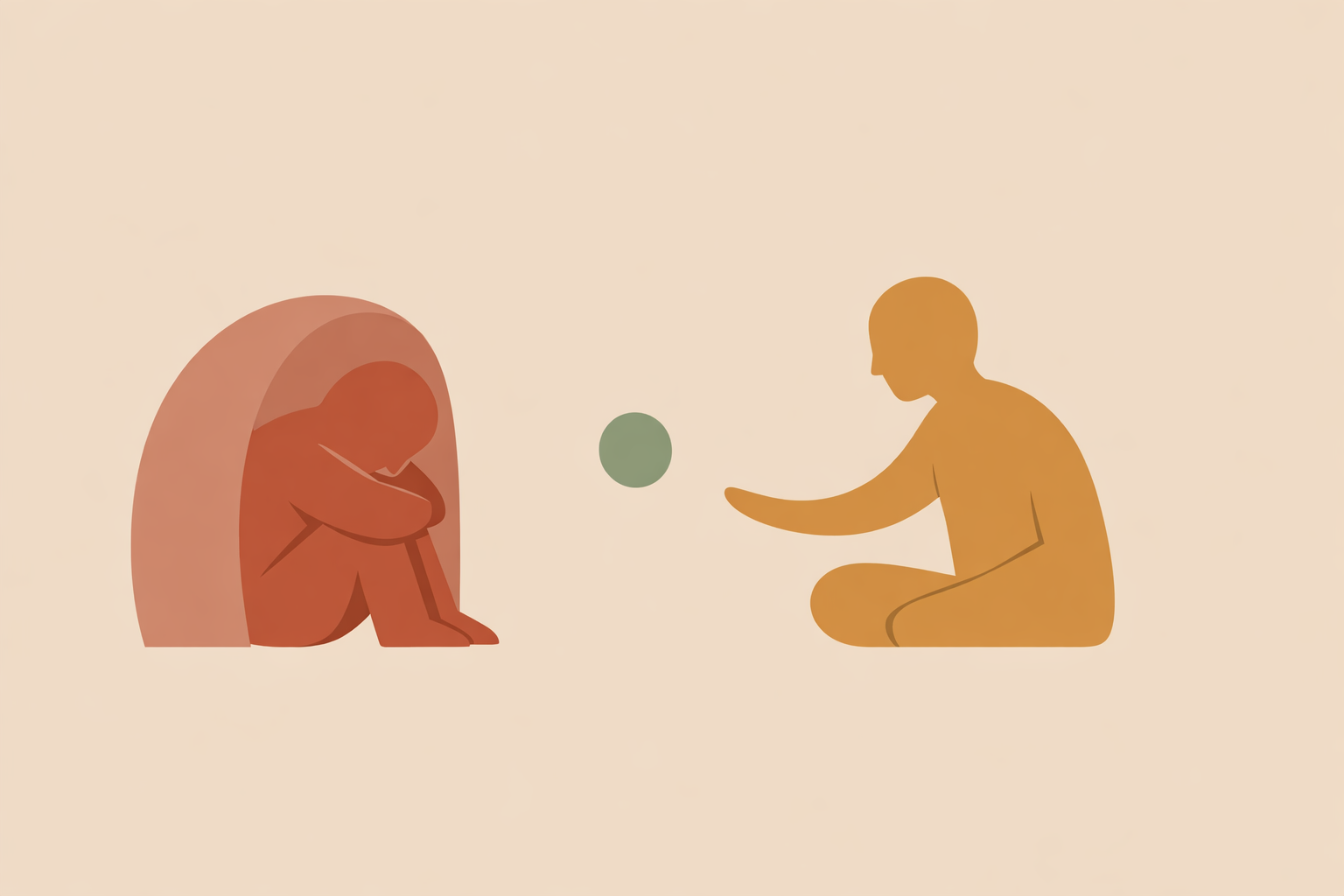
Shutdown is a familiar moment in inner-child-oriented work: the eyes drop, the jaw tightens, the room goes quiet, and language seems to disappear. The most helpful response is rarely to push harder. When pressure enters—through extra questions, rushed techniques, or premature interpretation—it often backfires. A steadier approach is to treat the shift as protective information, restore choice, and help the person reconnect with the present before exploring meaning.
Key Takeaway: When a client shuts down, respond with observation, pacing, choice, and present-moment orientation. Start by noticing what changed without labeling it. Offer simple options that return agency. If needed, use collaborative orienting prompts before revisiting the material. Inner child language can help when it is gentle and optional. If words are too much, silence, practical talk, or simple creative acts may support more than further exploration. When orientation or safety deteriorates, pause and help the client access additional support.
What to say first when a client goes quiet
Start with gentle observation and stay close to the present moment. Guidance recommends beginning with observable changes rather than conclusions.
Useful opening lines include:
- “I notice it got quiet just now.”
- “I notice your responses have slowed.”
- “Something seems to have shifted.”
- “We can slow this right down.”
Keep your voice calm, low, and unhurried. Clinical guidance recommends slowing speech and reducing questions when someone is in a shutdown-like state.
Short phrases usually land better than long explanations. Guidance generally supports fewer words, longer pauses, and one clear question at a time.
Avoid labels such as “you’re resisting” or “you are dissociating.” Even if you have a strong impression, naming a state without consent can pull the person further away. Stay descriptive, kind, and collaborative.
Restoring choice and pacing
After you name the shift softly, return agency. Choice turns overwhelm into manageable next steps. Trauma-informed communication emphasizes choice and collaboration as central supports.
Offer concrete options rather than open-ended questions:
- “Would you like to pause?”
- “Would it help to change the subject?”
- “Would you rather sit quietly, have some water, or stop here for today?”
- “Is it okay if we check what would support you next?”
In inner child work, consent is ongoing. Agreeing to begin does not mean agreeing to continue every exercise, image, body cue, or memory thread that arises.
This is especially supportive for people with appeasing patterns. Make “no” easy and welcomed: “You do not need to continue this thread,” or “Passing is completely okay.”
When pressure drops, shame often drops with it. The person no longer has to perform insight, produce a story, or justify their pace.
Orienting before meaning-making
Before exploring childhood meaning, help the person reconnect with the present. Grounding tends to work best when it is offered collaboratively. Guidance recommends supporting present awareness to restore steadiness.
You might ask:
- “Are you able to track where we are right now?”
- “Would it help to notice a few things in the room?”
- “Can you name two objects you see?”
- “Would feeling your feet on the floor help, or would you rather not?”
External orienting can bring attention back online. Grounding guidance specifically recommends noticing colors and objects in the room.
Ordinary, practical talk can also help: the time, the journey home, a drink of water, or what happens after the session. Grounding approaches sometimes use recent and future events to rebuild a sense of continuity.
Avoid commands such as “come back” or assumptions such as “you are safe now.” Trauma-informed guidance cautions against imposing interventions without checking what the person is experiencing and what feels workable.
Using inner child language gently
Once there is a little more steadiness, an inner child frame can be supportive when it is offered lightly and with choice, which is also central in trauma and emotional healing work.
You might say:
- “If it fits for you, this can sometimes feel like a younger protective part stepping in.”
- “We do not need to decide what this means right now.”
- “Something in you may be asking us to go more slowly.”
- “What would help you feel more choice right now?”
This kind of language protects dignity. It validates the experience without forcing a story or rushing toward childhood detail.
Supportive reparenting language can also help:
- “You do not have to explain anything right now.”
- “Your boundaries matter here.”
- “You decide how much to share.”
- “We can focus on what would support you today.”
Often, that is enough for the moment. The goal is respectful contact, then the next appropriate step.
When words are too much
Sometimes the wisest move is to reduce verbal demand. Silence, simple creativity, rhythm, or ordinary conversation can help a person settle without needing to explain themselves.
Silence can be a real intervention when it is held clearly and gently. Literature suggests productive silence can support reflection and connection when used with care.
You can frame it simply:
- “We can sit quietly for a minute if that feels easier.”
- “I can stay here with you without needing words.”
- “Would quiet feel better than more talking?”
Creative options can also lower the load:
- making marks on paper
- choosing a color for the feeling
- holding a smooth object
- writing a few words from the present self to the younger self
Across many cultural lineages, silence, rhythm, song, and handwork have long held emotions that are too large for language. Used respectfully and with consent, these simple forms often bring steadiness back.
When to pause and seek additional support
Not every shutdown should be worked through in-session. If orientation is slipping, memory becomes patchy, or risk signals rise, stopping is often the best choice. Clinical guidance recommends pausing or modifying the work when orientation deteriorates or meaningful participation is no longer possible.
Indicators that more support may be needed include:
- severe disorientation
- inability to remain oriented
- major gaps in recall during the session
- rising safety concerns
- difficulty engaging with even simple choices
In those moments, preserve dignity. You might say, “This feels important, and I think it deserves support beyond what we should do here today. Would you like help identifying an appropriately qualified local support?”
How you end the session matters. Leave time to reorient. Name the date, place, and next practical step. Keep your presence steady.
Afterward, document observable facts: what changed, what options were offered, what the client chose, how they responded, any concerns that arose, and the agreed next steps. Avoid speculation about causes or definitive statements about childhood events.
Closing perspective
When a client shuts down around childhood material, the clearest compass is simple: observation before interpretation, choice before pressure, orientation before meaning-making. In practice, that means fewer words, softer pacing, and deep respect for the protective intelligence in the moment.
Over time, progress often shows up as increased choice, self-understanding, compassion, boundary clarity, and easier access to the present. When people feel respected, the room becomes workable again, and for practitioners developing this depth of inner child work, steady pacing remains essential.
Go Deeper with Inner Child Work
Build shutdown-safe pacing and reparenting language with the Inner Child Work Certification.
Explore Inner Child Work →