When a client asks whether self-hypnosis really works, the most helpful response is calm, honest, and usable. Self-hypnosis is a learnable attention skill that can support real change when the goal is specific, the approach fits the person, and practice is consistent.
Key Takeaway: Self-hypnosis is best taught as a practical skill, not a mystery. Explain focus, choice, and repetition clearly. It tends to work best when you pick one concrete aim, follow a simple session structure, repeat it regularly, and stay within clear ethical and safety limits.
Describe self-hypnosis as focused attention, not loss of control
Many people still picture hypnosis as theatre: blank stares, lost will, someone else taking over. In reality, loss of control is a persistent cultural myth.
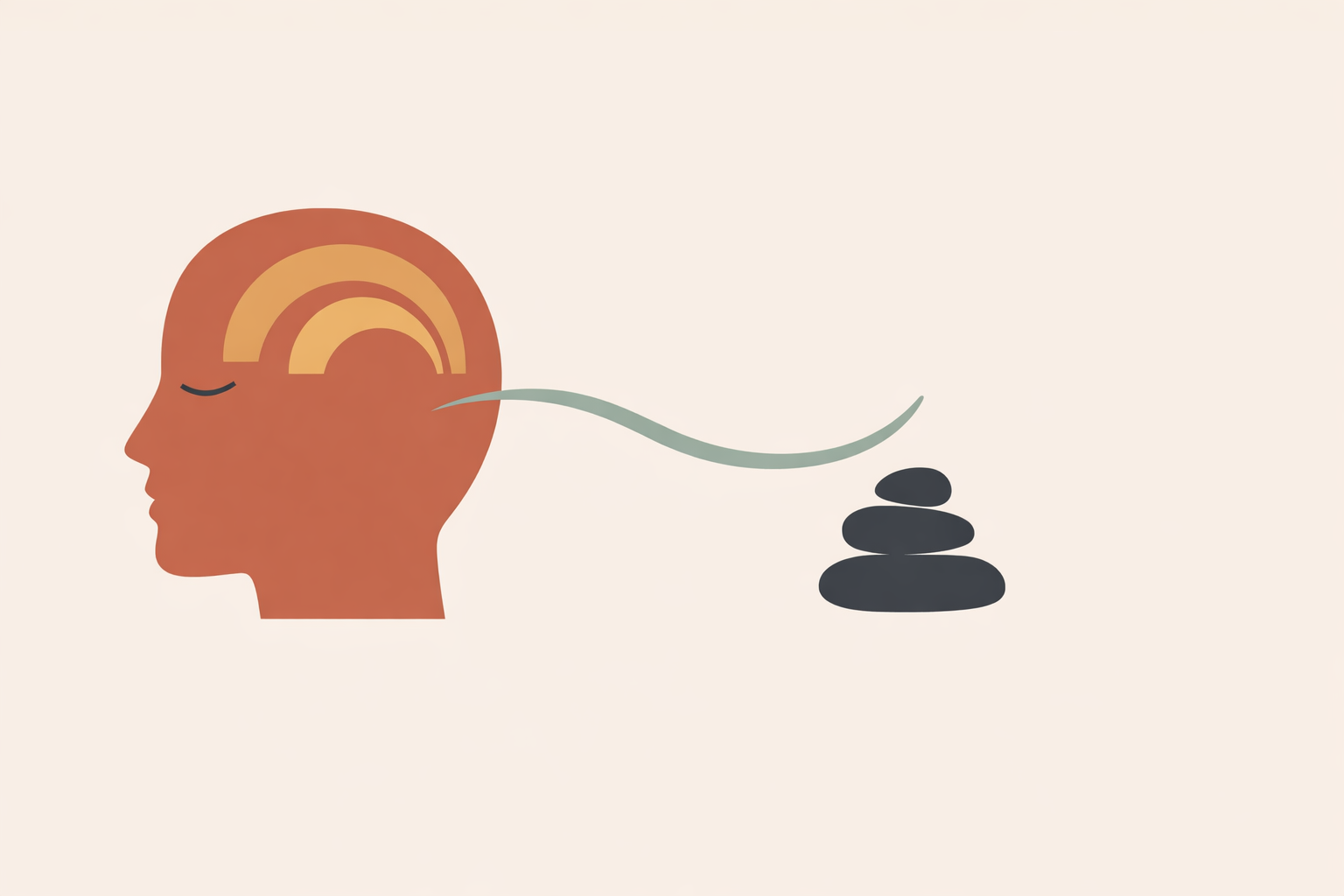
A more accurate framing is straightforward: self-hypnosis narrows attention on purpose, so suggestion, imagery, and inner rehearsal land more deeply. The person isn’t “gone.” They’re actively participating.
One explanation that often clicks is: “You already know absorbed states—music, a memory, a prayer, a repetitive task. Self-hypnosis gives that natural capacity direction.”
You can make it real with a short demonstration:
- Let the eyes rest softly or close.
- Breathe in gently and exhale a little longer than you inhale.
- Repeat one simple line such as: “I am here, I am steady, and I can soften.”
- Notice any shift in breath, jaw, shoulders, or inner pace.
Some people feel deeply relaxed. Others feel more settled and inwardly organized. Both are useful signs that attention is gathering in a steadier place.
Place self-hypnosis within older attention practices
Self-hypnosis may be taught in modern language, but the underlying human skill is ancient. Across cultures, people have long used song, breath, rhythm, imagery, and story to steady attention and invite inner change. That context helps clients see self-hypnosis as part of a broader lineage of intentional focus.
A respectful approach stays simple. You don’t need to borrow rituals, symbols, or language from traditions that aren’t yours. Rhythm, repetition, imagery, and clear intention are enough.
For example:
- Rest your gaze on a candle flame for a minute.
- Slow the exhale.
- Close the eyes and imagine warmth spreading through the chest or belly.
- Add one believable phrase that matches the goal.
This kind of structure often feels grounded and accessible, while still honoring the fact that focused-attention practice has always supported human well-being.
Connect self-hypnosis to everyday coaching goals
Most clients don’t care about trance as a concept. They care about daily-life outcomes: a steadier stress response, a smoother sleep routine, fewer automatic habits, and more flexibility with old inner narratives.
Self-hypnosis helps because it gives shape to repetition. Instead of vaguely “trying to change,” the person rehearses a preferred response while calm and attentive.
- Stress steadiness: Use a brief pause practice. “When pressure rises, I notice my breath, soften my jaw, and answer from steadiness.”
- Sleep routines: Pair slower breathing with a body scan and a line such as: “I do not need to force sleep; I allow my system to settle.”
- Habit change: Rehearse the cue and the replacement. “When my hand moves toward my mouth, I pause and press thumb to finger instead.”
- Belief flexibility: Add a more workable line: “This is an old pattern, and I can still take one small step.”
For some goals, the wider evidence base is stronger than for others. Mainstream guidance suggests gut-directed hypnosis may support some people with irritable bowel symptoms, and that hypnosis also shows promise for pain-related experience and procedure-related stress.
That supports a balanced message: self-hypnosis isn’t a cure-all, and it can be meaningful support when the aim is clear and the practice is repeated.
What makes self-hypnosis more effective
Most people do better with a simple structure than with a perfect script. A familiar rhythm works well: preparation, intention, induction, deepening, suggestion or imagery, and return.
Wording matters less than the sequence. When the flow is recognizable, people settle faster and build confidence more easily.
Brief, repeated practice usually beats occasional long sessions. A structured program of home practice is realistic and supports skill-building over time.
Guided support can help early on, especially when the goal is clear and the language fits the person, whether that sits within hypnotherapy and NLP training or simple one-to-one coaching. A one-goal plan also reduces noise and keeps practice doable.
A practical self-hypnosis structure can look like this:
- Prepare: Sit comfortably and decide on one clear aim.
- Induce: Slow the breath, soften the gaze, or close the eyes.
- Deepen: Count down, relax the body in stages, or imagine moving into a quieter inner space.
- Suggest: Use one believable phrase and pair it with imagery of the desired response.
- Return: Count up, open the eyes, stretch, and reorient.
A few weeks of steady practice is often enough for people to notice a shift. Rhythm matters more than intensity.
Set expectations around repetition, not drama
Frame self-hypnosis as practice, not performance. When people expect a dramatic experience, they can miss the real signs of progress: a slower reaction, a softer body response, a better pause before an old habit, or a calmer evening routine.
Those quieter changes are often the true starting point. Many clients notice a difference quickly, even if it’s subtle: more calm, more inner space, or the feeling that they can influence their own state.
Expectation also ties directly to ethics. Promise practice, not guaranteed outcomes. “Let us see what changes when you repeat this consistently for two weeks” creates openness without pressure.
Be clear about limits, safety, and ethics
Keep self-hypnosis rooted in common sense. Any exercise that narrows attention should not be done while driving, cooking, or in any situation that needs sustained outward focus.
Use a simple stop rule: if distress rises, or someone feels disoriented or overwhelmed, stop. Open the eyes, feel the feet on the floor, look around the room, and return to ordinary orientation.
Memory needs particular care. Hypnosis can increase confidence in remembered material without improving memory accuracy. Don’t use it to pursue hidden or uncertain memories; keep practice focused on present-day support, inner resources, and practical change.
Some people also do best with a slower, more adapted approach. If someone tends to feel spacey or unreal under stress, keep practices shorter, allow eyes partially open, and use more grounding language, much as anxiety-focused hypnotherapy benefits from a structured and practical frame.
Ethically, the essentials are straightforward:
- Explain what the exercise involves.
- Invite questions before beginning.
- Make it clear the person can pause or stop at any time.
- Do not promise transformation.
- Do not create dependency around the process.
A sentence that reliably lowers tension is: “You stay in charge the whole time. If anything feels off, we stop and regroup.”
A grounded answer you can use with confidence
The most useful conclusion is also the simplest: self-hypnosis works best when it’s presented honestly, practiced consistently, and tied to a specific aim.
You can say: “Self-hypnosis is a learnable attention skill. It helps many people become steadier, more intentional, and less automatic in the moments that matter. We will choose one goal, practice it in a simple way, and see what changes.”
That answer is clear and respectful. It honors the deeper roots of focused-attention practice while keeping expectations realistic, safety explicit, and the next step easy to take, whether someone is exploring self-use or moving toward professional hypnotherapy.
Train in Professional Hypnotherapy
Deepen these self-hypnosis foundations with the Professional Hypnotherapy Certification.
Explore Professional Hypnotherapy →