


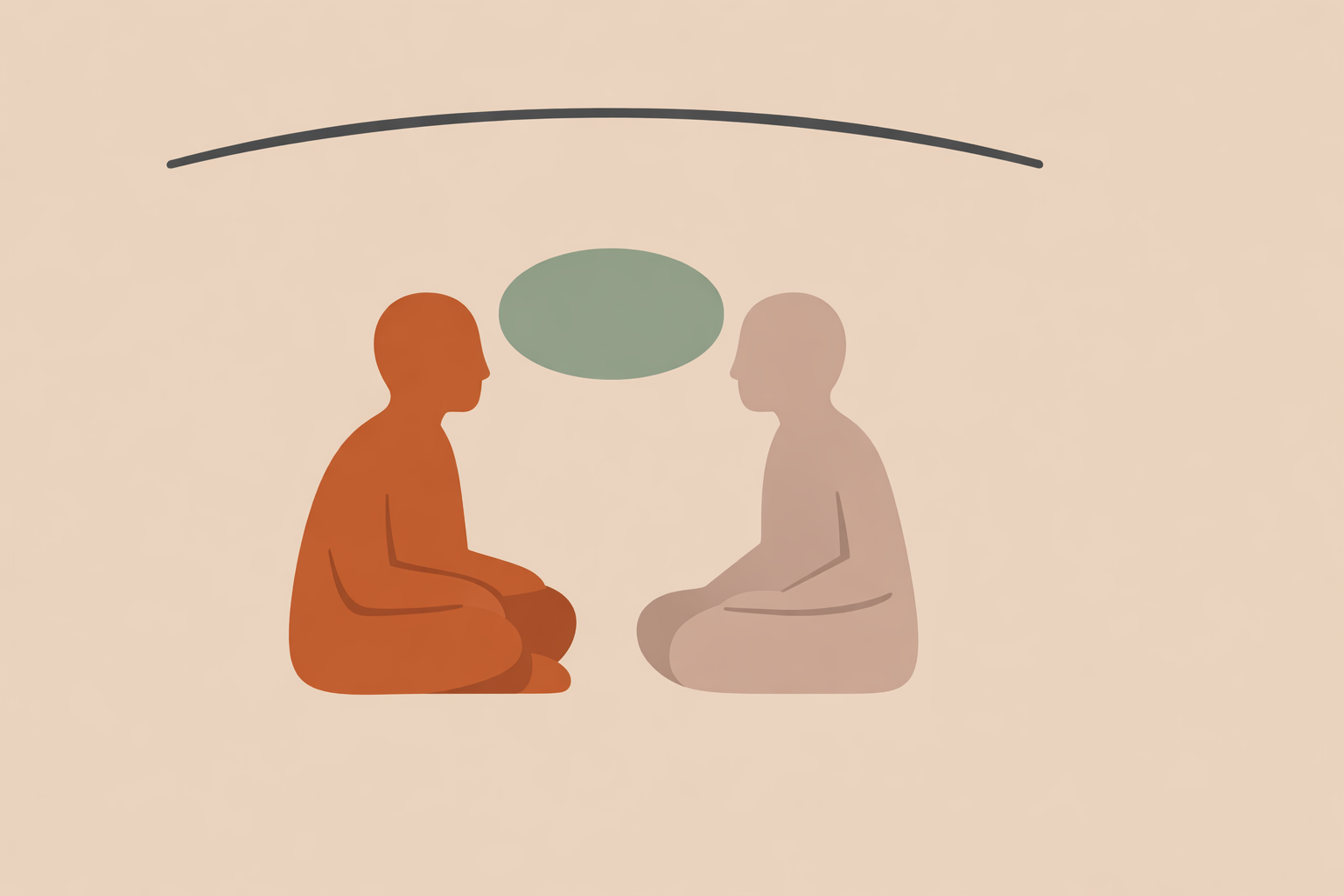
When a client says, “I’m stuck,” it’s tempting to reach for more advice, motivation, or a bigger plan. That often speeds the session up, tightens the client, and leaves you both with more tactics and less movement. Stuckness is rarely a character flaw. It’s usually a signal that the next step, the inner state, or the fit of the plan needs closer attention.
A steadier response is to sequence the conversation well. First, name the kind of stuckness you’re hearing. Then slow the room and ask one clear question. When overwhelm is high, shift into body and emotion language. Once clarity returns, translate insight into one small next step and shape the environment so follow-through feels natural.
Key Takeaway: Helping stuck clients is mostly a sequencing skill. First, identify the kind of stuckness you are hearing. Then regulate the pace of the conversation with presence and empathy. Ask one focused question at a time, meet overwhelm with body and emotion language, turn insight into a small clear action, design supportive systems around that action, and protect autonomy so resistance becomes useful information rather than a wall.
Step 2: Slow the room with presence and empathy
Once you hear stuckness, resist the urge to speed up. The more skillful move is often to slow down. A pause, a softer tone, and a clean reflection can do more than a clever strategy.
Across traditional practice and modern coaching, deep listening begins with stillness. When a client goes quiet, tense, or scattered, treat that as a cue to reduce pressure rather than add more.
Try language like:
- “I’m hearing a deep sigh. Let’s stay with that for a moment.”
- “What’s happening for you right now?”
- “Take a couple of easy breaths. We can take our time.”
- “I’m with you. We do not need to fix this yet.”
This communicates safety, respect, and patience. It also helps the client feel less managed, which matters because pressure tends to increase reactance.
Imagine Aisha crosses her arms when you mention meal prep. Instead of firing off follow-up questions, you soften and say, “I noticed your shoulders lift. What’s happening in you?” Then you wait. After a few seconds, she says, “Kitchens were stressful growing up.” Presence opens the door that strategy can’t.
A simple rhythm works well: name what you notice, offer space, ask one present-moment question.
Step 3: Ask one clear question at a time
After you slow the room, ask less. One focused question usually lands better than a chain of smart ones, especially when the client already feels overloaded.
A clean rhythm is: listen, reflect, then ask. It keeps the client connected to their own experience instead of performing for your curiosity, much like a steady session architecture.
Useful questions include:
- “What is this really about?”
- “Can you say more about that?”
- “What are you not saying yet?”
- “If nothing needed fixing today, what would you want to understand?”
These questions create space without steering too hard. They invite depth while keeping the client in the lead.
Luis says, “I’m just lazy.” You reflect, “You’re calling it lazy.” Then ask one question: “What might that laziness be protecting you from?” He pauses and says, “Failing again.” Now the work has a real target.
Forward movement often comes from timing more than brilliance: the right question at the right pace.
Step 4: Meet overwhelm with body and emotion language
When a client is overwhelmed, logic alone often stops landing. Under acute stress, cognitive flexibility drops, so options can feel narrower than they truly are.
In those moments, body-based noticing can be more useful than further analysis. Keep it simple:
- “As you say that, where do you feel it in your body?”
- “What happens in your chest, belly, or shoulders when you think about this?”
- “What are you noticing right now?”
Then help the client find a clear emotion label. Research suggests that labeling feelings can soften the intensity of difficult emotions.
You might ask:
- “Is this more like stress, fear, shame, or frustration?”
- “If the feeling could speak, what would it ask for right now?”
- “What would help this feel 5% easier?”
Suppose Priya’s breathing quickens as she talks about sleep. You say, “Pick the closest word: stress, fear, shame, or frustration.” She says, “Shame.” That naming alone can change the moment, and clearer feelings often lead to clearer choices.
Keep this work gentle, optional, and client-led. If a client becomes highly distressed or disconnected, stay simple, stay choice-based, and remain within coaching scope. The goal is enough settling for insight to return.
Step 5: Turn insight into a tiny, clear next step
Insight is valuable, and it needs a next step to become real. Once the client has clarity, shrink the action until it feels honest and doable.
In practice, a tiny experiment often beats a sweeping pledge, especially when someone feels uncertain or divided. Small, repeatable commitments rebuild capability without demanding a dramatic leap, which is central to growth mindset coaching.
Clarity matters most. Define “done” in one sentence.
- Instead of: “I’ll exercise more.”
- Try: “Done means I walk for 10 minutes after lunch on Tuesday and Thursday.”
You can guide this with prompts such as:
- “What’s the smallest honest step that still counts?”
- “Let’s define done in one sentence.”
- “On a hard day, what is the version you would still do?”
Jamal wants “better hydration.” Together, you refine that into: “I’ll drink one glass of water before coffee, Monday to Friday.” It’s small, visible, and easy to track.
Before you close, test the step against real life. Ask what might get in the way. When barriers are named early, the plan gets realistic while there’s still time to adjust.
Step 6: Design the environment, not just the intention
If action keeps wobbling, the issue is often the setup rather than the person. This is where many coaches become more effective: they stop asking for more willpower and start improving the path.
Context shapes habits. Cues, timing, friction, visibility, and routine all influence whether a behavior actually happens.
That makes these coaching questions especially practical:
- “What would make this easier to repeat?”
- “Where should this live: in your calendar, on your counter, or with another person?”
- “What cue will remind you when life gets busy?”
- “How can we make the first 30 seconds easier?”
Supportive design can include habit stacking, visual anchors, time-and-place specificity, social accountability, or reducing the number of steps between intention and action.
Consider Lila, a parent of two, who keeps missing morning walks. You redesign the setup: shoes by the door, stroller ready, a short route after school drop-off, and a text check-in with a neighbor. The walk becomes more likely because the environment supports it.
This is also the place to think ecologically. Does the plan fit the client’s energy, family life, culture, values, and season of life? A plan can look great on paper and still fail if it doesn’t belong in the person’s real world, which is one reason purpose and life design work benefits from context-aware coaching.
When stuckness returns, treat it as feedback. The step may still be too vague, too large, badly timed, or under-supported.
Step 7: Protect autonomy and learn from resistance
If hesitation continues, don’t rush to correct it. Resistance often carries information. It may be protecting energy, dignity, timing, belonging, or trust.
Many stuck clients need validation before refinement. When people feel pushed, they often push back internally. Autonomy-supportive wording tends to reduce reactance.
That’s why phrasing matters. Compare:
- “You should do this.”
- “You could try this.”
- “Would you be open to this?”
- “What feels right for you here?”
These small shifts preserve agency and keep the process collaborative.
You can also name resistance as protection:
- “It makes sense that part of you is hitting the brakes.”
- “What is that cautious part trying to protect?”
- “What would safety or right timing look like here?”
Dana keeps postponing an evening class. Instead of framing it as avoidance, you reflect, “A careful part of you may be protecting your rest.” From there, she chooses a 20-minute daytime self-study block twice a week. The resistance becomes guidance toward a better fit.
It also helps to remember that people often move sooner when they feel genuinely free to decline. Research suggests that being able to say no can support a more authentic yes.
Useful phrases here include:
- “You’re the expert on you.”
- “We can slow this down, change it, or leave it for now.”
- “What matters most to honor here?”
- “You could choose A, B, C, or none of them.”
Conclusion: Better sequencing creates movement
When clients feel stuck, what helps most is rarely a bigger plan. It’s better sequencing and better fit. Name the kind of stuckness, slow the pace, ask one clear question, meet overwhelm through body and emotion language, then choose a step small enough to live in real life.
From there, shape the setup around that step. Reduce friction, add cues, and respect the client’s ecology, history, and values. When resistance appears, listen for the wisdom inside it instead of treating it as failure.
Over time, these moves become less like a script and more like craft. You hear the sigh sooner, notice when analysis has gone too far, and learn when to ask, when to pause, and when to make the step smaller. That’s often what helps a client begin moving again: the right words in the right order, whether in life coaching training or everyday client work.
Advance Your Coaching Skills
Build confident, autonomy-supportive sessions in the Life Coaching Certification.
Explore Life Coaching Certification →










