


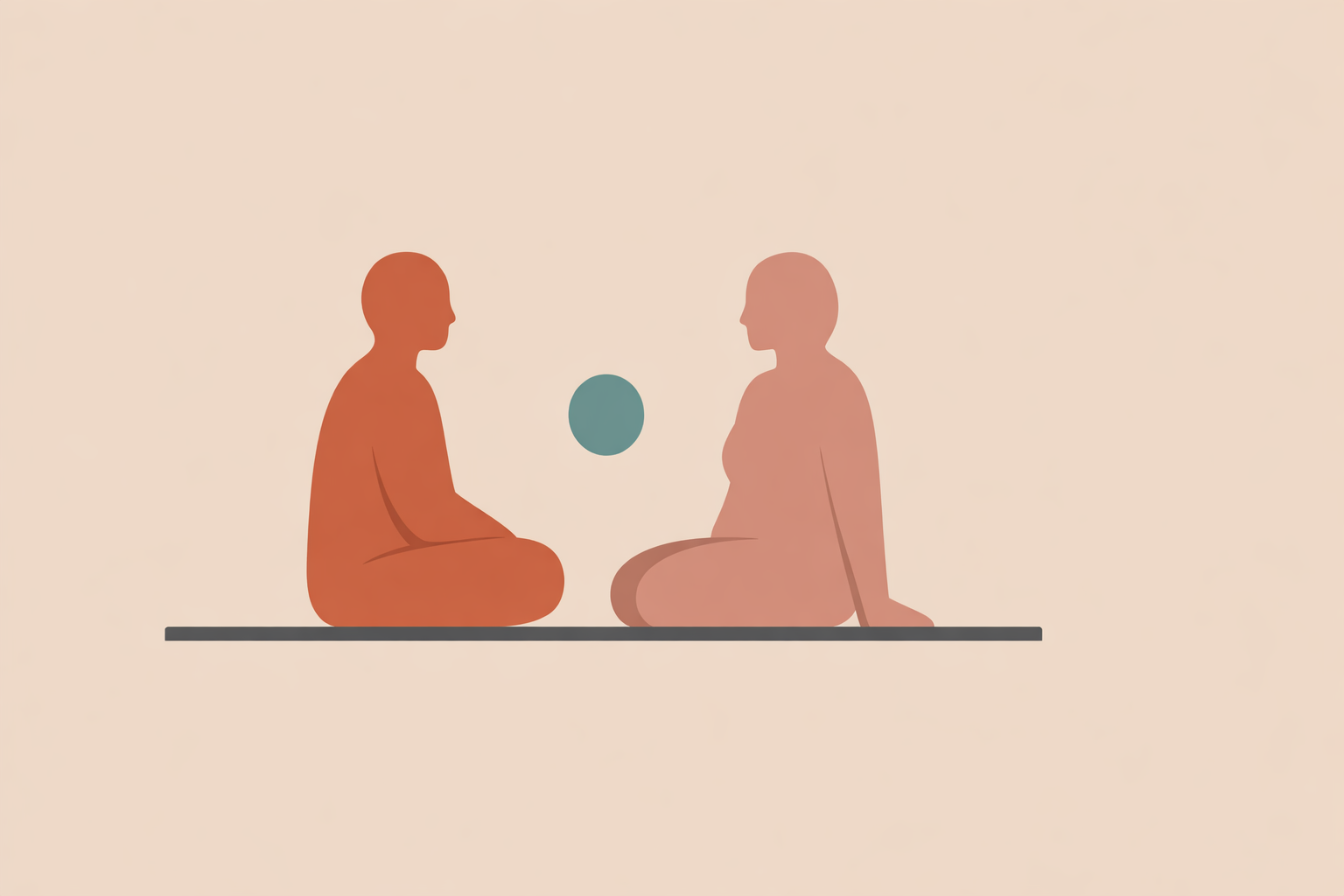
Coaches often hear this sooner than expected: a new mother says, “I hate my body,” in the middle of an otherwise practical check-in. The reflex is to reassure, pivot to goals, or offer a fast solution. In the postpartum season, that usually misses the heart of the moment. It narrows the conversation to appearance, skips over grief and identity shifts, and puts the coach in a corrective role that may not be helpful.
What helps more is a steadier first response, one that protects dignity, honors context, and keeps safety in view while supporting the person in front of you.
Key Takeaway: Effective postpartum body-image support begins with presence, not fixing. The most helpful conversations widen the focus beyond appearance, make space for mixed feelings, use body-neutral and culturally respectful language, and end with one small, doable next step. Good coaching also keeps clear limits: you can support reflection, self-trust, and practical shifts, while recognizing when someone needs a wider circle of support.
Start with presence and validation
Advice can wait. Presence comes first.
When a client risks honesty, they’re often checking whether you’ll stay with them without trying to tidy the moment. Simple phrases build safety quickly: “I’m glad you told me.” “That sounds heavy to carry.” “We don’t have to solve this right now.”
Many coaches default to cheerleading. A steadier approach is acknowledging the pain without trying to talk the client out of it. Validation doesn’t mean agreeing with a harsh inner voice. It means recognizing the weight of what’s being felt.
You might say: “I can hear how painful this is. I’m not joining the part that says your worth depends on how you look, but I am with you in what this is bringing up.”
- Sample 60-second response: “Thank you for trusting me. I can tell this feels heavy. We don’t need to fix anything right now. Let’s slow it down together. What feels most intense as you say that?”
Validate pain without feeding the inner critic
Once the client feels met, you can start to loosen the grip of self-judgment. The aim isn’t to debate the mirror or force positivity. The aim is to widen the frame so the client can breathe again.
One reliable shift is “and” language. A person can feel grateful for their body’s effort and grieve what has changed. They can love their child and feel disconnected from their reflection. When both truths are allowed, clients often stop feeling like they’re doing postpartum “wrong.”
It also helps to separate identity from appearance. You’re not asking the client to deny how they feel. You’re reminding them that the feeling isn’t the full story of who they are.
Try: “Your body image is hurting right now, and that feeling is not the whole of you.”
- Language swap: Replace “but” with “and.” For example: “You’re exhausted, and you still deserve gentleness.”
Ask gentle questions to find the real pinch point
After validation, curiosity becomes useful. The goal is not to analyze everything. It’s to find what hurts most so your support lands where it matters.
Sometimes the pinch point is clothing and daily routines. Sometimes it’s intimacy, comparison, a difficult birth experience, or family comments. Sometimes it’s the shock of not recognizing one’s own rhythms yet.
- “When you say you hate your body, what feels most painful about that?”
- “When is this feeling loudest during the day?”
- “What tends to set it off—getting dressed, being touched, photos, social media, comments?”
- “What do you fear this change means about you?”
- “What would feeling supported look like in your home, culture, or community?”
These questions move the conversation from global distress to something workable. A client may arrive with “I’m disgusting,” while the practical reality is uncomfortable clothes, no time to get ready, and a shame spiral that starts before breakfast.
Once you know the pinch point, you can help create one kinder morning, one softer boundary, or one small shift in self-talk.
Use body-neutral and culturally rooted language
For many postpartum clients, body neutrality is more accessible than body positivity. They may not be ready to celebrate every change, and they don’t need to. A calmer goal is relating to the body with less surveillance and more respect.
Useful phrases include: “This body is carrying me through today.” “I can care for my body without loving every feature.” “My worth is not measured by how closely I match an image.”
You can also guide attention toward immediate needs—warmth, food, water, rest, fresh air, privacy, touch, or quiet—so the client reconnects with lived experience rather than visual judgment.
Embodiment-focused work should be used carefully after difficult births or when there is a trauma history. Choice matters. Consent matters. Keep every invitation gentle and optional.
Culturally rooted postpartum care can be deeply supportive too. Across many traditions, postpartum practices include warmth, containment, and kinship. That may look like nourishing broths, belly wrapping, herbal baths, closing rituals, or home-based support from family and community.
Introduce these as possibilities, not prescriptions. If a client wants to draw from their own heritage, let them lead. Respect for cultural roots matters more than borrowing practices out of context.
- One-minute practice: “Name three things your body did today, then choose one act of care that matches that effort.”
Name the wider forces shaping body image
Postpartum body image doesn’t develop in a vacuum. It’s shaped by culture, family, partnership dynamics, work expectations, and the images a person absorbs every day.
Social media can intensify comparison. Postpartum content often amplifies body comparison through before-and-after imagery and bounce-back messaging. Even when clients know those images are curated, the emotional impact can still hit hard.
A compassionate media audit helps clients move from passive comparison to discernment. Ask: “What is this image selling?” “What is outside the frame?” “How do you feel in your body after looking at this account?”
Muting or unfollowing accounts that trigger shame, and following body-diverse or slow-timeline creators instead, can be a simple form of self-support. The point isn’t perfection; it’s noticing what repeatedly tightens the nervous system and choosing differently where possible.
Relationships matter too. Comments from partners or family can steady someone or deepen distress. Coaches can help clients prepare clear, calm boundary language when body talk becomes intrusive.
- Boundary script: “Comments about my body aren’t helpful right now. What supports me more is being asked how I’m feeling and what I need today.”
- Media audit micro-task: “Mute three accounts that leave you feeling urgent or ashamed for one week.”
If clients have family or community postpartum traditions that help them feel held, make room for those too. Support doesn’t always need to be new; sometimes it needs to be remembered.
Close with one small experiment
Before ending the conversation, land on one small, doable next step. Small experiments build self-trust more effectively than sweeping promises.
That step might be preparing two comfortable outfits, muting one triggering account, asking a partner for one specific kind of support, taking a five-minute sensory pause, or writing a kinder response to a recurring thought.
The goal is follow-through. A tiny action done with care often helps more than an ambitious plan that adds pressure.
You can ask: “What is one decision about clothing, rest, movement, media, or boundaries that would feel kind and realistic today?”
Then track progress in ways that reflect growing self-trust: less mirror checking, fewer avoidance habits, kinder self-talk, clearer boundaries, more comfort asking for help, and more ease in daily routines. These shifts usually tell you more than appearance ever could.
- Five-part close: Name what surfaced, identify what is needed, choose one action, confirm available support, and agree on signs that extra help may be needed.
Keep your scope clear and your support warm
Women’s health coaching conversations about postpartum body image can turn tender quickly. Coaching can offer reflection, practical support, and a more compassionate frame. It cannot hold everything.
If distress is intense, persistent, worsening, affecting everyday functioning, or moving beyond your training, be direct and caring about widening support. This is not rejection. It is respect.
You might say: “This feels bigger than coaching alone can safely hold. I’d like to help you connect with someone whose work is more focused in this area.”
It also helps to talk about getting help before things reach a crisis point. Early, open conversations can normalize help-seeking for families and reduce stigma. When it’s framed as ordinary support rather than failure, people often feel less alone.
Conclusion
When a mother says, “I hate my body,” the most supportive response is rarely a compliment or a plan to change her appearance. More often, it’s your ability to stay present, widen the story, and help her find one small way back to herself.
That may include naming mixed feelings without shame, choosing body-neutral language, drawing on culturally meaningful care, setting boundaries around harmful commentary, and reducing comparison one step at a time. None of this requires loving every feature. It asks for something steadier: honesty, respect, and a relationship with the body that feels more inhabitable.
Keep your support warm and your scope clear. When needed, help clients involve a wider circle so they’re not carrying this alone, a core part of thoughtful prenatal and postnatal coaching.
Strengthen postpartum coaching skills
Deepen your postpartum body-image support with the Prenatal & Postnatal Coach Certification.
Explore Prenatal & Postnatal →










