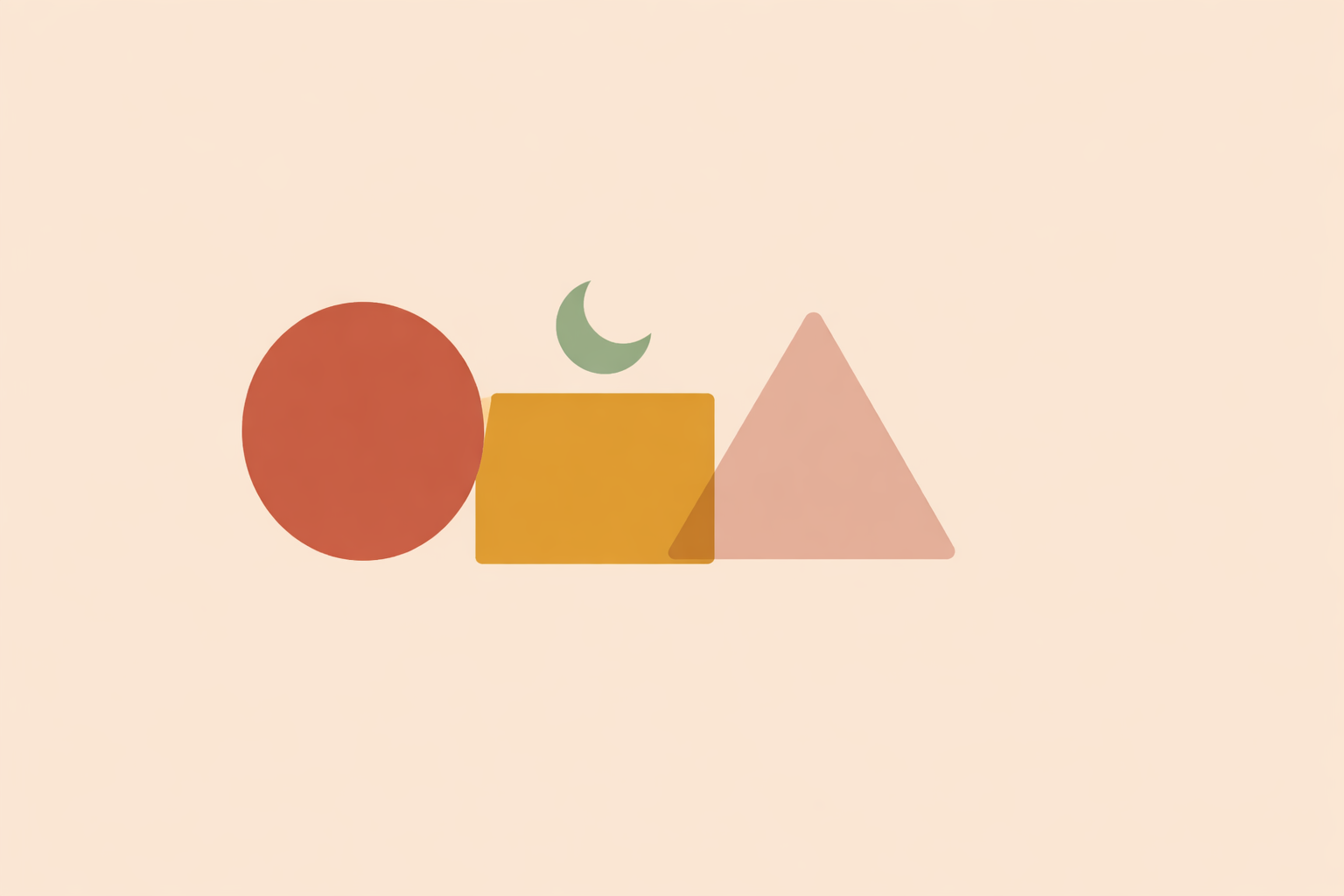
You’ve probably seen it in practice: someone repeats “triangles mean power” as if it were a fixed rule, another person tenses at a spiral, or a mandala gets presented as a universal tool rather than a culturally rooted form. The geometry is clear. The language around it is where confusion begins.
When shape symbolism is shared too absolutely, people can feel pressured to respond in the “right” way. Cultural context disappears, and personal experience gets crowded out. A steadier approach keeps measurable form separate from interpretive story, while making room for tradition, choice, and honest observation.
Key Takeaway: Responsible shape facilitation starts by separating measurable form from interpretive story and pairing meaning with consent, care, and cultural clarity. When you use humble language, stay sensitive to strong responses, and clearly distinguish tradition from evidence and modern lore, sacred geometry becomes more accurate, respectful, and useful in teaching, design, and contemplative practice.
Why language around shape meanings matters
A circle on the page may feel steady to one person and uncomfortable to another. The shape has not changed, but the experience around it has. Wording is part of the craft.
Stir memories, and even very simple forms can carry an immediate felt tone. Research also shows that strong responses are normal, especially with acute angles and other visually charged configurations. Shape work deserves language that invites noticing rather than enforcing meaning.
A line such as “This circle is held as meaningful in some traditions; you’re welcome to notice what it brings up for you” does several things at once. It respects lineage, leaves room for personal experience, and avoids presenting symbolism as fact.
Separate geometry from symbolism with two-language communication
A reliable way to share sacred geometry responsibly is to switch deliberately between two kinds of language: form language and story language.
- Form language describes what can be observed, constructed, or measured.
- Story language describes symbolism, association, lineage, and personal meaning.
For example:
“On the form side, this is an equilateral triangle with equal sides and equal angles. On the story side, some artists and traditions use triangles to suggest ascent, focus, or fire.”
This distinction keeps precision intact without stripping the work of meaning. People learn when they are hearing geometry, when they are hearing interpretation, and when they are hearing a specific cultural teaching.
Used consistently, it supports a more mature conversation. Symbolism stays rich, without being mistaken for universal law.
Use humble, choice-based phrasing instead of absolutes
To share symbolism without overreaching, shift from certainty to invitation.
- Instead of “Triangles mean power,” say “Triangles are often used to suggest focus, direction, or intensity.”
- Instead of “Circles create harmony,” say “Many people experience circles as cohesive or gentle.”
- Instead of “This pattern will calm you,” say “You might notice a softening with this pattern, or you may not.”
This style does not weaken your authority. It shows you can hold tradition, design language, and lived experience without collapsing them into one claim.
Two habits make it natural:
- Attribute the source of meaning. Say “In this lineage...” or “Many designers use...”
- Invite discernment. Ask “Does that fit for you?” or “What do you notice?”
That combination keeps the space open and lets participants remain the authors of their own experience.
Stay sensitive when shapes bring up strong feelings
Shapes can land deeply. Spirals, lattices, dense symmetry, or sharp angular forms may feel energizing for one person and overwhelming for another. Naming that variability early builds trust.
A few facilitation moves go a long way:
- Name choice early: Let people know symbolism is optional and they can focus only on lines, spacing, or construction.
- Offer alternatives: If a form feels intense, suggest softer curves, larger spacing, slower pacing, or observation instead of participation.
- Reflect rather than assign meaning: “You’re noticing this shape feels sharp” is very different from “This shape shows anger.”
Avoid rigid symbolic labeling. That kind of certainty can feel intrusive when it starts to sound like a verdict about someone’s inner life. Reactions are information, not conclusions.
A grounding script can be very simple: “Nothing about your response to this shape has to mean anything fixed. Notice what you notice, and choose your own pace.”
Honor cultural roots when sharing traditional symbols
Sacred geometry becomes more trustworthy when cultural roots are named clearly. If you are using a traditional form, say where it comes from. If you are offering a contemporary exercise inspired by older forms, say that too.
This matters especially with symbols such as mandalas, yantras, and patterned tiling traditions. These are not just attractive arrangements. They belong to living lineages, communities, and ways of practice.
A respectful approach may sound like this:
- “This exercise is inspired by historical mandala structures, but it is not a teaching of ritual use.”
- “This motif comes from a specific tradition, and I want to name that lineage before we explore it.”
- “We’re using a lineage-neutral construction study rather than presenting this as a traditional initiation.”
It also helps to invite personal reflection before offering inherited meanings. Ask what the pattern brings up first, then add context. That order reduces flattening and keeps interpretation relational rather than imposed.
Be clear about tradition, evidence, and modern myths
Not every claim around sacred geometry belongs in the same category. Some ideas come from lineage teachings. Some come from practitioner observation. Some are supported by research. Some are popular modern lore.
When you label claims clearly, your teaching gains integrity.
Take the golden rectangle. It is historically influential in art and design, and many people find it visually satisfying. At the same time, golden-ratio claims about famous works become far less convincing when actual measurements are checked.
The same goes for Fibonacci spirals in nature. They do appear in plant growth patterns, yet not universal. This does not make the pattern less beautiful. It just keeps the story honest.
Some educators also say that certain ratios or patterns are considered sacred because they recur consistently and invite reverence. That can be a meaningful philosophical position, and it lands best when presented as worldview rather than measurement.
A practical way to teach this is to label examples directly:
- Tradition: “Held this way within a lineage.”
- Evidence: “Observed in research or design practice.”
- Modern lore: “Commonly repeated, but not strongly grounded.”
That small distinction helps learners stay open without becoming uncritical.
Use ready-to-apply scripts in classes, sessions, and content
Good theory becomes practical when it changes the next sentence out of your mouth. These scripts help you keep clarity without flattening meaning.
Opening a session
- “On the form side, we’ll construct the pattern carefully. On the story side, we’ll notice what it suggests before discussing traditional readings.”
- “You do not need to connect with symbolism today. You can stay with structure, rhythm, and proportion.”
Introducing cultural context
- “This form comes from a specific lineage, and I want to name that clearly before we work with it.”
- “This is a contemporary exercise inspired by historical geometry rather than a formal traditional teaching.”
Responding to participant experience
- “I hear you saying this spiral feels expansive. Does that capture it?”
- “That reading is one possibility. Others may notice something very different.”
Repairing overstatement
- “Let me say that more accurately: triangles are often used to suggest focus or intensity, but they do not mean one thing for everyone.”
- “I spoke too broadly there. This proportion is influential and beloved, not universal.”
Closing reflection
- “What did you notice about constructing the form?”
- “What, if anything, did the pattern suggest to you?”
These prompts keep geometry rigorous while allowing symbolism to stay spacious.
Speak about shape meanings with integrity and care
Sacred geometry does not lose depth when we speak carefully about it. Clear distinctions, humble phrasing, cultural respect, and participant choice create a stronger container for real exploration.
Used responsibly, sacred geometry can support harmonious composition in art, architecture, digital media, and contemplative work. Its value does not depend on inflated claims. It rests in the meeting point between form, tradition, attention, and lived meaning.
As you bring this into your teaching or creative work, keep the tone invitational, name lineages clearly, and be ready to offer options when a form feels intense. That kind of care protects the work and the people engaging with it, especially within broader energy healing practice.
Explore Sacred Geometry Certification
Deepen your ethical, culturally aware facilitation with the Sacred Geometry Certification.
Explore Sacred Geometry →