Many facilitators instinctively add more sound when a room feels uneasy. In practice, that often does the opposite. In a sound bath, layering more tones, striking brighter bowls, or telling someone to relax can make a sensitized system tighten further. Overwhelm can appear quickly: someone sits bolt upright, scans the room, or goes still in a way that is not rest. In that moment, your next words and your next strike matter.
Key Takeaway: When bowls overwhelm, lead with agency and subtraction. Notice early signs, name choice, and simplify the sound field. The most reliable sequence is simple: spot activation early, reduce input, use short language that restores choice, guide brief grounding, and debrief afterward so future sessions feel clearer and safer.
When Singing Bowls Shift From Calming to Overwhelming
Singing bowls can be deeply settling, and for many people sound work can support relaxation. That said, the same soundscape can tip into “too much” for someone else within moments. In an immersive setting, one person softens while another starts bracing, and both responses are real.
The bowls themselves help explain the range. Their layered fundamentals and overtones create a rich sound field. In a resonant room or at close range, that shimmering complexity can feel dense, especially for highly sensitive listeners.
Skilled facilitation is less about preventing every strong response and more about recognizing the shift early, then responding with steadiness and respect.
How to Recognize Early Signs of Overwhelm
Overwhelm usually shows up in the body first. Watch for raised shoulders, a clenched jaw, fidgeting feet, guarded posture, or a sudden stillness that looks frozen rather than restful.
You might also see darting eyes, tears that don’t bring relief, a quick sit-up as if to leave, or a flat, faraway quality. These aren’t “bad sessions.” They’re useful cues that the sound, pacing, or closeness has exceeded someone’s current tolerance.
A quick scan while you play can be enough:
- Is anyone bracing?
- Has someone pulled tightly inward?
- Does the stillness feel restful, or does one person look stuck?
- Is breathing visible and easy?
If you notice a clear shift, stay calm. Soften your volume, widen the silences, and only move closer if that feels welcome.
- Example: You notice clenched fists and shallow breath. You lighten your strike, wait longer between tones, and quietly say, “I’m here. You can open your eyes or sit up. Would less sound help?”
Before the First Tone: Set Expectations and Choice
The easiest way to support regulation is to build choice in from the start. When you name variability and options upfront, participants tend to adjust early rather than forcing themselves to “push through.”
A brief permission statement can prevent re-escalation later. It also protects dignity, because everyone understands that pausing or changing position is part of the practice.
Your opening can include:
- responses to sound vary
- eyes may stay open or closed
- people may sit, lie down, move, or step outside
- covering the ears or asking for less volume is welcome
- you may quietly check in if someone seems uncomfortable
A short preview of the soundscape also helps: whether it will be bright or warm, sparse or layered, gently paced or more immersive. Fewer surprises usually means fewer spikes in alarm once the bowls begin.
Informed consent in sound work also includes the honest note that immersive sound and vibration can bring emotional surfacing, and that a small number of people may experience sensory overload. This can be stated plainly and lightly.
- Sample opening: “I’ll be playing layered metal and crystal tones. Some people find this deeply soothing, and some find parts of it intense. You’re welcome to keep your eyes open, change position, cover your ears, raise a hand, or step out at any time. No explanation is needed.”
Cultural respect belongs here too. Singing bowls come through Himalayan and related traditions. A simple acknowledgment of those roots, paired with careful practice and modest claims, goes a long way.
What to Say First When Someone Feels Flooded
When someone is overwhelmed, say less. Short, calm, choice-based language helps the body settle because it restores agency quickly.
Avoid performance cues like “just relax.” Most people do better when you reduce input and offer clear options instead of asking them to get calm the “right” way.
Use a simple sequence:
- name choice
- reduce input
- offer one small action
- check what would help
Examples:
- “You’re in charge. You can pause, sit up, or step out.”
- “I’m going to play more softly now.”
- “You can keep your eyes open.”
- “Would less sound help?”
- “You’re allowed to protect your ears.”
- “Sometimes the sound feels like a lot. Adjusting is welcome.”
If you’re speaking to one person within a group, keep each sentence complete and brief. It’s easier to take in one clear cue at a time, especially in stress-focused sound work.
- Example flow: “You’re in charge here. I can soften or pause. Let your eyes rest on something in the room. Would it help if I gave more quiet?”
Grounding Without Adding Pressure
Once the first wave eases, focus on gentle orientation. The goal is steady contact with the present moment, not forcing a particular state.
Light grounding, such as a 5-4-3-2-1 check-in, can shift attention away from an intense inner experience and toward safer external cues. Keep it optional and brief.
You can guide:
- contact: “Press your hand into the mat or your thigh and feel that.”
- vision: “Keep your eyes open if that feels better.”
- breath: “Let the exhale be a little longer.”
- small movement: “Try wiggling your toes or stretching your fingers.”
Small movement is often enough to reduce the feeling of being trapped and to re-establish choice.
A short grounding script might sound like this:
- “Notice one thing you can see. Notice where your body is supported. Press there gently. Let your next exhale be a little longer. If it helps, keep your eyes open and move your fingers or toes.”
Adjust the Soundscape by Subtracting, Not Adding
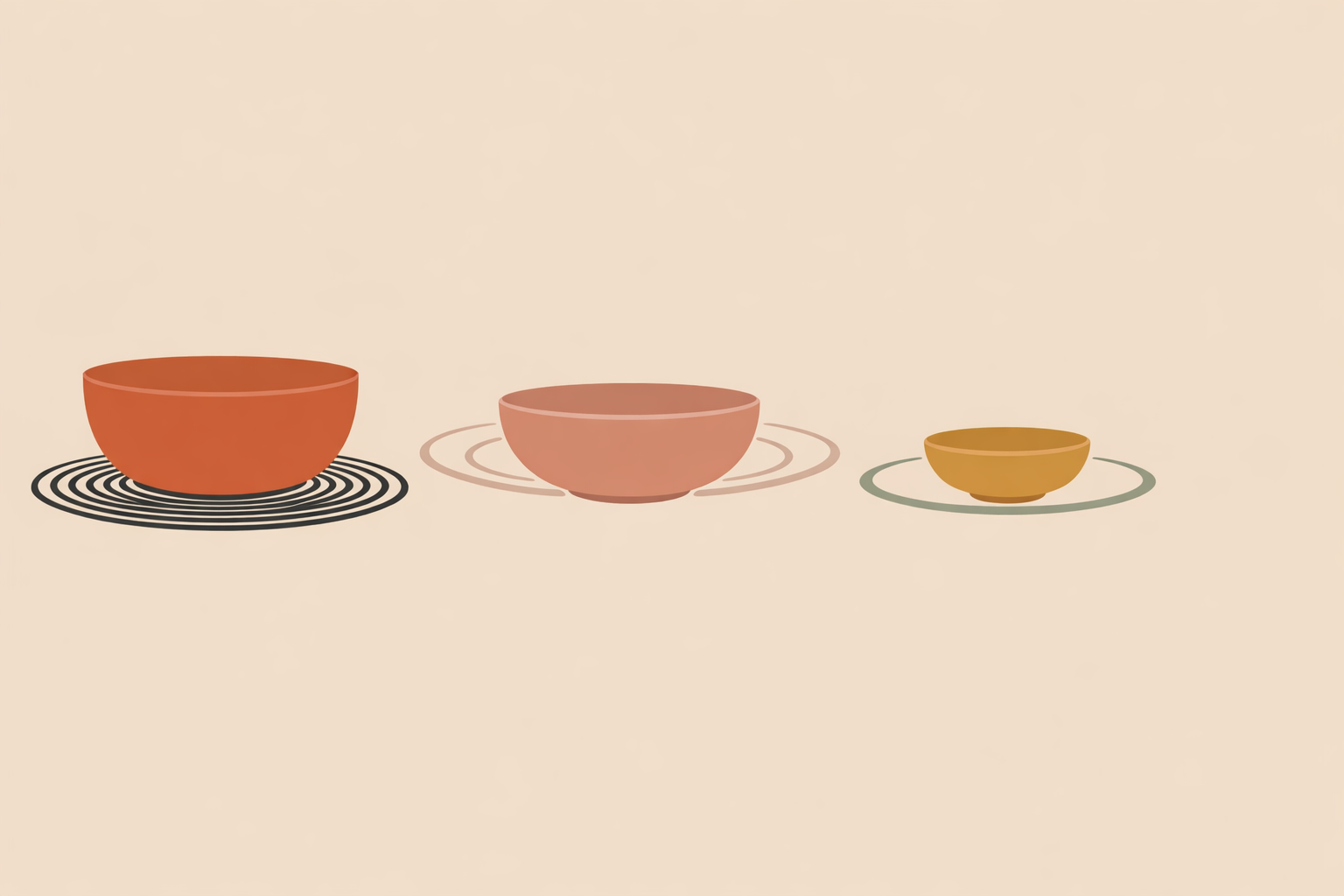
When the room feels activated, subtraction is usually the most reliable adjustment. Less sound, less density, more decay, and more silence gives the system space to reorient.
Overwhelm becomes more likely when volume, density, or reverberation exceeds someone’s tolerance, especially with sensory sensitivity or unfinished activation. Simplification works because it reduces the load quickly.
First-line adjustments include:
- fewer bowls at once
- softer strikes
- slower pacing
- more distance from the participant
- longer silences between tones
- pausing brighter or sharper instruments until the room settles
If you need to shift the whole group, narrate it in collective language so nobody feels singled out:
- “I’m going to slow the tempo and offer a little more space.”
- “You’ll hear fewer layers for a few minutes.”
- “If you’d like more distance or softer sound, you’re welcome to move.”
Clear invitations to adjust tend to reduce arousal more effectively than cues that ask people to perform relaxation.
Concrete scenario: mid-session, you notice two people covering their ears. You step back, shift to one lower tone, lengthen the silence, and tell the room, “I’m adding more quiet now.” Often, that single change resets the atmosphere.
Afterward: Debrief and Learn From the Experience
After an intense moment, a short debrief turns it into useful information instead of embarrassment. Keep your tone neutral, kind, and practical.
Begin with normalization. Let the participant know nothing “went wrong,” and that their response is helpful feedback for shaping future sessions.
Then gather specifics:
- Was it the volume?
- The brightness of the tone?
- Too many layers at once?
- The closeness of the bowls?
- Eyes closed for too long?
- Not enough preparation beforehand?
A simple two-minute debrief can look like this:
- Normalize: “Different people respond differently to layered sound.”
- Clarify: “Was it volume, pitch, density, or something else?”
- Note what helped: open eyes, more silence, lower tones, greater distance
- Plan ahead: hand signals, seat near the exit, fewer bowls, shorter format
Sound work can support relaxation, emotional processing, and a steadier sense of regulation for many people. It also serves everyone best when you stay honest about scope and avoid framing intensity as something to endure at all costs. Sometimes the wisest choice is a quieter format, shorter duration, or stepping back from group sessions for now.
Your boundaries are part of the container. Participants settle when they can feel you’re willing to pause, adapt, or decline a setup that doesn’t seem appropriate.
Facilitation That Builds Trust
Good bowl facilitation is built on steady listening: to the person, to the room, and to the sound you’re creating.
When overwhelm appears, return to the basics. Offer choice, reduce input, and guide brief grounding through contact, breath, and small movement. Then debrief in a way that helps the next session feel more workable.
This is how practice deepens: meeting each response with clarity, humility, and respect, whether you work in sound therapy or the wider field of energy healing.
Train in Sound Therapy Certification
Build safer, choice-led sessions with structured skills in the Sound Therapy Certification.
Explore Sound Therapy →