When overwhelm shows up in a session, it’s tempting to push deeper into the story or add another technique. In energy-aware practice, the steadier move is usually to slow down, notice what just shifted, and support coherence first. Many practitioners recognize the moment right away: pace speeds up, breathing braces, attention scatters, and the room itself can feel less organized.
Key Takeaway: Overwhelm can be read as a change in coherence, rhythm, boundaries, and available resources. In practice, six signals tend to matter most: a global shift from steadiness to chaos, a change in heart rhythm, blurred or flooded boundaries, the wired-and-drained pattern, older patterns surfacing, and the need to return to simple reconnection. The most useful responses are usually gentle: slow the pace, restore rhythm, reorient the senses, support basic resourcing, and keep every step client-led.
Signal 1: The field shifts from steady to chaotic
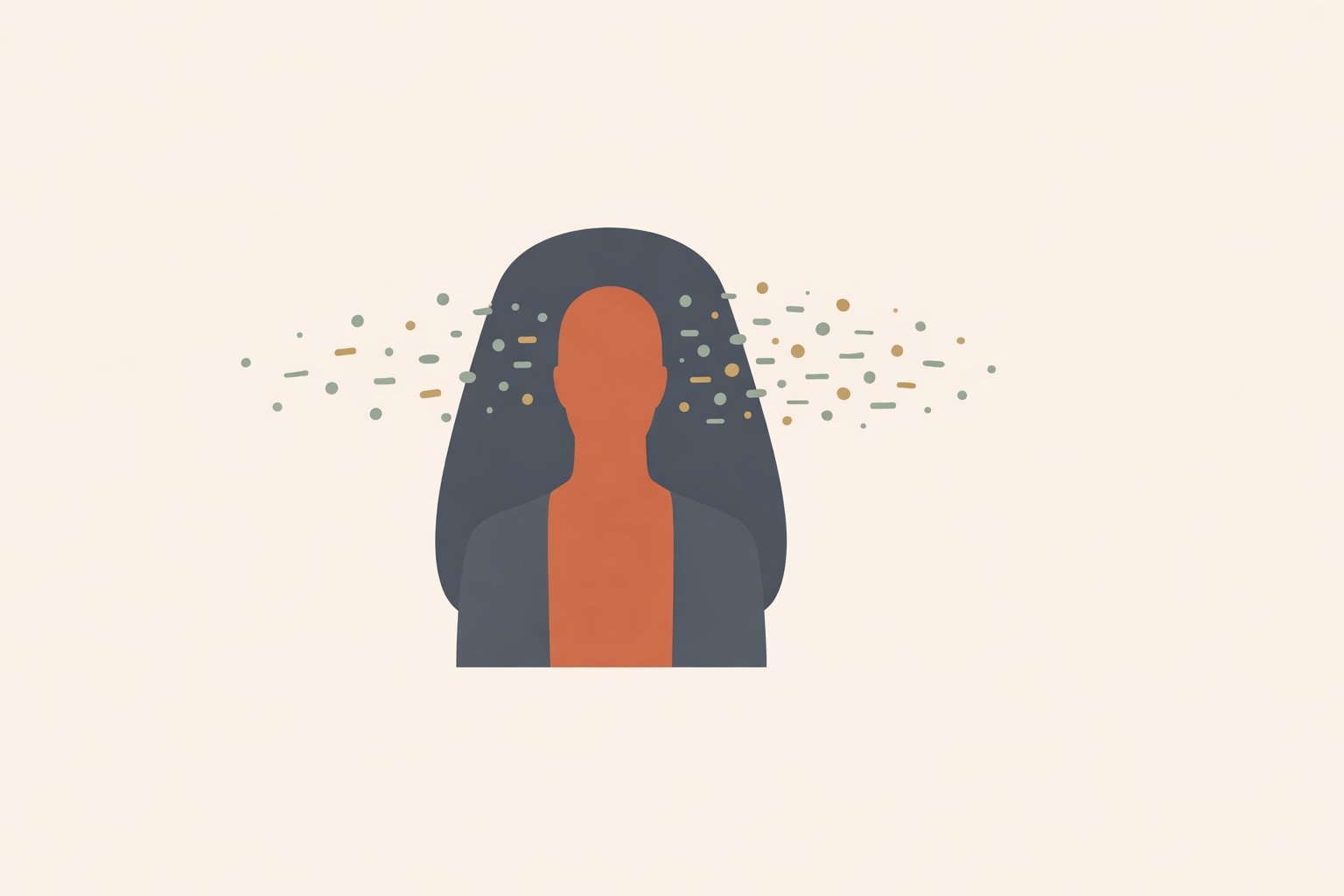
One of the earliest signs of overwhelm is a change in the overall feel of the session. Crispness drops away: attention scatters, breathing climbs into the chest, speech speeds up, and the person seems to have less inner space to work with.
Traditional and contemporary energy frameworks both treat the biofield as a practical way to track these shifts. The idea of biofield concept is often used to bridge older language like prana or qi with modern ways of describing regulation and relational presence.
You don’t need to over-interpret it. A chaotic field doesn’t mean something is wrong; it usually means more is happening than the system can organize comfortably right now. That’s your pacing cue.
You might notice:
- flitting gaze
- shallow or braced breathing
- fast or tangled speech
- a diffuse, grainy, or “snowy” quality around the head, chest, or shoulders
A short note can be enough: “Breath shallow, speech fast, field feels diffuse above shoulders.” From there, choose steadiness over depth.
Signal 2: Heart rhythm loses coherence
Once the global field gets less organized, the heart often gives the clearest next signal. Across many traditions, the heart is understood as a rhythmic organizer, and modern perspectives also suggest heart rhythms matter for whole-system coherence and how people adapt under pressure.
The heart’s electromagnetic field is measurable beyond the skin, and emotional states are associated with recognizable rhythm shifts. In-session, this can show up as a restless center, an unsteady midline, or the sense that the person can’t quite “land.”
Work on heart-rate variability points to better adaptability when variability is stronger and regulation is steadier. Coherence-oriented models also describe less efficient heart-brain communication when rhythms are incoherent.
That’s why heart-focused breathing is such a reliable early reset. Brief practice is associated with quick increases in cardiac coherence, and coherent rhythms can ripple outward across other body rhythms.
Try a simple two-minute reset:
- Rest a hand over the heart.
- Inhale gently for 4.
- Exhale softly for 6.
- Keep attention in the chest and invite the shoulders to drop.
Clients often report warmth, softening, or a sense of “coming back.” When the heart steadies, boundaries usually become easier to read.
Signal 3: Boundaries blur or flood
Overwhelm often changes how a person relates to space. Some feel far away or unreal; others feel overly open, flooded by the room, or saturated by other people’s emotion. In energy language, this often reads as blurred edges or inconsistent containment.
Grounding approaches describe similar experiences, including feeling far away or emotionally flooded. Somatic orienting practices also use sensory anchors and slow scanning to restore presence, with sensory anchors often bringing quick relief.
When the field feels thin or noisy, containment and reorientation tend to help more than interpretation.
A useful boundary reset:
- Name five things you can see.
- Name four things you can touch.
- Name three things you can hear.
- Name two things you can smell.
- Name one thing you can taste.
The 5-4-3-2-1 sequence can orient awareness back to the present. Then add a simple prompt: “Feel the chair beneath you. Notice your feet. Let your space settle around you.”
The shift is often visible: fuller exhale, steadier eye focus, and a clearer sense of here-and-now.
Signal 4: The system feels wired and drained
Another common pattern is activation and depletion at the same time. It can look like buzzing, restlessness, thin attention, low vitality, and very little spare capacity even while the system is running fast.
This often doesn’t need a complex explanation. Overwhelm frequently sits on top of under-resourcing: too much coming in, too little available to organize it. In energy healing terms, practitioners often perceive this as a thinner, less settled field.
The most helpful support is usually basic:
- water
- food or a light snack
- breath
- brief rest
- less stimulation
- gentle movement
Gentle movement, walking, and light shaking are commonly used in grounding work, and gentle shaking can help discharge excess activation.
A simple between-session rescue can be enough:
- 8 slow breaths
- a glass of water
- 60 seconds of loose ankle, knee, and hip shaking
The principle is clear: build available resource before asking for more processing.
Signal 5: Older patterns begin to surface
Not every wave of overwhelm is only about what’s happening today. Sometimes, when the system slows, older material becomes more noticeable. Many traditional lineages describe the field as a living archive, and many practitioners recognize recurring textures and themes that seem to carry history.
Qualitative work suggests that subtle energy sessions often include recurring embodied experiences like warmth, tingling, emotional release, and inner quiet. For a practitioner, that’s a useful reminder: people often move through recognizable felt shifts as they settle and reorganize.
Neutrality matters most here. Reflect sensation, offer choice, and keep pacing collaborative.
You might say:
- “I’m noticing heat and pressure there. Would you like to stay with it for a few breaths?”
- “We can pause here, or keep going gently. What feels right?”
- “Let’s stay with what you can sense clearly.”
This keeps the work respectful and within scope, while leaving room for traditional frameworks—energy centers, ancestral language, or straightforward body awareness—without forcing a single interpretation.
Signal 6: The session is asking for reconnection
At its core, overwhelm is usually a request for reconnection: back to rhythm, back to boundaries, back to enough support. The most effective response is rarely dramatic; it’s consistent and repeatable.
A concise reconnection arc can look like this:
- Settle: orient to the room, feet, seat, and breath.
- Soften: use heart-focused breathing to restore rhythm.
- Contain: clarify space and edges through sensory awareness.
- Resource: check water, food, rest, and pacing.
- Integrate: notice what changed and close gently.
Grounding resources emphasize simple, repeatable interventions when someone feels overwhelmed. Coherence training similarly builds steadiness through gentle repetition.
As coherence returns, clients often report tingling, warmth, emotional softening, or a spacious calm. In practitioner language, these are familiar signs that the system is organizing again.
Helpful documentation can stay simple:
- Intention: “Wants more room in the chest.”
- What was noticed: “Breath shallow, edges diffuse, attention scattered.”
- Support offered: “Orientation, heart-focused breath, sensory grounding.”
- Client report: “Feels more present, chest softer, room clearer.”
- Close: “Water, rest, simple support plan between sessions.”
Closing perspective
Overwhelm tends to show itself in recognizable ways: the field loses steadiness, heart rhythm becomes less coherent, boundaries blur, resources run thin, and older patterns can rise into awareness. Each signal offers guidance: slow down, support rhythm, reorient the senses, restore basic resourcing, and meet what surfaces with kindness and choice.
This is where energy alignment work becomes mature and practical. Skill comes from presence, pacing, and clear boundaries, with language that helps people reconnect in grounded ways.
As a final note, it’s wise to keep the work client-led and to stay within your training and professional scope, especially when someone feels highly dysregulated or repeatedly overwhelmed between sessions. When steadiness is prioritized, overwhelm often becomes a turning point, one simple choice at a time.
Train in Energy Alignment
Build steady, client-led coherence skills with the Spiritual Healing and Energy Alignment Certification.
Explore Spiritual Healing →