Practitioners who support people around boundaries and relationships often meet the same paradox: the people most praised for kindness are also the most depleted. They apologize for needing rest, over-explain reasonable limits, and stay “available” long after they meant to slow down. Their generosity looks like relational strength, yet resentment builds, sleep suffers, and “yes” keeps replacing a truer answer.
The issue is not closeness. It is enmeshment: a pattern of blurred boundaries in which one person’s feelings, choices, and identity become difficult to separate from another’s. Inner child work offers a compassionate way to work with this pattern while still honoring care, loyalty, and cultural belonging.
Key Takeaway: Enmeshment can look like closeness while weakening a person’s sense of self. Inner child work helps restore autonomy without losing connection by naming the pattern, tracing its early roots, recognizing younger states in real time, and building new support through reparenting, boundaries, somatic awareness, and creative practice.
What enmeshment looks like in adult life
Enmeshment often hides inside admirable qualities: loyalty, responsiveness, generosity, and emotional attentiveness. Underneath, though, someone may feel chronically responsible for other people’s moods, reactions, or stability.
In family-systems terms, enmeshment involves emotional blurring where separateness becomes hard to maintain. It also shows up as diffuse boundaries, which make it harder to hold onto personal preferences and limits.
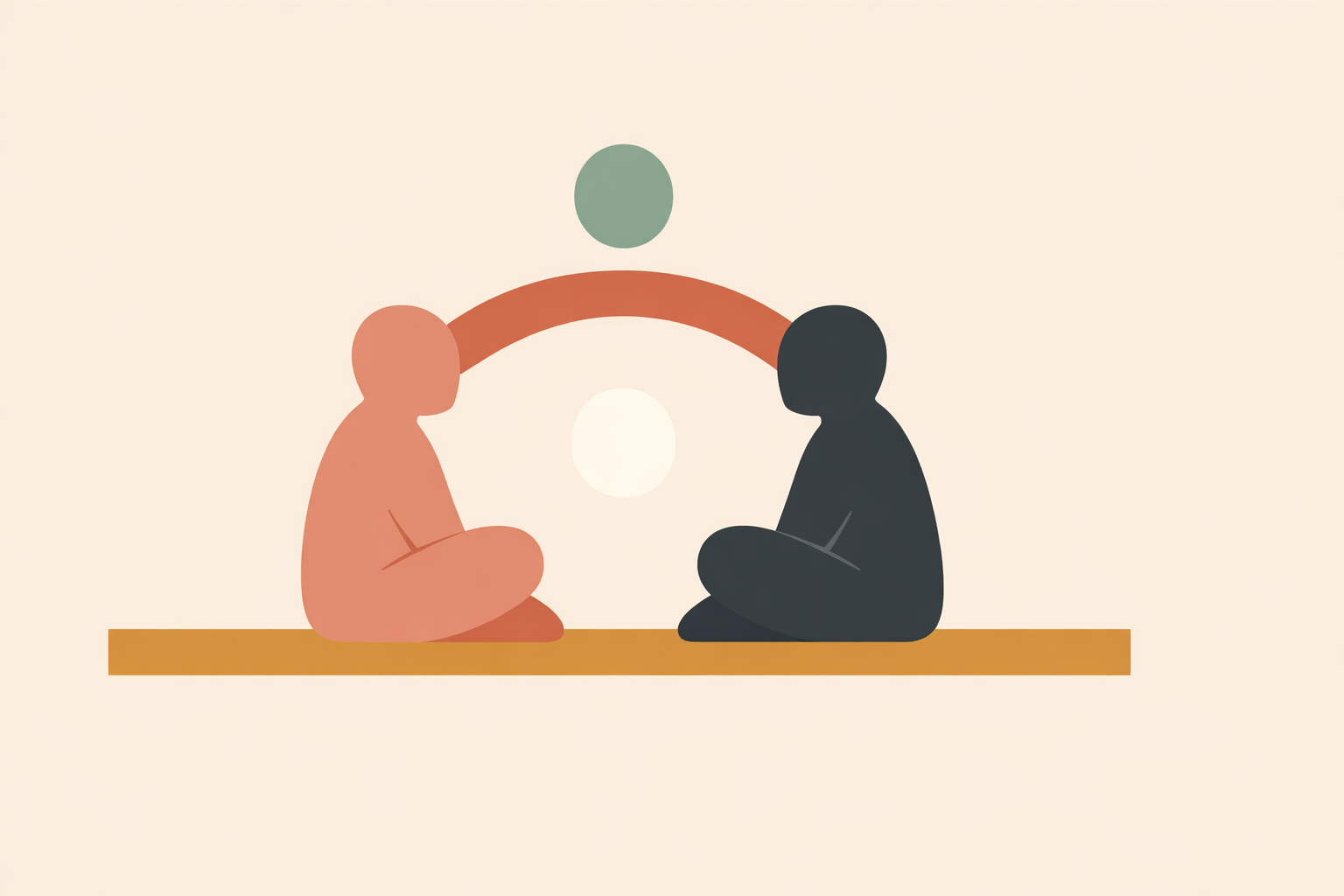
Healthy closeness still leaves room for two distinct lives, two perspectives, and two sets of needs. Relational health tends to rely on flexible boundaries, so connection can expand and contract without either fusion or shutdown.
In everyday life, enmeshment often sounds and feels like this:
- Seeking repeated reassurance before making ordinary decisions
- Over-explaining a reasonable limit
- Apologizing for having needs
- Staying emotionally available long past the point of exhaustion
- Feeling responsible for smoothing every tension quickly
The after-effects can be just as telling: shame after saying no, anger after prolonged compliance, or relief that feels strangely unsafe. A useful check-in is, “How much of my day was organized around other people’s moods?” When that stays high, what looks like closeness may be self-erasure.
Why enmeshment forms early
Enmeshment often begins as an intelligent childhood adaptation. A child becomes exquisitely sensitive to what keeps connection intact, and belonging can start to feel conditional on tracking moods, preventing conflict, keeping secrets, cheering an adult, or achieving enough to steady the family atmosphere.
Over time, the child learns that connection requires emotional compliance. Instead of building a steady sense of “I,” they get skilled at becoming what the relationship seems to need.
In enmeshed families, children can be pulled into meeting a parent’s psychological needs because boundaries are unclear. Family-systems writing also describes enmeshment as excessive involvement that can interfere with separateness and development.
The rules in these systems are rarely spoken out loud, but they are deeply felt:
- Your choices affect everyone
- Privacy means rejection
- Disagreement is disloyal
- Other people’s emotions are your job to manage
- Being easy to need is safer than being fully yourself
Inner child work helps because it gives language to the younger self who learned these rules early and still reacts as if closeness depends on self-abandonment.
Inner child work and enmeshment
Inner child work helps someone notice when an earlier pattern has taken over the present moment. The reaction may look adult on the surface, but it can be driven by an old fear: “If I disappoint them, I will lose love.” “If I set a limit, I will become unsafe.” “If I choose myself, I will be abandoned.”
Seen this way, enmeshment is not just a boundary skill issue. It is a younger loyalty pattern still trying to preserve connection.
This changes the tone of the work. Instead of criticizing people for being “too nice” or “codependent,” the practitioner can respect the wisdom of the adaptation while helping it evolve. The aim is differentiated connection: staying connected without disappearing.
A simple way to make the pattern visible is a life map. List ages on one side and roles on the other (helper, peacemaker, achiever, listener, mediator, secret-keeper). Under each role, note what belonging seemed to require at that time. The thread usually becomes clear very quickly.
How enmeshment gets triggered in the moment
Enmeshment triggers move fast, and the body often notices first: chest tightness after saying no, panic at someone’s disappointment, a constricted throat during conflict, or a sudden urge to explain everything so no one feels upset.
Many people also recognize younger states through rapid reactivity, present-day fear, or a strong impulse to escape. With enmeshment, the reflex is often to fix, soothe, appease, or agree.
To slow the pattern down, a brief reflection sequence helps create space:
- What just happened?
- What am I feeling right now?
- What is happening in my body?
- What do I suddenly believe?
- What action do I feel pressured to take?
- What earlier situation does this resemble?
- What does my present adult self actually need?
Example: a late-night request arrives and dread spikes. The belief is, “If I don’t respond now, I’m letting them down.” The younger strategy is instant compliance. The adult need is sleep, time to think, or permission to reply in the morning.
Even a small pause creates choice. Many practitioners find it helpful to say, quietly, “A younger part of me is scared right now.” Naming it often softens urgency and brings the adult self back online.
Reparenting the enmeshed younger self
Once the younger pattern is visible, reparenting becomes possible. Here, reparenting means offering what was missing: steadiness, permission, protection, and structure.
With enmeshment, the first repair is often permission: to have preferences, to rest, to disagree, to be private, and to be loved without constantly proving usefulness.
Then comes protection. The adult self learns to stand beside the younger self instead of sacrificing it for approval. That can sound like:
- I know this feels risky, but we do not have to answer immediately
- I will not shame you for feeling guilty
- I will help us choose a clear response
- We can care about this person without giving away our whole evening
Structure supports follow-through. New patterns grow best in clear containers, especially when old habits are strong.
A simple triad works well:
- Permission: It is okay to disappoint someone and still be a caring person
- Protection: If a conversation becomes pressuring, we can pause it
- Structure: No new commitments after a chosen hour
Read aloud, these statements often reduce guilt and make the next step easier. The person stops asking whether they are “allowed” to have limits and starts practicing them.
Boundary work without losing connection
At the boundary line, many people wait for guilt to disappear before acting. With enmeshment, that wait can keep the pattern running. Progress comes from making room for guilt and still choosing clearly.
Enmeshment tends to intensify guilt when someone prioritizes their own needs. It also carries autonomy costs when over-responsibility becomes a long-term identity.
A practical distinction is care versus caretaking:
- Care is chosen and sustainable
- Caretaking is compulsive and fear-driven
- Care respects both people
- Caretaking erases one person to stabilize the other
Boundaries usually land best when they are concrete. Rather than trying to manage someone else’s reaction, state what you will do:
- I’m not available tonight. I can speak tomorrow afternoon.
- I care about you, and I’m not able to take this on for you.
- If the conversation turns disrespectful, I’ll end the call and return later.
Afterward, guilt may surge. That does not mean the boundary was wrong; it often means the old pattern was interrupted. Try rating the guilt from 0 to 10, then do nothing for a few minutes except breathe, stand, walk, or feel your feet on the floor.
Over time, healing from enmeshment rests on three linked shifts: creating space through boundaries, tolerating the guilt that follows, and rediscovering identity outside an assigned role.
Somatic, creative, and ancestral support
Because enmeshment is deeply embodied, change tends to hold better when it includes the body, imagination, and lived ritual, not only insight.
Brief grounding actions can interrupt automatic compliance and restore adult choice:
- Feeling both feet on the floor
- Lengthening the exhale
- Looking around the room and naming what you see
- Softening the jaw or unclenching the hands
- Stepping outside before replying
Creative work can help when language feels defended or overly intellectual. Expressive arts approaches are increasingly used to support gentle access to younger experiences. For enmeshment, practical prompts include:
- Draw “my space” and “your space” on one page
- Create an image of a protective boundary
- Write a dialogue between the compliant younger self and the choosing adult
- Use color, movement, or music to explore what “more room to breathe” feels like
Play matters too. Low-stakes play supports flexibility, spontaneity, and self-expression, which can soften the rigidity enmeshment often creates.
For some people, ancestral or lineage-rooted practices add another layer of support. Song, storytelling, seasonal rhythms, family objects, or simple daily rituals can restore belonging that does not depend on fusion. The key is respect: work with your own lineage where possible, or with clear permission and guidance when engaging practices from elsewhere.
Practitioner ethics and clean support
When supporting enmeshment, it is especially important not to recreate it. The work should strengthen autonomy, not make the practitioner the new emotional center.
Structure supports clean work: name the shape of the session, be explicit about availability, and keep language collaborative rather than authoritative. Normalize choice, pause, and refusal so agency stays visible.
It also helps to remember that memory is reconstructive, and emotionally vivid memories are not always historically precise. Grounded phrasing supports clarity, such as “Part of you may feel,” “What does this remind you of?” or “Let’s separate what is happening now from what your system expects.”
A steady, trauma-informed pace matters: stabilize first, go slowly, and return to the present whenever intensity rises. Deep exploration is rarely useful when someone has lost the ability to choose or orient.
Cultural humility is essential. Not everyone wants maximum independence, and not every close-knit relationship is enmeshed. The aim is flexible agency within connection, shaped around the person’s values, culture, and lived context.
Simple boundaries around the work itself help prevent reenactment:
- Use a clear beginning, middle, and close to each session
- Agree on communication expectations in advance
- Encourage the person to develop support beyond the practitioner relationship
- Keep choice visible throughout the process
Choosing a new belonging story
Enmeshment usually begins as a wise attempt to stay close. That deserves respect, not ridicule. Later in life, though, a strategy that once protected connection can narrow a person’s choices and sense of self.
Inner child work helps update that strategy. It meets the younger self with compassion, helps someone recognize the old loyalty pattern in real time, and supports new forms of closeness that do not require self-abandonment.
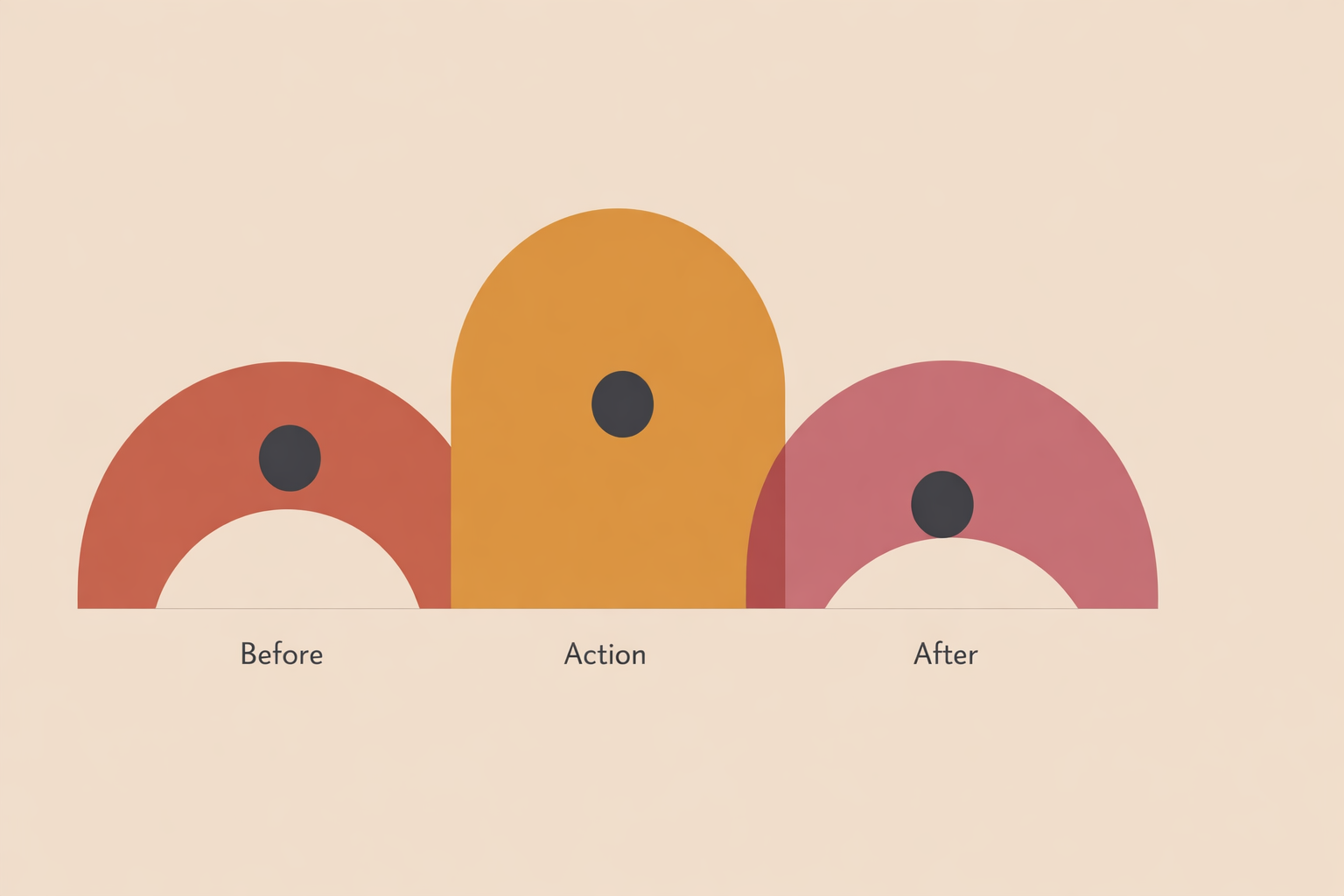
A simple weekly experiment can start the shift:
- Notice one recurring enmeshment pattern
- Name the childhood rule beneath it
- Offer the younger self a few words of reassurance
- Take one respectful adult action that creates more space
- Stay with the guilt long enough to discover that it passes
This is how a different kind of belonging grows: through repeated choices that honor both connection and selfhood. Over time, the person who once survived by merging can learn to stay loving, loyal, and fully themselves.
Deepen Inner Child Work Skills
Continue this boundary-healing approach with the Inner Child Work Certification.
Explore Inner Child Work →