Most practitioners know the loop: a client says they know what to do, you co-create a solid plan, and two weeks later the same barrier shows up again. The conversation keeps orbiting one meeting, one habit, or one intention. You dig for a clearer “why,” the client pushes harder, and motivation takes the blame.
Often, what looks like resistance is really a systems knot. A quick life-systems map can make relationships, timing, logistics, energy, and roles visible on one page. Once the pattern sits on the paper instead of inside the person, sessions usually shift from blame to practical options you can test and support.
Key Takeaway: Stalled sessions are often systems problems, not motivation gaps. Simple life-systems maps make the real levers easier to see. When a conversation keeps returning to the same issue, zooming out often helps. The most useful next step is usually a clearer picture of influences, loops, supports, and constraints. From there, one small, culturally respectful experiment can create practical movement.
Why life-systems mapping changes the conversation
A visual map gives both coach and client something to look at together. That shared focus lowers pressure on the client to tell a perfectly linear story and creates enough distance to examine the pattern without sliding into self-criticism.
Visual mapping can make complex pathways easier to follow and reduce the pressure to narrate everything in neat sequence. In coaching practice, that often brings forward details that would otherwise stay hidden.
Linear “why” questions tend to hunt for a single cause. Mapping suits situations where several influences interact at once. You let the page hold complexity, then you choose where to start.
A mini-map is usually enough: list a handful of factors, add a few arrows, and identify the link that matters most right now. The goal isn’t a perfect diagram. The goal is a workable hypothesis you can learn from.
Example prompt: “Let’s sketch who and what touches this goal: people, routines, places, expectations, and energy. We’ll draw only a few arrows, then look for the one link that matters most right now.”
On a whiteboard, it might look like: evening screens → lighter sleep → slower mornings → rush and guilt → more evening screens. In minutes, the loop is visible, and the emotional tone often softens.
How to invite life-systems mapping with clarity and respect
The invitation matters as much as the method. Start by naming the loop you’re noticing, then ask permission to step back and look wider.
A simple sequence works well: name the repetition, ask consent, choose one focus, and set a clear time boundary. “We keep arriving at the same point. Would it help to map the surrounding pieces for 15 minutes and then choose one next step together?”
Once there’s a yes, keep the container light. The client should know they can pause, erase, redirect, or decline any part of the exercise. Mapping works best when it stays collaborative.
If family, ancestry, community, or spiritual traditions enter the map, keep meaning-making client-led. Invite what already belongs to the client’s world, and avoid interpreting cultural material for them. Don’t borrow practices because they sound meaningful. Respect is part of the method.
If other people or organizations appear on the page, clarify confidentiality and what, if anything, will be kept in notes. That protects trust and keeps the process grounded.
For life-history mapping, keep the emphasis on reflection rather than intensity. A timeline can be helpful when it stays gentle and chosen.
Script you can use: “Let’s spend a few minutes naming the people, pressures, and routines around this. You choose what goes on the page, and you can pause at any time.”
Choosing the right map for the pattern in front of you
Different knots call for different maps. The best choice is usually the one that matches what you’re hearing most clearly.
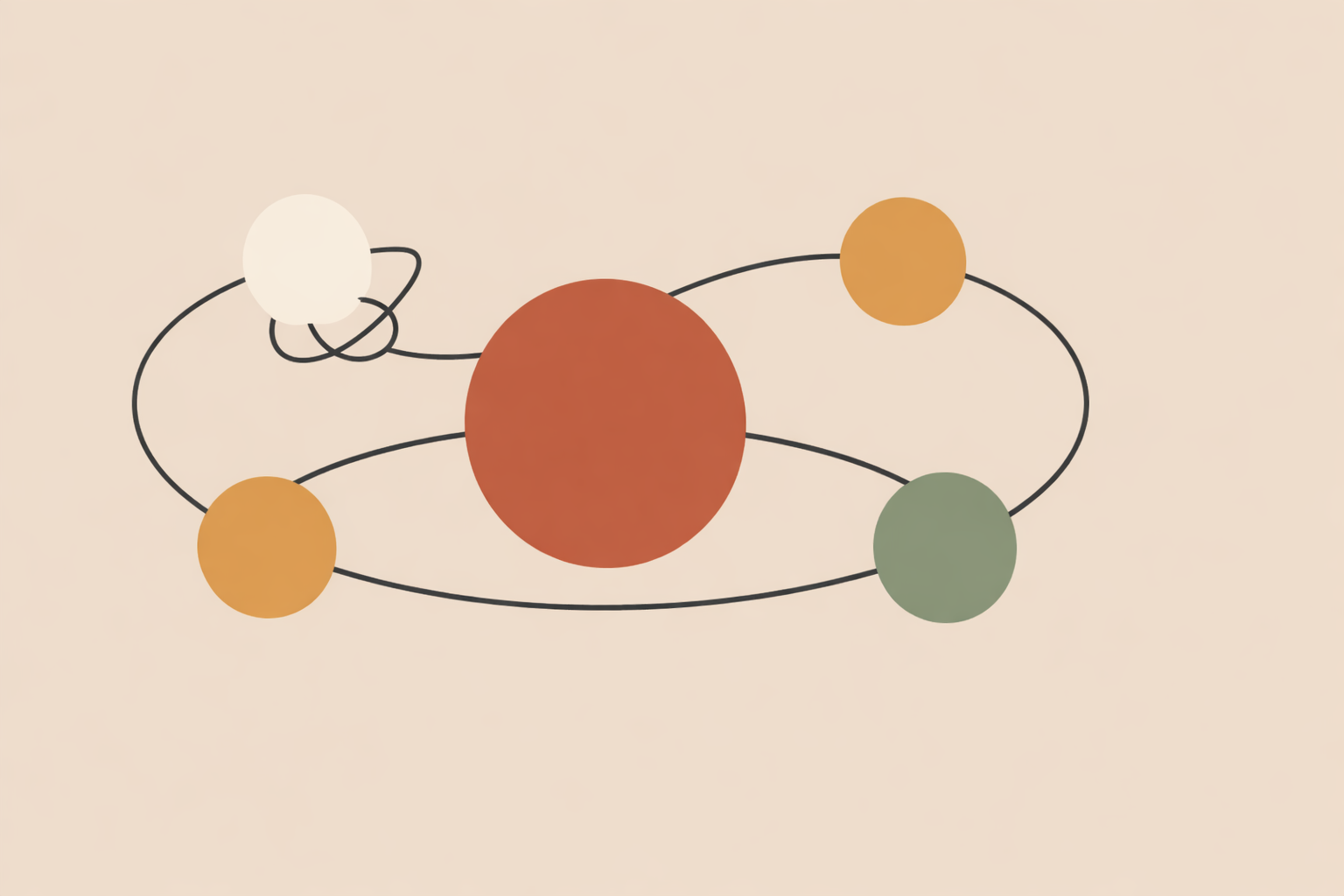
- Stakeholder ecosystem map: place the client or goal at the center, then add people, roles, places, routines, and institutions around it. This helps when someone feels over-responsible, isolated, or pulled by competing expectations. Stakeholder mapping can reveal support that exists but remains inaccessible, unrequested, conditional, or inconsistent.
- Journey map: trace what happens across a day, week, recurring situation, or transition, including actions, thoughts, energy shifts, supports, and barriers. Journey maps help when a client says, “I know what to do, but I never get to it,” because they show where intention leaks out of the process.
- Causal loop map: use a few elements and arrows to identify reinforcing cycles. This fits “this always happens,” especially when short-term relief increases long-term pressure.
- Life-line or landscape map: plot turning points, transitions, highs, lows, or major seasons of change. Use this when the issue is shaped by longer arcs of identity, belonging, or repeating themes.
- Life domains scan: quickly review work, home, relationships, rest, community, meaning, and daily structure. This works well when everything feels tangled and the client doesn’t know where to begin.
Selection cues can stay simple:
- If the client keeps returning to one event, try a journey map or life-line.
- If they say, “This always happens,” sketch a causal loop.
- If they feel alone with the problem, start with a stakeholder map.
- If everything feels tangled, begin with a domains scan and narrow from there.
Concrete example: a client says, “Mondays derail the whole week.” Instead of mapping everything, trace only Sunday evening through Monday morning. Three boxes in, a late-night group chat appears as a major influence, and the next step becomes far more workable.
Reading the map without blaming the client
Once the map is on the page, resist the urge to chase every arrow. Look for the hinge: one or two places where a modest shift could affect several parts of the pattern.
A steady question is: what touches multiple parts of this loop and is still realistic to influence? That keeps the work practical without pretending the client controls everything.
It helps to separate amplifiers from dampeners. What intensifies the issue, and what softens it? Often the best leverage point is strengthening what already helps.
Keep real-world constraints visible: schedules, caregiving, money, commute times, household dynamics, cultural expectations, workplace norms. A good map refuses to turn structural pressure into a character flaw.
Use observable language when describing relationships. “When X increases, what tends to happen to Y?” invites collaboration. If a link feels uncertain, mark it with a question mark and treat it as something to test.
When energy or confidence is low, choose the smallest reversible shift that can still teach you something. That protects momentum and makes follow-through more likely.
Micro-example: the loop shows evening messages → lighter sleep → slower mornings. Two options emerge: silence work notifications after 9 p.m., or strengthen a wind-down ritual that lowers activation. The client chooses notifications because one change could influence both sleep and morning pace, and it’s easy to test for a week.
- Helpful questions: “Which part is yours to influence?”
- “What already softens this pattern, even a little?”
- “What would make this map more accurate?”
- “What is small enough to try without creating more pressure?”
Turning insight into one small experiment
Insight helps, but movement comes from a clear next step. Once a leverage point is visible, turn it into one small, reversible experiment.
The experiment should fit the client’s real life: proportionate to capacity, connected to the map, and easy to review. A simple structure keeps it grounded:
- Focus: what specific part of the pattern are we testing?
- First step: what will happen, and when?
- Timeframe: how long will we try it?
- Observation: what will the client notice or track?
- Useful learning: what would count as progress, even if the shift is small?
- Review: when will the map be revisited?
If it fits the client’s world, bring in cultural or traditional supports they already trust. A family tea ritual, morning prayer, time outdoors at first light, a shared meal rhythm, or a familiar grounding practice can make an experiment feel natural and sustainable. The aim is to work with what already carries meaning.
Example:
- Focus: evening notifications after 9 p.m.
- First step: auto-silence work apps at 8:45 p.m.
- Timeframe: seven nights
- Observe: sleep onset, morning pace, and mood by 8 a.m.
- Useful learning: any small improvement or any clearer obstacle
- Review: revisit next session and redraw the map if needed
This keeps the work alive. Instead of ending with a good conversation, you end with a test that teaches both coach and client more about the system.
Let the map evolve
Life-systems mapping is a way of seeing that grows with the client. Roles shift, seasons change, energy changes, relationships change, and the map should change too.
Over time, many practitioners get quicker at hearing where the real knot sits and more skillful at choosing a small hinge rather than a full overhaul. The map stays provisional, and the learning stays collaborative.
Most of all, this approach keeps coaching relational and humane. You co-create the picture, identify one shift, learn from what happens, and redraw together. If you’re building broader purpose and life design work, or developing your practice through systems-based life coaching, a simple close to a mapping session is to end by naming the experiment and when you’ll revisit the map.
Master Systems-Based Coaching
Apply these mapping insights in the Systems Based Life Coaching Certification to design ethical, practical experiments with clients.
Explore Systems Based →