Many longevity plans fall apart for a quiet reason: the habits are fine, but the inner story is discouraging. A client can agree that movement, rest, nourishment, and routine matter, then undermine themselves with “I’m too old for that,” or “That ship has sailed.” When age becomes identity, follow-through tends to fade.
Supporting later life well often means starting upstream. Before new routines can settle, many people need a more life-giving relationship with aging itself—one rooted in agency, meaning, adaptability, and belonging. From that base, daily practices feel less like a struggle and more like a natural extension of who they are.
Key Takeaway: Soulful longevity coaching begins by shifting the inner story of aging. When clients loosen internalized ageism, reconnect with purpose, relate to movement as identity, protect rest, and strengthen belonging, their routines tend to become more natural, consistent, and personally meaningful.
Practice 1: Name Internalized Ageism Before It Shapes Behavior
Beliefs about age rarely stay abstract. They shape language, motivation, and what someone believes is still possible. In later life, more negative views of one’s own aging are associated with poorer health, while more positive self-perceptions are associated with better functioning.
In real coaching conversations, internalized ageism often sounds ordinary: “My balance is gone,” “I’m having a senior moment,” or “People my age don’t start new things.” Said often enough, those phrases can shrink a person’s sense of choice.
The first move is to make the pattern visible without shaming it. Help the client notice that an age-based assumption is still an assumption.
Try this in session:
- Spot: “I noticed you said, ‘I’m too old to learn that.’”
- Name: “That sounds like an age story, not a fixed truth.”
- Swap: “What would a more accurate version sound like?”
The replacement only needs to be believable: “I can learn this at my pace.” “My balance can improve with practice.” “I need a gentler starting point.”
Helpful between-session practices include:
- Language audit: Track age-related self-talk for two days.
- Phrase replacement: Rewrite each limiting phrase in neutral or strengths-based language.
- Role models: Choose an admired elder and name three qualities you share.
- Boundary script: Practice a response to dismissive age jokes, such as, “We all age. Let’s not talk ourselves down.”
This work does not deny the realities of aging. It removes unnecessary defeatism so real capacities can lead again: patience, skill, perspective, steadiness, humor, and lived discernment.
Practice 2: Re-Author the Aging Story
Once limiting beliefs are named, the next step is giving the client a better narrative to live inside. When aging is framed only as loss, people conserve energy and take fewer chances. When it’s framed as adaptation, contribution, and deepening, new habits have a place to land.
Narrative practices are a strong fit here. Guided life review has been associated with improved purpose in later life.
Life review works well in longevity coaching because it reconnects someone with their own evidence. Later years are not separate from the rest of the story; they are built from it.
A simple 20-minute sequence:
- Timeline: Draw the decades of life on a page.
- Name the turning points: For each decade, note one challenge and one strength it helped build.
- Find the thread: Ask, “What quality keeps returning?”
- Project forward: Complete these prompts: “In five years, I am... I’m known for... I contribute by...”
This often reveals a richer identity than the client arrived with. “I’m slowing down” can evolve into something truer, like “I keep adapting,” or “I build community wherever I go.”
Language choices also shape dignity. Person-first, age-aware wording tends to support a wider identity: “older adults,” “people in their 70s,” or “someone navigating change,” rather than labels that flatten a whole person into a life stage.
The goal is not forced positivity. It’s a story with more room in it, one that honors challenge without letting it write the ending.
Practice 3: Build Purpose Through Ikigai and Contribution
As identity loosens, purpose organizes energy. In later life, purpose often looks like meaningful participation: who needs me, what matters to me, and what still wants to come through me.
In Okinawan culture, ikigai is often described as a reason to get up in the morning. Among older Japanese adults, having ikigai has been associated with lower disability risk.
Traditional long-lived communities frequently carry meaning through familiar roles: tending a garden, helping family, making food, teaching a craft, singing with others, visiting a neighbor, keeping a ritual alive. These are ordinary acts that quietly shape a life’s rhythm.
An Ikigai Map can make purpose practical:
- What I love
- What I am good at
- What helps others
- What keeps me curious
Turn the map into one clear sentence: “I wake to tend living things and pass on what I know.” Or, “I bring calm, good soup, and practical help to the people around me.”
Then pair that sentence with one weekly act. Purpose strengthens through lived contribution.
- Host a tea or story circle.
- Mentor someone younger in a practical skill.
- Join or start a garden rhythm.
- Offer one regular act of neighborhood support.
Shared activity helps purpose last. In older adults, participation in social and leisure life is associated with better well-being.
Practice 4: Shift From Exercise Tasks to an “I Am Active” Identity
Movement sticks when it’s linked to identity rather than perfection. “I am active” gives clients room for adaptation and consistency across changing seasons of life.
In later life, regular physical activity is associated with improved mood and improved mobility. It’s also widely recognized as one of the strongest modifiable supports for vitality with age.
This reaches beyond strength and stamina. Neuroplasticity continues into later life and remains responsive to movement and novelty.
Traditional communities offer a steady reminder: sustainable movement is often woven into life. People walk, carry, tend, squat, reach, stir, sweep, garden, and visit. The aim is not to copy another culture superficially, but to rebuild a daily rhythm where movement belongs.
Mindful movement can be especially welcoming. Tai chi, for example, is considered well-tolerated across varied older adult populations.
A simple two-week starting structure for longevity and biohacking work:
- Daily: Walk for 10 minutes after a meal.
- Daily: Add a brief movement snack: sit-to-stands, calf raises, shoulder rolls, or gentle balance practice.
- Twice weekly: Include basic strength work using bodyweight, bands, or household support.
- Weekly: Choose one joy-based movement session such as dancing, gardening, tai chi, or an unhurried nature walk.
For hesitant clients, collaboration builds trust: “Let’s find the version your body says yes to.”
Practice 5: Make Rest, Stress Care, and Sleep Part of the Ritual
Longevity is also built through restoration. Many older adults carry subtle stress patterns tied to social invisibility, self-criticism, or the expectation of decline. Over time, that strain can drain motivation and resilience.
Experiences of age-related stigma are associated with lower well-being. Supportive stress-care practices help soften that load and create steadier days.
Contemplative practices such as mindfulness, compassion practice, prayer, and breath awareness have been linked to changes in attention and emotion networks. Regular inner practice supports a more responsive mindset in everyday situations.
Sleep deserves equal respect. In later life, poor sleep is associated with worse mood and cognitive difficulties. Steady routines often support steadier energy.
An evening wind-down can be very simple:
- Light tidy: Clear one small area to signal closure.
- Low stimulation: Dim lights and reduce late-evening screen time.
- Breath cue: Take three slower exhales before bed.
- Closing reflection: Speak or write one line of gratitude.
- Consistent rhythm: Keep sleep and waking times as regular as possible.
If formal meditation feels like too much, start smaller. A few quiet minutes of prayer, stillness, or breath awareness can establish a grounded rhythm that’s easy to repeat.
Practice 6: Restore Belonging and Generational Pride
Belonging is a foundation in longevity work. Without connection, purpose weakens, routines slip, and the future can feel less worth investing in.
In older adults, loneliness is associated with poorer long-term outcomes, and ageism is associated with greater isolation and lower mood.
Many people withdraw because they feel less valued. Coaching can be quietly powerful here by helping someone step back into visible participation, in ways that fit their culture, personality, and energy.
Useful prompts include:
- What do people still come to you for?
- What skill, taste, memory, or steadiness do you carry?
- Where could that be offered once a month?
Practical ways to rebuild belonging:
- Role-return letter: Invite neighbors or family into a simple recurring gathering.
- Skill-share list: Write five things you can teach and five things you want to learn.
- Ritual calendar: Choose one regular point of connection each month.
- Intergenerational exchange: Pair practical knowledge with curiosity across age groups.
Positive self-perceptions of aging are also associated with higher satisfaction. In practice, that outlook often grows when people feel useful, welcomed, and recognized as contributors.
Support is not only about company. Spaces that allow genuine sharing and processing can steady well-being during transitions, grief, and identity change.
Conclusion: A More Soulful Model of Longevity Coaching
The most effective longevity support in later life is rarely a stack of habits. It’s a way of helping someone inhabit aging with dignity, adaptability, and participation.
A practical sequence often looks like this:
- First, name the age beliefs that quietly reduce agency.
- Then, help the client re-author the story of later life.
- Next, anchor daily energy in purpose, contribution, and ikigai.
- From there, build an active identity through realistic movement.
- Support it with rest, sleep rhythm, and simple contemplative rituals.
- Finally, strengthen belonging so the whole pattern becomes easier to sustain.
Keep the tone respectful and adult. Avoid catastrophic language and burden-based framing. Speak to the person’s capacity to adapt, contribute, and evolve.
Later life is not a waiting room. For many people, it becomes a period of refinement, with deeper meanings and more intentional forms of care. Strong longevity coaching makes that chapter livable in the body, credible in the mind, and shared in community.
That is the heart of soulful aging: meeting change with presence, practice, and a wider sense of what a human life can keep becoming.
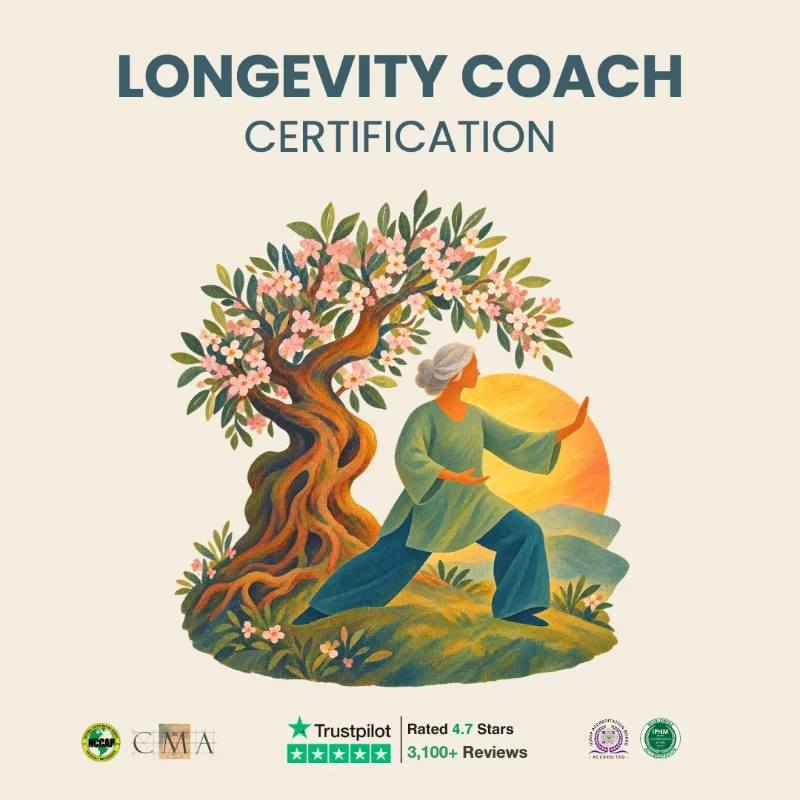
Explore Longevity Coach Certification
Deepen this soulful, evidence-informed approach with the Longevity Coach Certification.
Explore Longevity Coach →