Most practitioners try to improve client quality by improving marketing. Yet the same pattern often repeats: discovery calls feel polite but thin, “I’ll think about it” messages pile up, and the people who do sign on hesitate, need repeated reassurance, or drift from the agreed process.
The issue is rarely visibility alone. It usually starts much earlier, in the first moments of contact and in how you listen, pace, and shape the conversation.
When those early moments create trust, clarity, and shared responsibility, the right people tend to lean in. When they create pressure, vagueness, or over-promising, misalignment shows up later.
Five NLP-informed communication skills are especially useful here: rapport and calibration, language attunement, outcome clarity, reframing, and gentle state work. Used ethically, they don’t push people into decisions. They help the right clients recognise themselves in your way of working.
Key Takeaway: Better clients usually come from better early communication, not harder selling. When you build rapport, speak in ways that feel familiar and respectful, shape outcomes the client can own, reframe objections without pressure, and support steadier decision-making, you attract people who are a better fit and more likely to follow through.
Skill 1: Rapport and Calibration Build Early Trust
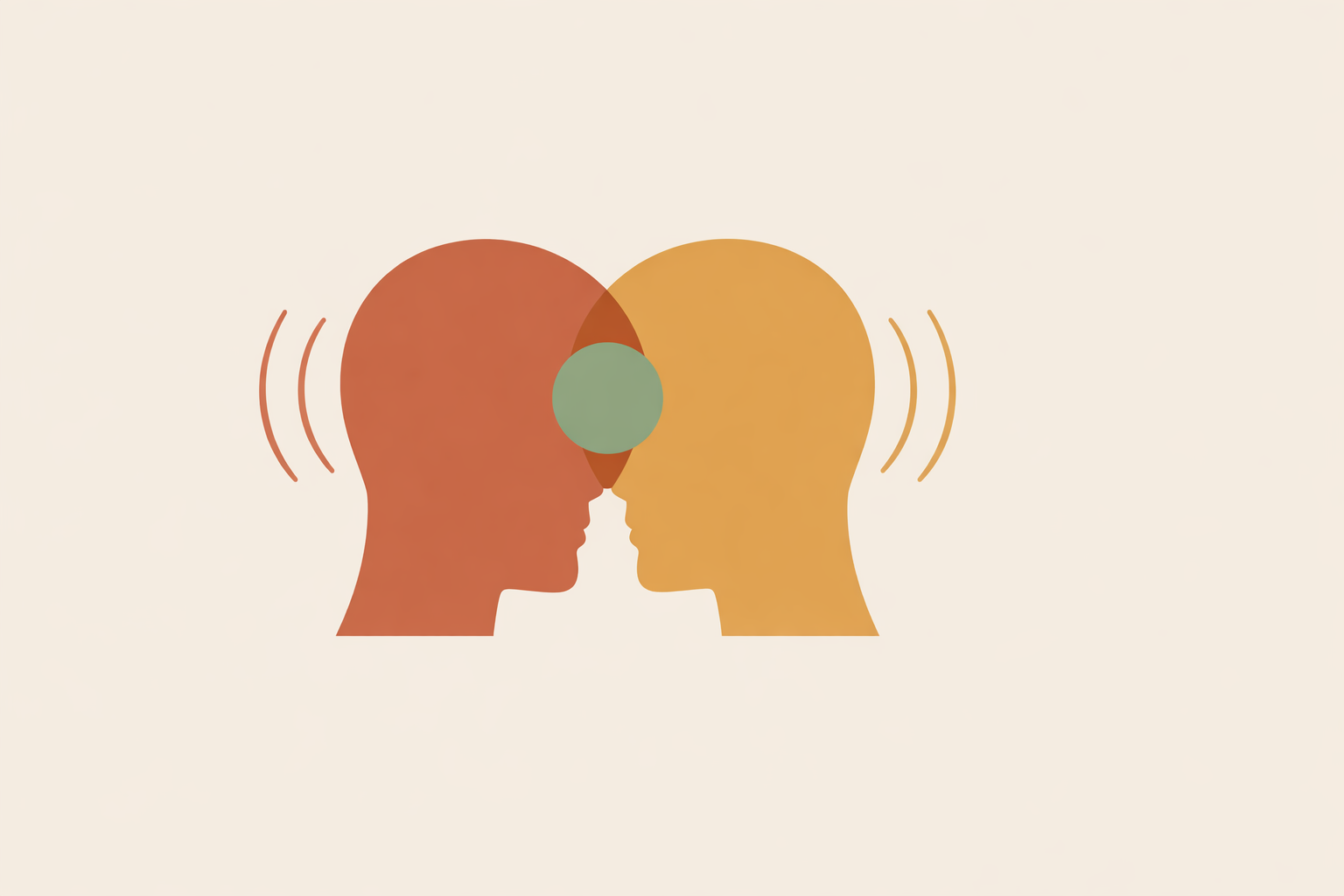
Rapport is the felt sense that someone is with you, not working on you. Calibration is the skill underneath it: noticing shifts in tone, posture, breathing, pace, and responsiveness, then adjusting so the other person continues to feel met.
In practitioner terms, this is often the turning point. A person may arrive curious but guarded. If your rhythm is too fast or too polished, they may stay polite while quietly withdrawing. If your presence is steady and responsive, the conversation tends to deepen on its own.
Traditional lineages have long valued attuned listening and careful story-holding; Hypnotherapy and NLP simply offers a modern label for something skilled guides have practised for generations.
Relational research points in the same direction: better outcomes are associated with a stronger early alliance. That matches everyday experience: how the first conversation feels often shapes whether someone returns, and how they show up.
A first-contact message can set the tone:
- “Thanks for reaching out.”
- “Would a short call help you clarify what you want and whether this feels like a good fit?”
- “If it doesn’t feel aligned, that’s completely okay.”
On a call, start with something useful rather than impressive:
- “What would make this conversation useful for you today?”
- “What feels most important to leave with?”
Then make small, respectful adjustments. If someone speaks slowly and carefully, slow down. If their breathing gets shallow when they talk about goals, soften your tone and widen the pace. Tracking breath and adding a grounding pause often changes the whole feel of a discovery call. It quietly communicates, “We do not need to rush your process.”
Used lightly, matching and mirroring can support this. The point isn’t imitation. It’s responsiveness—making your communication easier to receive.
Skill 2: Language Attunement Creates Values Fit
Many practitioners lead with their method. Often, a better entry point is the client’s language. When people hear their own style of meaning-making reflected back respectfully, they feel understood faster.
This includes sensory language, but it also includes metaphors, values, pacing, family language, cultural references, and the emotional tone someone uses when they talk about change.
One person says, “I need to see my next step clearly.” Another says, “I want something that feels solid.” Another says, “I need it to ring true.” They’re all reaching for clarity, just through different doorways. Reflecting the same “register” back makes your communication feel natural and personal.
There’s support for this kind of wording in messaging. Research suggests sensory language can increase engagement and emotional response. In practice, that makes a simple experiment worthwhile: write three versions of the same offer and see which your audience responds to.
- Visual: “See your next step clearly.”
- Auditory: “Hear what is true for you beneath the noise.”
- Kinesthetic: “Feel your next step become grounded and workable.”
Values fit matters just as much. When people recognise their own values in your message, it supports stronger brand alignment, and in real life it reduces “maybe” conversations that go nowhere.
A simple example:
“I work gently and practically, with respect for culture, real-life constraints, and personal responsibility. If you want quick fixes or aggressive pushes, this may not be the right fit.”
That kind of line welcomes the right people and saves you from trying to convince the wrong ones.
Keep it ethical. Don’t force jargon, mimic slang, or borrow from cultural language you don’t understand. Let people teach you the words that matter to them, then reflect those words back naturally and sparingly.
Skill 3: Outcome Clarity Attracts Committed Clients
Clarity is calming. When a potential client can name what they want, how they’ll recognise movement, and what part of the process is theirs to carry, commitment becomes easier to assess.
This is where NLP’s “well-formed outcomes” are genuinely useful. A strong outcome is positively framed, specific enough to notice, grounded in real context, and owned by the person rather than projected onto others. It also considers wider life impact, because change never happens in a vacuum.
Outcome clarity works as a quiet pre-screen. When you ask for evidence, context, and responsibility, “please fix this for me” expectations tend to fade. The people who stay engaged are usually ready to participate in their own process.
Use a short set of questions:
- “If this work goes well, what will be different in your life?”
- “How will you know?”
- “What will you be doing, saying, or choosing differently?”
- “Where will this matter most?”
- “What part of this is within your control in the next few weeks?”
- “If this change happens, is there anything it may disrupt or challenge?”
The final two questions matter because they bring responsibility and real-world context into the room.
This kind of alignment is consistent with broader relational evidence: more positive engagement is associated with a stronger alliance, especially around shared direction and collaboration. You don’t need a perfect goal statement. You need a direction both of you can genuinely stand behind.
For example, instead of “I want more confidence,” you might shape: “I want to speak once in each team meeting with one prepared point for the next four weeks.” That’s easier to support, reflect on, and own.
Many ancestral settings also approached intention with clarity, context, and accountability. The language may differ, but the principle is familiar: be clear about what you’re entering, where it belongs in life, and how you’ll carry your part.
Skill 4: Reframing Helps Objections Move
Once the outcome is clearer, resistance often surfaces more honestly: “I’m too busy.” “I’ve tried before.” “Part of me wants this, but another part doesn’t trust it.” These moments aren’t problems to overcome. They’re information you can work with.
Reframing works best when it doesn’t deny reality. The aim is to help someone find a different meaning, a wider context, or a smaller next step that still respects what’s true for them.
This overlaps with evidence-informed emotion regulation: regulated processing is associated with steadier engagement. Practically, the best reframes give enough perspective that action feels possible without pressure.
One of the cleanest reframes is values-based:
Client: “I’m too busy for this.”
You: “It sounds like you take your responsibilities seriously. That matters. What would a small step look like that respects those responsibilities and still moves this forward?”
It works because it starts with recognition, not correction.
Parts-based reframing can also help. Many practitioners appreciate how Internal Family Systems describes protective parts: when protection is acknowledged rather than fought, inner conflict often softens.
You might say:
“There seems to be a part of you that wants change, and another part that is trying to prevent disappointment. What is that protective part concerned would happen if you moved too fast?”
A reliable structure is:
- Hear the objection in the client’s own words.
- Validate the emotion or concern.
- Name the value or protective intention underneath it.
- Offer a new meaning or a smaller frame.
- Invite one modest next action.
Traditional storytelling, proverb, and parable have long served the same purpose: shifting perspective without forcing agreement. The best reframes still carry that quality.
Skill 5: Gentle State Work Supports Follow-Through
Sometimes a person is clear and willing and still can’t move. In those moments, the issue is often state. If someone is overwhelmed, overactivated, or scattered, even a good decision can feel out of reach.
Gentle state work creates enough steadiness for action. Trauma-informed literature often emphasises staying within a window of tolerance where a person can remain present and responsive. This fits well with careful, consent-based NLP use.
Anchoring can be useful when handled simply. An anchor here is just a chosen cue linked to a more resourced state such as calm, courage, or focus. With consent and a little rehearsal, it can help clients access that steadier state in real moments, much as anchoring is used in session practice.
A brief version:
- “Would you like to try a one-minute exercise to help you feel steadier?”
- “Recall a time you felt grounded enough to handle something challenging.”
- “As you reconnect with that feeling, gently press thumb and middle finger together.”
- “Now imagine using that same cue just before the moment you need it.”
Breath, rhythm, and posture have long been used across many traditions as living anchors. The language may be modern, but the principle is old: the body can help a person remember a quality of presence they already know.
It also helps to connect state directly to action:
- “What is the first step?”
- “When will you do it?”
- “What cue will help you access the state you want just before that moment?”
This pairing of one simple action with one simple anchor is often more useful than a long plan. Difficult experiences with state work usually come from moving too fast or working outside someone’s window of tolerance. Keep checking consent, track how the exercise is landing, and slow down whenever needed.
How These NLP Communication Skills Bring Better Clients
Taken together, these skills create a coherent arc:
- Rapport and calibration help people feel safe enough to be honest.
- Language attunement helps them feel recognised in their own world.
- Outcome clarity reveals whether they’re ready to take responsibility.
- Reframing helps resistance become workable information.
- State skills support follow-through by linking steadiness to action.
The result is often not just more enquiries, but better-matched and more committed clients. The process becomes a filter that serves both of you.
There’s no need to present NLP as unquestionable or universal. It’s a practical toolkit: some elements are echoed strongly by relational and regulation research, while others are grounded mainly in practitioner experience and long-standing communication craft. Used with consent, integrity, and clear boundaries, it can be highly effective.
One principle is especially worth keeping close: the map is not the territory. Your models are never the person. Each client brings their own meanings, history, values, and timing, so good practice stays flexible, culturally aware, and willing to keep listening.
To close, keep your ethics simple: don’t rush decisions, don’t overpromise, and don’t use these skills to “win” a conversation. When your communication is clear, respectful, and well-paced, the right clients feel it early. They’re more likely to trust the process, take ownership of their part, and stay engaged long enough for meaningful change to unfold, whether you draw from broader NLP training or a focused NLP practitioner certification.
Master NLP Practitioner Skills
Deepen these communication skills with the NLP Practitioner Certification and apply them ethically in real client conversations.
Explore the Certification →