In education, coaching, and workplace learning, the same quick check often gets used to support very different promises. A smooth in-session demo becomes “proof” something will still be usable a week later. A high engagement score becomes evidence that learning truly landed. Most of the time, it isn’t bad intent—it’s a design mismatch.
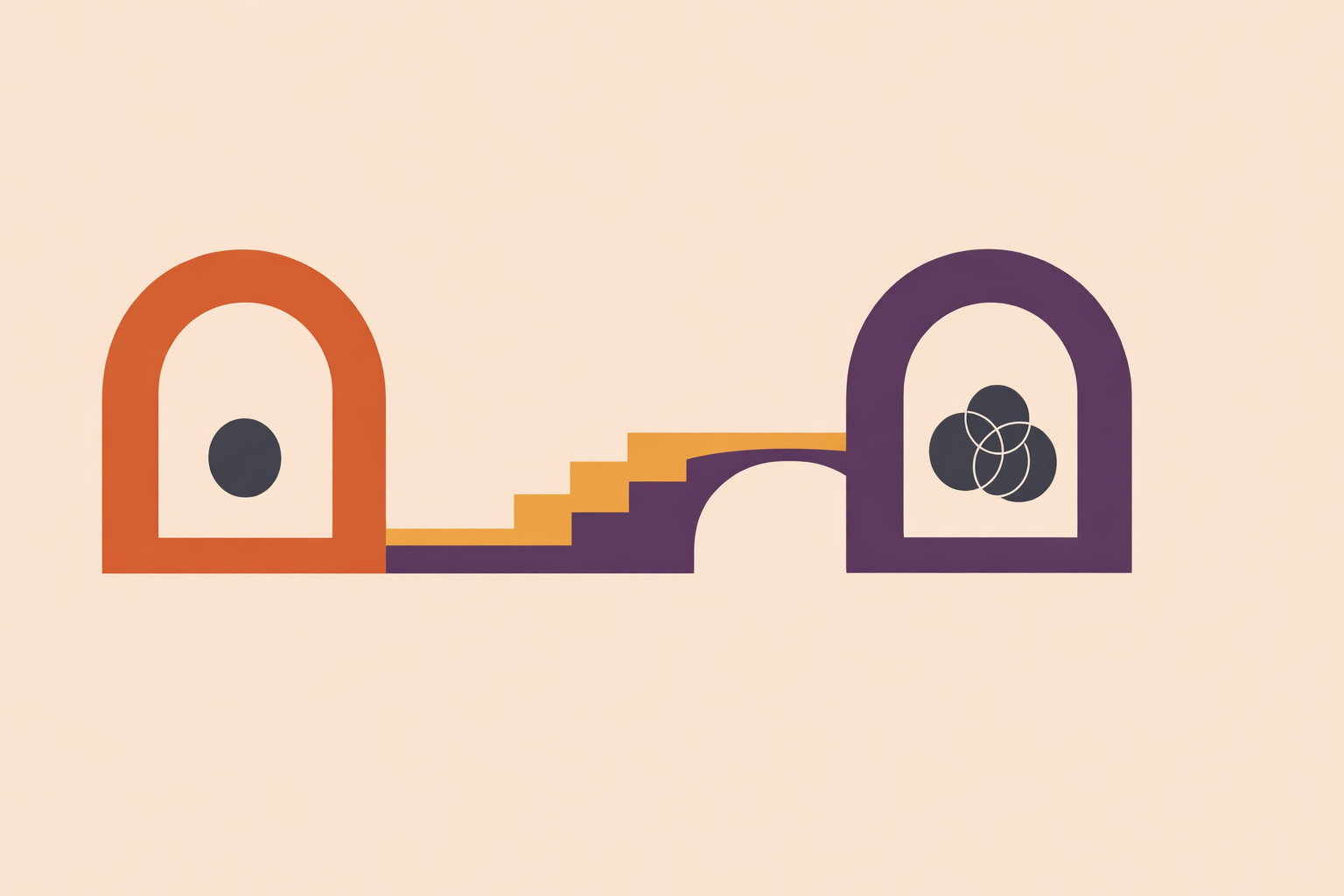
The fix is straightforward: decide whether the claim is about in-the-moment handling or lasting retention, then assess the matching system. Working memory and long-term memory support different kinds of success, and they run on different clocks.
Key Takeaway: Credible claims depend on testing the right memory system for the promise you’ve made. Use immediate, in-session assessment for focus and active handling. Use delayed recall and applied performance for retention and real-life use. If you care about the full learning arc, assess both across time.
Decision 1: Match the test to the claim you are making
Start with the outcome that truly matters in your setting. If your promise is stronger attention or better handling of information during the session, assess it immediately. If your promise is that learners will remember, apply, or teach the material later, assess it after time has passed.
This single distinction clears up a lot of confusion. Claims about task attention need immediate evidence. Claims about lasting learning need delayed assessment, after ordinary life has had time to interrupt and reshape what was learned.
Example: if someone learns a four-step breath sequence and you want to know whether they can follow it under mild distraction right now, you’re assessing working memory. If you want to know whether they can recall it and use it next week without prompting, you’re assessing long-term memory.
Before you measure anything, define:
- The exact claim: focus now, or remember and use later
- The task: what the learner will actually do
- The timing: same session, days later, or weeks later
- The scoring: accuracy, sequence, pacing, recall, or applied use
- The context: what counts as success in real life
That small upfront clarity makes the rest of the design far easier.
Decision 2: Understand how working memory and long-term memory differ
These are cooperating systems. Working memory is the limited workspace that supports active handling in the moment: following instructions, holding a sequence in mind, ignoring distractions, or keeping track of a goal while doing something else.
Long-term memory is what endures beyond the moment. It includes personal experience, meanings and concepts, and embodied know-how. It’s what lets someone retell a teaching, recognize a pattern, or perform a familiar sequence with increasing ease.
They constantly shape each other. Familiar, meaningful material can reduce cognitive load because existing knowledge allows chunking. In practice, domain knowledge strongly influences how manageable a task feels.
That’s why a novice can feel overwhelmed by five disconnected facts, while an experienced practitioner takes in the same five details as one coherent pattern. Structure, familiarity, and meaning change what the mind can hold and use.
Decision 3: Use working-memory tasks for real-time handling
When the main question is what someone can manage right now, working-memory assessment is the right tool. This includes following multistep directions, staying organized under distraction, holding key information while making a decision, or repeating a sequence accurately.
Practical task options include:
- Repeating a spoken sequence forward or backward
- Remembering locations in order
- Listening while holding target words in mind
- Tracking a repeating pattern amid distractions
- Following a short instruction chain while a mild competing stimulus is present
Keep the task close to the real-world demand. If learners need to follow spoken guidance in a lively environment, use a spoken sequence with light distraction. If they need to organize steps while moving, assess that directly.
Interpret results with care. Day-to-day factors such as stress and fatigue can lower performance, and unfamiliar test formats can do the same.
A simple session check might sound like: “When I finish, repeat the steps back to me, then do them in order.” Note where the sequence breaks down, whether pacing changes under distraction, and how much support is needed. In real coaching contexts, that kind of observation often tells you more than a decontextualized total score.
Keep notes brief and concrete:
- Held 3 steps reliably
- Lost the final step when music began
- Needed one practice round to understand the format
- Much steadier after hearing the sequence a second time
Decision 4: Use long-term memory checks for what stays and gets used
If you care about retention, integration, and later use, assess long-term memory. You’re checking what remains after the session ends and daily life resumes.
In most learning settings, delayed assessment supports claims about persistence. By contrast, immediate performance mainly shows what was accessible in the moment.
One of the strongest tools is asking learners to bring the material back in their own words. Retrieving information, especially when spaced over time and followed by feedback, helps strengthen memory. It works as an assessment approach and as part of the learning design.
Choose prompts that match what you actually need:
- Recognition: “Which of these options did we use?”
- Free recall: “Name the practice we used.”
- Cued recall: “Name the practice we used for settling before sleep.”
- Performance: “Show me how you would guide it.”
Recognition can be useful, but it can also make learning look stronger than it is when choices are obvious. Free and cued recall usually show what’s truly available without support. For skills, performance often reveals the most.
A practical delayed check could be a short voice note sent a week later:
- Name the two key ideas
- Retell the central example or story
- Describe one situation where you used the practice
Score lightly if you want, but watch the pattern. What returns easily? What needs prompting? What has already found a place in daily life?
Decision 5: Assess both if you care about the full learning arc
Often the real question is both: can the learner handle the material in the session, and does it remain usable later?
A two-stage design is usually enough:
- Stage 1: Assess immediate handling during or right after the session
- Stage 2: Assess recall, use, or transfer days or weeks later
If needed, add a third stage for application in a new context: under time pressure, with a novel example, or while explaining the idea to someone else.
This fuller arc tells a clearer story than a single score. Strong immediate performance with later decline can signal in-the-moment fluency without durable encoding. More modest early performance with stronger delayed performance can reflect consolidation supported by spaced retrieval and rest. For long-range claims, delayed retention is often the more meaningful signal.
A simple schedule:
- Same session: a 3-minute task tied to the day’s learning
- After 7 to 10 days: a short recall prompt and one real-life example
- After 3 to 4 weeks: a transfer task in a fresh situation
This stays practical while giving a much more trustworthy picture of what actually landed.
Decision 6: Let ancestral memory practices inform what you assess
Traditional learning lineages have long understood memory deeply, even when described in different language. Story, song, rhythm, repetition, seasonality, observation, and apprenticeship are enduring designs for remembering and passing knowledge on.
These forms engage multiple pathways at once: the event, the meaning, the body, the relationship, and the setting. That’s one reason they remain effective across generations. Learning is carried in lived context, not held only as abstract recall.
Assessment works best when it respects the form the teaching arrived in. If a teaching was offered through story, ask for retelling. If it was carried through rhythm or sequence, assess rhythm or sequence. If it was learned through guided doing, assess doing.
In many traditions, returning to the next gathering able to retell, demonstrate, or pass on a teaching already functions as a sophisticated long-term memory check. Modern language might call it retrieval and spaced review, but the method is older than the label.
Depth of processing matters here too. When people connect new material to meaning, personal experience, or a larger story, it tends to stay. Experts also organize what they know into flexible patterns and schemas, which supports skillful use of many details at once. This kind of knowledge structure is part of what makes mature practice look intuitive.
Respectful prompts can include:
- Retell the teaching in your own words
- Show the sequence or lead the practice
- Explain where this teaching belongs and why
- Share one situation where it would be appropriate to use
- Pass on a short version to another person
Also watch for bias in the materials. Tests built around unfamiliar images, idioms, or rhythms can end up measuring cultural familiarity more than memory. Assessments should feel intelligible and relevant to the people taking part.
Conclusion: What you should actually test
If the claim is about handling information now, assess working memory in the moment. If the claim is about remembering and using something later, assess long-term memory after a meaningful delay. If the claim spans both, measure both.
A checklist helps:
- Name the promise first: immediate handling or lasting use
- Choose timing that matches the promise
- Use tasks that resemble the real demand
- Log state factors like stress, fatigue, and novelty
- Include at least one delayed check
- Add one transfer task if real-life use matters
- Interpret patterns over time, not just single scores
It’s wise to stay modest in what you claim. Broad improvements from training rarely show far transfer across unrelated abilities or everyday performance. In real-world learning, how someone organizes and uses what they know often matters more than any narrow capacity score.
Neuroscience and brain health can help frame this well: attention opens the door, and meaning, repetition, and lived use help learning endure. When assessments honor that reality, conclusions become clearer and far more useful.
Explore Cognitive Neuroscience
Connect memory assessment to real mechanisms with the Cognitive Neuroscience Certification.
Explore Cognitive Neuroscience →