The default fix for erratic energy is to push harder—extra coffee, a punishing workout, and late-night catch-up that blurs into tomorrow. Practitioners see the cost: mornings that feel alert yet depleted, an afternoon slide that trashes focus, and sleep that doesn’t restore. Often, the real issue is timing. When stimulation spills into hours better suited to settling, output starts to feel expensive.
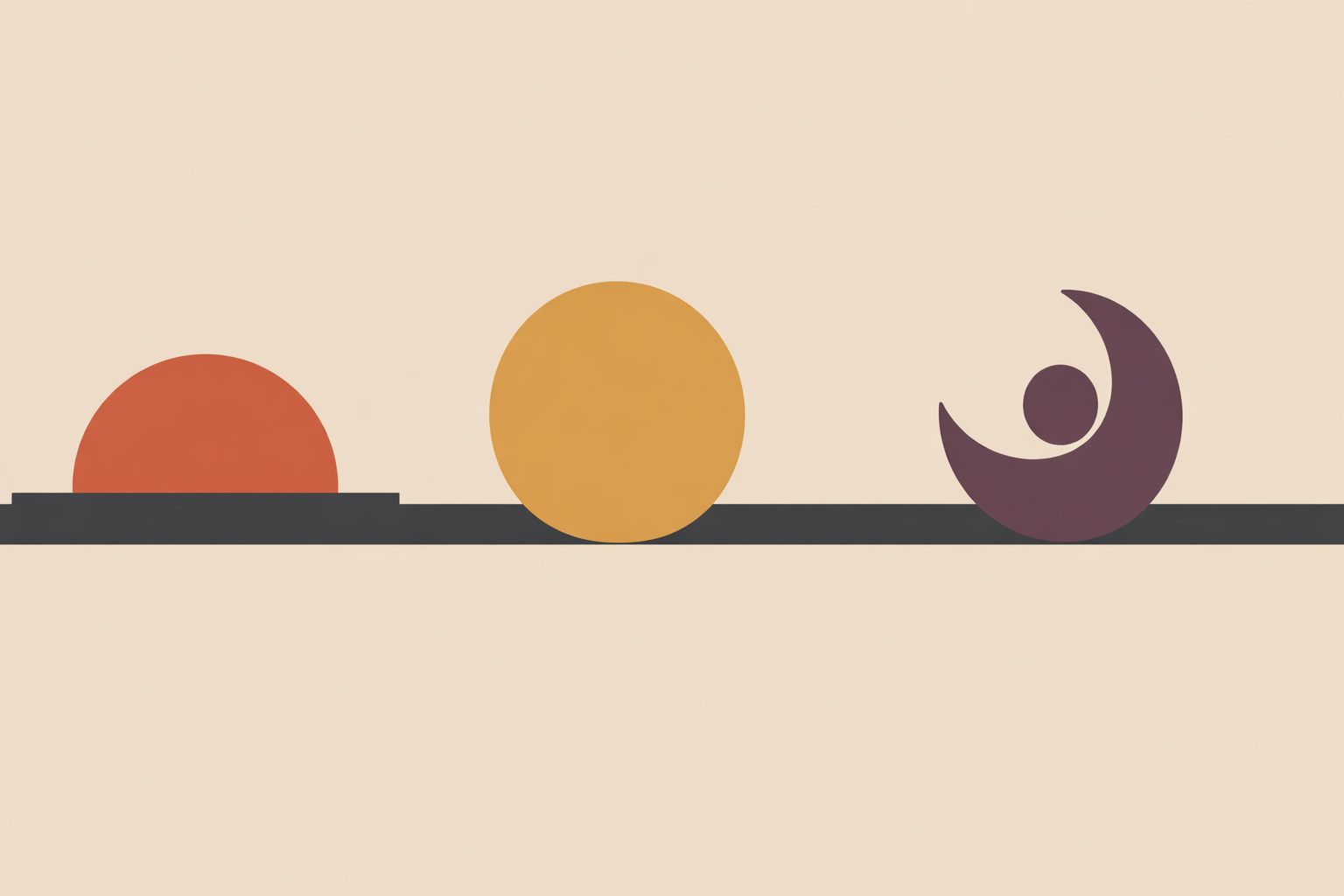
Yin and Yang offer a practical daily map for getting back to steadier energy. Build Yang cleanly in the morning, protect Yin at night, and keep Qi moving through the middle of the day. That can look very modern: choices around light, meals, movement, screens, breath, and small pauses that keep the day from swinging between extremes within traditional and eastern medicine.
Key Takeaway: Steady, calm energy is often less about doing more and more about doing things at the right time. A Yin–Yang approach helps you build morning momentum, avoid midday stagnation, and protect evening quiet through simple choices around light, food, movement, breathing, and rest.
See your day through Yin and Yang
Yin and Yang offer a clear way to read daily energy. Yang is active, warm, outward, and bright. Yin is quiet, cool, inward, and restorative. Both are necessary, and each supports the other.
When the day has a clear rhythm—more activation in the morning, more settling in the evening—energy usually feels smoother. When evening fills with stimulation and morning begins rushed and depleted, people often recognize the “wired but tired” pattern. In traditional practice, this points to a mismatch between output and restoration, not a lack of willpower.
Aim for coordinated Qi flow rather than nonstop productivity. Yang provides spark and movement; Yin provides the depth that lets that spark last.
To spot your personal rhythm, pause at lunch and name the morning with one word: clear, scattered, heavy, steady. Over a week, that quick check-in often tells you exactly where your balance is drifting.
Align your rhythm with light, sleep, and the organ clock
Better alignment with natural light and the body’s internal timing often supports steadier energy, clearer mornings, and more settled sleep. Traditional Chinese Medicine describes daily timing through the 24-hour organ clock, linking phases of the day to different functions and qualities.
In that map, early morning is often described as Lung time, connected with waking, breath, and the first upward movement of the day. The following window, often called Stomach time, is traditionally viewed as a supportive space for the first substantial meal. Many practitioners use this sequence to encourage a calmer start: wake gently, breathe fully, and eat in a way that supports the day.
Late evening and early night are strongly Yin. Getting to sleep during these more inward hours supports deeper restoration, and next-day alertness is often better when sleep timing stays closer to an earlier rhythm.
Light is one of the most reliable levers. Morning alertness is strengthened by natural daylight, while dimmer, warmer light in the evening supports the shift toward rest. This aligns naturally with the traditional view of Yang rising with the day and Yin gathering at night.
Try this for one week:
- Get outside within an hour of waking.
- Eat breakfast in the morning rather than skipping or delaying it deep into the day.
- Lower bright light and screens at night.
- Aim for a more regular sleep window.
Build morning Yang without burning through it
Morning Yang is best kindled, not forced. If the day begins with harsh stimulation, cold food, and frantic pace, energy can spike early and fade fast. A steadier build tends to last.
Start with light and gentle movement. Step outside soon after waking if you can, then add a few minutes of easy motion—shoulder rolls, spinal loosening, a short walk, or a brief Qigong sequence. This kind of morning practice has long been used to circulate Qi and support the day’s first lift without draining reserves.
Then consider breakfast. In Chinese dietetics, warm, cooked foods in the morning are often used to support Spleen and Stomach Qi. Oats, congee, stewed fruit, soft eggs, or soup often feel steadier than an iced drink on the run, and traditional food therapy highlights warm cooked foods as easier on digestion at this time of day.
Many people notice that swapping a cold smoothie (or skipping breakfast) for a warm meal leads to more even energy over time, a rhythm that fits well with daily TCM habits. That pattern shows up consistently in practitioner experience.
If Qigong is part of your routine, morning is a natural home for it. Regular practice has been associated with improved fatigue and better mental functioning, which fits the traditional view of Qigong as a daily regulator.
- 5 minutes of outdoor light
- 5–10 minutes of gentle movement or Qigong
- A warm, simple breakfast
Protect evening Yin so tomorrow has something to draw from
Evening is where many people unknowingly spend tomorrow’s energy. Late intensity can feel satisfying in the moment, then show up as a thin, edgy, or dull morning.
Begin with light. Bright screens, overhead glare, and stimulating content pull the system back toward activity. Reduced light exposure in the evening supports a smoother transition into night.
Exercise timing matters, too. Later sleep onset and lighter sleep are more common when high-intensity training lands too close to bedtime. Evening movement can still be a great fit; choose gentler options like walking, stretching, mobility work, or softer Qigong.
A small night ritual helps draw a clean line under the day:
- Dim lights
- Silence notifications
- Take a warm shower or bath
- Read, stretch, or sit quietly for a few minutes
Acupressure can also support settling. Practice traditions commonly use points such as HT7 (Shenmen) and SP6 (Sanyinjiao), and research has linked consistent use with improved sleep quality over several weeks.
Use micro-rests to keep Qi moving during the day
Steady energy is shaped by what happens between morning and bedtime. Long stretches of fixed posture, uninterrupted screen focus, and emotional bracing often create the flat, heavy feeling that shows up by mid-afternoon.
Classical Chinese thought cautions against staying too long in any one posture. Practically, that means changing position often and breaking up long blocks of stillness.
Brief workday pauses help. Hourly breaks and posture changes can reduce the strain that builds during desk-heavy work. Keep it simple: a few breaths, a shoulder reset, a short walk to the window, or standing for a call.
For screen-heavy days, the 20-20-20 habit is a friendly reset. Looking away regularly has been linked with better eye comfort, and it fits naturally into a rhythm of effort followed by brief release.
Emotional expression matters here, too. In TCM, constrained emotion is often described as impeding Liver Qi. Journaling, an honest conversation, drawing, or a few minutes of movement can restore flow, and traditional sources discuss emotional stress as a common contributor to stagnation.
- Every hour, stand up or change position.
- Take 3–6 slower breaths with a longer exhale.
- Let your eyes relax away from the screen.
- Notice whether what you need is movement, stillness, or expression.
Eat for smoother energy, not constant extremes
Chinese dietetics focuses on pattern more than rigid rules. The real question is whether a food fits the person, the season, and the time of day.
For day-to-day energy, moderation is a dependable guide. Meals that are very cold, greasy, spicy, heavy, or irregular tend to create bigger swings. Simple meals eaten at more consistent times support a steadier internal rhythm.
Morning often benefits from warmth and substance. Midday can usually handle the most variety and density. Evening tends to go better with lighter, simpler foods that don’t leave you overly full at bedtime.
Notice the after-effect. If a meal leaves you foggy, jittery, overfull, or reaching for another boost an hour later, take that as useful information and adjust the next meal rather than forcing a plan that doesn’t match your current pattern.
Use Qigong and breathing as daily regulators
Qigong and breathing practices are valuable because they meet you where you are. When energy feels stuck, they encourage movement. When it feels scattered, they help gather and settle it.
Qigong works with posture, breath, attention, and measured movement. In traditional practice, this supports the harmonious circulation of Qi and helps Yin and Yang adjust toward balance. The same practice can brighten the morning, smooth midday tension, or support a calmer evening, depending on pace and intention.
Breathwork is even easier to weave into real life. Slow breathing, especially with slightly longer exhales, supports a calmer state and helps interrupt constant low-grade activation. Many people do well with inhale for four and exhale for six.
Short breath breaks scattered through the day are often more sustainable than waiting for the perfect long session. Two minutes can shift the tone of the next hour.
- Morning: use breath and movement to brighten gently.
- Midday: use them to prevent stagnation.
- Evening: slow the pace, soften the body, and lengthen the exhale.
Create your own four-week Yin–Yang experiment
The most useful routine is the one you can observe and refine. Choose a few anchors, repeat them consistently, and let your experience guide the next adjustment.
You might begin with:
- Morning light within the first hour of waking
- A warm breakfast
- Two micro-rests before lunch
- A softer evening light routine
- A regular sleep window
Keep notes simple:
- Sleep window
- Morning light: yes or no
- Movement: yes or no
- Warm breakfast: yes or no
- Micro-rests: how many
- Evening wind-down: yes or no
- Three words for your energy
At the end of each week, look for patterns. Where did you overspend Yang? Where did you fail to protect Yin? What choices made your energy feel clearer and more consistent?
Traditional systems work best as lived rhythms, and studying Traditional Chinese Medicine Foundations can help put those patterns into a broader framework. Keep the process humane and adjustable, and let small changes compound. As with any well-being practice, individual needs vary; if sleep disruption, persistent exhaustion, or anxiety feels intense or ongoing, it’s wise to seek qualified support alongside your self-guided routine.
Study TCM Foundations
Connect Yin–Yang rhythms to core principles in Traditional Chinese Medicine Foundations.
Explore TCM Foundations →