



As a Global Instructor at Naturalistico, Paul shares practical insights and strategies designed to empower individuals, support their growth, and help them turn knowledge into real-world results.
7 Intake Questions for Small Animal Naturopathy Sessions (That Matter)
Publié le mars 18, 2026
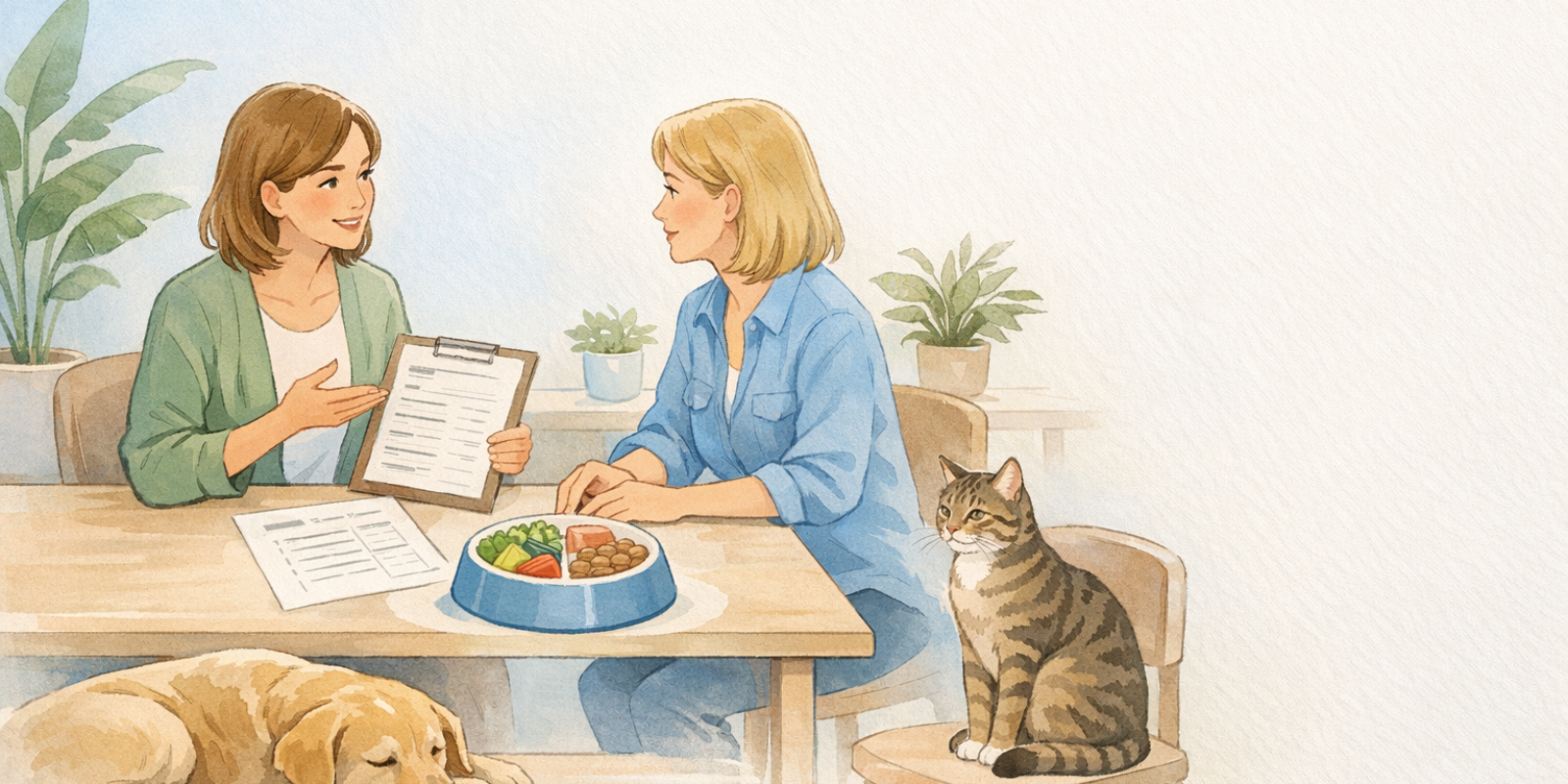
The right seven questions help you hear an animal’s whole story—clearly, gently, and with far less guesswork—so each session stays ethical, thoughtful, and truly individualized. Think of them as a compass: easy to ask, and surprisingly powerful in how they guide pacing and next steps.
In everyday practice, strong intake forms gather the same anchors: diet, lifestyle, environment, behavior shifts, and the guardian’s priorities. Many clinics protect an unrushed first appointment—often 60 minutes—to hear the full history, set goals, and build trust, then use shorter follow-ups to track patterns. Shelters use the same principle: structured questions early on help guide steadier long-term decisions.
When guardians submit thorough histories in advance, you can spend more time observing, clarifying, and co-planning—rather than scrambling to reconstruct basics. The sequence below follows how a real conversation naturally unfolds: start with food, widen into habitat and behavior, then gather physical observations, daily rhythms, recent triggers, and (finally) the guardian’s hopes. By the end, you’ll have a whole-animal map you can work with immediately.
Key Takeaway: A strong intake isn’t about collecting facts—it’s about building a whole-animal map that links diet, habitat, behavior, physical signs, daily rhythms, recent changes, and the guardian’s goals. Asked in a clear sequence, these questions reduce guesswork and keep support ethical, individualized, and trackable.
Intake Question 1: “What Is Your Animal Eating Right Now?” (Start With Diet)
Food is often the simplest doorway into vitality because it’s concrete, trackable, and closely tied to daily signals. Appetite, stool quality, and energy are key indicators of how well a diet is landing for many companion animals.
Ask for the full picture: brand or recipe, form (kibble, canned, homemade, raw), treats, chews, table scraps, supplements mixed into meals, and rough amounts. Missing diet details can ripple through other issues you’ll discuss later—from skin comfort to behavior.
Reading vitality through food, stool, and appetite
Digestion gives fast feedback. One comparison found ultra-processed diets were linked with higher fecal output than fresher options—an everyday clue many guardians notice right away. In dogs and cats, undigested protein in the lower gut is associated with wetter stools, while certain fibers support firmer stools. Overall, fecal consistency scores are considered a reliable indicator of how well a diet suits an individual.
Traditional feeders have long used stool logs as a practical “language” the body speaks every day. With raw-fed animals, many practitioners begin around 10% bone for adult dogs (often a bit lower for cats) and then adjust based on what the stools show. Essentially, the method is responsiveness: listen, adjust, re-check.
“Dr. Thompson carefully reviewed Mabel’s case and worked with me… with diet and the use of supplements, herbs and acupuncture,” a process that, in her words, honored steady, individualized change (Mabel’s Owner).
- Clarify: “What, exactly, is fed at each meal? What’s given between meals? What changed in the last 30 days?”
- Track: “How many bowel movements daily? What’s the texture (log, soft-serve, pellets)? Any mucus or straining?”
- Observe: “How eager is the first bite? Any food avoidance or gulping?”
Start here, and the rest of the intake has a clear, grounded base.
Intake Question 2: “What Does a Normal Day Look Like?” (Environment and Habitat)
Diet is never “just food”—it’s woven into where and how an animal lives. A thoughtful environment review can identify modifiable stressors that meaningfully improve day-to-day well-being.
Invite a room-by-room tour in words: floors, stairs, favorite resting spots, noise levels, other animals, access to sun and shade, and the flow of the household. These simple prompts—common in many intake questionnaires—often reveal the “friction points” you can soften quickly.
From home layout to enclosure ecology
For small mammals, it helps to think like a habitat designer. Enclosure size, substrate, humidity, lighting cycles, and temperature impact health and welfare, which is why exotic histories emphasize enclosure factors so heavily.
Many practitioners now blend traditional husbandry wisdom with field-biology insights: varied textures, foraging zones, and more complex environments can reduce stress behaviors and encourage exploration. Rodent welfare discussions point to practical upgrades like dust‑free bedding and species-appropriate foraging toys to support normal activity patterns.
Traditional lineages also remind practitioners to work with the seasons—light, warmth, airflow—because these shape rest and resilience. Adjusting lighting to better match natural cycles can improve rest-activity patterns in captive mammals; in the home, that might look like a draft-free winter nest or gentler summer shade.
“We worked together… changes in diet and in routine meds, supplementation, and office treatments,” one guardian shared. “Addy has been well for quite some time now,” pointing to the power of routine and habitat alongside other supports (Addy’s Owner).
- Ask: “Where does your animal rest at noon? At 2 a.m.? Which surfaces are slippery? Where do startles happen?”
- Adjust: Add traction, elevate bowls, create hideaways, and offer sun-and-shade choices.
- Note: If you change food but ignore habitat stress, results are often mixed—support both.
Intake Question 3: “How Is Your Animal Behaving Lately?” (Emotional Patterns)
Behavior is often the earliest, clearest feedback an animal can give. When you turn scattered anecdotes into patterns, you can match support to temperament and current stress load. Systematic behavior logging can enable tailored interventions aligned with individual needs.
Use observation-first checklists—pacing, vocalizing, hiding, clinginess, restlessness, withdrawal—so you’re tracking clusters rather than slapping on labels. Many forms use behavior checklists for exactly this reason, and shelters flag shifts like changes in greeting or destructive chewing as early indicators that routine or environment may need adjusting.
From personality snapshots to shifts over time
Once you have a snapshot, make it personal. Species-appropriate enrichment can reduce stress behaviors—think scent work for dogs, reliable hideaways for cats, or safer foraging for small mammals. Traditional observers have long noted that disharmony often shows up in behavior first, and modern findings support that behavioral alterations frequently precede more obvious physical changes.
Ask what connection actually looks like for that animal: calm cuddles, vigorous play, parallel companionship, or solitude. Many intakes include these questionnaire prompts because they’re gold for setting expectations and pacing changes.
As one guardian put it, “Her extensive knowledge of veterinary medicine and holistic treatments is the perfect combination to maintain the health of all my animals,” emphasizing that being seen—and adjusted to—matters as much as techniques themselves (Client of Dr. Baldner).
- Clarify: “When is your animal most relaxed? When do startles or reactivity appear?”
- Translate: Behavior guides intensity—sensitive animals often do best with shorter, more predictable sessions.
- Track: Pick three behaviors to watch across weeks (for example: greeting, sleep onset, noise reactivity).
Intake Question 4: “What Are You Noticing in the Body?” (Physical Observation, Not Diagnosis)
This question invites grounded, sensory detail—what guardians can see, smell, and feel—without drifting into clinical labels. Focusing on observable signs can improve the ethical quality and practical usefulness of the history.
Guide guardians to describe, not diagnose: coat (glossy/dull), skin (dry/greasy/flaky), odor, hydration cues, discharge from ears or eyes, breath, and any lumps as “present” or “changed.” Many forms begin with skin and coat descriptors for this reason. Similar lists of observable signs (cough, sneeze, vomit, low energy) are most useful when paired with a timeline, not conclusions.
Inviting guardians to describe, not diagnose
Mobility deserves extra care. Small-mammal histories ask about jumps, gait, and whether agility has shifted because subtle gait changes can reflect habitat mismatch or overexertion; in rodents, gait abnormalities have been linked to environmental factors. Digestive clues are equally actionable, and diet’s influence on stool moisture is well documented.
That’s why simple stool logs are so effective: they’re easy to maintain and surprisingly accurate over time.
“After 3 treatments Magnum is no longer limping and is back to his old loving self,” one guardian shared after acupuncture sessions—a reminder that physical ease often follows when the bigger picture is addressed (Magnum’s Owner).
- Ask: “Show me with your hand how your animal gets up—slow, quick, one side first?”
- Note: “Where does the skin look calm vs. hot? Is the coat glossy or dull?”
- Track: “One photo per week of coat, eyes, and posture at the same time of day” supports pattern-watching.
Intake Question 5: “How Much Does Your Animal Rest, Play, and Move?” (Lifestyle Rhythms)
Rhythm reveals resilience. When you map sleep, play, and movement, you can often tell whether an animal is overloaded, under-stimulated, or nicely balanced. Activity tracking can distinguish overload from under-stimulation, which mirrors what many traditional practitioners have observed for generations.
Gather basics you can work with: type, duration, and frequency of movement; solo versus social time; and whether the animal gets exploratory time. Many intakes include daily exercise prompts because they create a realistic scaffold for home planning.
Using activity patterns to pace sessions and home shifts
Hands-on and energy-based sessions tend to land best when the body isn’t rushed. Many practitioners recommend avoiding heavy meals and intense exercise right before or after, then observing how the animal settles and sleeps (before sessions; after sessions).
Traditional frameworks also emphasize circadian rhythms—the body’s natural day-night clock. In other mammals, circadian-aligned schedules can improve sleep quality and reduce stress. Put simply, consistency is calming: gentle morning movement, a dependable rest window, and unhurried evenings. For confined animals, personality-matched enrichment can also stabilize sleep and lower aggression.
As one guardian shared, “With an acupuncture ‘tune‑up’ when he needs it… Rufus is still going strong!!” A small change to rhythm, well-timed sessions, and steady home care can keep momentum without overwhelm (Rufus’s Owner).
- Clarify: “How long until your animal settles after play? How do they wake—stiff, eager, slow?”
- Plan: Pair movement with digestion—light movement before meals, relaxed snuffling after.
- Protect: Build a post-session quiet window so any shifts can consolidate.
Intake Question 6: “What Has Changed Recently?” (Timeline and Triggers)
Not every pattern is longstanding. When you separate long-running tendencies from recent triggers, you can choose a smarter first step—food, habitat, pacing, or simply stabilization and time.
Ask about life transitions: moves, new family members, schedule shifts, visitors, construction noise, boarding, travel. Events such as rehoming can trigger acute changes in behavior, digestion, and skin condition in dogs. These details often show up in household changes sections for good reason: they explain “why now?”
Also capture product and chemical exposures—preventives, dewormers, new cleaners, yard treatments—especially within the last 30 days.
Separating long‑standing patterns from recent shifts
Distant history matters too. Small-mammal worksheets ask about prior surgeries because old interventions can still influence mobility and sensitivity. In dogs, chronic pain and reduced mobility can persist years after orthopedic work.
For long-running concerns, many coaches start with weekly support and then widen the spacing. Moving from weekly to less frequent sessions can sustain gains over time, matching the traditional expectation of gradual, layered change (weekly sessions).
Between sessions, keep notes simple: attitude, appetite, urination, and stools. Owner logs can be the best guide to whether change is stabilizing, especially when paired with brief notes rather than long narratives.
One guardian described a multi-modal, stepwise process for an older dog: “electro‑acupuncture and chiropractic… and a regimen of Chinese herbal therapy,” underlining how a clear timeline and layered supports can serve an aging body (Splatter’s Owner).
- Ask: “What shifted in the two weeks before changes started—foods, products, routines, visitors?”
- Map: Build a one-page “what changed when” timeline to guide priorities.
- Stabilize: Change one variable at a time; give it a week; watch the notes, not the noise.
Intake Question 7: “What Are You Hoping Will Shift?” (Aligning With the Guardian’s Vision)
The most effective plan respects both the animal’s needs and the human-animal bond. Clear, co-created goals keep sessions grounded and progress visible. Shared goal-setting has been shown to enhance compliance and make progress easier to track.
Close with open-ended clarity: What are the top three concerns? What would you love to see improve first? Many forms invite primary concerns and pair them with written informed consent so the work stays transparent, kind, and realistic.
From complaints to co‑created well‑being goals
Traditional lineages often frame the role as guiding a return to balance—supporting the body’s adaptive capacity rather than forcing outcomes. In practice, that looks like goals you can actually observe: easier movement, steadier digestion, calmer evenings, brighter mornings—practical shifts consistent with restore balance thinking.
Consistency rises when people feel heard. Practitioner empathy can increase adherence to homework and tracking, and you often see that reflected in how carefully guardians complete forms and follow through.
As one guardian shared, “He went from not being able to walk to running around the backyard,” a testament to aligned intention and steady follow-through (Mason’s Owner).
- Name three outcomes in plain language: “Smoother stairs,” “Calmer evenings,” “Regular, formed stools.”
- Timebox: “Let’s reassess in four weeks with your notes and two short videos.”
- Consent: Confirm scope and next steps in writing; invite questions; keep it kind and clear.
Conclusion: Weaving These 7 Intake Questions into a Coherent Flow
Together, these seven questions create a clean arc: food, habitat, behavior, body, rhythm, timeline, and goals. In this order, a scattered history becomes a workable whole-animal plan—rooted in traditional wisdom and sharpened by what the animal is showing today.
Make it easy for guardians to succeed. Offer fillable forms and invite people to submit in advance so your first hour stays focused on observation and planning. Standardized digital intake records can also streamline follow-ups, and digital tools can support remote assessments, including video-based habitat walk-throughs.
Keep the long view. In many traditional frameworks, meaningful change tends to unfold over several sessions, sometimes with small fluctuations along the way—another reason simple notes are so valuable.
Final cautions belong at the end: protect scope, stay observation-led, and encourage guardians to seek appropriate veterinary support when red flags appear (sudden decline, breathing distress, persistent vomiting/diarrhea, collapse, or unmanaged pain). With that clarity in place, these seven questions will serve you for years—helping you listen well, plan wisely, and support the animal and guardian as a team.
Ready to Go Deeper?
Take the next step with a Naturalistico certification — designed for practitioners ready to deepen their expertise.
Explore the Course →
 Related courses
Related courses


HolisAnimal
12 modules
Equine Therapy Certification

HolisAnimal
11 modules
Animal Nutrition Certification
HolisAnimal
10 modules
Animal Herbology Certification

HolisAnimal
9 modules
Animal Massage Certification

HolisAnimal
9 modules
Animal Aromatherapy Certification
HolisAnimal
12 modules
Animal Communication Certification


