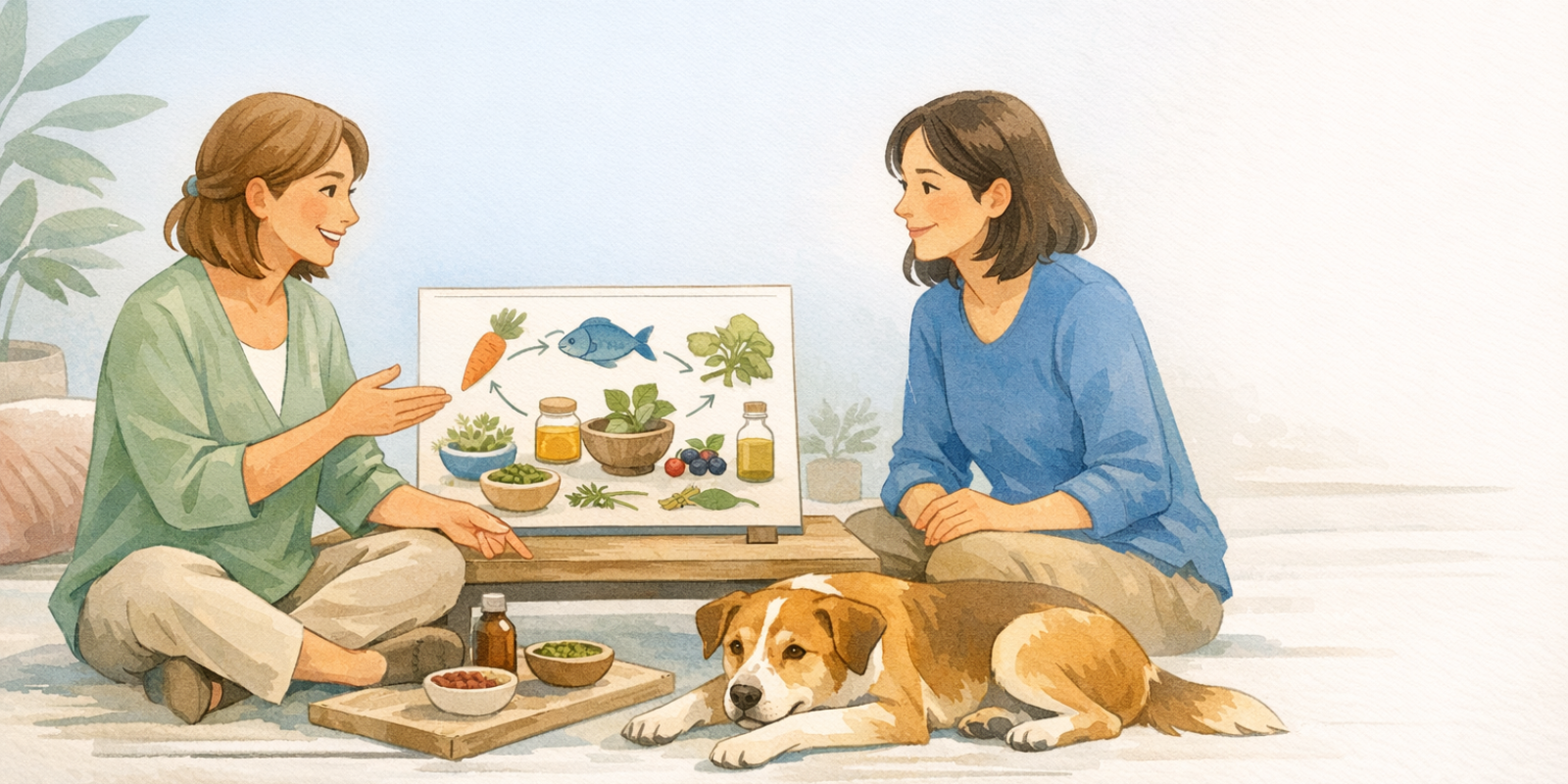
A clear niche helps you move from “I can help with anything” to “I’m the right guide for these dogs, in these situations.” The goal is simple: describe your canine naturopathy + holistic pet nutrition focus in a way that attracts right-fit guardians, honors traditional wisdom, and stays within an ethical coaching scope.
Most practitioners begin as generalists—because they care, and because dogs are wonderfully complex. But real progress often comes when you focus. Holistic nutrition looks beyond calories and into the dog’s full life—routine, environment, stressors, and current food—so guidance can be genuinely individual, not generic; that’s the heart of personalized plans.
Animal naturopathy brings a steady, time-tested compass: the “Eight Laws of Health”—nutrition, fresh air, sunshine, exercise, rest, water, temperance, and trust in higher powers. This worldview emphasizes balance and nature’s pace, honoring the Eight Laws and the “healing power of nature,” and it naturally shapes how you think about food, rhythm, and daily foundations.
Naturalistico is built for practitioners who want that blend of tradition and practical modern learning: an evolving platform with education, tools, and community to support real client work over time.
Key Takeaway: Naming a specific canine naturopathy + holistic nutrition niche makes your work easier to understand and more effective to deliver. When you clearly define who you help, the food-first foundations you prioritize, and the supportive practices you use, you attract better-fit guardians and build an ethical, repeatable coaching process.
From “I Help Pets” to “I Help These Dogs”: Why Niche Clarity Matters
Specificity isn’t exclusion—it’s clarity. When you name who you help and how, the right people can recognize themselves quickly and feel safe reaching out.
“Holistic” can sound vague until you ground it in what you actually do. Industry voices often describe holistic pet nutrition as a concept, not a neat label. In day-to-day practice, that concept becomes clear through individualized choices that consider lifestyle, environment, breed tendencies, and what’s already in the bowl.
Once your niche is named, your depth becomes easier to communicate. You naturally attract guardians who care about root causes, long-term vitality, and the human–animal bond—because your message signals how you think.
That’s also where professional growth accelerates. Many practitioners find that structured learning and better language for their work builds confidence—reflected in learner stories.
The hidden cost of being too broad
When you say “I help all pets,” guardians have to work harder to figure out whether you’re the right fit. A niche makes your work easier to understand—and often leads to fewer inquiries, but better ones.
What Makes Canine Naturopathy + Holistic Nutrition Distinct
This niche is defined by respect: for nature, for the dog in front of you, and for knowledge passed down through generations. You’re not just “adding supplements” or “switching food”—you’re supporting the whole being through everyday foundations.
The Eight Laws of Health keep you oriented beyond the bowl: fresh air and sunshine, movement and rest, hydration, moderation, steadiness, and trust. Alongside the healing power of nature, these principles shape how you observe patterns and choose next steps.
From there, it becomes species-first. Many practitioners describe dogs as scavenging carnivores and use that as a practical guide for building meals with appropriate textures, macronutrients, and feeding behaviors. Often this points toward minimally processed, whole-food approaches—raw or gently cooked—guided by ancestral patterns while staying open to useful modern insight. This lens aligns with traditional training that emphasizes anatomy, physiology, and species-specific needs.
Holistic pet nutrition also shifts attention away from chasing isolated issues and toward steady, whole-body resilience—often using whole-food foundations that reflect integrative nutrition’s focus on whole foods and lifestyle.
In many integrative settings, nutrition is paired with gentle, supportive practices—enrichment, bodywork, herbal traditions, and routine design—with quality of life at the center. Many teams blend these supports to protect long-term quality of life, and there’s growing interest in thoughtful exploration of herbs for pets within a careful, dog-by-dog approach.
Put simply: this niche is a philosophy you can see. It shows up in how you listen, what you prioritize, what you feed, and how you guide guardians to become capable partners.
Turn Your Story and Skills into a Canine Niche Statement
Your niche sits where experience meets preference: the dogs you understand, the work you love, and the tools you trust. The goal is one sentence you can say anywhere—clear, warm, and specific.
Start by noticing your patterns. Which dogs keep finding you? Which food approaches feel most natural for you to teach? Many holistic nutritionists end up specializing because individualized support naturally pulls them toward certain lifestyles, breeds, or home realities.
Then choose a few “toolkit anchors”—the supports you want to be known for. Animal naturopathy often includes gentle, non-invasive modalities alongside food, allowing you to build a niche around food-first guidance and herbal supports (where appropriate), supplements, aromatics, and daily rhythm work.
Finally, name the bond piece. Dogs don’t live in isolation, and neither do their habits. If your best work includes helping guardians create steadier routines and environments, say so—because emotional and behavioral steadiness are widely recognized in holistic care.
Naturalistico supports the reality that your niche evolves. With learning, tools, and community in one place, you can refine your message as you grow on an evolving platform.
Try this structure
“I help [type of guardians] with [type of dogs or situations] through [species-appropriate food focus], [one or two key supports], and [coaching emphasis], so they can [desired outcome in plain language].”
- Example 1: “I help first-time guardians of active herding breeds create species-appropriate routines, whole-food bowls, and enrichment rhythms, so their dogs can settle and thrive at home and on the trail.”
- Example 2: “I support guardians of sensitive rescues with gentle, cooked diets, gut-first adjustments, and daily patterning, so stress eases and connection deepens.”
- Example 3: “I guide guardians of aging companions with soft-food transitions, joint-friendly nutrients, and rest rituals, so comfort and sparkle last.”
Define Your Right-Fit Canine Clients (and Their Guardians)
Right-fit clients become obvious once you describe them clearly. Think in simple profiles: the dog’s daily life, the guardian’s values, and the kind of support they’re ready to implement.
Look for the patterns you consistently support well. Food-first strategies are often used for common challenges like itchy skin, joint stiffness, weight struggles, and sensitive digestion. This is where personalized plans matter most—because age, movement, stress, and home setup change what “best” looks like.
Many guardians are naturally drawn to prevention. They want to build resilience early with steady routines and balanced feeding—a mindset that aligns closely with preventive nutrition and the Eight Laws.
Specializing by lifestyle or life stage can make your message instantly relatable: anxious rescues, urban dogs, active companions, seniors. Many integrative practitioners tailor their approach around age, activity, and the dog’s specific needs, with routine and emotional steadiness included as part of the plan.
Just as important: the guardian. This niche thrives on partnership—guardians who want to learn, observe, and follow through. That collaborative approach strengthens the human–animal bond and makes your work more sustainable.
Client archetypes to consider
- The Sensitive Stomach Puppy: new guardians eager to build a gut-friendly base with routine and enrichment.
- The Anxious Urban Rescue: noise-sensitive, schedule-disrupted, craving rhythm, enrichment, and stabilizing foods.
- The Athletic Adventurer: high-output dogs needing nutrient-dense, joint-friendly bowls and recovery rituals.
- The Beloved Senior: guardians ready to soften textures, ease joints, and refine rest while savoring daily joy.
Choose 1–3 archetypes and write a short snapshot for each: what their day looks like, what they’ve tried, what isn’t working, and how your approach meets them. Those snapshots become powerful language for your website, calls, and content.
Design Offers Around Your Canine Naturopathy Niche
Your offers are where your niche becomes tangible. The best ones reflect your worldview, follow a clear process, and use plain, guardian-friendly language.
Start with a strong intake. Holistic nutrition work often begins by reviewing daily rhythm, current diet, environment, and relevant tendencies—so you can create tailored plans instead of handing out generic advice.
Then outline a simple journey. Many plans include species-appropriate whole foods aligned to life stage and activity, with supports such as omega-3s, probiotics, or joint-friendly nutrients when they fit the dog’s picture—approaches frequently mentioned in integrative care. Digestive steadiness is also a common focus, with food choices and supportive strategies aimed at digestion over time.
When trends come up, use your niche philosophy as your filter. For example, some guardians ask about alternatives to wheat, corn, or soy. You can integrate—or thoughtfully critique—certain grain-free trends based on the individual dog and your food framework.
Naturalistico can support clear package design and consistent client tracking with tools built for real-world coaching. Many programs are recognized by bodies such as IPHM, CMA, and CPD, and focus on nutrition, routine, and well-being foundations—useful pillars for structuring your offers.
From first session to long-term guidance
- Intake and Orientation: lifestyle, goals, history, current bowl, rhythms, and environment.
- Foundations Session: species-appropriate plan, shopping and prep support, routine anchors.
- Stabilize and Observe: 2–4 weeks of gentle adjustments, diary checks, and coaching.
- Deepening Phase: targeted supports (e.g., omega-3s, probiotics), enrichment pairing, seasonal tweaks.
- Maintenance: quarterly reviews, life-stage updates, and rhythm refreshers.
Make your niche visible in your offers
- Name the path: “Gut-First Reset for Sensitive Rescues” or “Senior Spark Plan.”
- State the tools: “whole-food bowls + rhythm coaching + gentle herbal allies.”
- Promise the process, not outcomes: “step-by-step food and routine changes you can implement with confidence.”
Stay Ethical: Scope, Collaboration, and Evidence-Informed Practice
Ethics sustain your work over the long term. Clear boundaries, collaboration, and evidence-informed decision-making help guardians feel respected and well-guided.
Be clear about role and scope. Some conventional voices caution that presenting oneself as an “animal naturopath” in a regulated clinical capacity can conflict with local rules; this reminder about regulations is exactly why it helps to frame your work as coaching, education, and lifestyle guidance.
Work collaboratively when guardians want that. Many holistic nutritionists coordinate with broader pet-care teams so food and lifestyle guidance supports what’s already in place. This spirit of collaborative work builds trust and consistency.
Stay evidence-informed without sidelining tradition. In this space, evidence includes practitioner observation and longstanding cultural use, alongside modern research when it adds clarity. Integrative approaches often emphasize prevention and personalization, and education continues to explore whole-food foundations plus supports such as omega-3s. Training in animal naturopathy commonly includes anatomy and physiology and the healing power of nature, helping you connect daily habits to long-term well-being.
Naturalistico reinforces this ethical framing—education and tools for client-centered coaching, not clinical practice—so you can serve confidently within scope on an evolving platform.
Ethical checklist for daily practice
- State your role as coach/educator and your focus on lifestyle and nutrition.
- Invite collaboration and share notes when guardians request it.
- Use tradition as a compass and modern research as a helpful map.
- Document plans, observations, and guardian feedback professionally.
- Avoid promises; emphasize process, partnership, and learning.
Describe Your Canine Naturopathy + Holistic Nutrition Niche with Confidence
Your niche is the doorway to meaningful work. Keep it simple, say it often, and let real conversations refine it over time.
Focus on a few clear pillars: species-first feeding, the Eight Laws, and whole-being support. Then translate your experience into one sentence, define 1–3 right-fit archetypes, and design offers that make your method easy to understand from day one. Done well, this supports steady progress—guardian skill-building, daily resilience, and sustainable habits—core aims of holistic approaches.
Many practitioners find that clarity creates momentum: when you can describe what you do and deliver it with structure, right-fit people lean in—echoed in learner stories.
Write your niche sentence, say it out loud, and test it in your bio, your headline, and your calls. Notice which words create instant understanding, then refine. Your niche isn’t a cage—it’s a compass, shaped by tradition, informed by evidence, and polished by the real dogs and guardians you support.
Published April 9, 2026
Ready to Go Deeper?
Take the next step with a Naturalistico certification — designed for practitioners ready to deepen their expertise.
Explore the Course →