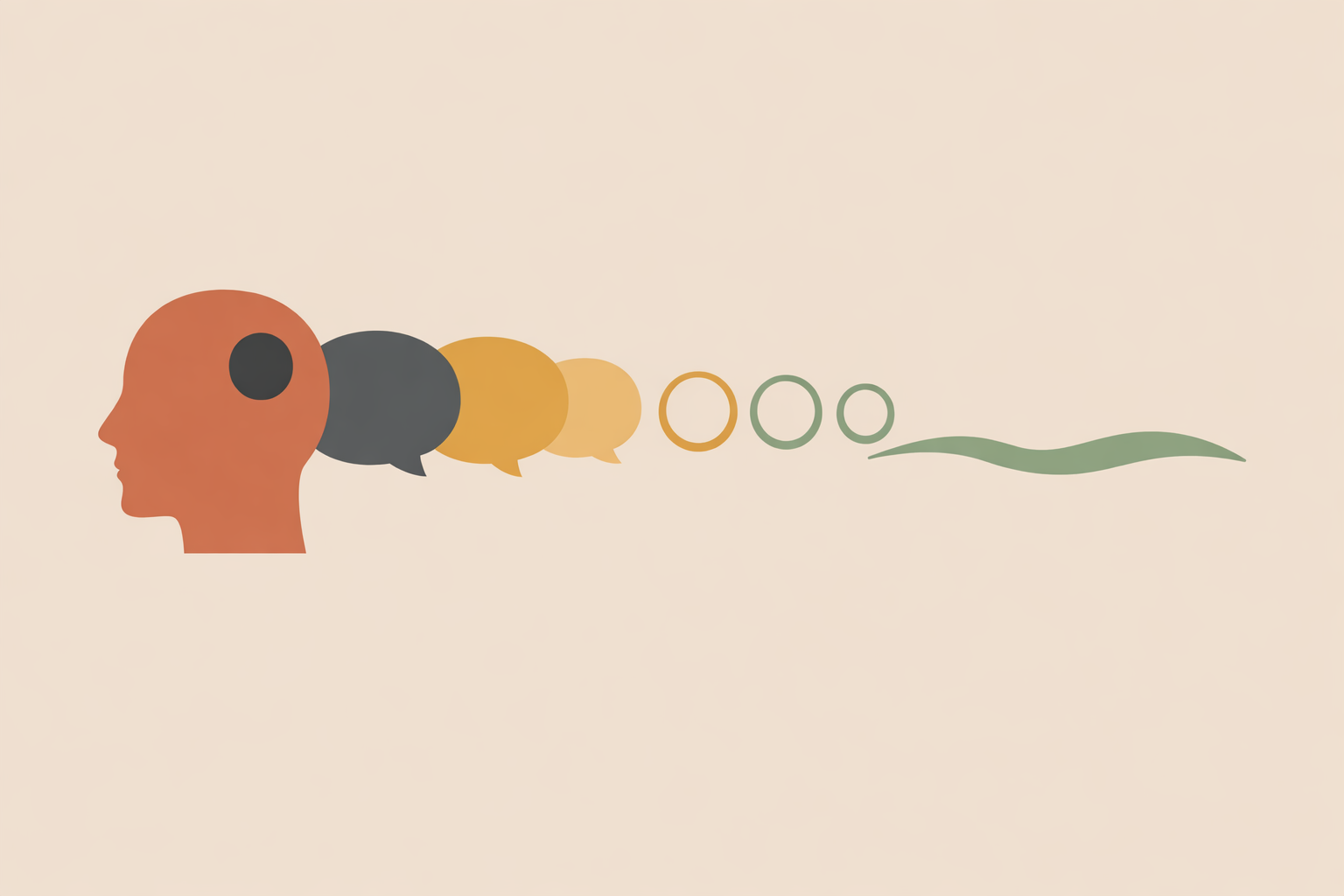
Reassurance-seeking is where many OCD-informed coaches feel the squeeze. A client pings you between sessions: “Just confirm I didn’t offend them.” In session, what starts as a practical check turns into a loop: “Are you sure?” minutes after you’ve answered. You want to be kind, protect rapport, and keep things moving, yet each extra confirmation brings brief relief and tightens the pattern. Partners and colleagues may also ask you to “just tell them it’s fine,” while your scope and instincts tell you that certainty promises do not build capacity.
Key Takeaway: Reducing reassurance in OCD coaching means replacing certainty-providing with uncertainty-capable, values-based action while staying warm and within scope. In practice, that means five core pivots: name the certainty demand and invite a small step that includes the unknown; shift from deciding what thoughts mean to observing the mind’s story; map inflated responsibility and choose proportionate, actionable steps; define “good enough” standards with clear stopping rules; and use body-aware regulation to support action without turning regulation into another ritual.
Pivot 2: From “Please Decide What This Means” to “Can We Observe the Mind’s Story?”
A common follow-up sounds like: “If I had that thought, doesn’t it mean something terrible about me? Tell me it doesn’t.” Here, the most helpful stance is often observation. Thoughts, images, urges, and meaning-making pressure can be noticed as mental events rather than verdicts.
Reassurance doesn’t always come from other people. It can show up as internal reviewing, arguing with a thought, replaying conversations, comparing, searching the same question repeatedly, or asking multiple people or tools until an answer finally feels right. These can function like invisible rituals, especially when they’re done to get relief and certainty.
Once these quieter rituals are named, the person has something solid to work with: a pattern, not a personal failure.
- “I’m noticing the thought that I could be responsible.”
- “My mind is telling the ‘what if this defines me?’ story.”
- “Thank you, mind — noted. I’m taking this thought with me while I answer my email.”
- “This is the urge to resolve meaning right now.”
Two quick composites show the tone. In scrupulosity: “What if I’ve offended the divine?” You might say, “Notice the ‘need-to-be-pure’ story, and bring your attention back to the next part of your practice.” In relationship OCD: “Did that glance mean I don’t love them?” You might say, “Name the ‘test-your-love’ story, then send the message you already intended to send.”
Any helpful script can become a ritual if it’s repeated to force certainty or total calm. If a client says, “I repeated the phrase ten times until it felt right,” simplify. Use the phrase once to identify the pattern, then return to the chosen task without waiting for relief.
A compact micro-practice works well: notice and name the story, take one slower exhale, then resume what you were doing.
Pivot 3: From “What If I’m Responsible for Everything?” to “What Responsibility Is Proportionate and Actionable?”
When guilt or duty surges, helpers often rush in with reassurance: “You’re not responsible at all.” A steadier move is to map responsibility with nuance, then choose one proportionate, actionable step.
In OCD, inflated responsibility involves an exaggerated belief that one must prevent harm, mistakes, discomfort, or uncertainty. This pattern is closely tied to checking and reassurance, and it’s well described as inflated responsibility.
A responsibility map externalizes the loop:
- Trigger
- Intrusive meaning
- Feared consequence
- Assumed responsibility
- Fear-based rule
- Reassurance request
- Short-term relief
- Long-term cost
- Values-based alternative
Example: “I may have left the stove on” → “I could burn down the building” → “I must prevent all harm” → “Check until I feel 100% sure” → “Please confirm again” → brief relief → time loss and conflict → “One visual check, then leave.” Written out, the pattern becomes workable without litigating every “what if.”
- “Would you hold someone you love to this same standard?”
- “What is reasonable action here, rather than perfect protection?”
- “How will you know the check is complete in observable terms?”
- “What is your finish line?”
Language matters. Instead of “You’re not responsible,” try: “You’ve taken the reasonable step available to you. The rest is outside your control.” It keeps the focus on proportion rather than total exoneration.
Mini-scenario: Priya worries she might have offended a colleague and wants three friends to confirm she did nothing wrong. Together, you choose one proportionate step: send one sincere message to the colleague, do not fish for reassurance from others, and return to the report due at 2 p.m. The win is aligned action, even with guilt still present.
Pivot 4: From “I Must Be Certain I Did It Perfectly” to “Good Enough Can Be Complete”
Perfectionism keeps reassurance loops alive. A co-created good-enough standard offers an exit ramp because it creates a clear endpoint without requiring the feeling of certainty.
A quality standard has observable steps and a finish line. A certainty ritual continues until anxiety dips or the task feels fully settled. Helping clients notice that difference in real time is often more useful than debating it in theory.
For example, a stopping rule for email might be: read once for facts, correct obvious errors, send, and do not ask anyone to certify the tone. You can rehearse this live and let discomfort be present while the action stays on track.
- Work: “Two passes on the slide deck; submit by 3 p.m.; no post-submission edits unless requested.”
- Study: “One practice quiz; move on after 20 minutes; no rechecking notes just to settle nerves.”
- Relationships: “State the plan once; if doubt about tone arises, proceed rather than asking for repeated approval.”
This also helps partners or colleagues support without feeding the loop: “I can help you set the standard once, but I won’t keep certifying that it’s perfect. I can stay with you while you finish.”
Progress often shows up behaviorally: fewer reassurance questions, shorter checking spells, and a quicker return to everyday tasks. Over the course of support, reduced reassurance seeking has been associated with better progress.
Composite example: Marco spends 45 minutes rereading Slack messages for tone. You define “good enough Slack” as one read before sending and no rereads after. In the first week, he slips and asks a teammate for reassurance twice. By the second week, he sends most messages within two minutes. That’s meaningful momentum.
Pivot 5: From “Make the Feeling Go Away” to “Help Me Stay Within Range While I Choose”
Sometimes the body takes the lead: chest tightens, attention narrows, and the urge for reassurance arrives fast. In those moments, a simple sequence helps: notice the activation, name the urge, steady briefly, and choose one next step.
The urge is typically tied to perceived threat, uncertainty, and responsibility, even when the bodily surge feels like the whole story. Models of OCD maintenance highlight threat and uncertainty as central drivers of these cycles.
A short regulation-and-action sequence is often enough:
- Notice: “My chest is tight and I want certainty.”
- Name: “This is the urge to get a guarantee.”
- Steady briefly: one or two slower exhales, feet on the floor, orient to the room, sip water.
- Choose: take one small values-based step.
- Allow: let the leftover discomfort travel with you.
Body-based support works best when it stays simple and purposeful. Traditional practices can be deeply supportive when used with cultural respect and clear intention: rhythm, breath-led phrases from one’s own lineage, grounding through posture and place, or other familiar anchoring practices. The aim is steadiness for wise action, not a new ritual to chase relief.
Loved ones also need guidance. Repeated reassurance and ritual participation can become accommodation, and accommodation is often linked with greater OCD burden. Warm boundaries help:
- “I love you, and I won’t answer the same safety question again. I can stay with you while you take the next step.”
- “I won’t check the stove with you, and I will walk to the car beside you.”
- “I can breathe with you for thirty seconds, then we’ll continue with the plan.”
Composite vignette: Darius feels a surge before locking the door. You say, “Name the urge.” He replies, “I want you to tell me it’s locked.” You answer, “I won’t certify it, and I’ll stay with you. Two slow exhales, one lock, hand off the knob, and we walk.” He locks once, breathes, and heads to the elevator while the urge rises and falls. That is momentum without guarantees.
Bringing the Five Pivots Together in OCD Coaching
Together, these five pivots create a practical rhythm: name the certainty demand, observe the mind’s story, choose proportionate responsibility, close the loop with good-enough standards, and steady the body enough to act. The stance stays consistent: warmth without guarantees, boundaries without punishment, and action that keeps moving.
What matters most is building a repeatable response to the cycle. Over time, change usually looks ordinary: fewer repeated questions, less time lost to checking and reviewing, more follow-through on daily responsibilities, and more room for relationships that aren’t organized around reassurance.
Collaborative boundaries work best when set in advance. Decide together which questions deserve one factual answer, what will happen when certainty demands return, and what support will be offered instead: presence, a reminder of the plan, a breath, or a next step. Within scope, mental health frameworks can help locate where coaching fits, and scope can support psychoeducation, pattern mapping, values clarification, communication boundaries, and daily-life follow-through while leaving formal mental health care to the appropriate professionals.
Hold both rigor and humility. Contemporary evidence offers useful guidance, and long-standing traditions offer equally valuable wisdom about rhythm, relationship, reverence, and living with uncertainty. When your presence is kind, culturally respectful, and clear, reassurance-seeking often loosens. In its place grows something steadier than certainty: trust in the person’s ability to keep living well without having everything resolved first.
Explore OCD Coach Certification
Deepen these reassurance-reduction pivots with structured coaching skills in the OCD Coach Certification.
Explore OCD Coach Certification →